"Consensus is genuinely one of the most important crypto conferences in the world" | Image credit: Hameem Sarwar/CCN
Share
Key Takeaways
Consensus 2026 reflected growing long-term confidence in crypto markets.
Miami continues strengthening its position as a global crypto hub.
Regulatory clarity in the US is reshaping institutional conversations around Bitcoin.
The Global Crypto Lifestyle Index (CLI) shows that the US still faces gaps in everyday practical adoption.
Crypto adoption often gets measured through prices, regulation, or market size. Consensus 2026 in Miami offered a different perspective by showing how crypto functions in real environments, where culture, access and usability shape everyday activity.
With CCN on the ground, reporter Max Moeller covered the event through interviews with PayPal’s Larry Wade, DogeOS CEO Jordan Jefferson, Optimism’s Kyle Jenke, and Tix founder Ahmed Nimale, alongside coverage from across the conference floor.
As part of the event, Crypto Citizen Network’s (CCN) Chief Content Officer, Samuel Hood Burke, moderated a panel featuring speakers from Houdini Swap, TON Foundation, Paxos, and GlobalStake. The discussion focused on real-world adoption and the challenges shaping the industry’s next phase.
CCN Chief Content Officer, Samuel Hood, at Consensus 2026
Miami Highlights Crypto Cultural Strength
Consensus 2026 reinforced Miami’s growing influence within the global crypto market, drawing major industry figures, startups, and policymakers to the city for one of the sector’s most closely watched gatherings.
“Consensus is genuinely one of the most important crypto conferences in the world, in part because it’s taking place in Miami, which now plays an outsized role in the crypto landscape, both in the US and globally,” said Burke.
“Beyond the panels and presentations, Miami continued positioning itself as a center for crypto business activity and international networking.”
Much of the industry’s momentum during the week came from private meetings, partnerships, and relationship-building across the city.
The conference size is ideal because it’s big enough to attract serious mid-tier to large players while still being intimate enough for entrepreneurs and startups to take time to meet each other in the network without being overwhelmed,” Burke said.
“While Consensus doesn’t have the absolute largest crypto brands attending, it does have serious leaders across a wide variety of verticals,” he added.
The event drew more than 15,000 attendees for over 150 sessions and 5,000 meetings across three days in Miami.
Major announcements included Crypto.com launching a new travel booking platform powered by Bookit, while Binance founder CZ floated the possibility of reviving Binance.US.
Tether’s global head of regulatory affairs, Jesse Spiro, also warned that this year’s US election could have a “seismic” impact on crypto regulation and adoption.
🌴 Miami hosts @consensus2026 — but does the city actually live crypto? It stands out for: • Strong crypto events and infrastructure • No state income tax • Growing founder and investor presence
But everyday crypto use remains limited, with federal tax rules still shaping how… pic.twitter.com/0vcMEmlZda
— CCN – Crypto Citizens Network (@CCNCitizens) May 5, 2026
Regulation and Institutional Adoption Take Center Stage
Consensus 2026 reflected a growing shift in how institutions discuss Bitcoin and digital assets. Conversations focused less on whether crypto belongs in traditional finance and more on allocation, diversification, and long-term positioning.
“Despite the down market in crypto, the increased regulatory clarity crypto is seeing under the current US administration has put long-term optimism among serious players,” Burke said.
The improving regulatory outlook in the United States also contributed to a more optimistic tone across the conference, particularly among firms focused on long-term market participation and infrastructure growth.
Stablecoins also remained a major focus. Ripple CEO Brad Garlinghouse said, “2031 we’ll hit $3T in market cap,” while arguing that the industry should move beyond internal divisions and support passage of the proposed CLARITY Act despite its limitations.
The event also highlighted broader trends shaping the industry. Animoca Brands chairman Yat Siu said, “AI agents will help people pick their next partners instead of regular dating apps,” reflecting the growing overlap between AI and crypto applications.
The event highlighted growing confidence across the crypto industry, but it also reinforced that global adoption remains uneven and still depends heavily on regulation, usability, and financial access in different regions.
CCN’s Global Crypto Lifestyle Index Explains the Gap
The Global Crypto Lifestyle Index (CLI) measures how crypto integrates into everyday life through factors such as usability, regulation, financial access, and payment infrastructure.
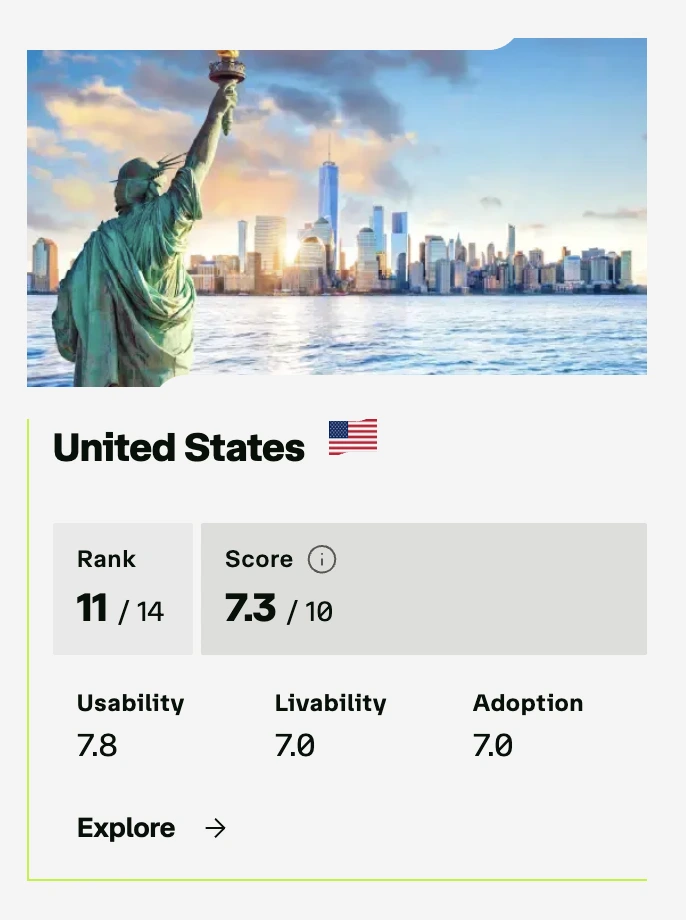
The US ranks 11th out of 14 countries, with an overall score of 7.3 out of 10. The country scored 7.8 in usability, alongside 7.0 in both livability and adoption.
The ranking reflects strong infrastructure, market participation, and cultural influence. However, countries such as Switzerland, Singapore, and the United Arab Emirates (UAE) continue outperforming the US in areas tied to regulatory consistency, financial integration, and practical crypto accessibility.
Consensus 2026 reinforced how the next phase of adoption will depend less on visibility or speculation and more on whether crypto can integrate naturally into everyday financial life.
Attendees across Miami also shared their views with CCN. One person described the city as “very crypto forward,” noting that while many residents may not understand the technical side of blockchain, most still recognize Bitcoin, Ethereum, and Solana as part of mainstream culture.
Another attendee argued that despite resistance from traditional finance, crypto visibility continues growing because “everyone still hears about crypto. It’s inevitable.”
The US position remains strong, particularly in Miami, where industry activity, investment, and networking continue shaping the broader crypto landscape. As Burke concluded, “once the toothpaste is out of the bottle, you can’t put it back in.”
Dr. Lorena Nessi is an award-winning journalist and media technology expert with 15 years of experience in digital culture and communication. Based in Oxfordshire, UK, she combines academic insight with hands-on media practice.
She holds a PhD in Communication, Sociology, and Digital Cultures, and an MA in Globalization, Identity, and Technology.
Lorena has taught at Fairleigh Dickinson University, Nottingham Trent University, and the University of Oxford. She is a former producer for the BBC in London, with additional experience creating television content in Mexico and Japan.
Her research focuses on digital cultures, social media, technology, capitalism, and the societal impact of blockchain innovation.
She has written extensively on digital media and emerging technologies, with her work featured in both academic and media platforms. Her Web3 expertise explores how blockchain technologies shape culture, economics, and decentralized systems.
Outside of work, Lorena enjoys reading science fiction, playing strategic board games, traveling, and chasing adventures that get her heart racing. A perfect day ends with a relaxing spa and a good family meal.