No Income Tax, 250+ Tech Firms and Crypto Foundations Boom — How Cayman Islands Become Web3 Haven
Share
Key Takeaways
Cayman Islands are becoming a Web3 legal hub as crypto foundations surged from around 790 in 2023 to over 1,700 by 2025, driven largely by DAO and blockchain projects.
Institutional crypto funds are moving to Cayman due to its strong hedge-fund infrastructure, with over half of crypto hedge funds reportedly domiciled in the jurisdiction.
Tech ecosystems are expanding rapidly with hundreds of fintech, blockchain and AI firms operating through Cayman Enterprise City and tech zones.
Tax neutrality and crypto regulation are driving growth as no income or capital gains tax combined with the VASP framework attracts Web3 startups and digital asset firms.
The Cayman Islands are quietly emerging as one of the world’s most important jurisdictions for crypto companies, DAO foundations and Web3 infrastructure. Once known primarily as an offshore hedge-fund hub, the Caribbean territory is now attracting blockchain projects, crypto funds and fintech startups at an accelerating pace.
What makes the Cayman Islands notable is not just tax neutrality. A surge in Web3 foundation companies, expanding tech zones, regulatory clarity for crypto businesses and deep institutional financial infrastructure are combining to transform the jurisdiction into a Web3 legal and financial hub.
Recent data suggests this shift is no longer theoretical — it is already happening.
Crypto Foundation Boom Signals Web3 Migration
One of the clearest indicators of Cayman’s Web3 growth is the surge in foundation companies. These legal structures are commonly used by blockchain projects, DAOs and token ecosystems for governance and treasury management.
According to data from the Cayman Compass, more than 1,700 foundation companies were registered by late 2025, up from around 790 in 2023, representing a dramatic expansion driven largely by Web3 projects.
Cayman is where the world’s leading financial institutions do business. The island’s bet on smart regulation has turned it into a premier hub for institutional crypto and tokenized assets. We saw the potential early and are ready to move. https://t.co/E3quS6GAq1
Legal analysts say these foundation companies are particularly attractive because they allow decentralized governance while still providing legal structure. Cayman foundation companies are widely used for:
Legal experts note that Cayman foundation companies provide a flexible legal wrapper for crypto entrepreneurs, making them a popular structure for Web3 organizations.
This rapid increase has also created a supporting ecosystem of crypto-focused law firms, governance specialists and compliance advisors, further reinforcing Cayman’s position as a Web3 infrastructure hub.
Tech Firms and Special Economic Zones Drive Ecosystem Growth
Cayman’s rise is also supported by the growth of its special economic zones, particularly Cayman Enterprise City and Cayman Tech City.
Recent 2026 data shows Cayman Tech City hosts approximately 180 companies across fintech, blockchain, software development and artificial intelligence.
Other reports suggest over 300 companies now operate across Cayman Enterprise City zones, benefiting from streamlined licensing, visa programs and business incentives designed to attract technology companies.
Earlier economic zone data also showed the milestone of 250 companies joining the special economic zones, reflecting steady growth over time.
These companies include:
Blockchain startups
Crypto service providers
Fintech companies
AI and software firms
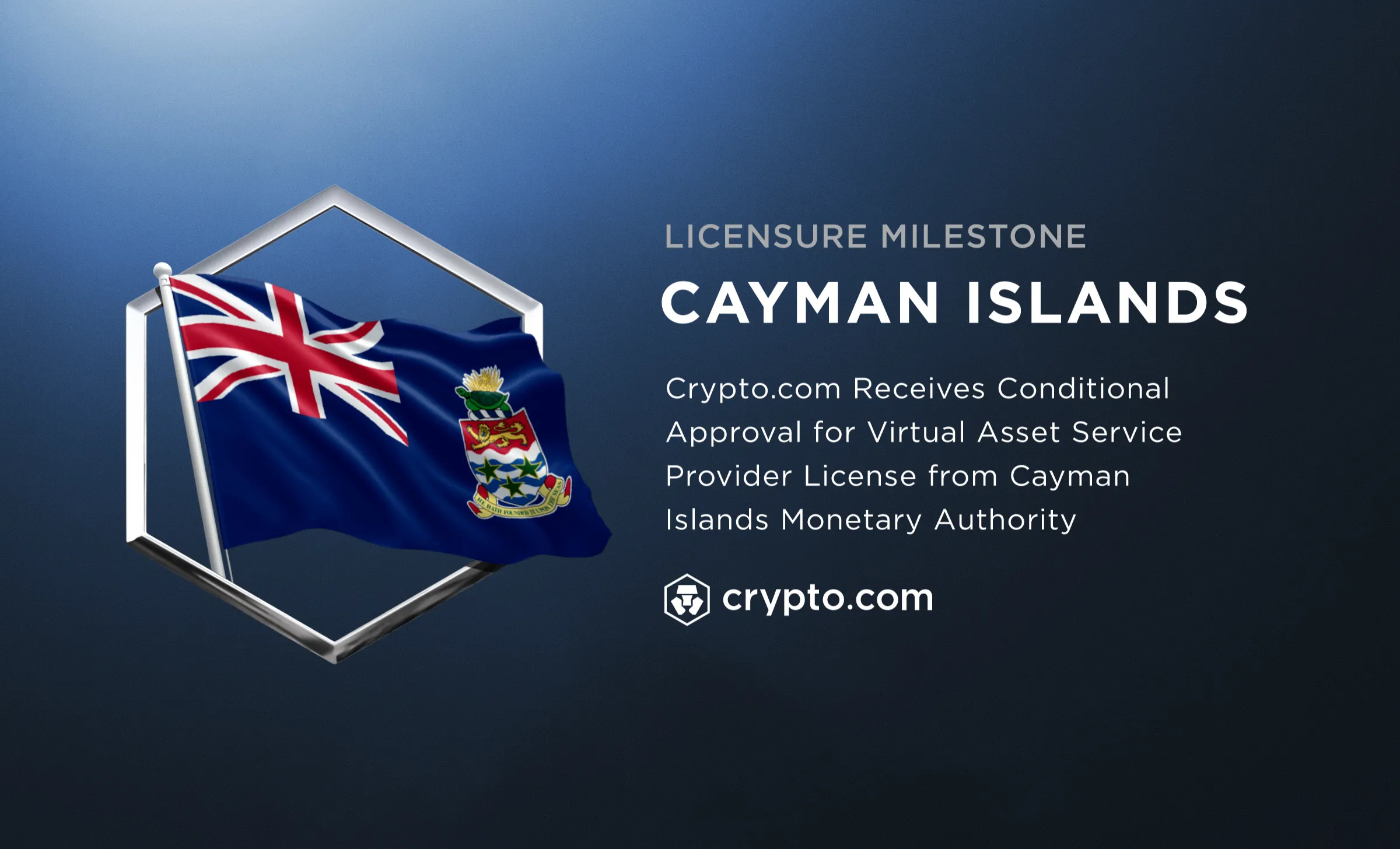
In January 2026, Crypto.com disclosed that the company has received conditional approval from the Cayman Islands Monetary Authority (CIMA) for a VASP license, making it one of the first digital asset firms to gain this status in the region. The approval builds on its 2022 registration and will allow Crypto.com to expand institutional services, particularly through its exchange offering. The company expects full authorization after meeting final requirements, reinforcing its strategy of growing through regulatory compliance and expanding global crypto infrastructure.
Crypto.com today announced that it has received conditional approval for its VASP license from the Cayman Islands Monetary Authority (CIMA) . | Source: Crypto.com
Rather than isolated offshore entities, this has created a growing technology cluster supporting Web3 businesses.
Hedge Fund Dominance Attracts Crypto Funds
Another major advantage is Cayman’s existing financial infrastructure.
The Cayman Islands already dominate the global hedge-fund industry. Industry estimates suggest 70–80% of global hedge funds are domiciled in the Cayman Islands, making it the world’s leading hedge-fund jurisdiction.
This creates a natural pathway for digital asset funds. Investors, legal firms and fund administrators are already familiar with Cayman structures, allowing crypto funds to integrate into traditional financial infrastructure.
This convergence between traditional finance and crypto is one of the main reasons Cayman has become attractive for institutional digital asset projects.
Regulatory Framework Designed for Crypto
Cayman Islands also developed a regulatory framework specifically for digital assets through the Virtual Asset Service Providers (VASP) Act.
The VASP regime provides rules for crypto custody providers, exchanges and trading platforms, requiring licensing and oversight by the Cayman Islands Monetary Authority.
Regulatory updates introduced in April 2025 expanded licensing requirements for custody and trading services, strengthening oversight while maintaining flexibility.
Further amendments proposed in 2026 aim to refine definitions around token issuance and digital asset offerings, showing continued regulatory evolution.
Unlike jurisdictions that have restricted crypto operations, Cayman’s approach focuses on:
Legal clarity
Institutional oversight
Innovation-friendly regulation
This balance has helped attract blockchain companies seeking predictable legal environments.
Data from the Cayman Islands Monetary Authority shows over 30,000 registered funds in the jurisdiction, including mutual funds and private funds.
This scale of financial infrastructure provides:
Fund administrators
Legal advisors
compliance professionals
investor networks
Crypto companies benefit from this existing ecosystem, allowing them to scale operations within an established financial center.
This is one reason why Cayman has transitioned smoothly from hedge-fund hub to Web3 governance center.
Tax Neutrality Remains a Core Advantage
Another key factor remains Cayman’s tax structure.
Cayman Islands impose:
No income tax
No capital gains tax
No corporate tax
Legal analysis notes that Cayman’s tax exemptions and progressive crypto regulations continue to attract Web3 entrepreneurs seeking legal certainty and operational flexibility.
For DAO foundations and crypto treasuries, this environment allows digital asset holdings to grow without local taxation, making Cayman particularly attractive for long-term governance structures.
Transparency Rules Without Losing Crypto Appeal
The Cayman Islands have also adopted international transparency standards.
The Crypto-Asset Reporting Framework (CARF) introduces global reporting standards for crypto transactions, aligning Cayman with international compliance expectations.
Despite these transparency requirements, Cayman retains tax neutrality, preserving one of its main advantages while improving regulatory credibility.
This approach aims to keep Cayman competitive while complying with global financial standards.
Offshore Finance Hub Transforming Into Web3 Infrastructure
The Cayman Islands built their reputation as a hedge-fund domicile decades ago. That infrastructure is now being repurposed for blockchain governance and Web3 organizations.
Growth in foundation companies, tech firms, crypto hedge funds and regulatory frameworks suggests Cayman is evolving into a Web3 infrastructure hub rather than simply a tax-neutral jurisdiction.
Crypto firms are not just incorporating entities there. They are building governance structures, launching token foundations and establishing long-term operational frameworks.
The transformation is happening quietly, but the numbers show momentum.
With no income tax, expanding tech ecosystems, thousands of funds and a growing Web3 legal infrastructure, the Cayman Islands are increasingly positioning themselves as one of the world’s most important jurisdictions for blockchain governance and crypto finance.
FAQs
Why do DAO and Web3 projects prefer Cayman foundation companies?
Cayman foundation companies allow decentralized governance while maintaining a legally recognized structure. This makes them ideal for DAOs, token treasuries and blockchain governance systems that require flexibility without traditional corporate ownership models.
Are crypto companies actually operating in Cayman or just registering entities?
While some companies register legal entities only, the growth of Cayman Enterprise City and tech zones shows that an increasing number of Web3 firms are building operational presence, hiring staff and working within the jurisdiction’s ecosystem.
Does the Cayman Islands regulate crypto businesses?
Yes. The Virtual Asset Service Providers (VASP) Act requires licensing for certain crypto activities such as custody and exchange services. The Cayman Islands Monetary Authority oversees compliance, providing institutional-grade oversight while maintaining flexibility.
Is the Cayman Islands becoming a competitor to Singapore or Dubai for Web3?
Cayman Islands are emerging as a complementary hub rather than a direct competitor. Singapore and Dubai focus on operational headquarters, while Cayman is increasingly used for legal structuring, DAO governance and crypto fund domiciles.
Disclaimer:
The information provided in this article is for informational purposes only. It is not intended to be, nor should it be construed as, financial advice. We do not make any warranties regarding the completeness, reliability, or accuracy of this information. All investments involve risk, and past performance does not guarantee future results. We recommend consulting a financial advisor before making any investment decisions.
She is a fintech writer based in Canada with an academic background in psychology and project management. She has previously contributed to crypto media platforms, including Cointelegraph. Her professional experience includes work as a relationship manager in the telecommunications industry, and her writing since 2020 has focused on digital assets, blockchain technology, and artificial intelligence, with attention to their interaction with traditional finance.


 Easy
Easy