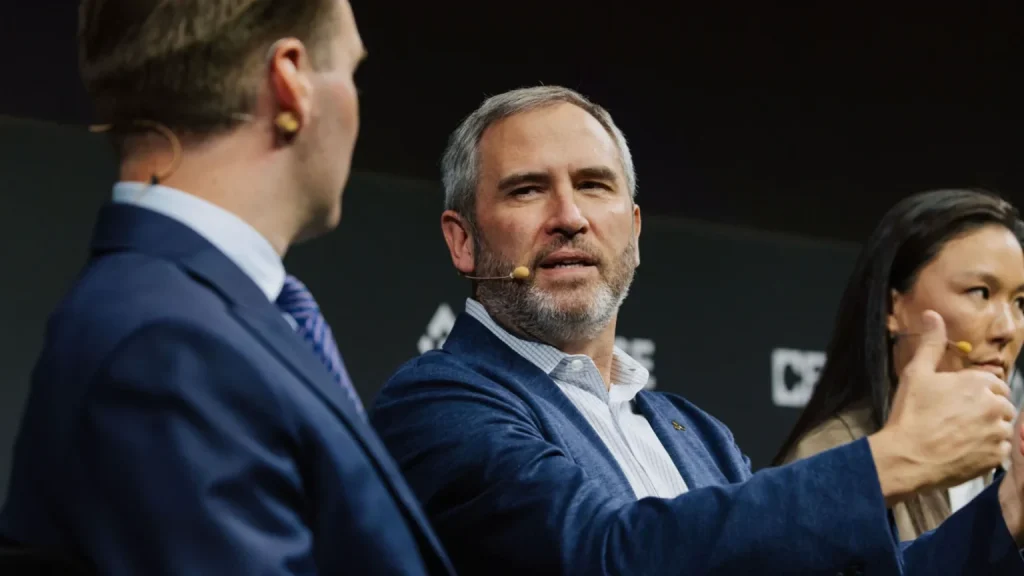
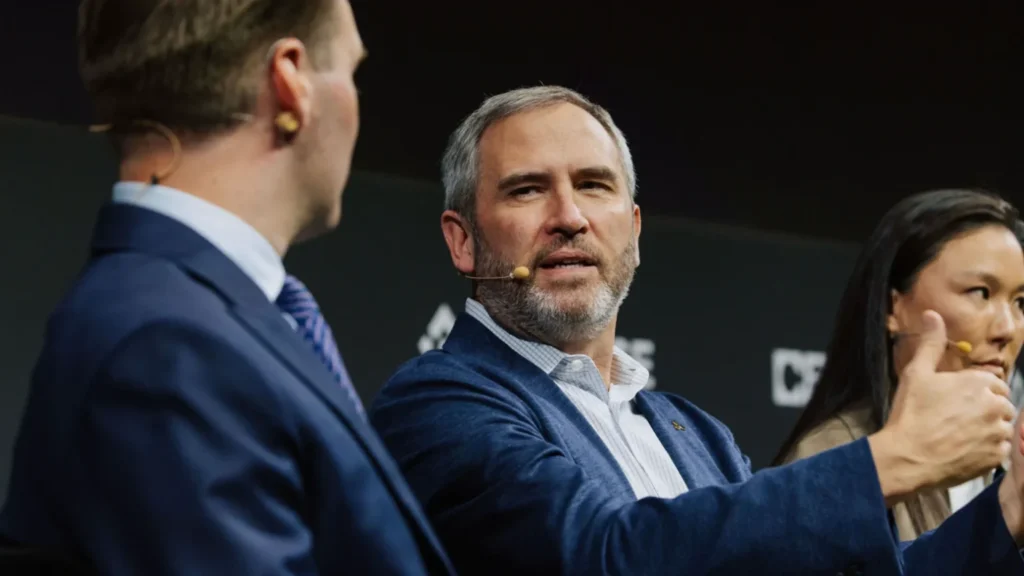
Brad Garlinghouse did not hold back at Consensus 2026. | Source: DARKHORSE
Share
Key Takeaways
Ripple CEO Brad Garlinghouse urged the crypto industry to unite behind the CLARITY Act.
He accused the SEC of creating “chaos” through “regulation by enforcement.”
Reflecting on the high-profile lawsuit, Garlinghouse said the SEC made a strategic mistake targeting Ripple.
Ripple CEO Brad Garlinghouse delivered a sharp rebuke of the US regulators on Tuesday, accusing the Securities and Exchange Commission (SEC) of fostering “chaos” in the digital asset sector.
Speaking at the Consensus 2026 conference in a fireside chat with Bullish CEO Tom Farley, Garlinghouse said the time had come for the industry to stop internal disagreements and push for passage of the proposed CLARITY Act, despite its shortcomings.
Try Our Recommended Crypto Exchanges
Sponsored
Disclosure
We sometimes use affiliate links in our content, when clicking on those we might receive a commission at no extra cost to you. By using this website you agree to our terms and conditions and privacy policy.
— #Consensus2026 → Miami (@consensus2026) May 5, 2026
He backed Farley’s call for the industry to rally behind the bill, even as debates continue over provisions such as stablecoin yields and ethics.
Some crypto-native firms and advocacy groups have continued to push for more favorable or more clearly defined provisions, while traditional financial institutions have raised separate concerns about competitive balance.
Garlinghouse said that continued resistance from within the sector risks delaying long-awaited regulatory certainty.
SEC Accused of “Regulation Through Enforcement”
Garlinghouse reserved his strongest criticism for the SEC, particularly under former Chair Gary Gensler, arguing that the agency has relied on enforcement actions rather than clear rulemaking.
“We’ve been living — particularly with a not well-intended SEC under Gary Gensler — with chaos,” he said.
“It’s just regulation through enforcement, and you didn’t know where they were going to focus their enforcement battle.”
He said this approach left companies operating in constant uncertainty, unsure how regulators would apply existing laws to digital assets.
The lack of clear guidelines, he argued, forced firms into defensive positions rather than enabling innovation.
SEC Ripple Case Reflection
Reflecting on Ripple’s high-profile legal battle with the SEC, Garlinghouse argued the agency made a strategic misstep by targeting a company with the resources to fight back.
“One of the key strategic mistakes the SEC made was picking on Ripple because we were strong enough to stand up to them,” he said.
He suggested regulators might have had more success establishing precedent by pursuing smaller firms more likely to capitulate.
Garlinghouse highlighted the imbalance between private companies and federal regulators.
“You have an unlimited budget of the federal government to come after you,” he said.
He noted that many crypto firms, unlike Ripple, would have been forced to settle or shut down under similar pressure.
Garlinghouse Urges Support Behind CLARITY Act
Garlinghouse’s remarks came as parts of the crypto industry continue to push back on elements of the CLARITY Act, even after compromises were reached in Washington.
Farley had earlier criticized that resistance, saying the industry should “shut the hell up” and support finalizing the bill.
Garlinghouse echoed that sentiment, arguing that continued fragmentation risks prolonging the very uncertainty companies have been complaining about.
Despite regulatory headwinds, Garlinghouse said Ripple has continued to pursue growth through acquisitions and by integrating traditional financial infrastructure with blockchain technology.
But he suggested that clearer rules would significantly accelerate adoption, particularly in areas such as cross-border payments and tokenized real-world assets.
Kurt Robson is a London-based reporter at CCN, specialising in the fast-moving worlds of crypto and emerging technology. He began his career covering local news in Cornwall after graduating from Falmouth University with First Class Honours in Journalism. There, he cut his teeth on everything from council meetings to missing swans.
He quickly rose through the ranks to become a frontline journalist at several of the UK’s leading national newspapers. Over the years, he has interviewed musicians and celebrities, reported from courtrooms and crime scenes, and secured multiple front-page exclusives.
Following the upheaval of the COVID-19 pandemic, Kurt shifted his focus to technology journalism—just ahead of the AI boom. With a natural curiosity and a trained eye for emerging trends, he has found a new rhythm in reporting on innovation.
At CCN, Kurt's work focuses on the cutting edge of crypto, blockchain, AI, and the evolving digital world. Drawing on his background in people-first reporting and his deep interest in disruptive tech, Kurt delivers stories that are insightful, entertaining, and human-centric.