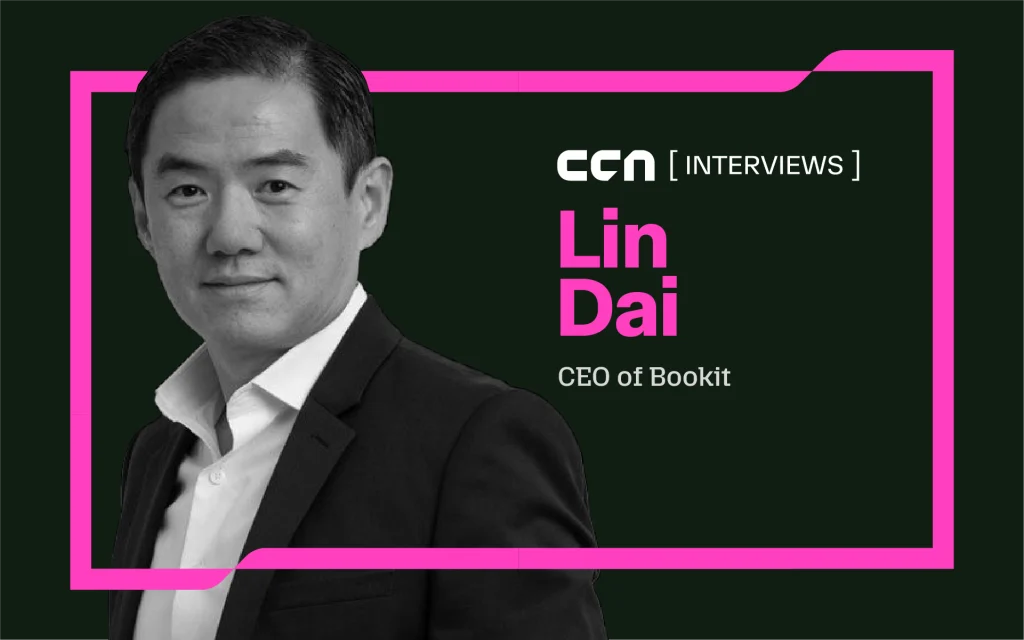
“Your points are now an asset and a true currency in their true sense,” | Image credit: CCN
Share
Key Takeaways
Blockchain-based loyalty programs turn rewards into usable assets, improving transparency, flexibility, liquidity, and real-world value for users.
Bookit introduces “stable points,” where rewards maintain a fixed value and can be spent across multiple platforms, not limited to one ecosystem.
Crypto adoption depends on hiding technical complexity, enabling users to benefit from blockchain without directly interacting with it.
Traditional finance partnerships require focusing on user value and ROI rather than leading with blockchain technology.
Blockchain is moving closer to everyday consumer use, changing how value is earned and used. Recent moves by Crypto.com, including the launch of its travel booking service powered by Bookit, highlight how crypto is expanding beyond trading into real-world rewards and services.
Notably, loyalty programs represent one of the largest untapped markets, with billions of dollars in unused points held as liabilities by banks and corporations.
In an interview with CCN’s Max Moeller, Bookit CEO and co-founder Lin Dai explained how blockchain-based rewards systems, stablepoints, and invisible crypto infrastructure could redefine how consumers earn and spend value.
Dai is also the CEO of Superlogic and co-founder of Spree.Finance, enabling crypto payments and rewards across 2M+ brands. A veteran entrepreneur, he previously led digital and social initiatives at major media firms and helped pioneer early influencer partnerships before taking a company public.
Technology Evolution Leads to Crypto-Based Rewards
Bookit is a crypto-native rewards platform that connects travel bookings, payments, and loyalty programs through blockchain infrastructure.
Dai places Bookit’s model within a broader evolution of technology, from hardware to networks, and now to decentralized systems.
“Technology comes in waves,” he said.
Each phase built on the previous one, moving from chip-level innovation to cloud computing, then social platforms, and now blockchain-based systems.
“Crypto has been kind of one of those technologies that fundamentally had a lot of potential to change how mainstream finance and consumer value are being transacted,” Dai said.
However, adoption has taken time due to regulatory and institutional barriers.
“It took a long time… there’s a lot of regulatory roadblocks and institutional roadblocks,” he added.
Why Loyalty Programs Move to Blockchain
Loyalty programs have traditionally operated as closed systems where value can shift unpredictably.
“Every bank has billions of dollars of unspent points on their balance sheet. They had to carry that as a liability,” Dai said.
These points often lose value over time, creating uncertainty for users.
“Your loyalty program found the way and it just doesn’t apply to Marriott. Any program starts taking value away from you,” he explained.
Bookit addresses this through a model called “stablepoints,” which maintains consistent value.
“100 points are always backed by $1,” Dai said.
This approach ensures purchasing power remains stable and removes restrictions tied to individual programs.
“You’re not limited to spending it with one program,” he added.
StablePoints Turn Rewards Into Usable Assets
Bookit’s system allows rewards to function more like currency rather than promotional credits.
“It’s not like made-up points… it could be a stablecoin, it could be stablepoints,” Dai said.
Stablepoints are blockchain-based rewards designed to maintain a fixed value, unlike traditional loyalty points that can lose purchasing power over time.
Users can earn rewards in different forms, including crypto tokens and use them across a wide range of services.
“You can spend across… airlines, hotel, cruises, resorts, entertainment experiences,” he said.
This expands utility far beyond traditional loyalty ecosystems.
“Your points are now an asset and a true currency in their true sense,” Dai added.
Higher Rewards Challenge Traditional Finance Models
Bookit’s model also changes how rewards are distributed, returning more value to users.
“We give up to 40% back to the users,” Dai said.
Traditional platforms often retain a large portion of margins.
“Those are the margins that the big players are keeping for themselves,” he explained.
This higher reward rate comes from redistributing margins typically retained by intermediaries such as travel platforms, banks, and booking providers.
This approach increases user engagement and spending.
“One of our major cruise line partners is generating 2.5 times more spend per customer,” Dai said.
Working With Traditional Institutions Without Compromise
Despite positioning itself as a disruptor, Bookit works closely with both crypto-native and traditional financial institutions.
Dai said the approach avoids leading with blockchain terminology.
“We don’t lead with the technology,” he said.
Instead, the focus remains on measurable outcomes for businesses.
“What you care about is how you engage and retain a user,” he explained.
This strategy helps bridge the gap between innovation and adoption.
Dai said sustainable business depends on delivering measurable returns and driving user engagement.
Dai argues that mainstream adoption depends on simplifying the user experience.
“For mass adoption, crypto absolutely needs to disappear into the background,” he said.
Users should interact with products based on value rather than technology.
“It’s the deal that is important to you, and the amount of rewards back that’s important to you,” he added.
Most users already engage with blockchain infrastructure indirectly through white-labeled services.
“You would never even realize this is powered by Bookit because that’s not important,” Dai said.
Invisible Infrastructure Enables Real-World Use Cases
While crypto remains hidden for most users, it still powers key functionalities behind the scenes.
The platform allows payments through multiple methods, including traditional cards and crypto wallets.
Dai said users can check out with a crypto-backed debit card or by connecting a wallet directly.
This flexibility allows users to spend digital assets in real-world scenarios.
“You can actually spend… any of the 30,000 memecoins for concert tickets or plane tickets,” he said.
Crypto Rewards Could Drive Broader Adoption
Dai believes integrating rewards into crypto platforms could accelerate adoption across the industry.
“Adding travel… to every major crypto application is actually going to help crypto adoption,” he said.
Providing tangible benefits aligns crypto platforms with traditional financial expectations.
“It puts the crypto exchanges and crypto banks on par with… Chase and American Express,” Dai said.
This shift could make crypto more competitive in consumer finance.
“You just get better rewards,” he added.
As blockchain infrastructure matures, the focus shifts toward usability and real-world value. Dai’s approach centers on removing complexity while improving everyday financial experiences. By turning rewards into assets and simplifying access, platforms like Bookit aim to reshape how users interact with value.
Disclaimer:
The information provided in this article is for informational purposes only. It is not intended to be, nor should it be construed as, financial advice. We do not make any warranties regarding the completeness, reliability, or accuracy of this information. All investments involve risk, and past performance does not guarantee future results. We recommend consulting a financial advisor before making any investment decisions.
Dr. Lorena Nessi is an award-winning journalist and media technology expert with 15 years of experience in digital culture and communication. Based in Oxfordshire, UK, she combines academic insight with hands-on media practice.
She holds a PhD in Communication, Sociology, and Digital Cultures, and an MA in Globalization, Identity, and Technology.
Lorena has taught at Fairleigh Dickinson University, Nottingham Trent University, and the University of Oxford. She is a former producer for the BBC in London, with additional experience creating television content in Mexico and Japan.
Her research focuses on digital cultures, social media, technology, capitalism, and the societal impact of blockchain innovation.
She has written extensively on digital media and emerging technologies, with her work featured in both academic and media platforms. Her Web3 expertise explores how blockchain technologies shape culture, economics, and decentralized systems.
Outside of work, Lorena enjoys reading science fiction, playing strategic board games, traveling, and chasing adventures that get her heart racing. A perfect day ends with a relaxing spa and a good family meal.
Max Moeller is a Chicago‑based writer and video editor passionate about games, tech, and crypto. Whether it’s crafting clear, insightful articles or piecing together engaging video retrospectives, he’s driven by curiosity and takes pride in keeping things human. Since 2017, Max has been published in a variety of notable crypto magazines.


 Easy
Easy