


Use Cases That Matter
Where crypto hits real life in the UAE:
Everyday Retail and Large Purchases
- Real estate purchases (luxury end) in crypto (BTC, ETH) are “almost routine,” with multiple major developers and realtors openly accepting it. Luxury car dealerships also facilitate purchases with BTC or USDT.
- ADNOC (the national fuel retailer) has announced it will accept the regulated, dirham-backed AE Coin stablecoin for fuel, convenience store items, and car washes at over 980 gas stations across the UAE.
- High-visibility commercial entities are integrating crypto payments, including Emirates Airlines (integrating crypto payments for flight bookings via Crypto.com Pay) and Dubai Duty Free (exploring crypto acceptance).
Government & Civic Payments Integration
- Thanks to a Stored-Value Facilities license secured by Crypto.com, Dubai residents will soon be able to pay government fees (such as visa and license renewals) directly in crypto, which is auto-converted to AED (anticipated live in 2026).
Financial Integration, Remittances, and DeFi
- Remittance Savings: A growing fraction of the UAE’s large expatriate population uses crypto (USDT, BTC) for cross-border remittances, finding it cheaper and faster than traditional channels.
- Stablecoin Banking: The UAE’s first fully regulated, dirham-backed stablecoin, AE Coin, was launched in 2025 by a consortium including First Abu Dhabi Bank (FAB) and government-linked entities.
- DeFi Use: Sophisticated users are actively engaging in Decentralized Finance (DeFi) for earning passive income, such as lending stablecoins on platforms like AAVE or staking assets, with DeFi usage growing 74% year-on-year in the region.
State-Level Digital Currency Projects
- The Central Bank Digital Currency (CBDC) project, the Digital Dirham, is well underway, having completed its first cross-border wholesale CBDC transfer (AED 50 million) with international partners in 2023–24.
Citizen Voices
As part of CCN’s Crypto Lifetime Index for the UAE, we spoke with Jamie Elkaleh, CMO of Bitget Wallet, about how crypto is moving beyond trading and into everyday financial infrastructure.
 Crypto in the UAE is becoming an invisible backend for value transfer — not just a ticker symbol on a screen.
Jamie Elkaleh, CMO of Bitget Wallet
How is crypto actually being used in daily life in the UAE today, beyond trading? Where do you see it showing up most naturally?
In the UAE, crypto is evolving into a functional tool integrated into the fabric of the economy. While trading remains significant, the most natural daily usage is now seen in high-value commerce and the gig economy. Luxury real estate developers, such as DAMAC and Emaar, have normalized accepting Bitcoin and Ethereum for property purchases, while high-end retail and car dealerships in Dubai frequently process crypto payments through regulated gateways. Beyond these big-ticket items, crypto is increasingly surfacing in the remittance sector, where the UAE’s large expatriate population uses stablecoins to send money home faster and cheaper than traditional exchange houses. This shift is turning crypto into an invisible backend for value transfer rather than just a ticker symbol on a screen.
Which real-world payment use cases best signal that crypto is moving from pilots to practical adoption in the UAE?
The transition from pilot programs to practical adoption is best signaled by the institutionalization of stablecoins and merchant integrations. In 2025, the Central Bank of the UAE’s approval of dirham-backed stablecoins, like the AE Coin and Zand AED, marked a turning point, moving crypto onto regulated, programmable payment rails. Major fintech partnerships, such as Mastercard’s collaboration with NEO PAY, now enable local merchants to settle transactions in real-time using digital assets. These use cases prove that crypto is no longer a sandbox experiment; it is becoming a standard settlement layer for businesses that prioritize speed and lower transaction fees over traditional banking cycles.
How have UAE banks, regulators, and fintech platforms shaped the way residents interact with crypto? Does access through familiar financial rails change trust and behavior?
The UAE’s crypto-comfort is a direct result of its regulators — VARA in Dubai, ADGM in Abu Dhabi, and the CBUAE — building familiar financial rails for the technology. By bringing crypto services under the same rigorous compliance standards as traditional banks, authorities have bridged the trust gap for the average resident. When users can access crypto through their existing banking apps or via partnerships with trusted brands like e& money, the fear of the unknown evaporates. This familiar environment has shifted consumer behavior from cautious experimentation to long-term holding, as residents feel their assets are protected by a world-class legal framework rather than residing in a regulatory Wild West.
What are the biggest remaining barriers to everyday crypto use in the UAE? What still prevents it from feeling as seamless as traditional payments?
The key barrier to everyday crypto use in the UAE is no longer hardware availability, but the economic friction of real-time conversion. While crypto cards are widely accessible, most still trigger invisible fees and exchange rate spreads, which usually total to 2-3%, making a simple coffee purchase more expensive than using a standard AED debit/credit card. Newer solutions, like Bitget Wallet’s zero-fee crypto card, are beginning to bridge this gap by offering zero-fee models and competitive settlement rates, designed to eliminate the hidden costs that have historically prevented crypto from feeling as fluid as traditional fiat payments.
How do the UAE’s tax-free environment and clear regulatory structure influence how people hold, spend, or build with crypto?
The UAE’s tax-free environment acts as a massive innovation subsidy, encouraging a “build and hold” mentality among both developers and investors. Since individuals face no capital gains tax on personal crypto holdings, there is a strong incentive to treat digital assets as a long-term wealth preservation tool rather than a quick flip. This tax efficiency, combined with the introduction of a clear Corporate Tax framework for crypto businesses, has professionalized the sector. Founders are not just launching tokens; they are building sustainable companies with economic substance, knowing that the UAE offers the most competitive ROI globally for digital asset ventures.
What concrete signals tell you that crypto adoption in the UAE is real and durable rather than hype-driven? Which trend do you think will matter most over the next few years?
The durability of UAE crypto adoption is evidenced by the industrial-scale infrastructure being built — from massive Bitcoin mining operations in Abu Dhabi to the tokenization of real-world assets (RWAs) like gold and commercial debt. These are not hype-driven retail fads; they are multi-billion-dollar capital commitments by state-linked entities and global institutions. Over the next few years, the most critical trend will be the tokenization of everything, where traditional financial instruments move onto the blockchain. This will transition crypto from a separate alternative class into the foundational ledger for the UAE’s entire financial system, making it a permanent fixture of the regional economy.
Crypto cost of living: What 1 BTC buys here
A glimpse into the lifestyle economy — measured in sats, not cents.
Core Lifestyle Benchmark
Here’s how the UAE’s everyday prices translate into cryptocurrency terms, based on retail sources and Bitcoin (BTC) prices as of December 2025:
This reflects the UAE reality: even a single Bitcoin (worth around $90,000) can be absorbed quickly by the steep expenses of Emirati life. Crypto wealth goes far here, but UAE prices remind everyone that value is always relative.
BTC-to-Housing: The Long View
How far has 1 BTC gone over time in the Swiss housing market?
Regulatory + Economic Snapshot
- H.E. Khaled Mohamed Balama, Governor, CBUAE: Leads Digital Dirham project and financial innovation.
- H.H. Sheikh Mohammed bin Rashid Al Maktoum, VP, PM, Ruler of Dubai: Championed Blockchain Strategy 2021 and digital economy vision.
- H.E. Abdulla bin Touq Al Marri, Minister of Economy: Drives ‘We the UAE 2031’ for crypto integration.
- Richard Teng, CEO, Binance: Former ADGM regulator, fosters the UAE as a crypto hub.
- Kokila Alagh, CEO, VARA (assumed role): Oversees virtual asset regulations in Dubai.
Risk Barometer
Crypto Adoption Timeline
-
2017–2018
Abu Dhabi Global Market’s FSRA publishes guidance on virtual assets (2017) and a comprehensive crypto regulatory framework (June 2018) – one of the first in the world.
-
2019
UAE Central Bank and SCA issue warnings about crypto trading risks, but also start drafting federal regulations. A Dubai café briefly installs a Bitcoin ATM in early 2019 but removes it due to regulatory uncertainty.
-
2020
The federal SCA issues decisions regulating Crypto Asset offerings, trading, and exchanges (covering the mainland UAE).
-
2021
DMCC (Dubai free zone) partners with SCA to allow crypto businesses. Over 100 crypto companies joined in the first year. Bitcoin Fund lists on Nasdaq Dubai, the Middle East’s first crypto fund listing.
-
2022
In March, the Dubai emirate enacted the Virtual Assets Law, creating VARA as a dedicated regulator. VARA issues initial guidelines, marketing rules, and begins granting provisional licenses (e.g., to Binance, FTX, Crypto.com). DIFC’s DFSA introduces its Crypto Token regime (November 2022) to regulate crypto in the finance hub.
-
2023
VARA publishes full VA Framework Rulebooks (Feb 2023) detailing licensing categories for exchanges, custodians, brokers, etc. SCA and VARA agreed to unify the UAE’s VASP register in July, clarifying that VARA licenses cover all of the UAE via SCA delegation. BitOasis (May) and OKX (June) get VARA operational licenses; Bybit opens Dubai HQ. VARA fines OPNX exchange ~AED 10m for unauthorized operations (August). Ras Al Khaimah announces RAK Digital Assets Oasis, a new free zone for virtual asset companies.
-
2024
Central Bank’s Payment Token Services Regulation comes into effect (August 2024), requiring a license for stablecoins and allowing only AED-backed or approved foreign stablecoins for payments (with a one-year transition for merchants). Binance secures its VARA MVP license (April). Crypto.com obtains a VARA license and later in Oct gets an In-Principle SVF license from CBUAE. Chainalysis reports the UAE received $30B+ in crypto inflows (July 2023–June 2024), 3rd in MENA, with 42% YoY growth. Henley Index: UAE ranks 5th globally in Crypto Adoption Index, 3rd in adoption rate. BlueChip Ponzi exposed: major local scam collapses, prompting enhanced public awareness and law enforcement collaboration.
-
2025
Integration & Innovation: AE Coin (regulated AED stablecoin) launches early 2025, backed by FAB bank. CBDC Pilot: Digital Dirham set for pilot launch in late 2025; first cross-border CBDC transfer already done (January 2024). ADNOC accepts AE Coin at 980 stations (December 2025). Emirates Airlines' MoU to accept crypto via Crypto.com Pay (March 2025). Dubai releases Metaverse and AI strategies linking with Web3. VARA Updated Rulebooks (May), tightening market integrity requirements. UAE forecasts crypto sector to contribute significantly to GDP; over 700 blockchain/Web3 companies now in Dubai. The UAE tops global charts, expecting a net inflow of ~9,800 millionaires due to crypto/tax advantages.
This timeline demonstrates how the UAE progressed from cautious exploration to full-spectrum integration of crypto in less than a decade.
Early frameworks in free zones gave way to emirate-level laws, then federal regulations and cross-sector adoption.
At each step, the UAE leadership signaled support, attracting more talent and capital, which in turn spurred further innovation and regulatory refinement.
By 2025, the UAE’s regulatory timeline is a case study in balanced, agile governance – keeping up with the fast-evolving crypto landscape and often staying ahead of it (as seen by being among the first with a dedicated crypto regulator and a central bank-approved stablecoin).
Meet Your Fellow Crypto Citizens
The UAE crypto community is as lively offline as it is online. From casual meetups to technical deep-dives, there’s always a place to connect, learn, and share ideas with other enthusiasts.
- The Dubai Bitcoin Meetup group still plays a role in hosting gatherings in Dubai — ranging from casual “Bitcoin Stammtisch”-style meetups to deeper technical talks (Lightning, Layer-2, etc.).
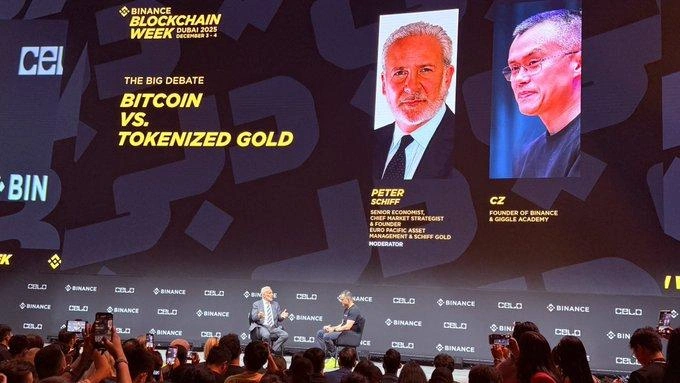
- Solana, Binance, and broader Web3 groups remain active in Abu Dhabi and Dubai, organizing workshops and developer sessions during major events such as Solana Breakpoint, Binance Blockchain Week, and the Global Blockchain Show.
- Regional crypto clubs are present in Abu Dhabi, Ras Al Khaimah, and other emirates, often offering a multilingual experience (English and Arabic) to cater to the international crowd. Groups such as Arabs in Blockchain and XDC Community facilitate local networking.
- On the digital side, there are UAE-focused Telegram groups and channels that are used for sharing local news, event alerts, and community discussions.
- Smaller pop-ups and topical events (NFT art installations, meme meetups like MemeCon, and crypto-themed gatherings such as DogeCon or TechnoShamanic RAVE) continue, maintaining grassroots energy and theme overlaps with mainstream culture.
Hubs, Players, Personalities & Coworking Spaces
- Crypto Oasis in Dubai is a key hub: coworking, acceleration, and networking. Over 2,000 blockchain companies are supported there.
- The broader UAE crypto region (Dubai + Abu Dhabi + Ras Al Khaimah) continues to be a magnet for blockchain startups thanks to favorable regulation, tax regime, and infrastructure.
- Hub71 in Abu Dhabi: Combines a blockchain incubator and public talks — although its prominence has fluctuated over time, depending on funding and community shifts.
- Phoenix Group, headquartered in Abu Dhabi, is notable for being a leading cryptocurrency mining company with operations in regulated markets.
- BitOasis, based in Dubai, remains one of the leading service providers (exchange, custody, and institutional services) in UAE crypto finance. Saeed Al Darmaki, co-founder of BitOasis, remains a well-known figure within the UAE crypto circles.
- Online communities: Telegram and Discord are buzzing.
Main Events in the UAE
 April 30-May 1
 Madinat Jumeirah, Dubai
October 14-18
Dubai World Trade Centre
October 28-29
Festival Arena, Dubai
December 3-4
Dubai
December 8-9
ADNEC Centre in Abu Dhabi
December 11-13
Etihad Arena on Yas Island in Abu Dhabi
Madinat Jumeirah, Dubai
October 14-18
Dubai World Trade Centre
October 28-29
Festival Arena, Dubai
December 3-4
Dubai
December 8-9
ADNEC Centre in Abu Dhabi
December 11-13
Etihad Arena on Yas Island in Abu Dhabi
- Grassroots gatherings such as Blockchain Abu Dhabi and DeFi Dubai hosted monthly meetups sponsored by hubs like Hub71, covering market analysis, yield farming, and smart contracts, often at cafes in Dubai Marina with 200+ diverse participants.
- Community-led groups organized frequent NFT creator meetups, DAO contributor sessions, and women-in-crypto panels, many in hybrid formats to include the broader MENA and Asia-Pacific Web3 crowd, supported by platforms like Eventbrite for listings.
Top 5 Trends to Watch
1. Stablecoins power everyday payments
- In 2025, a consortium led by First Abu Dhabi Bank launched AE Coin, the first dirham-backed stablecoin. Licensed by the Central Bank, AE Coin integrates stablecoins into the financial system and by late 2025, it will be accepted at 980 ADNOC fuel stations across the Emirates and even in Saudi Arabia and Egypt; customers can pay for fuel and convenience store items via mobile wallets.
- In retail, stablecoin payments are moving beyond pilots. Carrefour supermarkets and Starbucks cafés are testing crypto payments through fintech partners, while Dubai Duty Free has signed a memorandum with Crypto.com to accept digital currencies. These initiatives signal that paying for everyday purchases with stablecoins that instantly convert to dirhams is becoming feasible.
2. Tokenized finance goes mainstream.
- Tokenized finance in the UAE is shifting from proof of concept to mainstream products. In 2024, a local asset manager launched a tokenized real estate fund that allows investors to buy fractions of a property portfolio on-chain, and the country’s openness enabled the listing of a Bitcoin fund on Nasdaq Dubai in 2021, giving investors access to a regulated Bitcoin security.
- Beyond real estate, tokenized assets from art to commodities are flourishing. The UAE is exploring tokenized government bonds, and equity crowdfunding platforms in Abu Dhabi use token structures; these initiatives demonstrate that regulators and institutions are moving tokenization into real-world finance.
3. DeFi adoption surges
- Decentralized finance (DeFi) usage is soaring. Between mid-2023 and mid-2024, the value received by DeFi services in the UAE increased by 74%, with decentralized exchange volumes nearly doubling from about $6 billion to $11.3 billion. Younger investors increasingly use Uniswap and Curve for yield farming, lending and trading, and DeFi wallets like MetaMask and Trust Wallet are widely adopted.
- Instead of opening savings accounts, some residents hold stablecoins and lend them on DeFi platforms or stake collateral to obtain crypto loans. DeFi allows them to earn yields, take loans and swap value outside traditional banks, showing how on-chain finance is becoming a significant alternative.
4. Cross‑border digital money and remittances
- The UAE is building cross-border digital currency rails. The Central Bank’s Digital Dirham project has already completed a cross-border wholesale pilot, transferring 50 million AED with international partners, and is expected to launch a domestic pilot in 2025. The country also participates in the mBridge multi-country CBDC project, integrating the digital dirham with global networks.
- Remittances are embracing crypto. With about 90% of residents being expatriates, many use USDT or Bitcoin to send money home, buying stablecoins on Dubai’s peer-to-peer markets and selling them abroad at better rates than traditional exchanges. Banks and regulators are exploring this trend; the central bank has memoranda of understanding with India, and banks like Emirates NBD have partnered with RippleNet to improve cross-border payments.
5. Web3 culture and NFT creativity thrive.
- Web3 culture in the UAE is vibrant. Throughout 2025, Dubai and Abu Dhabi hosted major gatherings, including TOKEN2049 with more than 15,000 participants, GITEX Global with 180,000 attendees, Blockchain Life, and Binance Blockchain Week, alongside regular grassroots meetups and DAO sessions. These events highlight tokenization, stablecoins, and AI-blockchain fusion, making the UAE a global hub for Web3 adoption.
- NFTs and digital art have become mainstream. Dubai was among the first cities with an NFT art gallery, Emirates Post issued NFT stamps for the nation’s fiftieth anniversary, and Arts DAO hosted the region’s largest NFT exhibition featuring local artists. Luxury brands are launching their own collections, and young influencers and gamers share NFT culture on social media and even themed cafes that accept Dogecoin.
Neighbour Watch: What’s Happening Next Door?
A snapshot of how crypto is regulated across the Gulf — and what it signals for the region.
🇸🇦 Saudi Arabia — Legal, restricted, investor-cautious
- Regime: Crypto isn’t legal tender and remains subject to warnings and restrictions; no specific legislation as of December 2025, with outright prohibitions on certain activities for financial institutions.
- Access: Citizens and residents can invest via international platforms, but banks and licensed entities are prohibited from dealing in cryptocurrencies; investor education and warnings are provided by authorities such as the Saudi Central Bank (SAMA).
🇴🇲 Oman — Legal, increasingly regulated, non-tender
- Regime: Cryptocurrency is not legal tender but subject to general laws and increasing regulation; the Central Bank of Oman does not recognize it as legal tender, with no specific legislation prohibiting it.
- 2025 shift: Amendments to Common Reporting Standard (CRS) and Crypto-Asset Reporting Framework align with international tax transparency standards; future plans include blockchain infrastructure development.
🇶🇦 Qatar — Restricted; tokenized assets legal; crypto banned
- Regime: Cryptocurrencies are mostly illegal with heavy restrictions; the QFC Regulatory Authority bans services for cryptocurrencies like Bitcoin, but the new Digital Assets Framework permits tokenized assets tied to real-world rights.
- What’s next: Framework excludes stablecoins and cryptocurrencies, focusing on regulated token service providers; ongoing development in Web3 for the Middle East.
🇧🇭 Bahrain — Fully regulated markets; stablecoin focus
- Regime: Cryptocurrency is legal and regulated; the Central Bank of Bahrain (CBB) issues licenses for crypto-asset services, including exchanges and custodians, with AML and consumer protection rules.
- 2025 shift: New Stablecoin Issuance and Offering Framework effective July 2025, allowing licensed issuers for single-currency stablecoins backed by Bahraini Dinar or reserves; Travel Rule compliance for VASPs.
🇰🇼 Kuwait — Payments and investments banned; adoption is low
- Regime: Comprehensive ban on crypto activities, including payments, investments, trading, and mining; not legally recognized as financial instruments.
- 2025 National enforcement and implementation: Crackdown on mining amid power crisis; total ban on crypto-mining implemented in April 2025, with strict penalties for illegal currency trading, including jail and fines.
References
- Triple-A. Cryptocurrency Ownership Data
- DataReportal. Digital 2026: United Arab Emirates
- Charles Russell Speechlys. In depth: Virtual currency regulation (UAE)
- CCN. Circle and Tether compete on stablecoins in ADGM
- CCN. Ripple gets first Middle East approval, UAE payments market focus
- VARA. FTX Exchange FZE, revocation of approval and suspension of MVP licence
- VARA. Notice of fines: OPNX exchange
- Speedtest by Ookla. Global Index
- VARA. BitOasis becomes the first broker dealer to secure MVP operational licence
- ADGM. Binance becomes first crypto exchange to secure a global license under ADGM framework
- Emirates NBD. Emirates NBD launches Digital Asset Lab, announces founding council members
- BTC Map. Bitcoin acceptance map
- Gulf News. ADNOC Distribution adopts AE Coin payments across its retail network
- Majid Al Futtaim. Majid Al Futtaim and Binance announce partnership to unlock Web3 capabilities
- Crypto.com. Official website
- EmiFast. DMCC crypto license cost breakdown
- Khaleej Times. How authorities trace Bluechip scam money trail via CCTV footage
- VARA. Consumer and marketplace alert: Memecoins
- Bloomberg. Crypto exchange Binance gains regulatory win in Abu Dhabi
- NYU Abu Dhabi. World of blockchain and cryptocurrencies
- University of Sharjah. MoU with Binance Academy to foster blockchain innovation and talent development
- Vogue Arabia. Art Dubai 2025 returns
- Arte8lusso. Morrow Collective announces line up of artists for Art Dubai Digital 2023
- WAM. Dubai Finance signs MoU with Crypto.com to enable payments framework
- Global Legal Insights. UAE launches regulatory framework for DAOs
- Sui Blog. Hub71 incubator (UAE)
- Ripple. Ripple expands in the Middle East and brings annual global conference to Dubai
- Circle. Circle expands into the Middle East with ADGM incorporation and partnership with Lulu Financial Holdings
- Sensor Tower. 2025 Q2 unified top 5 cryptocurrency apps (by units)
- Khaleej Times. How UAE became a global haven for crypto migration
- Chainalysis. Middle East and North Africa crypto adoption 2024
- Lexology. Virtual Currency Regulation: United Arab Emirates
- Chainalysis. In conversation with VARA, Dubai’s standalone virtual assets regulator
- ADGM. ADGM launches crypto asset regulatory framework
- ADGM. ADGM welcomes Kraken global virtual asset exchange
- Central Bank of the UAE. Payment Token Services Regulation (Rulebook)
- VARA. Crypto.com secures MVP preparatory license from VARA
- ADQ. IHC, ADQ and FAB pioneer a UAE dirham backed stablecoin for the digital economy
- Central Bank of the UAE. Report on progress towards issuing the Digital Dirham (PDF)
- Henley & Partners. Private Wealth Migration Report 2025: Country wealth flows
- Khaleej Times. Court freezes $456 million alleged cryptocurrency reserve theft
- Habib Al Mulla & Partners. Dubai court orders return of crypto in kind or cash at market value
- Norton Rose Fulbright. DIFC announces new Digital Assets Law (2024)
- CCN. Bitcoin (BTC) price prediction
- CCN. Ethereum (ETH) price prediction
- CCN. Tether co founder Reeve Collins on stablecoins as a threat to banking
- CCN. Fed rate cut boosts Bitcoin inflation hedge narrative
- CCN. $2B Binance deal settled, Trump family linked stablecoin USD1
- Gulf Business. RAKBANK and Kraken to offer UAE’s first dirham denominated virtual asset trading
- RAKBANK. Press release: RAKBANK crypto brokerage
- Emirates NBD. Fintech and digital partnerships
- CCN. Yield bearing stablecoins explained
- CCN. Crypto tax in India explained