Silver +163%, Gold +142% Since 2023 — Bitcoin Drops 24%. Could 2026 Be the Year of Precious Metals?
Share
Key Takeaways
Gold, Bitcoin, and silver rally as investors seek protection from inflation, geopolitical risk, and monetary uncertainty.
Lower interest rates and persistent inflation would boost all three assets.
Analysts see gold’s fundamentals as strong despite short-term volatility.
But ChatGPT has another expectation that Bitcoin could outshine both gold and silver by the end of 2025.
As 2025 enters its final stretch, investors are watching three key assets with renewed intensity: gold, Bitcoin, and silver. All three have surged to record or near-record highs amid global market uncertainty, sticky inflation, and heightened geopolitical tension.
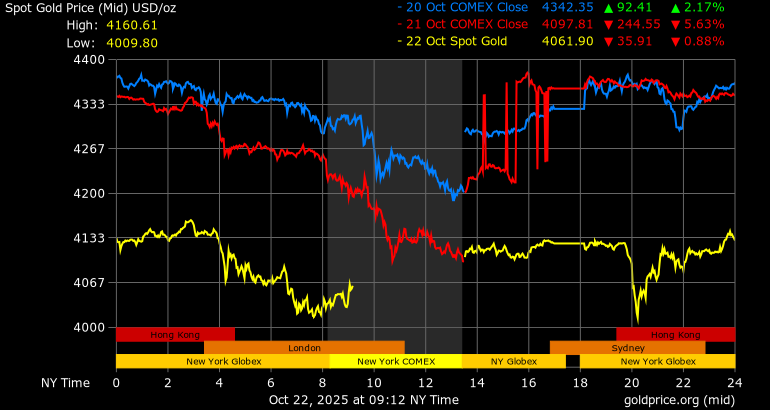
Gold flirted with $4,200 per ounce, marking its most explosive recent rally. Bitcoin is holding around $110,000, rebounding strongly after a volatile summer. And silver has broken past $53, posting its best performance since 2011.
The question now dominates investor conversations: which of these assets will outperform by year-end?
Try Our Recommended Crypto Exchanges
Sponsored
Disclosure
We sometimes use affiliate links in our content, when clicking on those we might receive a commission at no extra cost to you. By using this website you agree to our terms and conditions and privacy policy.
Gold’s Relentless Rally: The Classic Hedge Shines Again
Gold’s journey to the $4,200 mark has been historic. After years of oscillating between $1,700 and $2,000, the precious metal finally broke free from its consolidation phase in early 2025.
Why Gold Is Rising
Several forces are pushing gold higher:
Central bank buying: According to World Gold Council data, central banks added more than 1,000 tonnes of gold to reserves in 2025 alone, led by China, India, and Turkey.
Real yields declining: As inflation expectations remain elevated while growth slows, real interest rates have softened, making non-yielding gold more attractive.
Safe-haven demand: With multiple geopolitical flashpoints, from Eastern Europe to the South China Sea, investors are again flocking to the time-tested safety of gold.
De-dollarization: A slow but visible trend toward diversifying reserves away from the U.S. dollar continues to benefit gold, especially among emerging markets.
Gold has reached a new record-high last week. | Credit:GoldPrice.com
Gold as “Quiet Power”
Gold’s strength lies in its quiet reliability. Unlike Bitcoin, it doesn’t swing wildly on sentiment or social media chatter. Its price reflects centuries of trust and scarcity, a narrative deeply embedded in institutional and sovereign portfolios.
Yet analysts warn that momentum could slow as prices approach $4,200. Gold tends to correct after parabolic runs, but even a mild retracement wouldn’t alter its long-term bullish structure.
For conservative investors, gold’s current momentum underscores one truth: the metal remains the ultimate portfolio stabilizer when markets wobble.
Bitcoin: The Digital Gold Hits $110K and Finds Maturity
After years of skepticism and regulation battles, Bitcoin has evolved from a speculative experiment into a recognized macro asset. As of October 2025, Bitcoin hovers around $110,000, near its all-time high.
Why Bitcoin’s Still in the Game
Several structural changes are supporting Bitcoin’s resilience:
ETF adoption: The rise of spot Bitcoin ETFs in major markets has ushered in billions in institutional inflows.
Sovereign interest: Several countries continue experimenting with Bitcoin for payments and reserves, reinforcing its global relevance. The Bitcoin price has received a notable boost since Donald Trump returned to the White House.
Inflation hedge narrative: While volatile, Bitcoin continues to be viewed as “digital gold,” especially among younger investors and institutions seeking uncorrelated assets.
Bitcoin will outperform gold and silver, according to analysts and ChatGPT. | Credit: CoinMarketCap
The New Bitcoin Investor
Unlike the retail-driven frenzy of 2021, today’s Bitcoin market is more institutionally balanced. Hedge funds, pension managers, and corporate treasuries are allocating to crypto as part of broader diversification strategies.
Still, Bitcoin remains volatile. Price swings of 5-10% in a single day are common. Yet many analysts see support above $90,000, suggesting the current cycle is more structurally sound than previous booms.
“The difference now is liquidity and maturity,” a crypto fund manager told CCN.
“Bitcoin has become a macro asset, sensitive to global liquidity, inflation expectations, and policy, much like gold.”
Silver’s Comeback: The Industrial Underdog Breaks $50
Silver, often overshadowed by its shinier cousin, has quietly staged one of the strongest rallies of 2025. Trading near $53 per ounce, it’s up nearly 40% year-to-date.
What’s Driving Silver
Silver’s strength stems from its unique dual role: monetary metal and industrial commodity.
Green transition demand: Silver is critical in solar panels, electric vehicles, and advanced electronics. As clean energy adoption accelerates, demand from manufacturers has surged.
Tight supply: Mine output remains constrained, and recycling volumes have not kept pace.
Investor repositioning: As gold’s price soared, some investors rotated into silver as a cheaper alternative with higher upside potential.
Silver set a new record over the last days. | Credit: BullionVault
The “Catch-Up” Trade
Historically, silver lags gold during early bull runs but then outperforms when momentum builds. If history rhymes, silver’s late surge could continue into the year-end.
Technical traders are eyeing $55-$57 as the next resistance zone. If breached, it could unlock a path toward $60, marking a decade-high.
Comparing the Three: Risk, Reward, and Real-World Role
Each asset plays a distinct role in portfolios, shaped by different investor motivations and macro linkages.
Asset
2025 YTD Return (approx.)
Key Drivers
Risk Profile
Typical Investor
Gold
+27%
Central bank buying, inflation hedge
Low
Institutional, conservative
Bitcoin
+65%
ETF inflows, halving, digital asset adoption
High
Institutional/retail mix
Silver
+40%
Green energy demand, tight supply
Moderate
Speculative/industrial hedge
While Bitcoin has delivered the strongest nominal gains, its volatility remains a deterrent for traditional investors. Gold offers steadier returns and credibility, while silver provides a hybrid opportunity, industrial exposure with a precious metal’s safe-haven appeal.
Macroeconomic Backdrop: The Real Driver
To predict which will outperform, investors must look beyond charts and consider macro forces shaping markets:
Interest rates: If central banks pivot toward easing in late 2025, gold and Bitcoin could gain further momentum as real yields drop.
Inflation: Persistent inflation would favor all three assets as they thrive when fiat currencies lose purchasing power.
Dollar strength: A weakening U.S. dollar typically boosts commodities and crypto alike.
Geopolitical tensions: Heightened uncertainty, from energy crises to wars, usually drives investors toward hard assets.
One wildcard is regulation. Bitcoin’s ascent could face headwinds from new tax or compliance frameworks, particularly in the U.S. and EU. Gold and silver, being traditional commodities, face no such scrutiny.
Market Outlook 2025: Analysts Weigh Bear, Base, and Bull Scenarios for Key Assets
While no one can perfectly time markets, consensus among analysts suggests the following possible scenarios for year-end 2025:
Asset
Bear Case
Base Case
Bull Case
Gold
$3,700
$4,300
$4,600+
Bitcoin
$85,000
$120,000
$150,000+
Silver
$45
$55
$65
Gold could stabilize as investors lock in profits, while silver’s cyclical tailwinds could push it higher. Bitcoin’s fate will depend heavily on liquidity conditions and investor sentiment toward risk assets.
Antonio Di Giacomo, Financial Markets Analyst for LATAM at XS.com, told CCN, “Gold saw a sharp correction, falling more than 3.5% to $4,215 per ounce after reaching a new all-time high of $4,380.”
“The profit-taking came amid renewed risk appetite following U.S. President Donald Trump’s more conciliatory tone regarding trade tensions with China. In recent remarks, Trump suggested that the high tariffs on Chinese goods would not be maintained in the long term and announced a potential meeting with Xi Jinping in South Korea, fueling hopes for a diplomatic breakthrough.
Despite the short-term pullback, the yellow metal ended the week with more than 4.9% gain, marking its ninth consecutive weekly advance.
“Nevertheless, analysts warn that volatility could rise in the coming weeks. Ongoing negotiations between Washington and Beijing and upcoming U.S. inflation and employment data will be key to determining gold’s direction. A substantial trade deal or a smaller-than-expected Fed rate cut could trigger further short-term corrections.”
“In conclusion, although gold has paused after its impressive climb, the fundamentals driving its rise remain solid. Expectations of lower interest rates, structural central bank demand, and a weak dollar continue to support the precious metal. As long as global uncertainty persists, gold will continue to shine as one of the most sought-after assets for investors prioritizing safety and long-term value,” the analyst added.
ChatGPT Weighs In: Which Asset Could Lead by Year-End 2025?
CCN also asked ChatGPT to answer the headline question, and its response puts Bitcoin at the forefront.
OpenAI’s central product states, “Bitcoin likely has the most substantial potential to outperform by year-end, but it also carries the highest risk.”
Here’s the reasoning in short:
Bitcoin benefits most if global liquidity stays loose or central banks start easing. Its supply is fixed, and institutional demand (ETFs, funds, corporate treasuries) gives it structural support. If risk appetite holds, Bitcoin could easily break new highs.
Gold remains the safest play, near record levels because of central-bank buying and macro uncertainty. It may still edge higher, but its upside is likely more moderate (maybe 5–10%).
Silver could surprise on the upside if industrial demand (solar, EVs, electronics) stays strong; it often lags gold, then accelerates fast.
Store-of-Value Race Enters a New Era: What This Signals About Money
The simultaneous surge of gold, silver, and Bitcoin reveals a more profound shift in the global monetary psyche. Trust in fiat systems is eroding, not catastrophically, but steadily. Investors are rediscovering the appeal of finite assets in a world awash with debt, deficits, and digital liquidity.
Gold remains the anchor of confidence. Bitcoin represents the new frontier of trustless finance. Silver bridges the old and new, a tangible asset tied to the industries shaping the future.
Whether one outperforms another by December is almost secondary. The broader trend is clear: the global store-of-value race is no longer confined to gold. It’s a multi-asset contest: physical, digital, and industrial.
Conclusion
As 2025 winds down, investors face a rare convergence: three hard assets rising together.
Gold defends wealth. Bitcoin redefines it. Silver multiplies it through industrial growth.
Any of them might claim the spotlight by year-end, but all share an everyday driver: diminishing faith in paper promises and growing confidence in tangible or digital scarcity.
In the long arc of financial history, this moment marks not a bubble, but a recalibration, a reminder that in uncertain times, humanity always returns to what endures: tangible assets that stand the test of time.
Why are gold, Bitcoin, and silver all rising simultaneously?
All three benefit from similar macro forces, persistent inflation, geopolitical instability, and a weakening U.S. dollar. Investors are seeking hard assets that preserve value as traditional markets wobble and central banks signal potential rate cuts.
Which asset is considered the safest right now?
Gold remains the safest due to its centuries-long reputation as a store of value and broad acceptance among central banks and institutions. It’s less volatile than Bitcoin and less cyclical than silver.
How much upside is left for gold after hitting $4,200?
Analysts see moderate further upside, potentially up to $4,500 if inflation stays sticky or geopolitical tensions worsen. However, profit-taking could trigger short-term corrections.
What role do central banks play in gold’s price?
A major one. Central banks continue buying record amounts of gold to diversify reserves away from the U.S. dollar, particularly in China, India, and emerging markets. This steady demand forms a strong price floor for gold.
Disclaimer:
The information provided in this article is for informational purposes only. It is not intended to be, nor should it be construed as, financial advice. We do not make any warranties regarding the completeness, reliability, or accuracy of this information. All investments involve risk, and past performance does not guarantee future results. We recommend consulting a financial advisor before making any investment decisions.
Giuseppe Ciccomascolo began his career as an investigative journalist in Italy, where he contributed to both local and national newspapers, focusing on various financial sectors.
Upon relocating to London, he worked as an analyst for Fitch's CapitalStructure and later as a Senior Reporter for Alliance News. In 2017, Giuseppe transitioned to covering cryptocurrency-related news, producing documentaries and articles on Bitcoin and other emerging digital currencies. He also played a pivotal role in establishing the academy for a cryptocurrency exchange website. Crypto remained his primary area of interest throughout his tenure as a writer for ThirdFloor.


 Easy
Easy