XRP’s Old SWIFT Advantage Is Disappearing as Banks Move Tokenized Money Onchain
Share
Key Takeaways
XRP’s strongest early payments argument was capital efficiency, not merely speed: institutions could source liquidity when a payment occurred, rather than keeping money pre-funded around the world.
That gap is narrowing fast. JPMorgan now offers eight-currency blockchain deposit accounts with onchain FX, while Citi says its 24/7 network can reduce pre-funding across more than 40 markets.
XRP still has a role in situations where bank networks are fragmented or local FX liquidity is poor, but it increasingly has to compete with tokenized deposits and stablecoins, including Ripple’s own RLUSD.
For years, XRP had an obvious target in cross-border payments: banks could send a SWIFT message quickly, but actually moving and settling money remained slower and capital-intensive.
Its On-Demand Liquidity system converted one currency to XRP, moved XRP across the ledger, and then converted it to the destination currency. Ripple said this allowed customers to operate without pre-funding accounts in foreign markets, freeing working capital while settling around the clock.
That was arguably more valuable than XRP’s three-to-five-second settlement time.
As of Aug. 25, 2026, however, banks are beginning to attack the pre-funding problem itself.
Try Our Recommended Crypto Exchanges
Sponsored
Disclosure
We sometimes use affiliate links in our content, when clicking on those we might receive a commission at no extra cost to you. By using this website you agree to our terms and conditions and privacy policy.
JPMorgan Is Recreating the XRP Liquidity Pitch With Bank Deposits
JPMorgan’s Kinexys network may be the clearest challenge.
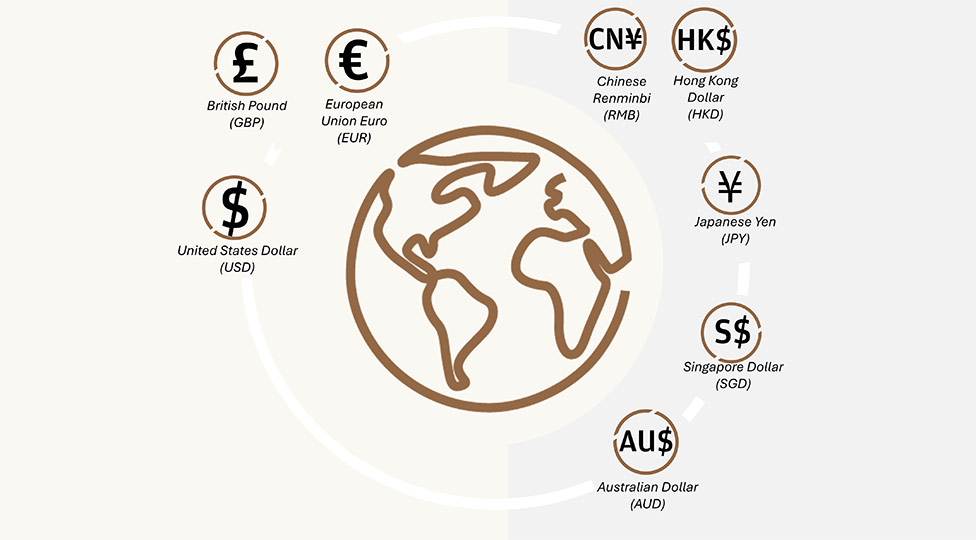
In June, the bank expanded its Blockchain Deposit Accounts to eight currencies: USD, EUR, GBP, AUD, HKD, JPY, RMB, and SGD. Customers can move those balances 24/7 and execute on-chain foreign exchange between supported currencies.
Kinexys dominates blockchain FX settlement market. | Source: jpmorgan.com
A company holding dollars does not necessarily need to purchase a neutral bridge asset to obtain yen. JPMorgan can provide the FX rate, convert the currencies and record settlement on its blockchain in near real time.
The bank explicitly says there is “no multiday clearing process, no intermediary holding funds, and no settlement window to wait out” for these onchain FX transactions.
That goes directly after the economic problem XRP was designed to solve.
However, the weakness is reach. JPMorgan’s system works inside a bank-controlled, permissioned environment. XRP does not depend on a single institution agreeing to issue both sides of a currency pair.
But wherever both currencies already exist as tokenized bank deposits, XRP has to demonstrate why inserting a volatile bridge asset makes the transaction cheaper.
Citi Is Going After Pre-Funding Without a Crypto Bridge
Citi provides a second data point.
Its 24/7 USD Clearing infrastructure reaches more than 250 banks across more than 40 markets, while Citi Token Services moves tokenized commercial bank deposits on blockchain infrastructure. The bank says that integrating the two lets institutions make near-instant cross-border payments while reducing the amount of capital they need to pre-position.
The offering is remarkably close to Ripple’s historical XRP proposition.
Citi has also said its Token Services can complete cross-border movements in as little as 90 seconds, while Real-Time Liquidity Sharing can execute payments without pre-funding individual accounts.
Ninety seconds is slower than XRPL settlement. For a corporate treasurer, however, the relevant comparison may not be between 3 seconds and 90 seconds.
It may be 90 seconds using money already held at a regulated bank versus introducing XRP into the payment path.
That changes the competitive calculation.
SWIFT Is Trying to Make Different Bank Tokens Talk to Each Other
The next problem for banks is fragmentation.
An HSBC dollar token is an HSBC liability. A Standard Chartered deposit token belongs to another banking system. Without interoperability, tokenized deposits risk becoming faster versions of isolated bank accounts.
SWIFT has now demonstrated one possible answer.
On Aug. 19, HSBC and Standard Chartered completed the first live cross-border transaction using SWIFT’s blockchain-based ledger.
Their deposit tokens remained on their respective banking infrastructures while SWIFT exchanged messages and coordinated, matched, and netted the obligations. Final settlement still occurred through existing systems.
🚨 SWIFT, HSBC and Standard Chartered just completed the FIRST live cross-border tokenised deposit transaction on Swift’s blockchain ledger.
Bank money is starting to move onchain, 24/7, effectively copying the blockchain tech.
HSBC alone already operates its Tokenized Deposit Service across six markets and supports CNH, HKD, SGD, EUR, GBP, USD and AED.
Each additional interoperable bank and currency reduces the territory in which a neutral bridge asset is technically necessary.
Even Public Blockchains Are No Longer XRP’s Exclusive Territory
Another historical divide is fading.
JPMorgan now issues JPM Coin on Base, an Ethereum layer-2, allowing approved institutional clients to move bank-backed dollars, settle transactions and post collateral on public blockchain infrastructure.
That means the choice is no longer simply between regulated bank money on closed rails and XRP on a public blockchain.
Regulated bank liabilities can increasingly reach public chains themselves.
XRP retains an important difference: it is not JPMorgan’s liability, HSBC’s liability, or anyone else’s deposit. Its neutrality can become useful when counterparties do not share a banking provider.
But “being onchain” by itself is becoming less of a moat.
Ripple Is Also Reducing Its Own Dependence on XRP
Perhaps the strongest evidence comes from Ripple’s current product strategy.
Ripple Payments now supports settlement in RLUSD, USDC, USDT and fiat, and says its settlement layer is deliberately “decoupled from any single issuer’s token.” Its network reaches more than 60 payout markets and has processed over $100 billion in payment volume.
Ripple is also building stablecoin-to-stablecoin payment infrastructure.
Its expanded Bitso partnership brings Mexican peso-backed MXNB and dollar-backed RLUSD into enterprise settlement flows on XRPL for the US-Mexico corridor.
Ripple and @Bitso are expanding their long-standing payments partnership.
Bitso’s regulated MXN-backed stablecoin, MXNB, will be issued on XRPL and integrated into Ripple’s Payments on DEX infrastructure, supporting enterprise stablecoin settlement across Latin America.…
That creates a new competition XRP did not originally face: USD → RLUSD → XRPL → MXNB → MXN can potentially move value on the same ledger without XRP serving as the bridge.
XRP’s remaining opportunity, therefore, is to become more specific.
Where a bank already provides both currencies, tokenized deposits may be enough. Where dollar stablecoins have deep local liquidity, RLUSD or USDC can work. XRP becomes more valuable when neither option provides an efficient pair, particularly across disconnected institutions, less-liquid currencies, and markets where capital is still expensive to pre-position.
Ripple continues to describe XRP as a bridge asset that can access hard-to-reach markets, while XRPL provides settlement in seconds.
That is still a real use case.
But the old XRP thesis was broader: banking infrastructure could not move money as efficiently as crypto could.
In 2026, JPMorgan has eight currencies settling onchain, Citi connects hundreds of banks around the clock, HSBC has tokenized deposits in seven currencies, and SWIFT is beginning to connect those bank tokens across institutions.
XRP now has a harder job: not proving that blockchain payments work, but proving that using XRP for liquidity is economically better than banks tokenizing the money they already have.
Disclaimer:
The information provided in this article is for informational purposes only. It is not intended to be, nor should it be construed as, financial advice. We do not make any warranties regarding the completeness, reliability, or accuracy of this information. All investments involve risk, and past performance does not guarantee future results. We recommend consulting a financial advisor before making any investment decisions.
Dr. Guneet Kaur is a senior editor at CCN.com and a Science Fellow at Exponential Science. She is a fintech and blockchain expert with extensive experience in digital finance education, blockchain ecosystems, and cryptocurrency markets. She has worked with global media such as Cointelegraph, as well as education and blockchain platforms, to design and lead strategic content and learning initiatives. As an educator and assessor for top-tier executive programs, she bridges real-world fintech trends with academic insight.
Dr. Kaur is also a published researcher and peer reviewer across fintech and data science journals, including Financial Innovation Journal and International Journal of Big Data Intelligence and Applications. Her work spans data-driven analysis, Web3 innovation, and technical content development. With a strong foundation in both industry and academia, she translates complex financial technologies into practical applications, empowering learners, professionals, and institutions across the rapidly evolving digital finance landscape.