Rate cuts and the end of QT mark a new era for markets — and a potential breakout moment for Bitcoin. | Credit: Hameem Sarwar/CCN.com
Share
Key Takeaways
The Fed cut interest rates by 25 basis points to a range of 3.75%–4.00% and announced it will end quantitative tightening.
A softening labor market, tight financial conditions, and rising signs of liquidity strain prompted the Fed to pause further tightening.
The Fed’s decision marks a turning point: the end of aggressive post-pandemic tightening.
For markets, especially crypto, it’s a potential tailwind, but data dependency remains key.
The U.S. Federal Reserve delivered a one-two punch of policy news on Oct. 29, announcing not only a widely expected interest rate cut but also a plan to halt quantitative tightening (QT) by December. The Fed cut its benchmark interest rate by 25 basis points (0.25%), the second such cut this year, citing a softening labor market and other mixed economic signals.
At the same time, officials said they will stop reducing the size of the Fed’s balance sheet as soon as December, effectively marking an end to the QT program. For the average person, terms like “quantitative tightening” might sound arcane.
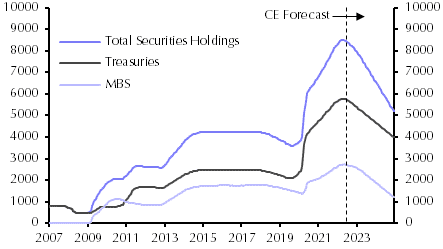
For everyone asking what QT actually looks like… here is the Fed's balance sheet since 2007.
QT was one of the biggest liquidity drains in modern history. And tomorrow… that process finally ends.
This shift sets the stage for the December 9–10 FOMC meeting, where attention now turns to whether the Fed will cut rates again to 3.50%–3.75%. Futures pricing suggests an 80% probability of such a move, reflecting growing confidence that the Fed’s tightening cycle is over.
Still, the path isn’t risk-free. With key November employment and inflation reports set to arrive after the meeting, policymakers will have to rely on incomplete data. Some Fed officials have warned against easing too quickly, noting that inflation remains slightly above the 2% goal.
Yet, with slowing job growth, cooling inflation, and a need to support financial stability after QT ends, the Fed appears poised to deliver a final 25-bps cut in December, signaling a cautious pivot toward a more neutral stance as the economy heads into 2026.
Is the Fed Really Ending Quantitative Tightening? Here’s What It Means for Markets
On Wednesday, the Federal Reserve’s rate-setting committee (the FOMC) lowered the federal funds rate by 0.25%, setting a new target range of 3.75%–4.00%. This move was largely anticipated by markets.
The bigger surprise came from the Fed’s balance sheet announcement: the central bank revealed it will stop shrinking its bond holdings by December 1, effectively ending the quantitative tightening program that began in 2022. In practical terms, this means the Fed will no longer be removing liquidity from the financial system each month.
Fed’s QT pace. | Credit: Bloomberg
Fed Chair Jerome Powell explained that recent economic trends justified a pause in QT. Job growth has slowed, and financial conditions have tightened, raising concerns that continuing to reduce the balance sheet could put additional stress on the system. Beginning in December, the Fed will reinvest proceeds from maturing Treasury securities rather than allowing its balance sheet to shrink further.
This marks a notable shift from the Fed’s post-pandemic tightening cycle. Since early 2022, the central bank has reduced its asset holdings from a peak of nearly $9 trillion to about $6.6 trillion. By ending QT, the Fed is signaling that it believes it has removed about as much excess liquidity from the financial system as it safely can for now.
What Is Quantitative Tightening (QT)?
Quantitative tightening (QT) is essentially the opposite of the more familiar quantitative easing (QE). During crises like the 2020 COVID-19 pandemic, the Federal Reserve launched QE programs, buying large quantities of Treasuries and mortgage-backed securities, to inject money into the economy and stabilize financial markets.
This caused the Fed’s balance sheet, which represents the total assets it holds, to expand from roughly $4 trillion before the pandemic to nearly $9 trillion by 2022. QE is like opening the floodgates of liquidity, making cash plentiful and borrowing costs low.
Quantitative easing vs. quantitative tightening. | Credit: Loomis Sayles
QT, by contrast, is like putting the genie back in the bottle. Instead of buying new assets, the Fed allows the bonds it holds to mature without fully replacing them.
In practice, this means the Fed had been letting a set amount of its bond holdings “run off” each month, those bonds would expire, and the Fed would not buy new ones, thereby shrinking the money supply.
The goal of QT is to pull liquidity out of the financial system by reducing the amount of cash circulating in markets. Essentially, money that was once added to the economy through QE gets removed as the Fed gradually unwinds its asset holdings.
Why the Fed Is Halting Quantitative Tightening — and What It Signals for Policy Ahead
Several factors pushed the Federal Reserve to call time on quantitative tightening.
One major reason is that financial liquidity has been tightening in recent months, to the point where further QT could do more harm than good. The Fed has observed that money market liquidity is drying up and that bank reserve levels are falling to levels it considers uncomfortably low.
Banks keep reserves, cash held on deposit with the Fed, as a cushion, and the central bank wants to maintain “ample” reserves to ensure the smooth functioning of short-term lending markets.
A clear warning sign appeared in the surge of activity at the Fed’s Standing Repo Facility, which allows firms to borrow cash against Treasuries. Usage of this facility spiked to record highs right before the Fed’s latest meeting, a signal that short-term funding markets were under strain as the Fed continued to drain liquidity.
Quantitative tightening. | Credit: InsiderFX
The overnight federal funds rate, which the Fed targets, also began creeping toward the top of its range, suggesting that cash was becoming scarce in the banking system. These developments echoed a similar episode in 2019, when reserves fell too low and caused a sudden cash crunch in short-term lending markets.
To avoid a repeat of that 2019 disruption, the Fed is halting QT before reserves become dangerously scarce. Chair Jerome Powell has reiterated that the goal is to maintain an “ample” level of reserves, not to squeeze liquidity to the point of market dysfunction.
As one economist recently put it, “Bank reserves are closer to ample than abundant,” making the decision to end QT a prudent one. The move is about ensuring financial stability rather than signaling pessimism about the economy. Powell emphasized that the QT wind-down is a technical adjustment, not a change in the Fed’s broader economic outlook.
Another reason for the timing is the broader economic backdrop. Inflation, while much lower than its 2022 peak, remains slightly above the Fed’s 2% target, and recent data show a cooling labor market. By cutting rates and ending QT, the Fed is easing its policy stance just enough to cushion the economy without reigniting inflation.
Powell has also stressed that future rate cuts are not guaranteed and will depend on incoming data. The overall goal is to achieve a “soft landing,” reducing inflation to target while avoiding a recession. Ending QT removes one potential source of volatility as the Fed navigates this delicate balance.
How Ending Quantitative Tightening Could Affect Markets and the Economy
Halting QT has wide-reaching implications for financial markets. For nearly a year and a half, QT has exerted upward pressure on interest rates and drained liquidity. With that force removed, several shifts may occur:
Bond Yields and Borrowing Costs
When the Fed was shrinking its holdings, private investors had to absorb a steady supply of Treasuries and mortgage-backed securities, pushing long-term yields higher. Ending QT means the Fed will roll over maturing bonds and reinvest proceeds, removing a source of upward pressure on yields. This could help stabilize or slightly lower long-term rates and mortgage costs, providing relief to the housing market and borrowers more broadly.
Bank Liquidity and Credit
Ending QT halts the decline in bank reserves and may eventually allow them to rise again. More cash in the system makes banks more comfortable extending credit, improving lending conditions. Regional banks and financial institutions that are sensitive to liquidity pressures could benefit from this change. Overall, the Fed’s decision signals it intends to preserve stability in the financial system and avoid funding strains.
Stock Market Sentiment
Equity markets generally welcome signs of a more accommodative Fed. By pausing QT and cutting rates, the Fed is shifting toward a dovish stance compared to the aggressive tightening of 2022. Lower yields tend to support higher stock valuations, especially in growth sectors like technology. Stocks rallied around the Fed’s announcement, reflecting optimism that the tightening cycle is ending. Still, investor enthusiasm could be tempered if markets interpret the move as a response to weakening economic conditions.
U.S. Dollar and Inflation
Ending QT, especially when combined with rate cuts, could weaken the U.S. dollar. A softer dollar typically boosts exports and can raise commodity prices slightly.
While increased liquidity can pose some inflation risk over the longer term, the Fed appears confident that inflation is sufficiently contained to justify easing. Officials are framing the move as a technical step to maintain control of interest rates, not a new stimulus effort.
U.S. dollar performance impact on Fed moves. | Credit: Capital Economics
Why Bitcoin Investors Should Watch the Fed’s End to Quantitative Tightening
The Fed’s policy shift is significant for cryptocurrency markets. Bitcoin, in particular, tends to perform well when liquidity is abundant and investors are more willing to take risk.
Bitcoin vs. U.S. dollar. | Credit: TradingView
Liquidity could fuel Bitcoin demand: When the Fed stops withdrawing liquidity, that excess money can flow into riskier assets like stocks and crypto. As QT winds down, improved liquidity across banks and markets can translate into more capital available for investment in Bitcoin and other digital assets.
Lower rates and opportunity cost: Bitcoin doesn’t pay interest or dividends, so when rates fall, the opportunity cost of holding it decreases. With real yields declining and the dollar weakening, conditions are favorable for Bitcoin. Historically, looser monetary policy has coincided with rising crypto prices.
Historical precedent: When the Fed halted QT in 2019 and began cutting rates, Bitcoin’s price more than doubled in the following months. Many investors see parallels today, anticipating that abundant liquidity and easier policy could again boost Bitcoin.
Institutional flows and sentiment: Large investors appear to be positioning for this shift. In the week leading up to the Fed’s decision, spot Bitcoin funds saw hundreds of millions in net inflows. Analysts at major banks have also noted that a Fed pivot could be bullish for crypto markets, reinforcing the growing link between macro policy and digital assets.
Weaker dollar, stronger Bitcoin: A softer dollar often strengthens Bitcoin’s appeal as a store of value. Some investors view it as a hedge against future monetary easing and potential currency debasement. While ending QT is not the same as launching QE, it nonetheless suggests that the Fed is moving away from aggressive tightening, which can revive Bitcoin’s “hard money” narrative.
Overall, the Fed’s decision to end quantitative tightening is broadly positive for Bitcoin and other risk assets. It eases liquidity stress, reduces borrowing costs, and supports a more favorable environment for asset prices.
However, Bitcoin investors should remain cautious. The Fed’s stance could change quickly if inflation reaccelerates or growth surprises on the upside. Monetary policy remains data-dependent, and shifts in that data could swing market sentiment just as quickly as it has improved.
Fed Eases the Squeeze: A Tailwind Emerges for Bitcoin, But Risks Remain
The Fed’s move to end QT marks a key turning point in the post-pandemic policy cycle. It signals that the phase of aggressive liquidity withdrawal is over. For the economy, it means reduced risk of financial strain and steadier credit conditions. For markets, it represents the removal of a persistent headwind.
Finally, for Bitcoin, it’s potentially a tailwind. Liquidity and monetary policy have become crucial drivers for crypto performance, and the Fed’s shift could help sustain Bitcoin’s recent strength. Still, investors should balance optimism with realism: policy pivots can be temporary, and macro uncertainty remains high. As 2025 draws to a close, the interplay between the Fed’s evolving stance and crypto’s response will remain a central theme for markets.
Prospects for a Rate Cut in December 2025
As of late November 2025, financial markets and analysts broadly expect the Federal Reserve to deliver another rate cut at its upcoming December 9–10 FOMC meeting. After lowering the target range to 3.75%–4.00% in October, the Fed signaled a clear shift toward easing as inflation cooled and economic growth softened.
Futures markets now price in roughly an 80% chance of a 25-basis-point cut, which would bring rates down to 3.50%–3.75%. The decision is seen as part of a gradual transition from restrictive to more neutral monetary policy, following nearly two years of tightening.
However, uncertainty remains. Key inflation and employment data for November will be released after the meeting, leaving policymakers to rely on incomplete information. Some Fed officials have cautioned against moving too quickly until they are confident inflation is sustainably near the 2% target.
Still, with labor-market cooling, slowing consumer spending, and easing inflation trends, the balance of risks appears to favor one final 25-bps cut in December, potentially confirming the Fed’s pivot toward a new phase of policy normalization heading into 2026.
Quantitative tightening is the process by which the Fed reduces the size of its balance sheet—the assets it holds, mainly Treasuries and mortgage-backed securities. During QT, the Fed allows these bonds to mature without buying new ones, effectively removing money (liquidity) from the financial system. It’s the opposite of quantitative easing (QE), which adds liquidity to stimulate the economy.
Does ending QT mean the Fed is turning dovish or starting QE again?
Not exactly. Fed Chair Jerome Powell emphasized that the decision is a technical adjustment to maintain liquidity and control interest rates, not a new round of stimulus. While the move is less restrictive, it doesn’t mark a full pivot to quantitative easing.
How does this affect interest rates and borrowing costs?
Ending QT may help stabilize or slightly lower long-term interest rates, such as mortgage and corporate borrowing rates. Without the Fed reducing its bond holdings, downward pressure on yields could ease financial conditions across markets.
What’s the bigger picture takeaway?
The Fed’s decision to end QT marks a turning point in post-pandemic policy. It signals that the phase of aggressive liquidity withdrawal is over, reducing systemic risk. For the broader economy, this move supports financial stability and credit flow. For markets, including crypto, it removes a key liquidity headwind and could underpin asset strength heading into 2026.
Disclaimer:
The information provided in this article is for informational purposes only. It is not intended to be, nor should it be construed as, financial advice. We do not make any warranties regarding the completeness, reliability, or accuracy of this information. All investments involve risk, and past performance does not guarantee future results. We recommend consulting a financial advisor before making any investment decisions.
Giuseppe Ciccomascolo began his career as an investigative journalist in Italy, where he contributed to both local and national newspapers, focusing on various financial sectors.
Upon relocating to London, he worked as an analyst for Fitch's CapitalStructure and later as a Senior Reporter for Alliance News. In 2017, Giuseppe transitioned to covering cryptocurrency-related news, producing documentaries and articles on Bitcoin and other emerging digital currencies. He also played a pivotal role in establishing the academy for a cryptocurrency exchange website. Crypto remained his primary area of interest throughout his tenure as a writer for ThirdFloor.


 Easy
Easy