Coinbase to Add AUDD and XSGD Globally: Here’s How to Trade Local Currency Stablecoins.
Share
Key Takeaways
The Fed’s 0.25% rate cut erodes Treasury-driven income for stablecoin issuers like Tether and Circle.
Traditional investors lose easy yield from money markets, savings accounts, and short-term Treasuries.
Stablecoins make DeFi yields more accessible, offering 6-8% returns compared to shrinking TradFi options.
Risks remain: yield volatility, smart contract exploits, and regulatory ceilings under the GENIUS Act.
For the last two years, the Federal Reserve’s aggressive rate-tightening campaign has reshaped global markets. Yields on US Treasuries reached levels not seen in years, allowing even cautious investors to earn 4-5% on low-risk assets like money market funds and short-term Treasury holdings.
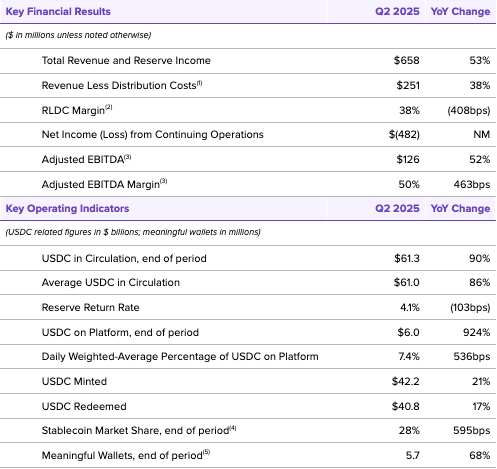
Income for stablecoin issuers like Circle (USDC) grew 53% year-over-year to $658 million from August 2024 to August 2025, due to rising interest in Treasuries tied to USDC.
However, these years of rates speeding uphill may soon be over. With the Fed cutting interest rates by 0.25% on September 17, 2025, it’s finally hitting the brakes. Alongside promising more cuts before the end of the year, stablecoin issuers may feel the pain of shrinking income from Treasury-backed reserves as investors shift their money toward more profitable avenues. Avenues such as decentralized finance (DeFi).
Let’s dive deeper.
Try Our Recommended Crypto Exchanges
Sponsored
Disclosure
We sometimes use affiliate links in our content, when clicking on those we might receive a commission at no extra cost to you. By using this website you agree to our terms and conditions and privacy policy.
Stablecoin issuers like Tether (USDT) and Circle hold tens of billions in reserves, tied largely to short-term Treasuries. When interest rates are high, these assets provide billions in annual interest income.
As mentioned, Circle’s highest results came from its reserve income at $658 million. A 0.25% cut means about $164.50 million of that revenue is gone next quarter.
Circle’s Financial Results for Q2 2025 | Source: Circle
Tether has even larger reserves, holding $120 billion in US Treasuries as of Q1 2025. Each incremental cut from the Fed chips away at the easy profits generated by issuers. But investors hurt too.
Why Traditional Investors Lose Too
A cut of any kind means the following for risk-averse investors:
High-yield savings accounts will drop from the 4.35% range to 4% or lower.
Yield on short-term treasuries, like the 2-year note, will continue to drop.
With each rate cut aimed at counteracting inflation, the profitability of low-risk investments declines. Investors who once lounged on easy 5% returns are now forced to sleep on thinner padding or find a new bed in DeFi.
DeFi: A Growing Alternative to Earn Yield
Platforms like Aave, Compound, and Curve allow investors to lend, borrow, or provide liquidity for returns that rise far above 5%. And while volatile cryptocurrencies might offer potentially higher returns, stablecoins like USDT and USDC act as a dollar-pegged intermediary. A stable avenue into higher interest rates.
To many, crypto investments mean worrying about whether Bitcoin or Ether will swing 10% in a few days’ time. Stablecoins allow investors to park tokenized dollars into liquidity pools and enjoy the yield. In other words, stablecoins make DeFi yields comparable to low-risk bank products, but with higher rates.
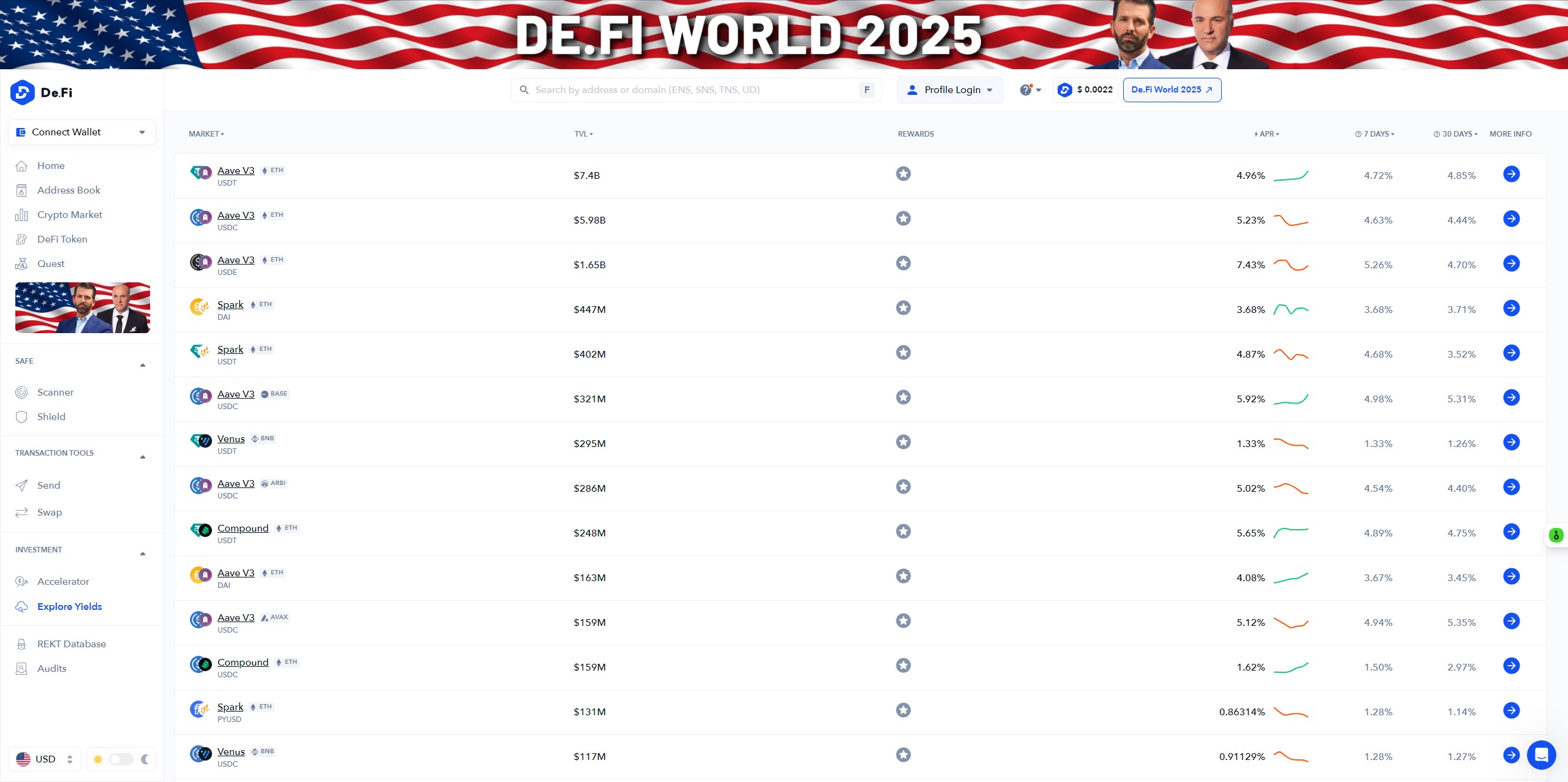
Stablecoin interest rates are often higher than in traditional banking. | Source: De.Fi
In the current environment, one where traditional rates will continue to drop, a 6-8% rise shines in comparison to the fading glow of a bank’s 4% account.
For yield-hungry investors, that contrast is hard to ignore. It feels like an upgraded savings account. For institutions, DeFi represents a stepping stone toward the mass adoption of tokenized finance.
Digital wealth management firm Amber Group notes that stablecoin transaction volumes reached $27.6 trillion in 2024, surpassing the combined annual transaction volumes of Visa and Mastercard. Yield-bearing stablecoins represent around 4% of the overall stablecoin market as of May 2025, with about $9 billion in holdings at the time.
Each Fed cut lowers the ceiling for traditional finance returns while raising the potential for stablecoin-powered DeFi. These movements, alongside stablecoin developments like The GENIUS Act and Tether’s USA₮ issuance, seem to be the perfect ingredients for a stablecoin-flavored explosion.
But like any recipe, one wrong ingredient can spoil the whole dish. Stablecoins and DeFi come with their own risks.
Risks and Rewards of Earning Yield on Stablecoins
Rewards
Attractive spreads: DeFi yields are often far higher than TradFi due to a lack of central intermediaries, and that difference is enough to pull in capital. Stablecoins make comparisons possible since they’re tied to the dollar, meaning investors can think in APY vs APY terms rather than worry about volatility.
Liquidity growth: DeFi markets are global, meaning more liquidity to strengthen markets. Stronger markets make for lower borrowing costs, ideally bringing in more users.
Alternative issuer revenue streams: Tether and Circle rely heavily on Treasury income, but falling rates push these companies to develop other use cases. As more investors adopt DeFi-related policies, stablecoin issuers will develop new DeFi models to compound that growth.
Risks
Smart contract exploits: Unlike Treasuries, DeFi protocols can suffer from hacks. Billions have been lost from smart contract exploits over the last few years, meaning choosing the right DeFi protocol is half the battle.
Yield volatility: As exciting as higher yield rates may be, these rates aren’t fixed. If lending slows down, annual percentage yields (APYs) can drop from 8% to 2% in weeks.
Regulatory changes: The GENIUS Act could present both good and bad for stablecoin growth. The Act provides issuers with a clear framework for providing their own dollar-backed assets, but prevents issuers from offering yield-generating services. That said, DeFi protocols that support these stablecoins can offer yield, which is ideal for investors.
Either way, the Fed’s 0.25% cut is just the first domino. Each one that tips afterwards seems poised to limit safe returns in favor of DeFi yields.
Investors seeking returns may start rotating capital from banks and money markets into stablecoin lending pools, and recent policies seem to encourage this trend.
Whether this trickle effect becomes a flood is yet to be determined.
Disclaimer:
The information provided in this article is for informational purposes only. It is not intended to be, nor should it be construed as, financial advice. We do not make any warranties regarding the completeness, reliability, or accuracy of this information. All investments involve risk, and past performance does not guarantee future results. We recommend consulting a financial advisor before making any investment decisions.
Max Moeller is a Chicago‑based writer and video editor passionate about games, tech, and crypto. Whether it’s crafting clear, insightful articles or piecing together engaging video retrospectives, he’s driven by curiosity and takes pride in keeping things human. Since 2017, Max has been published in a variety of notable crypto magazines.


 Easy
Easy