The DC Blockchain Summit 2026 brought crypto policy further into the U.S. mainstream.
Smaller remarks on tax treatment, tokenization, CBDCs and quantum security added depth to the summit’s broader policy agenda.
The event showed Washington moving deeper into the practical work of crypto legislation, regulatory coordination and financial rule design.
The DC Blockchain Summit 2026 made one thing clear: crypto policy in the U.S. has moved beyond ideology and into execution.
Held in Washington on March 17–18 as the flagship event of DC Blockchain Week, the summit brought together top regulators, lawmakers, and industry leaders for conversations that felt markedly different from past years.
This was no longer about whether crypto belongs in the U.S. financial system. It was about how to structure it.
We sometimes use affiliate links in our content, when clicking on those we might receive a commission at no extra cost to you. By using this website you agree to our terms and conditions and privacy policy.
One of the summit’s clearest storylines centered on market structure legislation and the growing sense that Congress may be getting closer to action.
Sen. Kirsten Gillibrand said lawmakers had only “three or four open items” left under negotiation and suggested the CLARITY Act could move within weeks.
She also pointed to ethics provisions as one possible way to unlock additional support.
That gave the summit one of its strongest legislative signals and framed crypto market structure as an active congressional project rather than a distant policy goal.
Regulators Are Starting to Align
If legislation is moving forward, regulators appear to be catching up.
Atkins and Selig both projected a more cooperative posture between the SEC and CFTC.
Selig said the agencies had struggled for too long to work together, even on basic definitions and called for closer cooperation on enforcement, surveillance and staff coordination.
Atkins described the old relationship as a kind of institutional crossfire and said the SEC is now working more closely with the CFTC to harmonize definitions and provide greater clarity for market participants.
Atkins also used the summit to signal a broader shift at the SEC.
He said the agency’s long-running failure to provide clarity on how securities laws apply to digital assets is over.
The SEC Chair pointed to a more differentiated approach that separates digital securities from categories such as digital commodities, collectibles and payment stablecoins.
Stablecoins — and Digital Dollars — Stayed at the Core
Stablecoins remained one of the summit’s most consequential topics, cutting across nearly every discussion.
Debates extended beyond legislation into questions of privacy, programmability, and control over financial systems.
That naturally pulled CBDCs into the conversation.
Sen. Lummis reiterated her opposition to CBDCs, while others framed them and stablecoins as overlapping policy questions rather than opposing ones.
Chris Giancarlo challenged the idea that stablecoins are inherently more private, arguing that both systems ultimately depend on broader legal frameworks.
At the same time, Caroline Pham highlighted blockchain’s potential to enable more programmable and flexible forms of money.
Together, these views reinforced a central reality: digital dollar policy is becoming one of Washington’s defining financial debates.
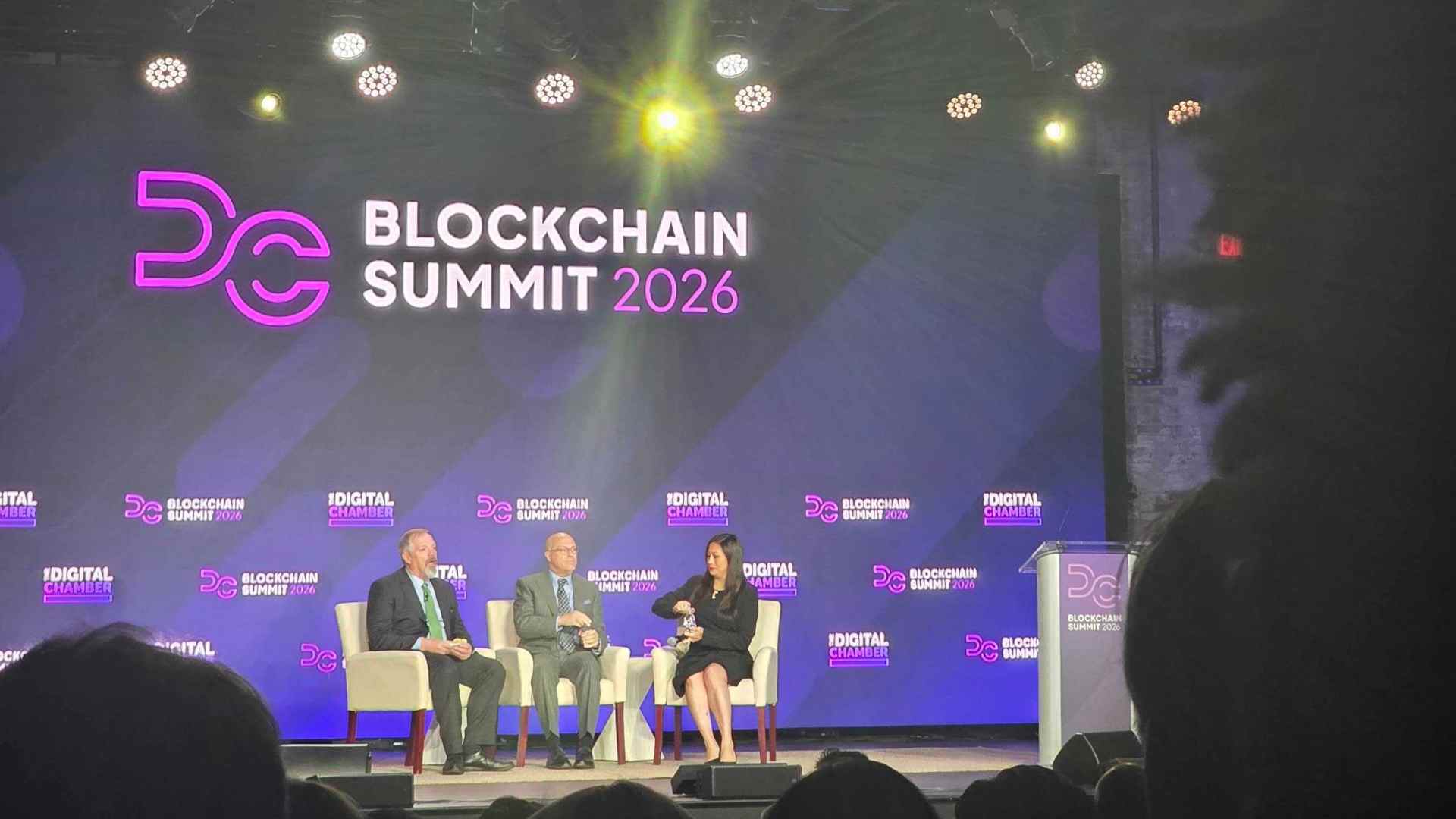
Chris Giancarlo, Former Chairman, CFTC (left), Norman Reed, Senior Advisor, Binance.US (middle), Caroline D. Pham, CLO, Moonpay (right) | Source: CCN
What Really Mattered: Banking Access and Regulatory Coordination in Crypto
While headline discussions focused on legislation and regulation, the most telling signals came from the details.
Comptroller Jonathan Gould suggested that new bank formation should be encouraged, not constrained—echoing the summit’s broader push to keep financial innovation within the U.S. system.
That conversation naturally tied into the roles of key regulators.
Several speakers emphasized the distinct responsibilities of the FDIC, Federal Reserve, and OCC, reinforcing the importance of coordination as crypto policy grows more complex.
Fidelity’s Sarah Reilly pointed to ongoing uncertainty around staking—particularly how and when rewards should be taxed.
Her comments reflected a broader shift in crypto regulation, moving away from high-level debates and into the details that directly affect users and businesses.
Digital money remained another thread running through the event.
In contrast, others framed CBDCs and stablecoins as part of the same policy conversation—raising questions around privacy, programmability, and control over financial systems.
Tokenization, meanwhile, was consistently framed as a growth opportunity.
Speakers highlighted blockchain infrastructure as a way to expand access to global liquidity and unlock new forms of financial participation.
A few remarks pushed the conversation even further.
Justin Sun spoke about the convergence of traditional finance, blockchain, and artificial intelligence, while David Holtzman warned that quantum computing could pose risks to financial systems sooner than expected.
Taken together, these moments broadened the scope of the summit—showing that crypto policy is no longer a single-issue debate.
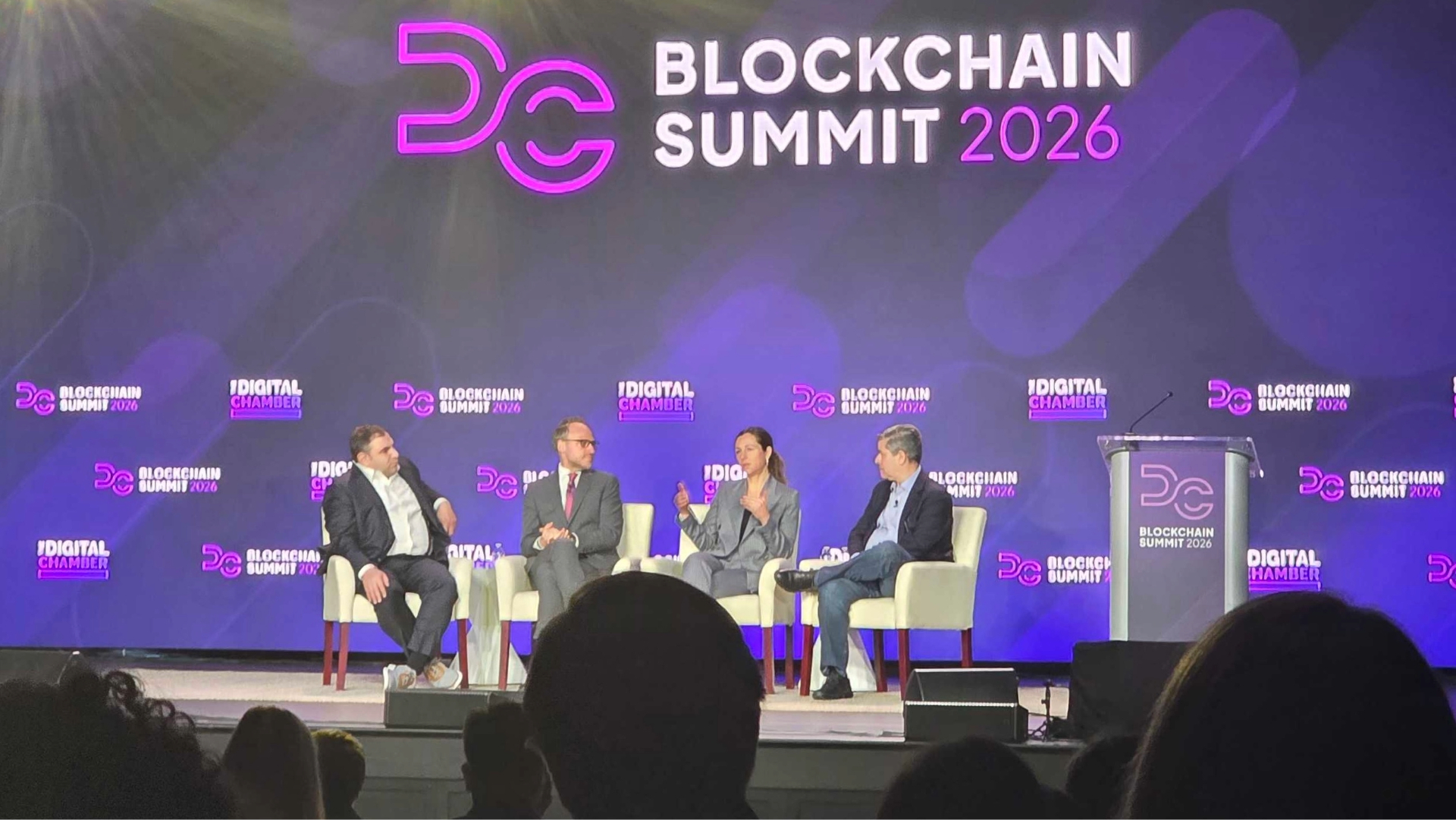
(Right) Jonathan Steinberg, Founder and CEO, WisdomTree Investments | (Inner Right) Amy Oldenburg, Head of Digital Asset Strategy, Morgan Stanley | (Inner Left) Teddy Fusaro, President, Bitwise Asset Management | Source: CCN
Executives Framed Competing Visions of Crypto’s Future
The summit also gave executives a stage to present sharply different visions of crypto’s next chapter in the U.S.
Bitwise President Teddy Fusaro described blockchain as “10x better” than the current financial system and framed the technology as an upgrade to aging financial infrastructure.
Jonathan Steinberg of WisdomTree challenged the “digital gold” label for Bitcoin while still presenting the downturn as an opportunity for investors as the asset class matures.
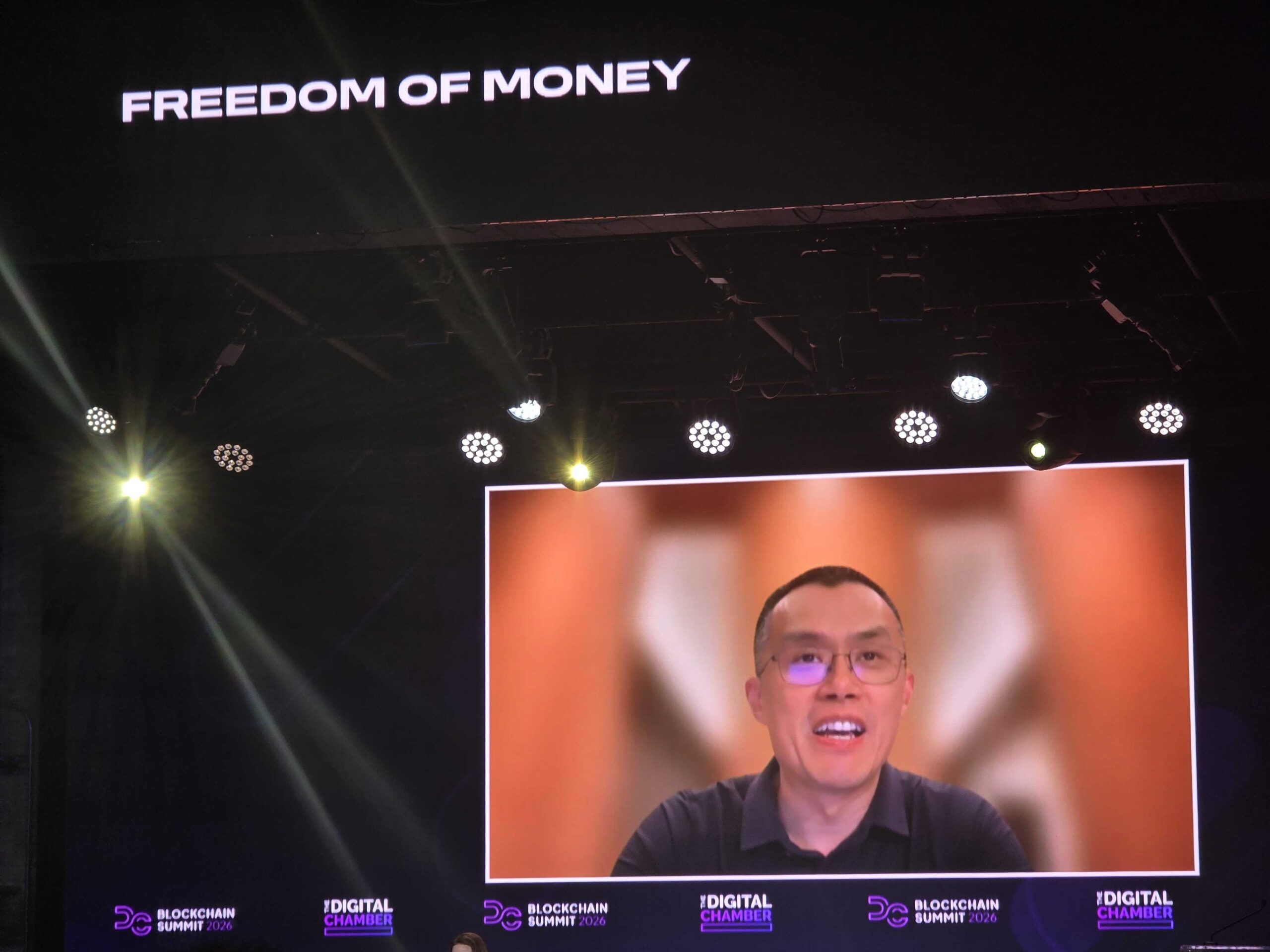
CZ added a more combative tone, criticizing the U.S. market’s lack of competition and accusing traditional media of focusing too heavily on negative narratives.
CZ at DC Blockchain Summit on Wednesday, March 18 | Source: CCN.
CCN on the Ground at DC Blockchain Summit
CCN’s senior editor, Dr. Guneet Kaur, spoke with several industry leaders at the DC Blockchain Summit, where a clear theme emerged: regulation is no longer a distant debate — it’s the defining challenge shaping DeFi’s future.
In a conversation with 1inch CLO Orest Gavryliak, the focus was on a fundamental gap between regulators and technology.
Non-custodial systems, he argued, are still widely misunderstood, leaving DeFi platforms operating in legal gray zones despite active efforts to build compliance frameworks.
At the same time, companies like 1inch are quietly developing new risk-management models.
Ones that rely less on control and more on transparency, data, and reputation systems.
In a separate interview, Tron DAO’s Adrian Wall pushed back on the idea that crypto regulation is politically gridlocked.
While debates over implementation continue, he said lawmakers across party lines largely agree on the fundamentals: consumer protection, innovation, and the need for clear rules.
That alignment, though often overlooked, could be what ultimately unlocks meaningful legislation.
This is especially as stablecoins and real-world use cases continue to gain traction globally.
Another conversation at the summit turned to infrastructure.
Specifically, the often-overlooked role of oracle networks.
RedStone CEO Marcin Kaźmierczak warned that even a single faulty data point can cascade across DeFi, triggering liquidations and systemic risk.
As the ecosystem grows and integrates with traditional finance, the reliability of these systems is becoming just as critical as the protocols they support.
His message was clear: as DeFi scales, so do the risks beneath the surface.
US Crypto Policy Outlook: Clarity Act and Bipartisan Momentum
The DC Blockchain Summit’s significance came from accumulation.
Across two days, the summit brought together the main policy questions shaping U.S. crypto, with experts signaling strong consensus that the Clarity Act will pass with bipartisan support.
Furthermore, discussions centered on how regulators will divide authority, how stablecoins will be treated, and how banking, taxation, and digital money rules will evolve.
The event showed Washington working through crypto policy in a more detailed way, with legislation, oversight and market design all moving together.
Disclaimer:
The information provided in this article is for informational purposes only. It is not intended to be, nor should it be construed as, financial advice. We do not make any warranties regarding the completeness, reliability, or accuracy of this information. All investments involve risk, and past performance does not guarantee future results. We recommend consulting a financial advisor before making any investment decisions.