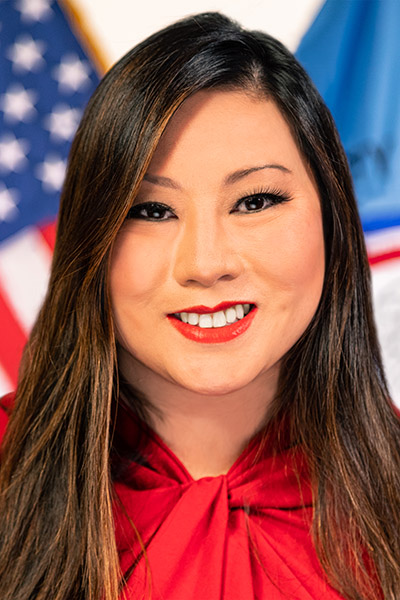
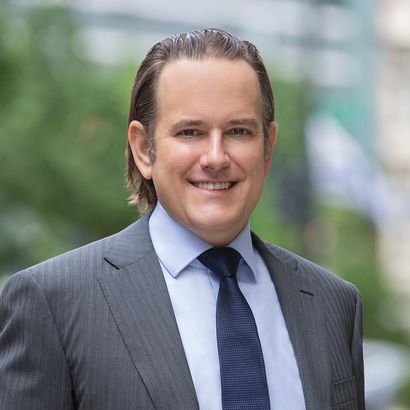
From Caroline Pham’s to Tyler Williams, here’s how each contender could shape the future of U.S. crypto regulation. | Credit: Derek Fenech/CCN.com
Share
Key Takeaways
The next CFTC Chair will set the tone for U.S. crypto market infrastructure, ranging from spot-market rulings to how stablecoins will be used as collateral.
Caroline Pham signals continuity and rulemaking, while other candidates bring their own expertise to the table.
The leadership choice will determine retail access to digital assets, alongside institutional comfort. One could expect clearer listing standards alongside increased surveillance.
Post-Quintenz, the White House is prioritizing government-experienced, crypto-fluent candidates.
The Commodity Futures Trading Commission (CFTC) is poised to play a significant role in US crypto policy over the next two years. After former Chair Rostin Benham stepped down in early 2025, Commissioner Caroline Pham was tapped as acting chair while the White House sought a permanent leader.
A first attempt to fill the job stalled recently, as the White House withdrew the nomination of former CFTC Commissioner Brian Quintenz, a Trump nominee and a favorite among many in the crypto community. With that reset, attention has turned toward a handful of potential contenders.
Let’s dive deeper.
Try Our Recommended Crypto Exchanges
Sponsored
Disclosure
We sometimes use affiliate links in our content, when clicking on those we might receive a commission at no extra cost to you. By using this website you agree to our terms and conditions and privacy policy.
Acting Leadership at CFTC: Caroline Phan’s Policy Priorities and Changes
Acting leadership: Caroline Phan is the acting chair and has already moved on a few structural and policy priorities, including a focus on complex and retail fraud, as well as the withdrawal of a Biden-era guidance that listed carbon credit derivatives.
Nomination reset: The White House pulled Brian Quintenz’s nomination on September 30, 2025, after weeks of debate. Speaking to Politico, Quintenz stated that “President Trump has made it a priority to make America the crypto capital of the world,” so one can assume the next nominees will represent that mantra.
Broader candidate slate: Reports indicate that White House Officials are vetting new candidates beyond their initial shortlist, emphasizing those with hands-on experience in digital assets, while also having worked in government.
Potential CFTC Chair Candidates and What They Could Mean for Crypto Regulation
Caroline Pham (Acting Chair)
Whether or not she ends up nominated, Pham’s recent agenda gives a clear preview of a “rules-first” CFTC: joint work with the Securities and Exchange Commission (SEC) on spot-market guidelines, an exploration of 24/7 market hours that mirror crypto’s always-on trading, and an open door to stablecoins as collateral in U.S. derivatives markets.
She has also approved a faster, more transparent method of establishing compliant crypto firms. Should Pham make the cut, we should expect continued emphasis on clarity in digital asset regulation.
Acting Chair Caroline Pham | Source: CFTC
What Pham could mean for crypto?
A Pham-led commission would likely prioritize formal rules and pilot programs over one-off settlements. Think clearer listing standards, a defined set of guidelines for stablecoins as collateral, and surveillance rules built in tandem with the SEC. Crypto startups would enjoy more predictable regulation timelines and disclosure requirements, even if Pham’s enforcement stays aggressive against fraud.
Josh Sterling – Former CFTC Official with a Market Innovation Agenda
Josh Sterling is also in consideration, according to Semafor. Sterling is a former CFTC official who currently advises prediction-market operator Kalshi. His background in derivatives and his openness to market innovation make him a prime candidate for a crypto-focused leadership role. One can expect Sterling to extend Pham’s initiatives, including 24/7 crypto trading consultations and a modern approach to digital asset collateral.
Josh Sterling | Source: Milbank
What Sterling could mean for crypto?
Expect a “plumbing-first” agenda with Sterling. This means tighter listing standards for crypto derivatives and stronger capital and risk management solutions for futures merchants.
Michael Selig – SEC Crypto Counsel with Cross-Agency Expertise
Selig is chief counsel of the SEC’s crypto task force, and fits the bill as a government employee who actually has experience in digital assets. Someone who regularly deals with crypto-related policy, including determining whether a cryptocurrency is a security or a commodity, could provide fast-track guidance.
Selig also has past experience with the CFTC and was a partner with Willkie Farr, where he advised clients “on the intersection of financial regulations and crypto technologies, including blockchains and crypto assets.”
Michael Selig | Source: Blockworks
What Selig could mean for crypto?
Selig brings experience from multiple agencies, such as the SEC, the CFTC, and Willkie Farr, into one position. He understands where the SEC stands on crypto classification and custody while having already worked in the CFTC ecosystem, so reintegration should come as no problem. Should Selig become Chair, one should expect speedier crypto classifications and product approvals.
Tyler Williams – Treasury Counselor and Stablecoin Policy Expert
As Counselor to the Treasury Secretary, advising directly on digital assets and blockchain policy, Tyler Williams has experience working with stablecoins, real-world assets (RWAs), anti-money laundering (AML), and many other financial topics that the CFTC would surely address under his leadership.
Williams also has experience as the former Global Head of Policy at Galaxy Digital, a platform that bridges institutional investors with the world of crypto through its digital assets platform.
Tyler Williams | Source: TRMLabs
What Williams could mean for crypto?
Williams’ experience with stablecoins and RWAs makes him a great candidate for managing the intersection of traditional and decentralized finance. He should have no problem translating between market participants and regulators, which is ideal for creating a balanced framework that caters to both parties. One should expect an emphasis on tokenized dollars and RWAs should Williams make the cut.
The identity of the next CFTC Chair will determine whether crypto policy advances through a straightforward, durable ruleset or if it will slowly progress through painful processes. Pham offers continuity and momentum, Sterling promises a clearer road toward institutional adoption, Selig brings cross-agency expertise, while Williams focuses on stablecoins and RWAs. Any of these paths would be consequential, just in different ways for exchanges, issuers, and investors.
Conclusion
The race for the next CFTC Chair is more than a personnel decision, it will shape the trajectory of U.S. crypto markets for years to come. Caroline Pham offers continuity with her rules-first approach, Josh Sterling emphasizes stronger market “plumbing” and innovation, Michael Selig brings rare cross-agency expertise, and Tyler Williams highlights the integration of stablecoins and real-world assets.
Whichever candidate is chosen, the outcome will define how digital assets are classified, how stablecoins are adopted in derivatives markets, and how much regulatory clarity startups and institutions can expect.
For crypto exchanges, issuers, and investors alike, the next CFTC leader will either accelerate mainstream adoption through clear rules or slow progress with fragmented oversight.
Market reactions could come within weeks, but actual rules usually take months to propose and finalize.
Will the CFTC gain a clearer authority over spot crypto?
Maybe. Expect progress through SEC-CFTC coordination first. Congress could clarify later.
What does “stablecoin as collateral” really mean?
U.S. entities could accept certain stablecoins as collateral, but with haircuts, liquidity tests, and limits to manage risk.
Would retail trading get stricter under a tough rulemaker?
One might expect lower leverage, clearer disclosures, and tighter suitability checks due to established rules, but better institutional access due to that increased trust.
Disclaimer:
The information provided in this article is for informational purposes only. It is not intended to be, nor should it be construed as, financial advice. We do not make any warranties regarding the completeness, reliability, or accuracy of this information. All investments involve risk, and past performance does not guarantee future results. We recommend consulting a financial advisor before making any investment decisions.
Max Moeller is a Chicago‑based writer and video editor passionate about games, tech, and crypto. Whether it’s crafting clear, insightful articles or piecing together engaging video retrospectives, he’s driven by curiosity and takes pride in keeping things human. Since 2017, Max has been published in a variety of notable crypto magazines.


 Easy
Easy