Learn how to verify if a stablecoin is truly stable. | Credit: Veronica Cestari/CCN.com
Share
Key Takeaways
Stablecoins bridge traditional finance and DeFi, powering trading, payments, remittances, and yield farming.
True stability depends on redeemability, the ability to swap one token for $1 anytime.
Check who can redeem, fees, and geographic restrictions.
Look for open voting, public proposals, and clear emergency controls.
Stablecoins have become essential building blocks in the digital asset ecosystem. They bridge traditional and decentralized finance (DeFi), enabling everything from trading and remittances to yield farming and payments. But despite their name, not all stablecoins are equally stable.
Behind the promise of “$1 equals $1” lie complex collateral management systems, algorithmic design, governance, and market dynamics.
A failure in any of these layers can break the peg, as with TerraUSD (UST) in 2022, wiping out billions in investor value and shaking confidence across the crypto industry.
It is essential to know how to evaluate their safety if you hold or trade stablecoins.
Try Our Recommended Crypto Exchanges
Sponsored
Disclosure
We sometimes use affiliate links in our content, when clicking on those we might receive a commission at no extra cost to you. By using this website you agree to our terms and conditions and privacy policy.
A stablecoin aims to maintain a fixed value, usually pegged to a fiat currency like the U.S. dollar (USD). Some are pegged to other assets, such as gold or a basket of currencies, but USD-pegged stablecoins dominate the market.
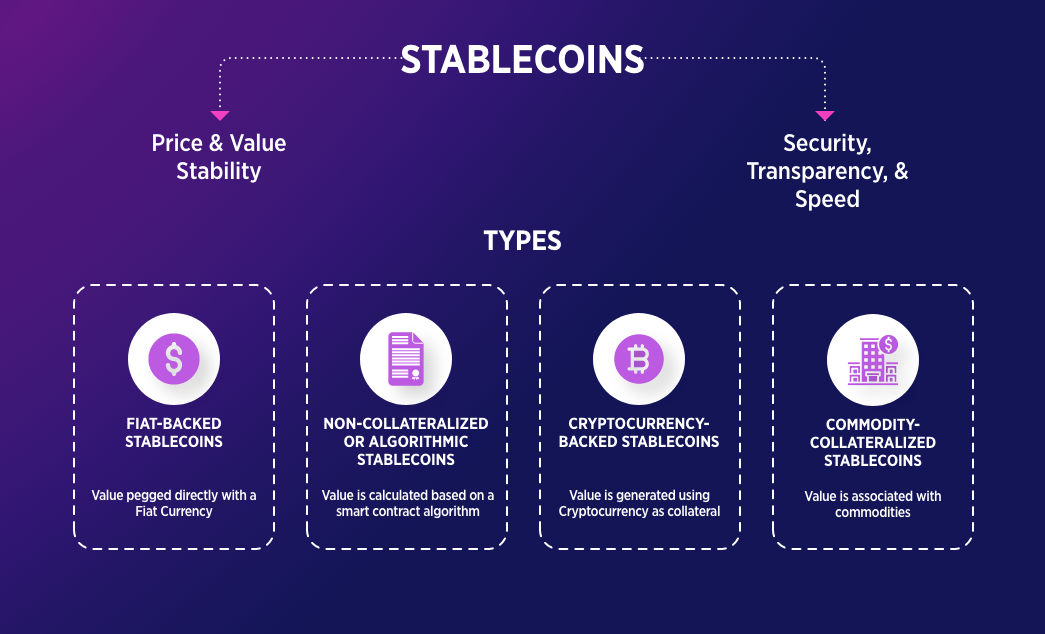
The primary stability mechanisms fall into three broad categories:
Fiat-backed (or off-chain collateralized): Each token is backed by fiat reserves or short-term assets (like U.S. Treasuries) held by a custodian. Some examples include USDT (Tether), USDC (Circle), FDUSD (First Digital USD).
Crypto-backed (on-chain collateralized): Each token is backed by overcollateralized crypto assets held in smart contracts, like DAI (Sky), sUSD (Synthetix), MIM (Magic Internet Money).
Algorithmic or hybrid: The peg is maintained algorithmically through incentives, mint-burn mechanisms, or arbitrage without full collateral backing. Some examples include FRAX (partially algorithmic).
Commodity-backed: The stablecoin is pegged to a commodity, like gold or oil or silver. Tether Gold (XAUT) and Paxos Gold (PAXG) are gold-backed stablecoins.
What stablecoins are. | Credit: European Business University
Each model has different risk exposures, and the trade-off between decentralization and safety is often stark. Fiat-backed stablecoins are typically the most stable but often lack transparency. Crypto-backed versions offer greater transparency (because their reserves are held on public blockchains) but can be highly volatile, while algorithmic models remain experimental and vulnerable to collapse.
Assessing Stablecoin Risk: The Role of Collateral and Liquidity
Collateral is the bedrock of a stablecoin’s credibility. To judge whether a stablecoin is safe, start with three core questions:
1. What Backs the Stablecoin and Where Is It Held?
For fiat-backed stablecoins, safety depends on the quality, liquidity, and custody of the reserves.
Riskier reserves include commercial paper, corporate bonds, or opaque loans.
After regulatory scrutiny, major issuers like Tether (USDT) and Circle (USDC) began publishing reserve breakdowns showing that most holdings are now short-term Treasuries. Still, the frequency and reliability of these reports vary.
Check the issuer’s reserve attestations. Legitimate stablecoins provide regular audits or attestations by recognized firms. If you can’t find up-to-date data, treat that as a red flag.
For crypto-backed stablecoins, assess:
Collateral diversity: Is it overexposed to one asset (e.g., only ETH)?
Volatility buffer: How much overcollateralization is required? DAI, for example, typically requires 150% collateralization.
Liquidation process: How are positions unwound during market stress?
DeFi protocols like Sky (previously MakerDAO) and Liquity maintain on-chain data dashboards showing collateral ratios and liquidation parameters, a level of transparency unmatched by fiat-backed coins.
2. Is the Collateral Accessible and Auditable?
Transparency is key.
On-chain stablecoins (e.g., DAI): Collateral is visible to anyone; you can verify reserves in real time using blockchain explorers or dashboards like DeFiLlama.
Off-chain stablecoins (e.g., USDT, USDC): You must rely on issuer reports and third-party attestations.
Many users mistakenly equate attestation with audit.
An attestation is a snapshot at a point in time (like a monthly photo).
An audit is a deeper review of financial statements, controls, and practices.
So, a stablecoin with frequent attestations but no complete audits is only partially transparent.
3. How Liquid and Redeemable Is It?
A stablecoin’s stability ultimately depends on redemption trust, the ability to convert one token into 1 dollar at any time.
Ask:
Can retail users redeem directly, or only institutional clients?
When USDC temporarily depegged in March 2023, after Silicon Valley Bank, one of its reserve banks, failed, Circle quickly honored redemptions and restored the peg. That restored confidence because the redemption functionality never broke.
Contrast that with UST, which had no meaningful collateral to redeem against and relied on arbitrage incentives. When confidence fell, redemptions collapsed, and the peg death-spiraled.
Liquidity on centralized exchanges (CEXs) and decentralized exchanges (DEXs) is a secondary stabilizer. A coin with wide trading pairs and deep order books is less likely to deviate sharply from its peg in normal conditions.
Beyond Collateral: How Governance Shapes Stablecoin Peg Stability
Beyond collateral, the governance model determines how quickly and transparently a stablecoin responds to stress.
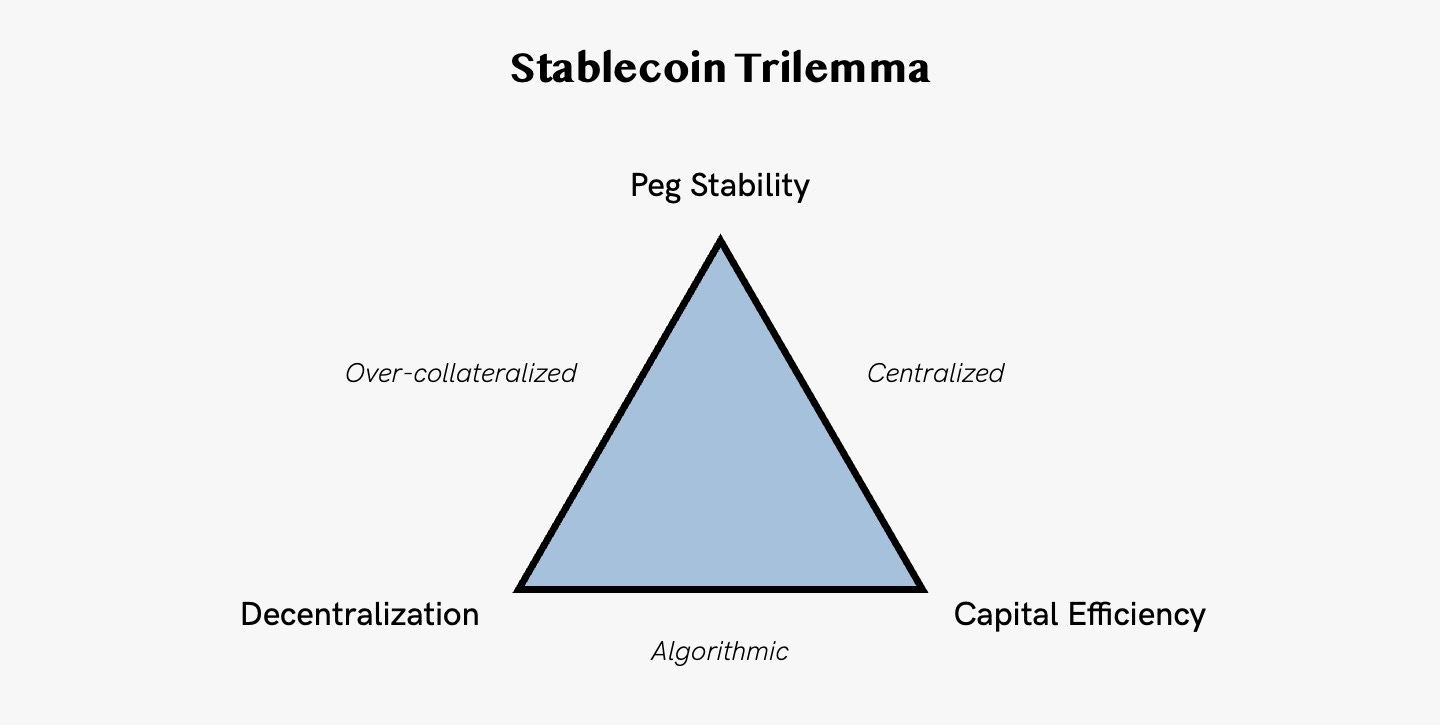
The stablecoin trilemma. | Credit: Ceteris Paribus
Centralized stablecoins
A corporate issuer controls them. Governance decisions are made internally, such as freezing wallets, changing redemption rules, or managing reserves.
They provide a quick response during crises and regulatory clarity, but also carry censorship risk, opaque decision-making, and dependence on traditional banks.
Decentralized stablecoins
Governed by token holders and smart contracts. Rules for collateral, stability fees, and redemptions are managed on-chain.
These stablecoins provide transparency, censorship resistance, and algorithmic enforcement, but they also have some cons, like slower decision-making and the risk of governance capture by whales or DAOs with concentrated voting power.
In hybrid models like FRAX, governance mixes both: an algorithmic layer manages the peg while a DAO oversees parameters like collateral ratio and incentive design.
Evaluating Stablecoins’ Governance Safety
To evaluate governance safety, look for:
Public proposals and on-chain voting: Are policy changes visible and verifiable?
Multisig or emergency controls: Who can pause or modify the protocol in crises?
Auditable documentation: Are the stability mechanisms well-explained?
When a stablecoin’s governance is opaque or concentrated in a few anonymous developers, users assume both market and governance risks.
For instance, Sky’s governance forums and Arbitrum’s DAO votes show how open governance can improve accountability. In contrast, the collapse of Iron Finance in 2021 exposed how vague governance rules and unchecked algorithmic logic can amplify risk instead of reducing it.
Stablecoin Depegging Risks: The Real Test of Stability
Even well-designed stablecoins can temporarily lose their peg. To assess resilience, study how a stablecoin behaves during market stress.
A past depeg doesn’t automatically disqualify a stablecoin, but the response matters.
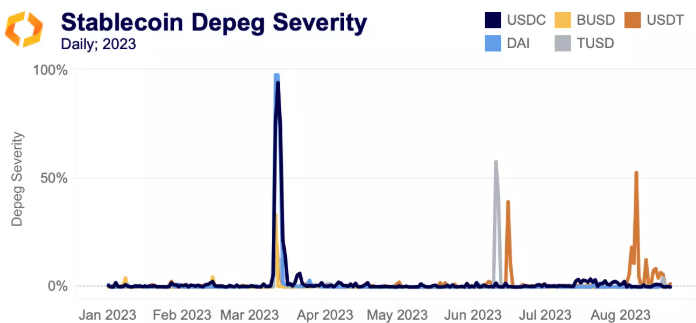
USDC (March 2023):Dropped to $0.88 after SVB’s collapse; restored to $1 within 48 hours after Circle confirmed backing and resumed redemptions.
DAI (March 2023):Followed USDC downward since much of its collateral was USDC; rebounded as markets stabilized.
UST (May 2022): Collapsed irreversibly to near-zero after confidence vanished.
wBETH plunged to $430, a staggering 89% discount to the price of ETH, the asset it is designed to mirror.
BNSOL dropped to $34.9, showing little to no similar movement across other major exchanges.
Many will continue to argue about whether Ethena’s USDe truly “depegged” during the Oct. 11 crypto liquidation chaos. On paper, a drop to $0.65 looks like a textbook failure, yet context matters.
As data shows, the dislocation was confined mainly to Binance, while USDe traded close to $1 across its deeper liquidity pools.
Still, the debate highlights a bigger truth that OKX’s Star Xu underscored: USDe should not be viewed as a traditional stablecoin at all. In his words, it behaves more like a tokenized hedge fund, using derivatives and basis trades to mimic dollar stability.
That distinction reframes the entire conversation; this wasn’t a stablecoin “breaking,” but a complex financial instrument reacting to extreme market stress.
Understanding Stablecoin Fragility: Why “Peg” Stability Is More Than Just Code
Stablecoins often rely on incentive-based mechanisms (arbitrage, mint/burn, collateral liquidations). When sentiment shifts or liquidity dries up, these mechanisms can reverse, accelerating the fall instead of stabilizing it.
Stablecoin depeg severity. | Credit: Kaiko
Key risk amplifiers include:
Low liquidity on major exchanges.
Correlated collateral (e.g., DAI backed heavily by USDC).
Panic redemptions or smart contract bugs.
Oracle delays may cause mispriced liquidations.
Monitoring on-chain data dashboards like Nansen, Dune Analytics, or DeFiLlama can reveal early signs of stress, such as abnormal redemption spikes or shrinking TVL.
Even a well-collateralized stablecoin can depeg if confidence evaporates. In 2023, rumors about USDT’s reserve transparency caused short-lived deviations from the peg not because of insolvency but because of sentiment.
Similarly, regulatory events, like enforcement actions or bans, can drive depegging.
For instance, on Oct. 6, Binance announced upcoming changes to the pricing mechanisms for three specific assets, with implementation scheduled for October 14. The sudden market crash unfolded on Oct. 10-11, midway through the eight-day window between the announcement and the update.
Is it merely a coincidence that, out of thousands of trading pairs, only those slated for oracle updates suffered such severe de-pegging events? The odds are vanishingly small.
Some other cases may include:
A sudden exchange delisting can reduce liquidity.
Sanctions or freezing of wallets can erode trust in centralized issuers.
New compliance requirements can force redemptions or reduce supply.
Hence, stability isn’t just a technical matter; it’s also psychological and political.
Stablecoin Due Diligence Checklist
It’s smart to run through this quick due diligence checklist before trusting any stablecoin, whether fiat-backed, algorithmic, or synthetic. Each question helps you assess how resilient a stablecoin really is when markets turn volatile.
Category
Questions to ask
Why it matters
Collateral
Is it backed by cash, Treasuries, or volatile crypto assets?
Determines redemption strength.
Transparency
Are reserves independently audited and published regularly?
Builds verifiable trust.
Attestation report
Does the issuer (e.g., Circle) publish independent monthly attestations confirming reserve balances?
Confirms that reserves actually exist and match circulating supply, strengthening credibility.
Redemptions
Can users redeem directly, and how quickly?
Ensures liquidity and confidence.
Governance
Who controls upgrades or redemptions? Centralized team or DAO?
Impacts censorship resistance and risk.
On-chain metrics
What’s the TVL, collateral ratio, and circulation trend?
Reflects market health and growth.
Past performance
How did it behave during previous crises?
Reveals resilience under pressure.
Liquidity
Are there deep pairs on major exchanges (CEX & DEX)?
Prevents slippage and depegging.
If a stablecoin fails more than one of these categories, treat it as speculative, not stable.
Regulation and Market Maturity: The Next Phase for Stablecoins
While technical design and collateral quality determine whether a stablecoin can hold its peg, regulation determines whether it will.
The landscape is shifting fast. After years of ambiguity, lawmakers in the U.S. and abroad are beginning to provide clearer frameworks for digital dollars, setting guardrails for reserves, transparency, and redemption rights.
Laws like the GENIUS Act aim to align stablecoin issuers with mainstream financial rules while still encouraging innovation. This marks a turning point: stablecoins are evolving from experimental crypto instruments into recognized financial infrastructure.
The impact is already visible. Traditional fintechs and payment firms are beginning to embed stablecoins into cross-border settlements, payroll, and e-commerce. Institutional players are moving from observation to participation.
Capturing this macro shift, Anurag Arjun, co-founder of Avail and previously co-founder of Polygon, told CCN,
“$300B in stablecoins is a structural shift and one that is bound to rise further. With the GENIUS and CLARITY Acts bringing regulatory alignment, digital assets are no longer mere speculative instruments; they are actually becoming part of real financial flows. In parallel, supporting infrastructure and tooling have also matured. Basically, today the risk premium for moving real-world liquidity on-chain has collapsed, technologically and legally.”
“This means more companies are bound to enter the space, competition will increase, and we will see innovation with hybrid issuance and merchant-tokenization networks. As fintech companies embed stablecoins into their flows, existing dominance may erode, but the overall industry will evolve,” Arjun added.
His remarks highlight a critical evolution: stablecoins are no longer peripheral trading tools; they’re fast becoming regulated rails for real-world money movement. With clearer laws and better technology, the sector’s next challenge won’t just be stability, but scalability.
The Future of Stablecoin Safety
The next generation of stablecoins will likely combine transparency, programmability, and regulatory alignment. Several trends are already reshaping the environment:
On-chain attestations: Real-time proofs of reserves using blockchain oracles (e.g., Chainlink Proof of Reserve).
Regulated stablecoins: Licensed issuers under frameworks like the EU’s MiCA or U.S. stablecoin legislation.
CBDC interoperability: Integration with government-issued digital currencies may anchor confidence.
Algorithmic 2.0 designs: Projects like Ethena (USDe) and Liquity USD (LUSD) explore hybrid models using delta-hedged or immutable governance structures to mitigate previous failures.
The goal is not to eliminate risk, as that’s impossible, but to make risk transparent, measurable, and manageable.
Conclusion
A stablecoin is only as stable as the system that supports it. Collateral provides the base, governance provides the steering, and market confidence provides the fuel. If any of these fail, the peg can and often will break.
As an investor or DeFi user, your best defense is due diligence.
Verify collateral, not just claims.
Examine governance structures.
Track market liquidity and historical performance.
The promise of stability in crypto is alluring, but blind trust is dangerous. A “stable” coin can become unstable overnight, unless sound reserves, transparent governance, and resilient market design back it.
A stablecoin is a type of cryptocurrency designed to maintain a stable value, typically pegged to a fiat currency like the U.S. dollar. It enables smoother trading, payments, and DeFi participation without the volatility of traditional crypto assets.
Are all stablecoins equally safe?
No. Safety depends on factors like collateral quality, transparency, governance, and liquidity. Fiat-backed coins tend to be more stable but less transparent, while crypto-backed coins are more transparent but subject to market volatility.
What’s the difference between an attestation and an audit?
Attestation is a snapshot of reserves at a specific point in time with limited scope. Audit is a deeper, ongoing review of financial statements and controls with higher reliability. Stablecoins with full audits offer stronger credibility.
How can I tell if a stablecoin has healthy market liquidity?
Check trading volume and pair depth on major centralized (CEX) and decentralized (DEX) exchanges. A coin that’s widely traded with deep liquidity pools is less likely to depeg sharply.
Disclaimer:
The information provided in this article is for informational purposes only. It is not intended to be, nor should it be construed as, financial advice. We do not make any warranties regarding the completeness, reliability, or accuracy of this information. All investments involve risk, and past performance does not guarantee future results. We recommend consulting a financial advisor before making any investment decisions.
Giuseppe Ciccomascolo began his career as an investigative journalist in Italy, where he contributed to both local and national newspapers, focusing on various financial sectors.
Upon relocating to London, he worked as an analyst for Fitch's CapitalStructure and later as a Senior Reporter for Alliance News. In 2017, Giuseppe transitioned to covering cryptocurrency-related news, producing documentaries and articles on Bitcoin and other emerging digital currencies. He also played a pivotal role in establishing the academy for a cryptocurrency exchange website. Crypto remained his primary area of interest throughout his tenure as a writer for ThirdFloor.


 Easy
Easy