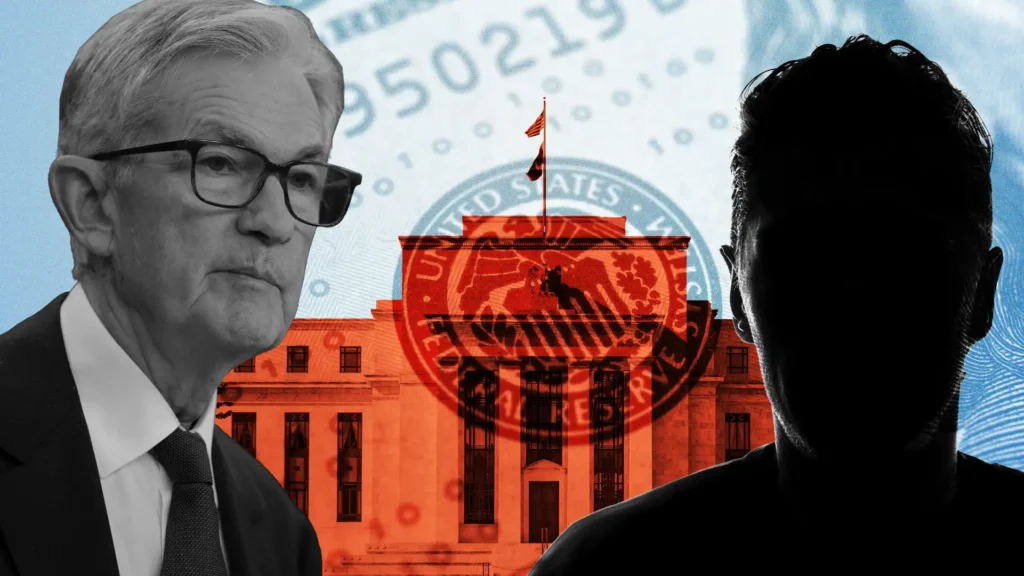
Trump picks Kevin Warsh as Fed Chair. Bitcoin, stocks, and gold slide as markets reprice interest rates and Fed policy. What’s next for crypto? | Credit: CCN.com
Share
Key Takeaways
Kevin Warsh has been nominated by Donald Trump to replace Jerome Powell as Federal Reserve Chair.
The Federal Reserve Chair is one of the most powerful economic roles in the world, shaping interest rates, inflation control, and financial market stability.
Warsh is a former Fed Governor with experience spanning Wall Street, the White House, and crisis-era policymaking during the 2008 financial collapse.
Compared to Jerome Powell, Warsh is viewed as more skeptical of prolonged low interest rates and aggressive monetary intervention.
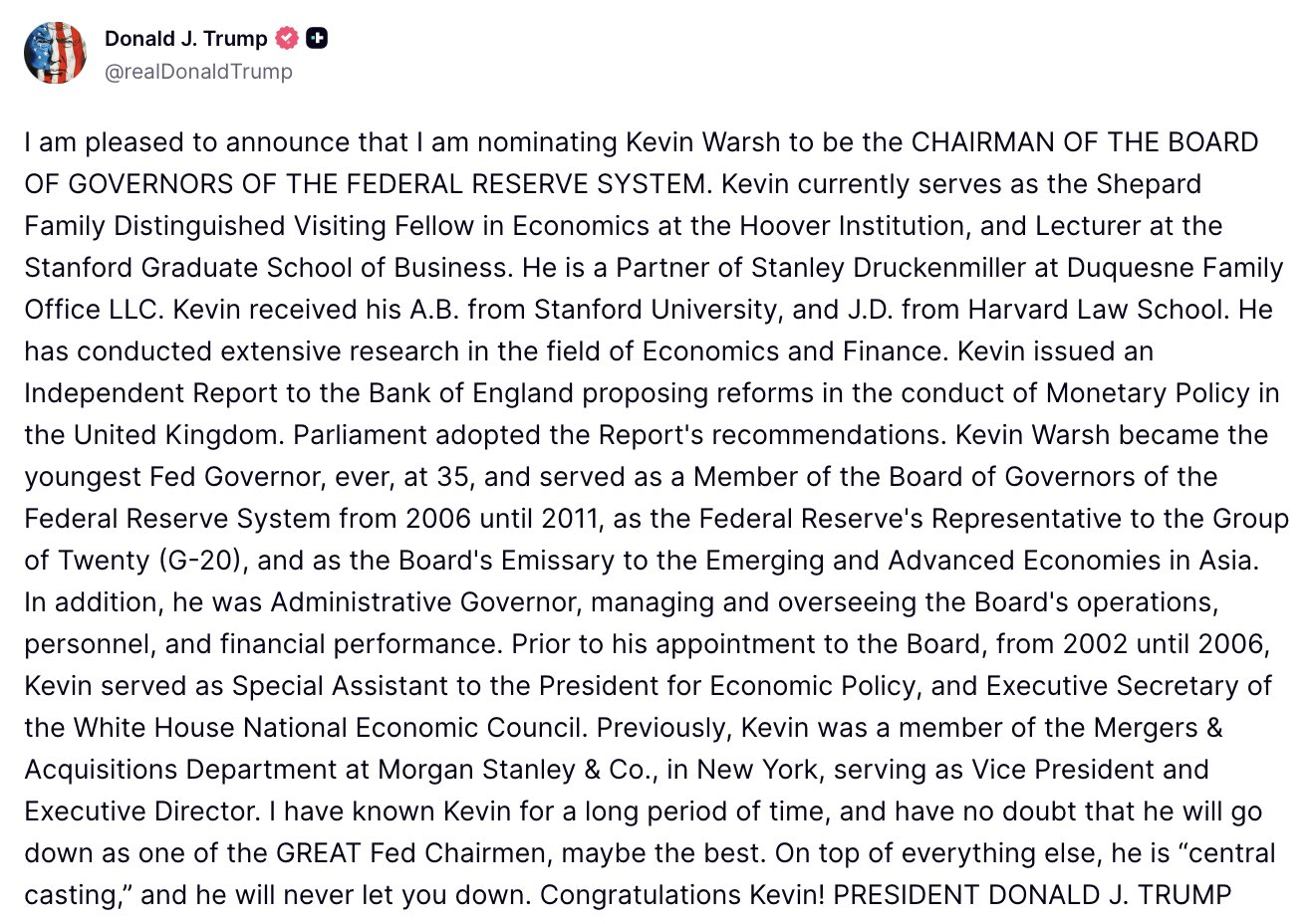
On Jan. 30, 2026, Donald Trump announced that he has nominated Kevin Warsh to be the next Chair of the Federal Reserve, succeeding Jerome Powell when Powell’s term ends in May 2026.
This selection marks a potentially significant shift in U.S. central banking policy and has drawn attention from economists, politicians, and financial markets alike, particularly among investors closely watching Kevin Warsh crypto implications, as his views on interest rates, liquidity, and monetary tightening could influence Bitcoin and broader cryptocurrency markets.
Donald Trump announced his pick for Fed chair. | Credit: Truth Social
Kevin Warsh’s Background
Education and Early Career
Kevin Warsh is a Harvard-educated economist and lawyer, earning degrees from Stanford University and Harvard Law School. Early in his career, he built a reputation as a sharp policy thinker with strong ties to both academia and finance.
Wall Street and White House Experience
Before joining the Federal Reserve, Warsh worked at Morgan Stanley, giving him deep exposure to global financial markets. He later served in the George W. Bush White House, advising on economic policy during periods of financial stress.
This blend of Wall Street and government experience has long defined Warsh’s profile: market-savvy, policy-oriented, and comfortable operating at the intersection of politics and finance.
Warsh’s Role as Former Federal Reserve Governor
Warsh served as a Federal Reserve Governor from 2006 to 2011, placing him at the heart of the 2008 global financial crisis. During that period, he was involved in decisions around emergency lending facilities, bank rescues, and unconventional monetary policies.
Economic Views and Policy Reputation
Warsh is often described as more skeptical of aggressive monetary intervention than some of his peers. While he supported crisis-era actions, he later became more vocal about the long-term risks of prolonged low interest rates and balance sheet expansion.
Why Trump Chose Kevin Warsh as Federal Reserve Chair
Donald Trump has publicly praised Warsh in the past, even considering him for Treasury Secretary. While not a political loyalist in the traditional sense, Warsh aligns with Trump’s criticism of the Federal Reserve’s handling of growth, inflation, and interest rates.
Warsh has questioned the Fed’s reliance on ultra-low rates and large-scale asset purchases, arguing they can distort markets, inflate asset bubbles, and worsen inequality.
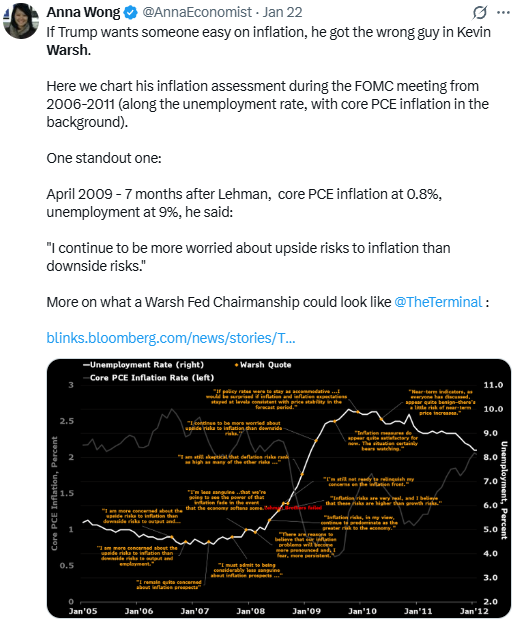
Kevin Warsh nomination has been widely criticized on X. | Credit: Anna Wong X profile
Compared to Jerome Powell, Warsh is often seen as more hawkish, more willing to prioritize inflation control even if it means tighter financial conditions.
Trump’s nomination signals a desire for a Fed Chair who is more openly critical of past policy frameworks, though still operating within the Fed’s institutional constraints. Investors see the pick as a potential shift in tone, if not an outright policy reversal.
Kevin Warsh vs. Jerome Powell: Federal Reserve Leadership Comparison
Warsh is expected to take Jerome Powell’s place. Here are the main differences between the two.
Policy Philosophy
Jerome Powell: Pragmatic, consensus-driven, willing to adapt frameworks.
Kevin Warsh: More skeptical of prolonged intervention and balance sheet expansion.
Interest Rate and Inflation Approach
Powell emphasized flexibility and gradualism, while Warsh is perceived as more comfortable with firmer anti-inflation stances.
Public Trust and Communication Style
Powell cultivated steady, reassuring communication. Warsh is seen as more direct and intellectually rigid, traits that could unsettle or reassure markets, depending on context.
Why the Leadership Change Matters
A shift from Powell to Warsh could alter expectations about how aggressively the Fed responds to inflation, recessions, or financial instability.
Impact of Kevin Warsh as Fed Chair on Financial Markets
When Donald Trump nominated Kevin Warsh to be the next Federal Reserve Chair, global financial markets reacted quickly, pricing in potential changes to U.S. monetary policy and how those would affect key asset prices.
1. Stock Markets and Equities
Financial markets reacted with notable volatility as investors processed the news. Many stock indices, including U.S. stock futures, the S&P 500, Dow Jones, and Nasdaq, moved lower or fluctuated after the announcement. Traders appear uncertain about how Warsh’s leadership might shift interest rate expectations and economic growth forecasts.
This suggests that equities are sensitive to uncertainty around future Fed policy, especially if investors perceive a mix of hawkish (inflation-focused) and dovish (growth-oriented) signals from Warsh’s stance.
2. US Dollar and Bond Markets
The U.S. dollar strengthened modestly after the nomination news, as investors reassessed expectations for monetary policy and potential interest rate direction. A stronger dollar generally reflects either anticipation of higher interest rates or a shift toward central bank independence, both of which can attract foreign capital.
At the same time, Treasury yields, especially on short and medium-term government bonds, increased slightly, indicating that traders are pricing in either slower rate cuts or expectations of persistent inflation pressures.
3. Commodities and Precious Metals
Commodities like gold and silver reacted sharply to the news. Precious metal prices fell significantly in the wake of Warsh’s nomination, as investors rotated away from traditional inflation hedges. A stronger dollar often puts downward pressure on metals, reducing their appeal as a safe-haven asset.
Gold and silver saw notable declines even after strong gains earlier in the month, partly because the market interpreted Warsh’s potential stance as less aggressively inflationary than some had feared.
4. Risk Sentiment and Market Volatility
The overall reaction showcased “risk-off” behavior in some areas of financial markets. Investors sold riskier assets or reduced positions in equities and metals, while defensive assets such as the dollar gained ground. This kind of rotation can occur when markets face uncertainty about how a new Fed leader will balance inflation control with economic growth.
5. Broader Global Market Response
International markets also felt the ripple effects. Some Asian stock markets dipped, while European markets showed mixed responses, reflecting the global influence of U.S. monetary policy expectations. Foreign exchange markets similarly shifted, with currencies like the euro and yen fluctuating against the dollar.
Impact of Kevin Warsh and Federal Reserve Policy on Crypto Markets
The nomination of Kevin Warsh as Fed Chair has already shown early effects on crypto market sentiment, with Bitcoin and other digital assets reacting to expectations about future Federal Reserve policy.
As speculation around Warsh’s likely appointment rose, Bitcoin prices dipped toward lower ranges (around the low $80,000s) and major altcoins such as Ethereum also saw declines, reflecting broader risk-off sentiment among traders.
Warsh’s reputation as a policymaker who may favor tighter monetary policy and reduced liquidity has been interpreted by some investors as a potential headwind for high-risk assets like crypto. A tighter monetary environment often strengthens the U.S. dollar and raises borrowing costs, which can make non-yielding assets like Bitcoin and Ethereum less attractive.
Generally, Federal Reserve decisions on interest rates and liquidity influence crypto prices: lower rates and ample liquidity tend to boost demand for risk assets, while higher rates can dampen speculative investment.
Overall, Kevin Warsh crypto impact is tied to how his leadership affects monetary conditions, investor risk appetite, and the availability of capital flowing into digital asset markets.
What Is the Federal Reserve? Role of the US Central Bank
The Federal Reserve is the central bank of the United States, responsible for managing money supply, credit conditions, and financial stability.
The Federal Open Market Committee (FOMC), which sets interest rates.
Fed decisions ripple through the entire economy, affecting borrowing costs, asset prices, wages, and long-term growth.
What Does the Federal Reserve Chair Do? Powers and Responsibilities
The Fed Chair leads discussions that influence decisions on interest rates, quantitative tightening or easing, and liquidity conditions.
While the Chair is only one vote, their agenda-setting power and influence over consensus make the role exceptionally powerful.
Markets react as much to Fed language as to policy itself. The Chair’s speeches, press conferences, and testimony can move trillions in market value.
Although appointed by the President, the Fed Chair is designed to operate independently to prevent political manipulation of monetary policy.
Federal Reserve Chair vs US President: Who Has More Power?
The Federal Reserve Chair and the U.S. President are both powerful figures in the U.S. government, but their powers are very different in scope and purpose. Understanding their roles helps clarify how economic decisions are made and how political and economic goals interact.
Role of the Federal Reserve Chair
The Federal Reserve Chair leads the Federal Reserve System, the United States’ central bank, which was created in 1913 to manage the monetary system and provide financial stability. The Chair is responsible for overseeing monetary policy, particularly setting the federal funds rate, the benchmark interest rate that influences borrowing costs across the economy, and guiding decisions that affect inflation and employment. The Chair also presides over the FOMC (Federal Open Market Committee), the committee that formally sets monetary policy. Furthermore, the Chair reports to Congress, not the President, and is appointed for a four-year term with Senate approval.
Importantly, the Fed is structured to be independent from political influence so that monetary policy decisions are based on economic conditions rather than electoral politics. This independence is intentional: Congress designed the Fed’s structure to insulate monetary policy from short-term political pressures, helping maintain price stability and long-term credibility.
Role of the US President
The President of the United States leads the executive branch of government and has broad powers over fiscal policy, foreign policy, national security, and the enforcement of laws. The President proposes budgets, signs or vetoes legislation, and sets broad economic goals for the country. However, the President cannot directly set monetary policy or tell the Fed what to do on interest rates or inflation; these powers belong to the Fed.
While the President can nominate the Fed Chair and governors (with Senate confirmation), and can publicly express opinions on interest rates, they cannot directly control the Fed’s decisions. The Fed’s independence means the Chair and governors make decisions based on economic data and long-term goals, not presidential directives.
Features
Federal Reserve Chair
US President
Appointed by
President (Senate confirms)
Elected by voters
Main Power
Monetary policy (interest rates, inflation)
Fiscal policy, government leadership
Can Set Interest Rates?
Yes
No
Independent from Politics?
Yes (designed by law)
No
Reports to
Congress
Public, government
Major Influence
Financial markets, economy’s money supply
Entire government, laws, foreign policy
Criticism of Kevin Warsh and Trump’s Fed Chair Nomination
Some economists argue Warsh underestimated risks during the pre-2008 housing bubble.
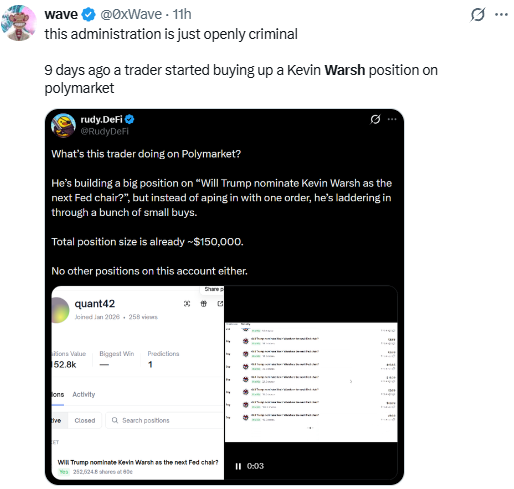
Allegations of insider trading on Polymarket were spreaded on socials. | Credit: Wave X profile
The nomination has reignited debate over whether central banks can remain apolitical in polarized environments.
Supporters see Warsh as disciplined and credible. Critics fear tighter policy and politicization.
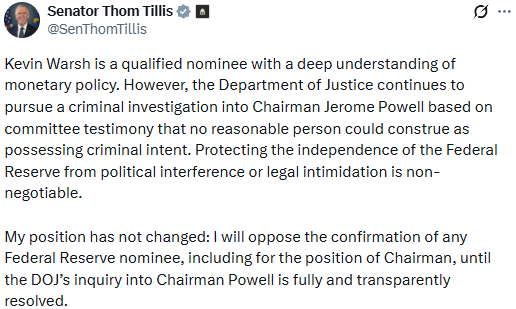
Critics also came from the Republican Party. Sen. Thom Tillis said he will oppose President Donald Trump’s nomination of Kevin Warsh as Federal Reserve chair until the federal criminal probe of current Chair Jerome Powell is fully resolved.
A Republican senator said he’ll oppose Warsh nomination. | Credit: Senator Thom Tillis X profile
The North Carolina Republican’s stance could block Warsh’s nomination from advancing out of the Senate Banking Committee, where a single GOP defection would prevent approval.
“Protecting the independence of the Federal Reserve from political interference or legal intimidation is non-negotiable,” Tillis wrote on X.
Democrats echoed those concerns, with Sen. Elizabeth Warren warning that “no Republican purporting to care about Fed independence should agree to move forward with this nomination.”
How Kevin Warsh as Fed Chair Affects Everyday Americans
As Kevin Warsh becomes Federal Reserve Chair, his decisions on interest rates and monetary policy would influence everyday finances. The Fed’s interest rate guidance affects how much consumers pay to borrow, from mortgages and car loans to credit cards, because changes in the federal funds rate filter through to broader lending costs.
Lower rates usually make loans cheaper and can boost hiring and economic activity, while higher rates can slow price growth but make borrowing more expensive and reduce spending.
Fed policy also shapes inflation, which affects grocery and energy prices, and can indirectly influence job opportunities and wages through broader economic conditions.
What to Watch Next: Senate Confirmation and Policy Direction
Kevin Warsh’s nomination marks a potentially meaningful shift in Federal Reserve leadership. His background, policy views, and relationship with Donald Trump set him apart from Jerome Powell’s tenure.
Now that Kevin Warsh has been nominated by President Donald Trump to be the next Federal Reserve Chair, the next major step is the U.S. Senate confirmation process. Warsh must be approved by a majority vote in the Senate before he can officially take over when Jerome Powell’s term ends in May 2026.
Senators from both parties are already signaling differing views, with some expressing concern about Fed independence and others praising Warsh’s experience. The confirmation hearings will be watched closely for clues about Warsh’s approach to interest rate cuts, inflation and how he might balance political pressure with economic data.
For instance, Senate Banking Committee Chair Tim Scott (R-S.C.) said Warsh has “deep knowledge of markets and monetary policy” that is “essential” for restoring “accountability and credibility” at the Federal Reserve.
After confirmation, markets and the public will look for Warsh’s initial policy direction, especially on whether he leans toward rate cuts, balance sheet changes or other shifts in monetary strategy.
Concerns About Fed Independence
Sen. Elizabeth Warren (D-Mass.) warned that Warsh might be “subservient to Trump” and criticized his past focus on Wall Street over broader economic needs during crises.
Sen. Thom Tillis (R-N.C.) said he would oppose advancing Warsh’s confirmation (even though he called Warsh “qualified”) until a Department of Justice investigation into Jerome Powell, which some see as political pressure, is resolved, arguing that protecting the Fed’s independence is “non-negotiable.”
Some senators, including Republicans like Tillis and others, support Warsh’s background but are tying their stance to broader concerns about legal actions affecting the Fed, signalling a more complicated confirmation than simply agreeing or opposing.
The confirmation hearings will be closely watched for signals on how Warsh would approach interest rate cuts, inflation. And critically, how firmly he would defend Federal Reserve independence, a cornerstone of U.S. and global financial stability.
One thing is clear: the Fed Chair matters, and Kevin Warsh’s rise to the role would place him at the center of America’s, and the global economy’s, next chapter.
Kevin Warsh is a former Federal Reserve Governor and Wall Street executive who has been nominated by Donald Trump to replace Jerome Powell as Chair of the Federal Reserve.
Why did Donald Trump choose Kevin Warsh as Fed Chair?
Trump selected Warsh due to his criticism of past Federal Reserve policies, his focus on inflation control, and his skepticism of prolonged low interest rates and large-scale monetary intervention.
Has Kevin Warsh worked at the Federal Reserve before?
Yes. Kevin Warsh served as a Federal Reserve Governor from 2006 to 2011, including during the 2008 global financial crisis.
What does the Federal Reserve Chair do?
The Federal Reserve Chair leads U.S. monetary policy, influences interest rate decisions, oversees the Federal Open Market Committee (FOMC), and communicates policy direction to markets and Congress.
Disclaimer:
The information provided in this article is for informational purposes only. It is not intended to be, nor should it be construed as, financial advice. We do not make any warranties regarding the completeness, reliability, or accuracy of this information. All investments involve risk, and past performance does not guarantee future results. We recommend consulting a financial advisor before making any investment decisions.
Giuseppe Ciccomascolo began his career as an investigative journalist in Italy, where he contributed to both local and national newspapers, focusing on various financial sectors.
Upon relocating to London, he worked as an analyst for Fitch's CapitalStructure and later as a Senior Reporter for Alliance News. In 2017, Giuseppe transitioned to covering cryptocurrency-related news, producing documentaries and articles on Bitcoin and other emerging digital currencies. He also played a pivotal role in establishing the academy for a cryptocurrency exchange website. Crypto remained his primary area of interest throughout his tenure as a writer for ThirdFloor.


 Easy
Easy