RippleNet and R3 Corda Code Confirm XRP’s ISO 20022 and SWIFT-Ready Infrastructure — Here’s the Proof
Share
Key Takeaways
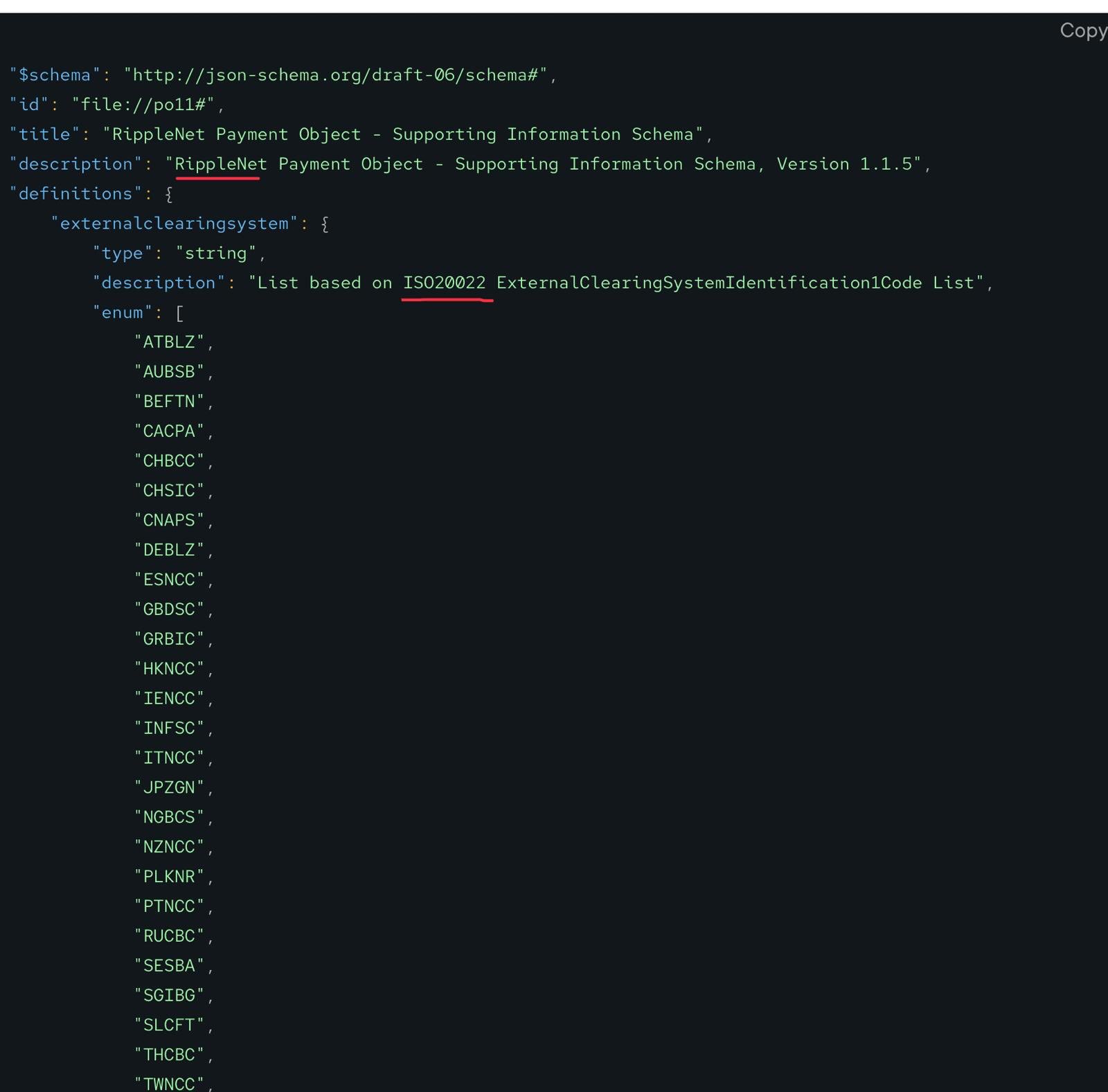
Direct code evidence indicates that RippleNet utilizes ISO 20022 standards, including references to the official list.
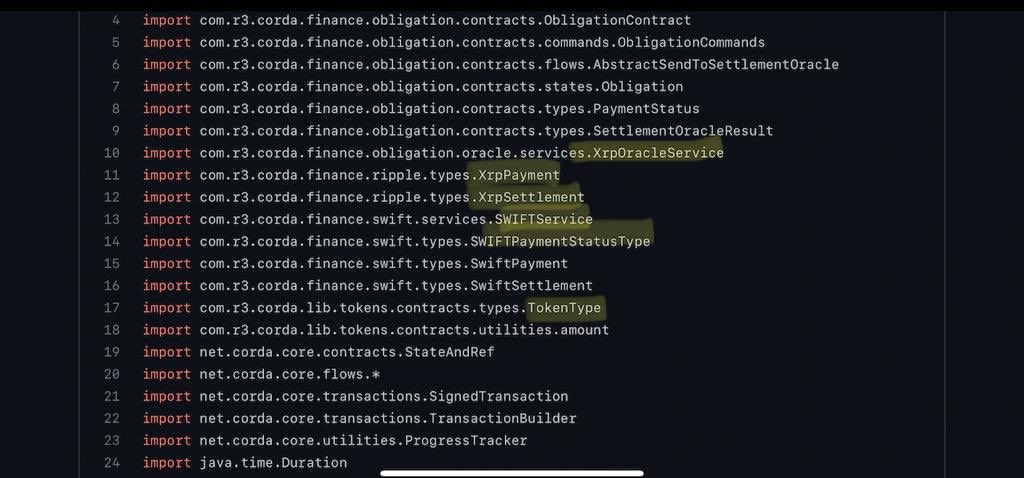
R3 Corda’s codebase imports XRP-related modules, such as XrpPayment and XrpSettlement, which demonstrates that XRP is built directly into its settlement logic.
Any network connecting to SWIFT must support ISO 20022, and the code demonstrates XRP already meets that requirement.
ISO 20022 compatibility improves data quality, reduces errors, and enables richer, standardized payment messaging, making XRP more attractive for banks.
In the payments infrastructure sector, interoperability and messaging standards are the keys to unlocking seamless global payments.
Two of the most essential standards in this space are ISO 20022, a globally standardized messaging format for financial transactions, and the network operated by SWIFT (Society for Worldwide Interbank Financial Telecommunication), which facilitates secure messaging among thousands of financial institutions worldwide.
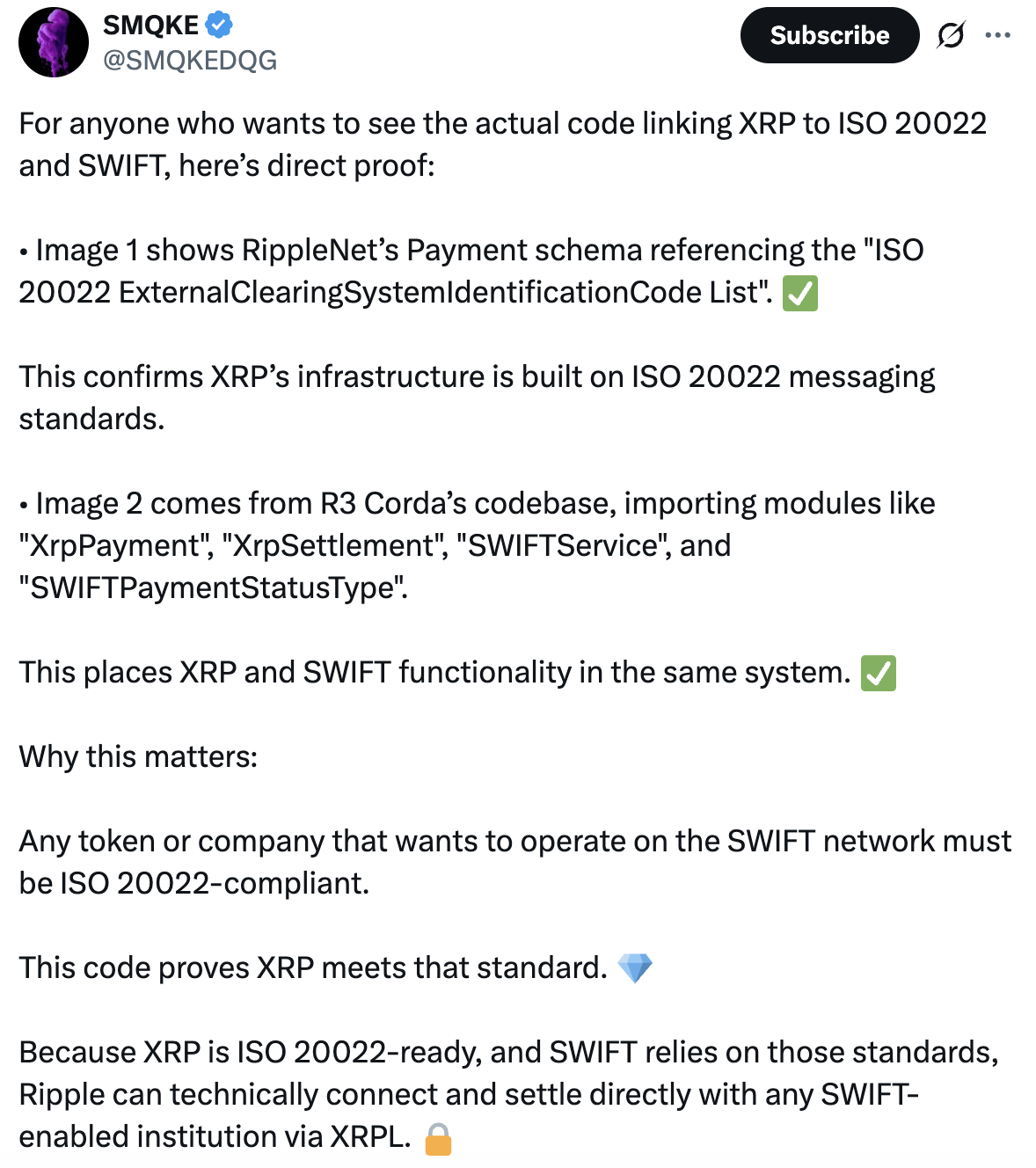
Recently, a tweet highlighted direct code evidence showing that both the infrastructure of Ripple Labs’ network and the codebase of R3 CEV’s Corda platform explicitly reference ISO 20022 messaging and SWIFT services, and crucially, tie them to the digital asset XRP.
This is a significant discovery for the cryptocurrency industry, as it suggests that XRP-based infrastructure is fully ISO 20022-compliant and designed to interoperate with SWIFT-enabled institutions.
This article breaks down the available evidence, explain why it matters, and highlight important implications for institutions, crypto users, and the payments ecosystem.
Code Evidence That XRP Supports ISO 20022 and SWIFT Integration
RippleNet Payment Schema References
The first piece of proof comes from a schema in the RippleNet infrastructure: the payment schema directly references the “ISO 20022 ExternalClearingSystemIdentificationCode List”. This means that when a payment is processed within RippleNet’s architecture, the messaging structure supports external clearing systems in accordance with ISO 20022 naming conventions. The takeaway: XRP-based infrastructure is designed from the ground up to align with ISO 20022 messaging standards.
R3 Corda Code Importing XRP- and SWIFT-Related Modules
The second piece of evidence comes from R3’s Corda codebase. Within the code, modules are imported with names such as “XrpPayment”, “XrpSettlement”, “SWIFTService”, and “SWIFTPaymentStatusType”.
“SWIFTService” and “SWIFTPaymentStatusType” show that the same system also includes services for interacting with SWIFT-type payment statuses and messaging. Together, these imports imply that the same ecosystem is built to handle both XRP settlement and SWIFT messaging/status logic.
Code revelation on X. | Credit: SMQKE X profile
Why This Matters
The code is relevant for a variety of reasons:
Any token or company that wants to operate via SWIFT systems must adopt ISO 20022 messaging standards, which is the standard that SWIFT has mandated for cross-border payment messaging.
The presence of ISO 20022 references in the code indicates that the XRP infrastructure meets the messaging standard that SWIFT expects.
With both XRP-specific modules and SWIFT modules in the same codebase, the implication is that XRP settlement and SWIFT messaging can live in the same system—hence the claim: XRP is “SWIFT-ready”.
Code image 1. | Credit: SMQKE X profileCode image 2. | Credit: SMQKE X profile
Why ISO 20022 and SWIFT Compatibility Matter for Global Payments
ISO 20022 as the Global Payment Language
ISO 20022 is often referred to as the “payment language” of the modern era. It standardizes how messages appear, including the naming of data fields, the types of data used, and the definition of reference data.
As cross-border payments and ledger interoperability become increasingly complex, having all systems communicate using the same messaging language significantly enhances efficiency, reduces errors, and lowers costs.
When a token like XRP is built to comply with ISO 20022 messaging, it means the token’s settlement and messaging logic can integrate into broader financial institution ecosystems that already expect ISO 20022-formatted messages. That’s a huge advantage.
SWIFT Integration and Interoperability
SWIFT is the backbone of global financial messaging for banks and institutions. Even if a new token or distributed ledger technology (DLT) system aims to connect to institutional rails, one of the biggest obstacles is messaging compatibility and regulatory/clearing alignment.
By having SWIFT-service modules alongside XRP modules, the code shows that settlement via XRP and messaging via SWIFT could be engineered in the same system.
This means that, in theory at least, institutions that use SWIFT could settle via XRP through a shared infrastructure, rather than treating crypto as some separate “sideshow”.
What It Means for XRP
For XRP, this code evidence supports the narrative that it isn’t just a speculative token; it is architected for institutional-grade payment settlements, compliance with messaging standards, and interoperability with existing financial messaging networks.
In practical terms:
XRP infrastructure aligns with ISO 20022 messaging.
XRP settlement logic is integrated in frameworks that also handle SWIFT messaging.
Therefore, XRP is designed to integrate with existing institutional payment rails that utilize ISO 20022 and the SWIFT messaging standard.
Real-World Implications of XRP’s ISO 20022 and SWIFT-Ready Design
For Financial Institutions
Banks and payment service providers considering digital-asset rails now have one less excuse to say, “crypto isn’t compatible.” If the infrastructure clearly supports ISO 20022 messaging and SWIFT integration, then the barriers to entry are lower.
An institution might not need to build messy, customized interfaces for crypto; they might simply plug into infrastructure that already adheres to the standards they use.
For Corporates and Cross-Border Payment Users
If XRP-based systems support SWIFT conventions and ISO 20022 messaging, cross‐border payments via XRP could become faster, cheaper, and more transparent. Strong messaging standards lead to better data, improved reconciliation, fewer errors, and the potential for fully traceable payment chains. That reduces risk for corporates and opens new use cases.
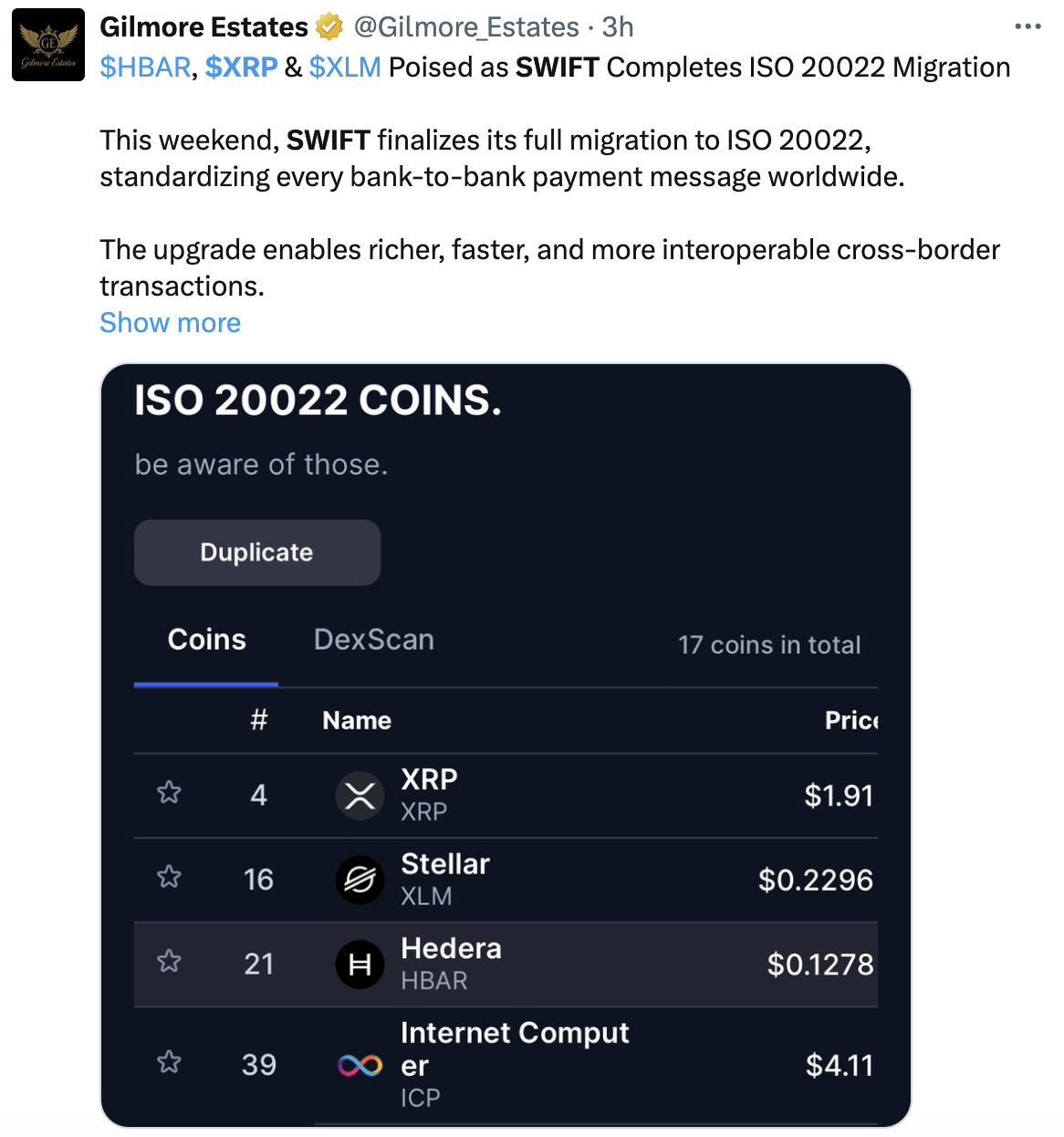
$HBAR, $XRP & $XLM poised as SWIFT completes ISO 20022 migration. | Credit: Gilmore Estates X profile
For the Crypto Ecosystem
This kind of code-level proof strengthens the narrative bridge: that crypto tokens aren’t isolated “speculative assets” far removed from traditional finance, but instead can be built for and directly connected to the same messaging and settlement infrastructure used by global banks.
For XRP specifically, it addresses one of the often-cited critiques: “crypto is incompatible with legacy rails.”
Caveats: Still Some Gaps to Close
While the code evidence is strong, it does not mean that all institutions are currently settling via XRP or that SWIFT has formally endorsed XRP for all its messaging purposes. Some crucial caveats remain:
Governance, regulation, and settlement-finality frameworks still need alignment.
The presence of modules in code doesn’t automatically guarantee full production usage or regulatory compliance everywhere.
Market adoption, liquidity, and institutional confidence remain dependent on numerous factors beyond compliance with standards.
Breaking Down the ISO 20022 and SWIFT References Found in RippleNet and Corda Code
Let’s walk through what the code references tell us and why each point is important.
“ISO 20022 ExternalClearingSystemIdentificationCode List” in RippleNet Schema:
This is a reference data list used in ISO 20022 messages to identify external clearing systems (i.e., your bank’s clearing system or a settlement system).
When a payment message includes “ExternalClearingSystemIdentificationCode”, it means the message specifies which clearing system is used. By referencing that list, RippleNet is clearly aligning its payment schema with ISO 20022 fields.
Modules: “XrpPayment” and “XrpSettlement” in R3 Corda Code:
“XrpPayment” implies a programming module that creates, processes, or handles payments using XRP.
“XrpSettlement” suggests a module that handles final settlement of XRP transactions, possibly the ledger logic that confirms payments.
These modules demonstrate that XRP isn’t just a reference; it will be at the heart of the settlement logic engine.
Modules: “SWIFTService” and “SWIFTPaymentStatusType”:
“SWIFTService” likely refers to logic handling SWIFT-style messaging, such as initiating, tracking, or receiving status updates of SWIFT messages.
“SWIFTPaymentStatusType” implies that payment statuses used in SWIFT messaging (e.g., “acknowledged”, “settled”, “rejected”) are part of the code logic.
Together, these modules demonstrate that the platform will support both SWIFT-style workflow and XRP settlement.
The key takeaway is not just individual modules, but that they co-exist in the same codebase or infrastructure. This means XRP settlement logic and SWIFT messaging logic will work together.
In effect, an institution might send a message via SWIFT, have that message processed by this system, and execute settlement via XRP, all within a framework that utilizes ISO 20022 messaging standards.
Try Our Recommended Crypto Exchanges
Sponsored
Disclosure
We sometimes use affiliate links in our content, when clicking on those we might receive a commission at no extra cost to you. By using this website you agree to our terms and conditions and privacy policy.
How XRP’s ISO 20022 and SWIFT Alignment Could Transform Cross-Border Payments
The recent code evidence linking RippleNet and R3 Corda to ISO 20022 and SWIFT standards has significant implications for the evolution of global payments. By proving that XRP can operate within the same messaging frameworks used by banks worldwide, the benefits extend far beyond technical compatibility.
From faster cross-border transfers to smoother institutional adoption, here’s what this integration could mean for the future of digital settlements.
Faster, lower-cost cross-border payments: Traditional cross-border payments via SWIFT often involve multiple intermediaries, delays, and foreign exchange transactions. If XRP is for settlement, that density of steps can shrink dramatically. Combined with ISO 20022 messaging, the data is richer and more transparent, and settlement could be near‐instant.
Reduced operational risk: ISO 20022 compliance means standardized data fields, resulting in richer information, fewer errors, and better reconciliation. And if an institution can plug into a system that already supports SWIFT messaging and XRP settlement, operational friction and integration costs drop.
More institutions may on-ramp: A significant adoption barrier for digital assets has been “legacy rails incompatibility”. If you can say, “We use the standard messaging format you already use, and we integrate with SWIFT; you don’t need a stand-alone silo for crypto,” then institutions may be more willing to onboard.
Stronger narrative for XRP: Code-level proof strengthens the broader market’s view of XRP and reinforces the narrative that institutions can use it, not just retail traders. That can lead to greater institutional interest, better liquidity, and a stronger value proposition.
Why Cryptocurrencies Themselves Cannot Be ISO 20022-Compliant
A key clarification often misunderstood in crypto discussions is that no cryptocurrency, like XRP, XLM, ETH, BTC, or any other, can be ISO 20022-compliant.
The ISO organization explicitly states that ISO does not certify or “approve” cryptocurrencies. ISO 20022 is a messaging standard, not a blockchain standard, so digital assets themselves do not—and cannot—achieve “ISO 20022 certification”.
Instead, ISO 20022 applies to:
Payment messages.
Data structures.
Financial institution communication.
Clearing and settlement instructions.
Interfaces between systems.
In other words, ISO 20022 governs the messaging between systems, rather than the assets being moved across them.
While no token can be ISO-certified, the infrastructure that sends or receives financial messages involving that token can adopt ISO 20022. Messaging layers, APIs, schemas, and integration modules may follow the ISO standard as part of an institutional workflow.
This creates an important distinction:
XRP (the cryptocurrency) cannot be ISO 20022-compliant.
RippleNet, payment gateways, and R3 Corda modules using XRP can implement ISO 20022-compliant messaging.
This is exactly what the code evidence demonstrates: not that XRP itself is “ISO certified,” but that systems built to use XRP adopt ISO 20022 formats, allowing them to operate inside the same messaging environment that banks and SWIFT use.
This distinction matters because it puts the focus on infrastructure readiness.
Final Thoughts on XRP’s ISO 20022 and SWIFT-Ready Infrastructure
The digital payments environment is shifting rapidly. Legacy systems are under pressure to adapt, and new rails are emerging. What makes a token or network stand out is not just speed or decentralisation: it’s whether it can meet institutional standards and integrate into existing infrastructure.
The code evidence, RippleNet’s ISO 20022 schema references, and R3 Corda’s XRP and SWIFT modules strongly support the idea that XRP’s infrastructure prepares it for this future. It’s ISO 20022-ready, SWIFT-aware, and includes built-in settlement logic for XRP.
Of course, standards compliance and architecture alone do not guarantee success. Adoption, regulation, liquidity, and trust remain essential considerations for the success of any financial system. However, for anyone who doubted that XRP was ready for institutional rails, this code provides a serious reason to reconsider.
Suppose you’re a financial institution technologist, corporate payments operations head, or participant in the crypto ecosystem. In that case, it is worth noting that the infrastructure is catching up, and it may already be live, ushering in a new era of global, efficient payments.
The proof is in the code, and the code shows that XRP is ready for the big leagues.
ISO 20022 is a global financial messaging standard used by banks and payment networks, including SWIFT. It standardizes how payment data is structured, making transactions more accurate, efficient, and interoperable across systems. Any asset or platform aiming to connect with major institutions must comply with this standard.
Does the code really prove that XRP is ISO 20022-compliant?
The code shown in a tweet includes direct references to the “ISO 20022 ExternalClearingSystemIdentificationCode List” within RippleNet’s payment schema. This confirms that Ripple’s infrastructure is built to follow ISO 20022-formatted messaging, meaning XRP-based settlement aligns with the standard.
Does this mean SWIFT officially uses XRP?
No. The code proves compatibility, not that SWIFT has formally adopted XRP. It demonstrates that Ripple and Corda systems are designed to work with SWIFT-style messaging and ISO 20022 requirements, making technical integration possible.
Does this mean an XRP price surge is guaranteed?
No. Technical readiness doesn’t automatically translate to immediate market value. Adoption, regulatory clarity, and institutional demand will determine future price action. The code simply shows XRP is architecturally prepared for the ISO 20022 and SWIFT era.
Disclaimer:
The information provided in this article is for informational purposes only. It is not intended to be, nor should it be construed as, financial advice. We do not make any warranties regarding the completeness, reliability, or accuracy of this information. All investments involve risk, and past performance does not guarantee future results. We recommend consulting a financial advisor before making any investment decisions.
Giuseppe Ciccomascolo began his career as an investigative journalist in Italy, where he contributed to both local and national newspapers, focusing on various financial sectors.
Upon relocating to London, he worked as an analyst for Fitch's CapitalStructure and later as a Senior Reporter for Alliance News. In 2017, Giuseppe transitioned to covering cryptocurrency-related news, producing documentaries and articles on Bitcoin and other emerging digital currencies. He also played a pivotal role in establishing the academy for a cryptocurrency exchange website. Crypto remained his primary area of interest throughout his tenure as a writer for ThirdFloor.


 Easy
Easy