Key Takeaways
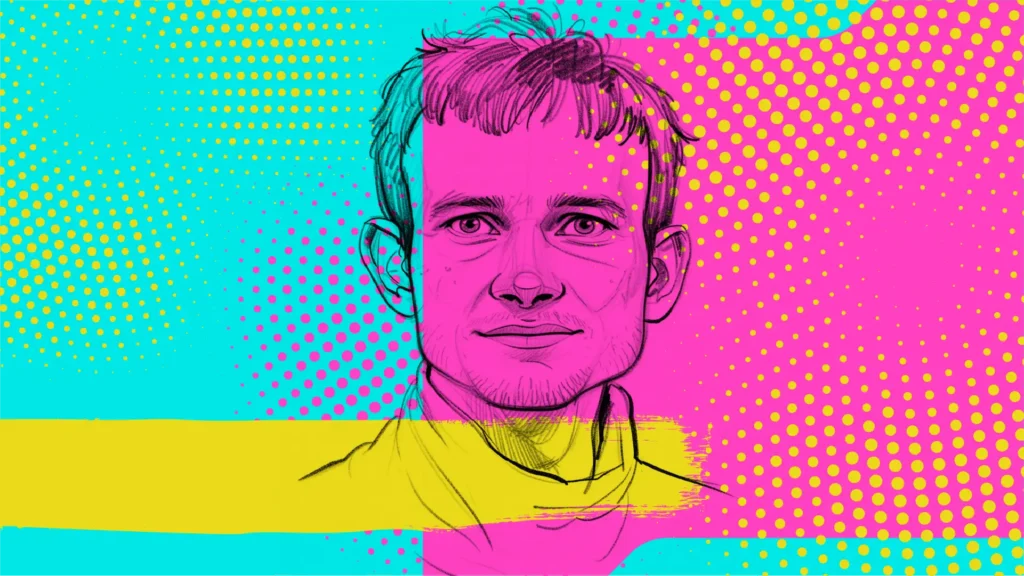
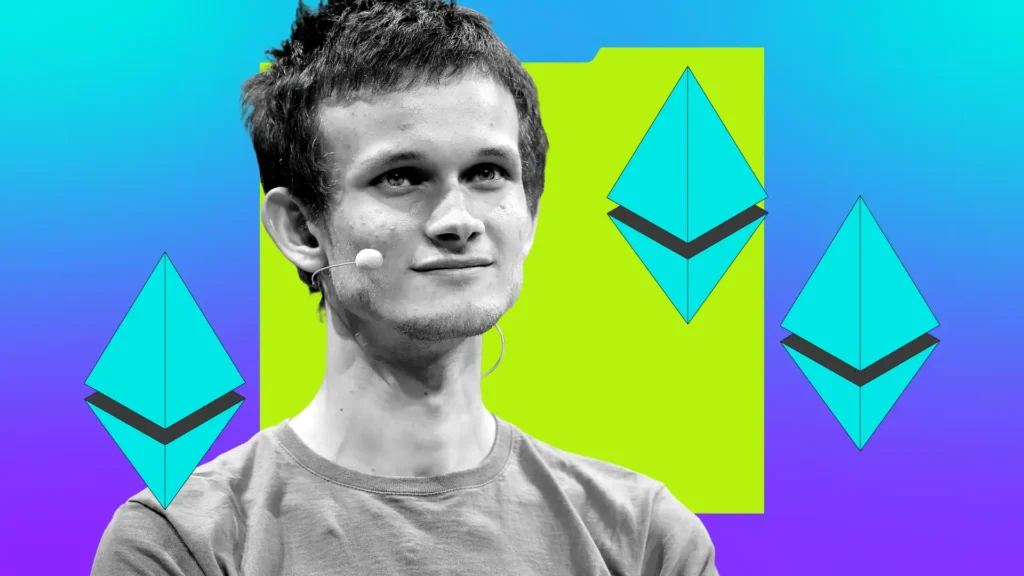
- Vitalik Buterin ranks #1 on CCN’s Top 101 for 2026 for reshaping Ethereum’s roadmap and maintaining influence without centralized control.
- His research-driven leadership and layer-2 focused vision continue to define Ethereum’s direction and broader crypto industry standards.
- As Ethereum enters its next scaling phase, upgrades like Glamsterdam could determine whether it achieves true mainstream adoption.
Each year, CCN’s Top 101 highlights the people shaping the future of crypto. Not just through visibility, but through real, lasting impact.
As we near the end of this year’s Top 101 reveals, the final spot was always going to come down to one question.
Who is shaping not just crypto today, but its long-term direction?
In 2026, no figure carries more weight across that answer than Ethereum’s co-founder, Vitalik Buterin.
In an industry crowded with founders who chase attention, capital, or control, Buterin has spent the better part of a decade doing something rarer.
Shaping the direction of a system he doesn’t own, can’t dictate, and refuses to centralize.
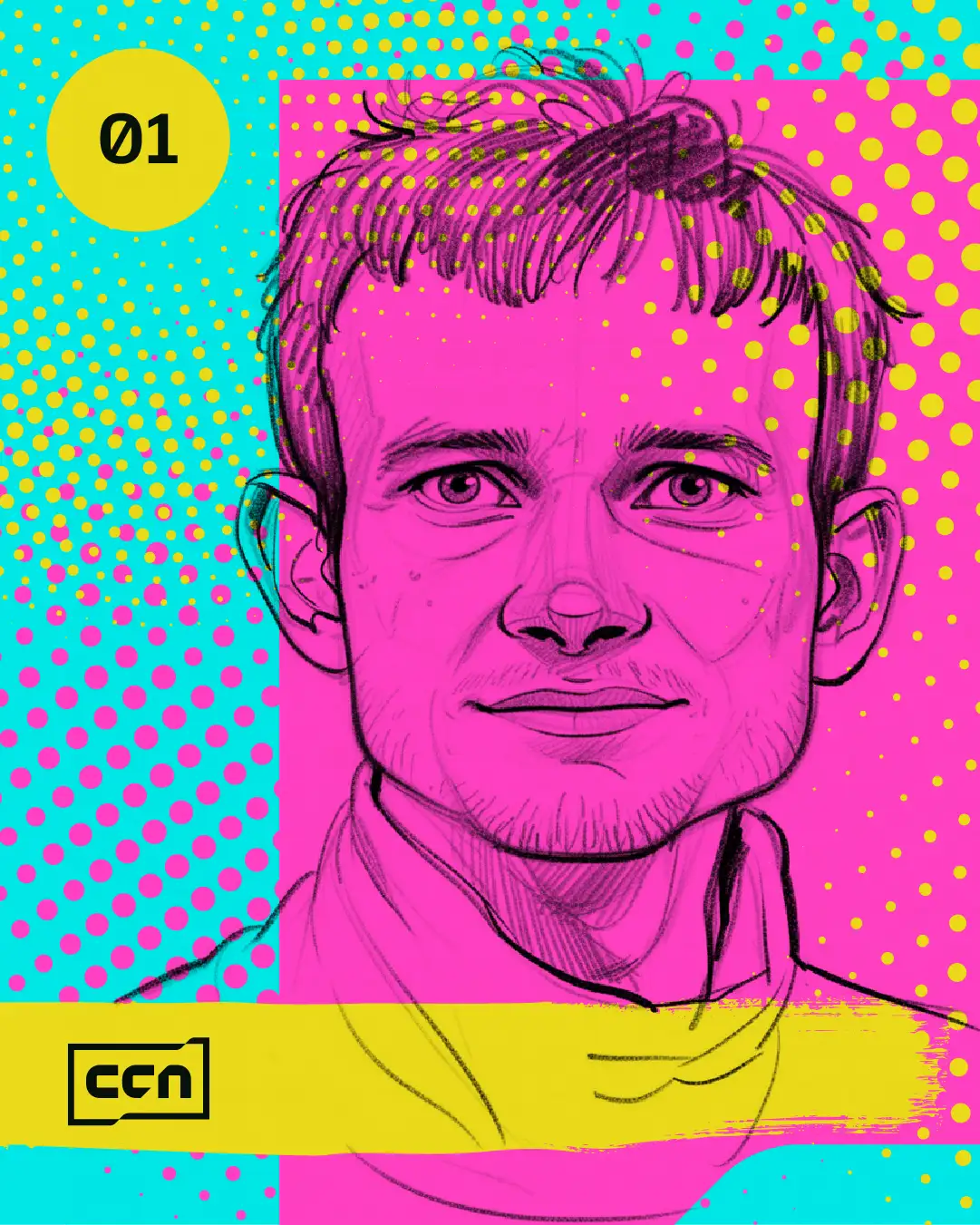
That paradox—outsized influence without formal authority—is exactly why he ranks #1 on CCN’s Top 101 for 2026.
Why Vitalik Buterin Ranks #1
The simplest explanation is also the most obvious. Without Vitalik Buterin, Ethereum doesn’t exist.
He proposed the idea in 2013, launched it in 2015, and turned what began as a whitepaper into the foundational layer for decentralized finance, NFTs, and much of what the industry now calls Web3.
But this ranking isn’t about origin stories. It’s about relevance.
In 2025, Buterin didn’t just reflect on Ethereum’s past—he actively reshaped its future.
At a time when competitors were gaining ground and internal debates were intensifying, he helped reset the roadmap around a layer-2 centric vision, pushing Ethereum toward scalability without sacrificing decentralization.
Upgrades like Glamsterdam, part of Ethereum’s evolving roadmap, are designed to lower costs, increase throughput, and bring the network closer to mainstream usability.
That combination—technical direction, ecosystem alignment, and long-term thinking—is what puts him at the top.
Influence Beyond Ethereum
Buterin’s influence extends far beyond the network he created.
He is one of the few figures in crypto who can shape conversations across the entire industry.
Whether it’s about decentralization, governance, or how blockchain systems should evolve.
His writing alone, ranging from scaling models to philosophical reflections on open systems, has become required reading for developers, founders, and policymakers alike.
And when he speaks, the market listens.
In 2025, that influence showed up in subtle but meaningful ways:
- Endorsing certain layer-2 approaches while cautioning against centralization risks.
- Exploring ETH as a corporate treasury asset, expanding its narrative beyond “gas token.”
- Continuously reinforcing Ethereum’s core principle: decentralization is not optional.
He doesn’t just build. He reframes how others build.
The Architect of Ethereum’s Past, Present, and Future
Ethereum’s biggest challenge today isn’t survival — it’s scale.
And Buterin has made that his focus.
His roadmap for the coming years centers on making Ethereum faster, cheaper, and easier to use without compromising its core values. That includes:
- Modular scaling and layer-2 expansion.
- Lighter, more accessible nodes.
- One-click staking.
- Improvements to staking safety and validator design.
- Long-term research into privacy and decentralization.
The goal is clear: maximize real-world usage while preserving trustless infrastructure.
That’s not an easy balance, and this is where Buterin’s role becomes critical.
He isn’t just proposing upgrades. He’s defining constraints.
Innovation, Not Hype
What separates Buterin from much of the crypto space is his approach to innovation.
He doesn’t chase trends. He interrogates them.
While others push narratives, Buterin tends to break them down—questioning token models, governance assumptions, and even the industry’s obsession with short-term gains.
His work consistently circles back to fundamentals:
- How do systems remain decentralized at scale?
- How do incentives align with long-term value?
- What does sustainable crypto actually look like?
That mindset has helped Ethereum evolve through multiple cycles—from ICO boom to DeFi explosion to institutional adoption—without losing its identity.
Market Impact Without Market Theater
Ethereum remains the second-largest cryptocurrency by market capitalization and underpins a significant share of on-chain activity across DeFi, NFTs, and tokenized assets.
Major shifts in Ethereum’s direction—whether technical upgrades or strategic positioning—ripple through the broader crypto ecosystem.
And yet, Buterin himself rarely leans into that power. There are no grand promises. No price predictions. No theatrics.
Just ideas and their consequences.
A Different Kind of Leadership
Buterin’s leadership style is often described as research-driven — and that’s exactly what it is.
He operates less like a researcher and more like a systems thinker:
- Publishing open research instead of issuing directives.
- Engaging with developers rather than commanding them.
- Letting ideas compete in public rather than enforcing decisions.
Why This Ranking Matters
Putting Vitalik Buterin at #1 isn’t just about acknowledging influence.
It’s about recognizing a type of leadership that’s increasingly rare — not just in crypto, but in tech more broadly.
In a space driven by hype and speculation, Buterin continues to prioritize architecture over attention.
In a market obsessed with speed, he focuses on sustainability. And in an industry still figuring itself out, he remains one of the few consistently thinking several steps ahead.
The Road Ahead
Ethereum’s next phase will determine whether it can truly operate at a global scale.
If upcoming upgrades like Glamsterdam (mid-2026) and Hegota (late 2026) deliver, the network could move from infrastructure for crypto-native users to infrastructure for everyone.
If they don’t, the pressure from faster, cheaper competitors will only grow.
Either way, Buterin will be at the center of that transition—not as a figurehead, but as the person quietly shaping the boundaries of what’s possible.
Who Else Made It To CCN’s Top 101?
Vitalik Buterin may have taken the top spot, but he wasn’t alone in shaping crypto’s trajectory over the past year.
Paolo Ardoino (rank 6) continued to cement Tether’s role as the backbone of global crypto liquidity, with stablecoins becoming essential to everything from trading to cross-border settlements.
Michael Saylor (rank 5) stuck to his “never sell” mantra, drove institutional adoption and the DAT fever, and doubled down on Bitcoin as a treasury asset—buying over 225,027 BTC and solidifying Strategy’s position as the largest corporate holder of Bitcoin.
President Donald Trump (rank 3) drove one of the most significant policy shifts in crypto for one of the world’s most important jurisdictions. It wouldn’t be a stretch to call him the most crypto-friendly U.S. president to date, as he continues pushing for a Strategic Bitcoin Reserve alongside broader pro-crypto regulation at the federal level.
At the asset level, Bitcoin (rank 2) remained the industry’s anchor, setting the tone for macro narratives and institutional flows, while Ethereum (rank 4) continued to dominate on-chain finance and innovation.
Click Here To View all CCN Top 101 Profiles
See You Next Year
Next year, the rankings will change. New founders will emerge.
Exciting narratives will take over. Better technologies will challenge the status quo.
But for now, in 2026, one thing is clear: Vitalik Buterin isn’t just part of the story. He’s still writing it.
See you next year for CCN’s Top 101 in crypto in 2027. Stay tuned!
The information provided in this article is for informational purposes only. It is not intended to be, nor should it be construed as, financial advice. We do not make any warranties regarding the completeness, reliability, or accuracy of this information. All investments involve risk, and past performance does not guarantee future results. We recommend consulting a financial advisor before making any investment decisions.

Insha Zia is the News Editor at CCN. Based in Dubai, United Arab Emirates, he ensures the CCN newsroom provides value to readers by educating, informing, and engaging them with accurate and timely coverage.
Before joining CCN, Insha was a Senior Journalist at DailyCoin, where his career in crypto journalism took off. At DailyCoin he garnered ample experience by covering some of the biggest news in the crypto industry, especially in the Cardano ecosystem, and maintain solid relations with KOLs in the industry.
Insha has worked as a ghostwriter and a developer for three years. He has co-authored numerous articles in reputable publications, including Hackernoon, Yahoo Finance, and Nasdaq. He also has experience as a Solidity Developer and a Data Analyst.
Insha’s developer and journalist backgrounds go hand in hand when educating readers on technically complex concepts within the crypto space. He values accuracy, transparency, and delivering valuable insights to his readers.
Insha firmly believes education can propel the mass adoption of the crypto space. He is committed to giving CCN readers a greater understanding of the technology using his technical background.
Insha earned a Bachelor of Science in Computer Systems Engineering at the University of Engineering and Technology, Peshawar, in 2022. His technical foundation includes expertise in quantitative and qualitative research, data analysis, programming languages, and cybersecurity.
His comprehensive skill set enables him to communicate complex concepts to crypto readers with authority and clarity, making his articles both informative and engaging for his audience.
Insha is determined to take CCN to the top of the industry. When he’s not working on his next article or editing, Insha enjoys playing video games, mainly in FPS and MMORPG genres. He also loves playing soccer and has supported Arsenal since he was six.