Key Takeaways
- Monday is the third anniversary of Ethereum’s transition to proof-of-stake consensus.
- Before and since The Merge, the Ethereum Foundation’s “Privacy & Scaling Explorations” (PSE) team has pioneered exploratory research.
- Rebranded as Privacy Stewards for Ethereum, PSE has a renewed mandate to enhance privacy across the ecosystem.
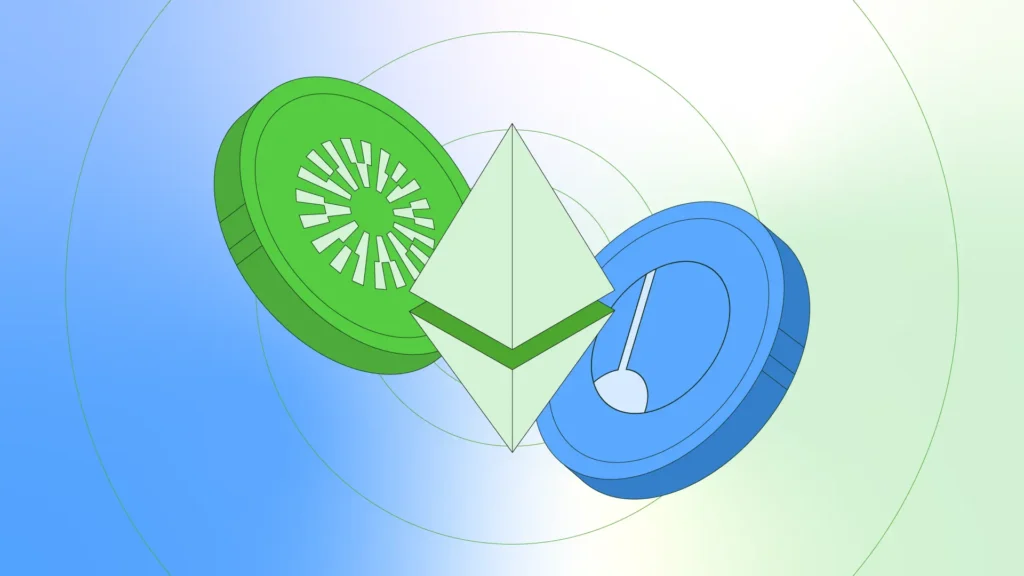
Monday, Sep. 15, marks exactly three years to the day since Ethereum finalized its transition to a proof-of-stake (PoS) consensus mechanism in an upgrade remembered as “The Merge.”
To mark the anniversary, a team of cryptographers committed to Ethereum research and development has launched a new privacy roadmap for the network.
Who Are Privacy Stewards for Ethereum?
The Ethereum Foundation’s “Privacy & Scaling Explorations” (PSE) initiative has traditionally been at the cutting edge of Ethereum research, pioneering new ideas and concepts long before they are widely adopted by the ecosystem.
Before The Merge, the PSE team validated cryptographic primitives that would become essential components of Ethereum’s PoW implementation.
They also prototyped zero-knowledge (zk) solutions that later influenced zkEVM and rollup design. For instance, Polygon zkEVM, Scroll, zkSync, and Taiko all drew on or collaborated with PSE research.
Building on this legacy, PSE is now responsible for enhancing Ethereum’s privacy. Newly rebranded as “Privacy Stewards for Ethereum,” PSE will work with protocol teams to ensure that updates “enable strong, censorship-resistant intermediary-free privacy [to] take place” a blog post announced.
Privacy in the Ethereum Roadmap
The Ethereum roadmap has always been centered on scalability, security, and decentralization. Meanwhile, privacy has traditionally only been a secondary focus.
The launch of Privacy Stewards for Ethereum, however, marks a renewed emphasis on privacy across the technical stack, from protocol and infrastructure upgrades to networking, applications, and wallets.
Going forward, PSE listed its top three priorities as:
- Private transfers
- Private governance
- Confidential DeFi
Private Transfers
PSE’s plans for private transfers rest on an Ethereum research project known as Plasma Fold, that combines the original Plasma architecture with modern zero-knowledge folding schemes.
While Plasma-based Layer 2s (L2s) have largely been superseded by optimistic and zk rollups, Plasma Fold incorporates cryptographic innovations that could usher in a new generation of more private L2 designs.
Thanks to PSE’s research into folding and proof-carrying data, future L2s may be able to aggregate multiple zk-proofs into one compact proof. Transactions could then be “folded” together, so that only small verification proofs need to be posted to the mainnet, not the underlying transaction details.
Private Governance
In today’s Ethereum ecosystem, most decentralized autonomous organizations vote on-chain in a fully transparent way i.e. anyone can see which outcome an address voted for.
Transparent voting introduces the risk of votes being influenced by peer pressure, fear of retaliation, or of reputational damage This is why traditional democratic systems let people vote in private.
Going forward, PSE will collaborate with teams developing voting protocols. It also plans to present a “state of private voting 2025” report outlining current progress.
Confidential DeFi
The same blockchain transparency that makes private voting difficult also applies to trading and investing.
For institutional investors for whom confidentiality is often a legal requirement and a competitive necessity, this has been a significant drag on their participation in Decentralized Finance (DeFi).
As more financial activity occurs on-chain, PSE is working to develop privacy solutions that will let firms invest in tokenized assets without giving their hand away. This will “unblock institutional adoption,” the team claimed.
Change in Focus, Not Direction
While PSE’s rebrand may suggest the initiative has dropped its scaling remit, projects like Plasma Fold still hold the potential to increase Ethereum’s throughput.
Where the goals of scaling and privacy are aligned, PSE will continue working on the same projects as before. But with its mission more narrowly defined, expect privacy to take center stage going forward.
Recommended Secure Partners

James Morales is CCN’s blockchain and crypto policy reporter. He has been working in the news media since 2020, writing about topics such as payments, banking and financial technology. These days, he likes to explore the latest blockchain innovations and the evolving landscape of global crypto regulation.
With an educational background in social anthropology and media studies, James uses his platform as a journalist to explore how new technologies work, why they matter and how they might shape our future.