Key Takeaways
- Vitalik Buterin believes future crypto wallets will heavily integrate AI to simplify user interactions and improve security.
- AI could suggest actions, automate routine tasks, and even remove risky website interfaces that hackers often exploit.
- Buterin warns that large AI models should never control significant funds on their own and insists users must always review and approve important transactions.
For years, one of crypto’s biggest challenges hasn’t been scaling blockchains—it’s making them usable.
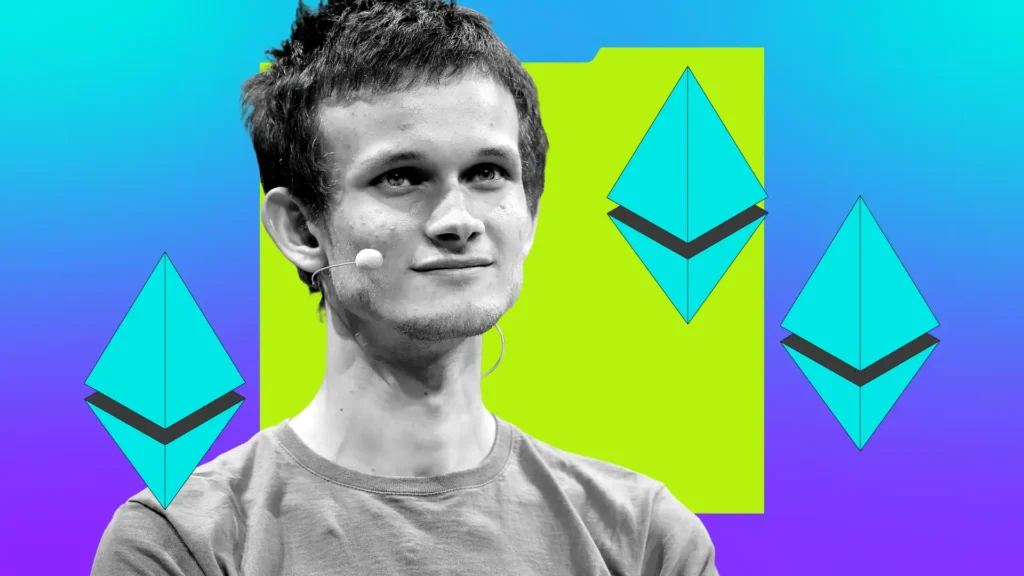
Ethereum co-founder Vitalik Buterin believes the next leap forward in blockchain usability may come from an unexpected partner: artificial intelligence (AI).
In comments shared on March 6, Buterin outlined a vision for the future of crypto wallets in which AI plays a central role, simplifying transactions, protecting users from scams, and removing many of the complex interfaces that currently expose people to hacks.
But his message came with a clear warning: AI may help manage crypto wallets, but it should never be trusted with full control over users’ funds.
AI Wallets Could Transform How People Use Crypto
Crypto wallets today often require users to navigate a maze of decentralized applications, browser extensions, and unfamiliar smart contract interactions.
Each step adds complexity—and potential risk.
Buterin believes AI could radically simplify this process.
“It’s clear that next-generation wallets will heavily rely on artificial intelligence,” he said, describing a future where wallets behave less like static tools and more like intelligent assistants.
Instead of manually interacting with websites and approving multiple contract calls, users could simply describe what they want to do.
The wallet’s AI layer would then interpret the request, assemble the necessary transactions, and guide the user through the process.
The idea goes beyond convenience.
By removing traditional decentralized application (DApp) interfaces, AI-powered wallets could also reduce many of the attack surfaces that hackers exploit.
“Completely removing the DApp’s user interface can eliminate a large number of attack avenues, including theft and privacy breaches,” Buterin explained.
Many crypto attacks today rely on deceptive interfaces—fake websites, malicious approvals, or hidden transaction parameters.
If users interact directly with a trusted wallet agent rather than external websites, those risks could decline significantly.
Automation With Guardrails
Buterin believes AI could also handle many routine wallet actions automatically.
For example, an AI-enabled wallet might monitor transaction patterns, flag suspicious activity, suggest optimal transaction routes, or automate low-risk operations like token swaps or fee optimization.
These capabilities could make crypto far more accessible to non-technical users.
But Buterin repeatedly emphasized that convenience must not come at the expense of security.
Large language models (LLMs), the technology behind many modern AI systems, are powerful but imperfect.
They generate responses probabilistically and can make mistakes, hallucinate information, or be manipulated through adversarial prompts.
For that reason, Buterin argues that AI should assist users—not replace them.
Why Buterin Doesn’t Trust AI With Large Sums
Despite his enthusiasm for AI-powered wallets, Buterin draws a hard line when it comes to high-value transactions.
“I wouldn’t trust a local light client (LLM) to handle millions of dollars in transactions or funds,” he said.
Instead, he proposes a layered approach that combines AI assistance with deterministic security checks and human approval.
“In high-value scenarios, the best workflow is ‘AI proposes a solution, the local light client simulates its execution, and the user views the operation and simulation results and manually confirms them.’”
This hybrid approach reflects a core principle of Ethereum’s design philosophy: security through redundancy.
Rather than relying on a single system to interpret a user’s intent, Buterin suggests combining multiple independent checks—from AI analysis to transaction simulation to explicit user confirmation.
Each layer reduces the chance of catastrophic mistakes.
Simulation Before Confirmation
Buterin has been exploring these ideas for some time.
In February 2026, he published a framework describing how wallets could use transaction simulations to improve safety.
Under that model, users would first specify the action they want to perform—such as swapping tokens or interacting with a DeFi protocol.
The wallet would then simulate the on-chain consequences before asking for confirmation.
“The user specifies first what action they want to take, and then clicks ‘OK’ or ‘Cancel’ after seeing a simulation of the on-chain consequences of that action.”
This process could help users understand exactly what will happen before a transaction is executed—a feature that could prevent many common crypto mistakes.
AI as One Piece of the Security Puzzle
Buterin’s approach also reflects a broader view of artificial intelligence within crypto.
He has previously argued that AI should be treated as just one “angle” through which systems can interpret human intent.
“LLMs should under no circumstances be relied on as a sole determiner of intent,” he said.
At the same time, he acknowledged that AI can be extremely useful in areas where traditional systems struggle—such as interpreting vague instructions, explaining complex transactions, or identifying suspicious activity patterns.
The key, he argues, is combining AI with other tools rather than relying on it alone.
A New Direction for Crypto User Experience
If implemented successfully, AI-powered wallets could represent one of the biggest usability improvements in crypto since the invention of smart contracts.
Today’s blockchain systems often demand technical expertise from users.
Mistakes—such as signing the wrong transaction or interacting with a malicious contract—can lead to irreversible losses.
Buterin’s vision aims to reduce those risks by combining AI assistance, transaction simulations, and user confirmation into a unified workflow.
The result would be wallets that function less like software interfaces and more like trusted digital advisors.
At the same time, his caution about AI highlights an important reality: even as artificial intelligence becomes more capable, human judgment remains essential.
For Buterin, the future of crypto wallets isn’t about replacing users with machines.
It’s about building systems where both work together—each compensating for the other’s weaknesses.
Top Trending Crypto Articles

Prashant Jha is a seasoned crypto journalist based in Delhi, India, with a Bachelor’s Degree in Computer Science Engineering. Passionate about the evolving world of blockchain and cryptocurrencies, he has been a dedicated voice in the industry since 2018. Prashant’s expertise lies in regulatory reporting, where he unravels complex legal and financial developments with clarity and precision. Before joining CCN in 2024, he honed his craft at Cointelegraph, establishing himself as a trusted name in crypto journalism.
His coverage spans major industry events, including the high-profile collapses of FTX, Three Arrows Capital (3AC), and LUNA, offering readers insightful analyses of their regulatory and market implications. Prashant’s technical background enables him to bridge the gap between intricate blockchain technology and its real-world applications, making his work accessible to novices and experts.
Beyond his professional pursuits, Prashant is an avid music enthusiast, often exploring diverse genres to unwind. A sports lover, he has a particular passion for cricket and frequently engages in discussions about the game. His multifaceted interests and sharp journalistic instincts make him a valuable contributor to CCN, where he continues shaping the crypto landscape's narrative.