The Ethereum Foundation staked approximately 22,517 ETH into the Beacon Chain today across 11 transactions, marking the largest single staking event in the foundation’s history.
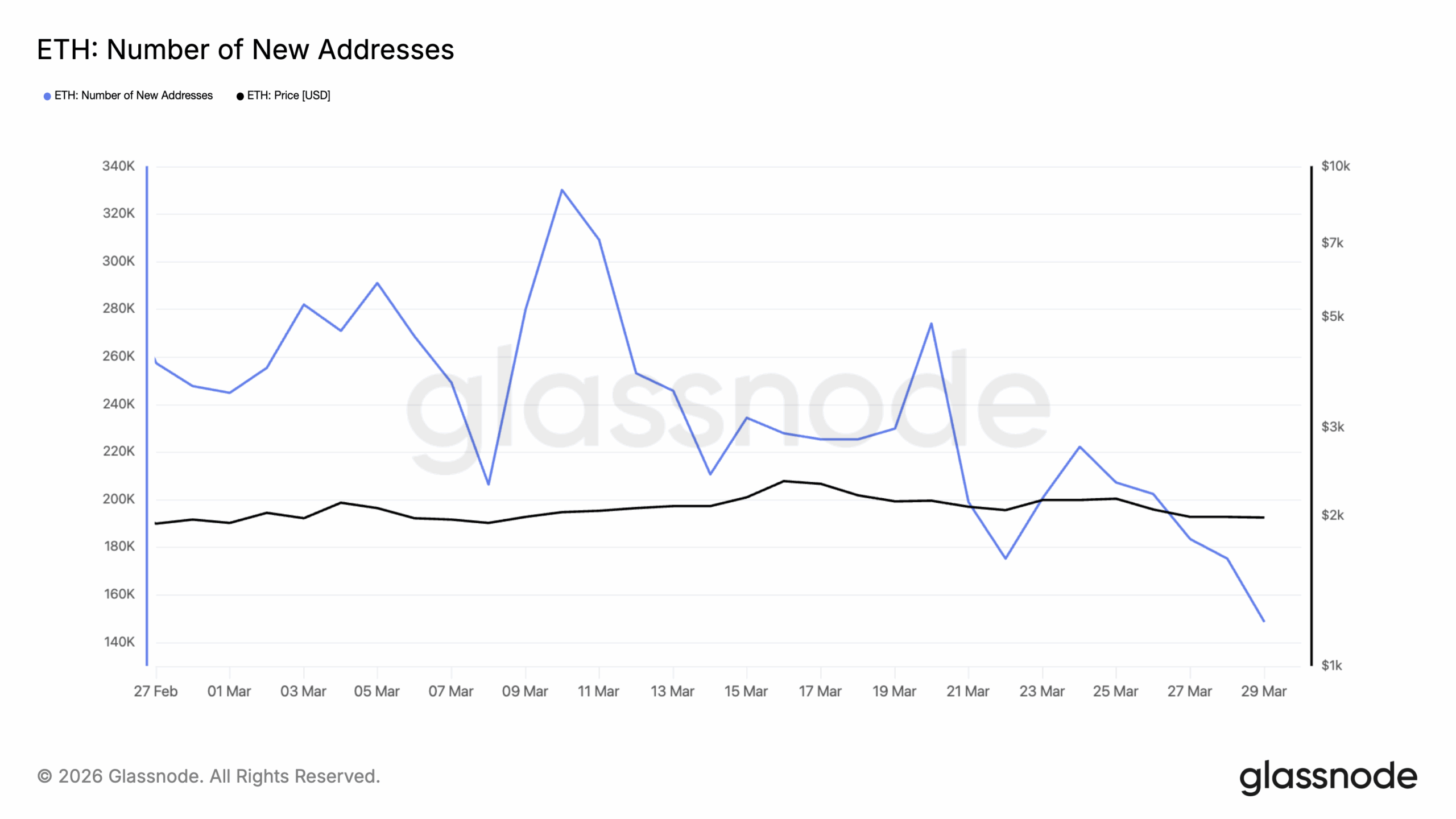
ETH spot ETFs have recorded eight consecutive days of net outflows totaling, while new address creation fell to a monthly low on March 29 — signaling weakening demand from both institutional and retail participants.
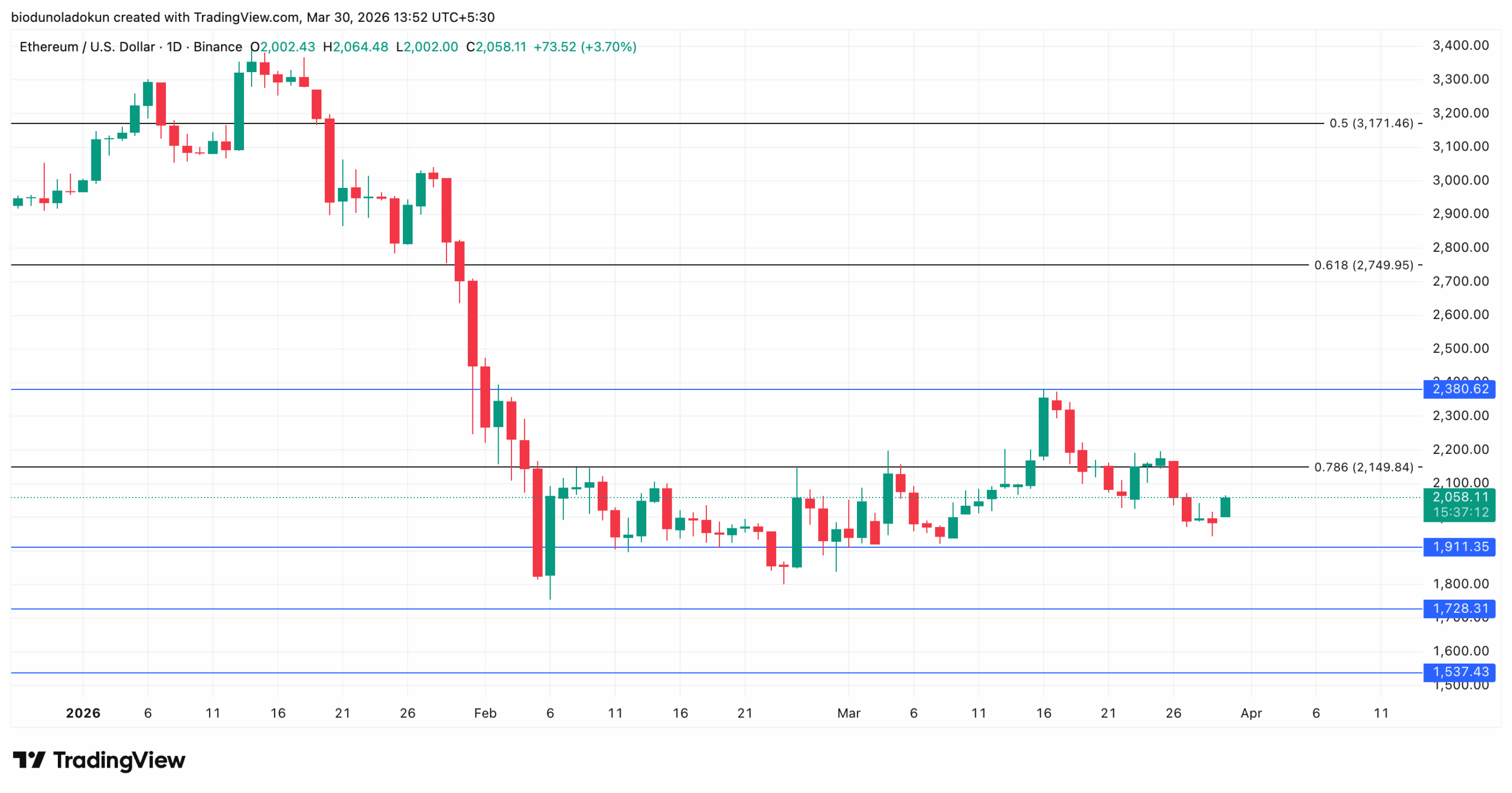
ETH trades at below the 0.786 Fibonacci retracement at $2,149. Failure to reclaim this level could trigger a decline toward $1,728, with $1,385 in view if broader support breaks.
The Ethereum Foundation staked approximately $46.2 million worth of ETH earlier today — its largest staking event on record.
While the move signals deep institutional confidence in the network, deteriorating sentiment and weakening demand may keep ETH’s price under pressure in the near term.
Ethereum Foundation Makes Its Largest ETH Stake on Record
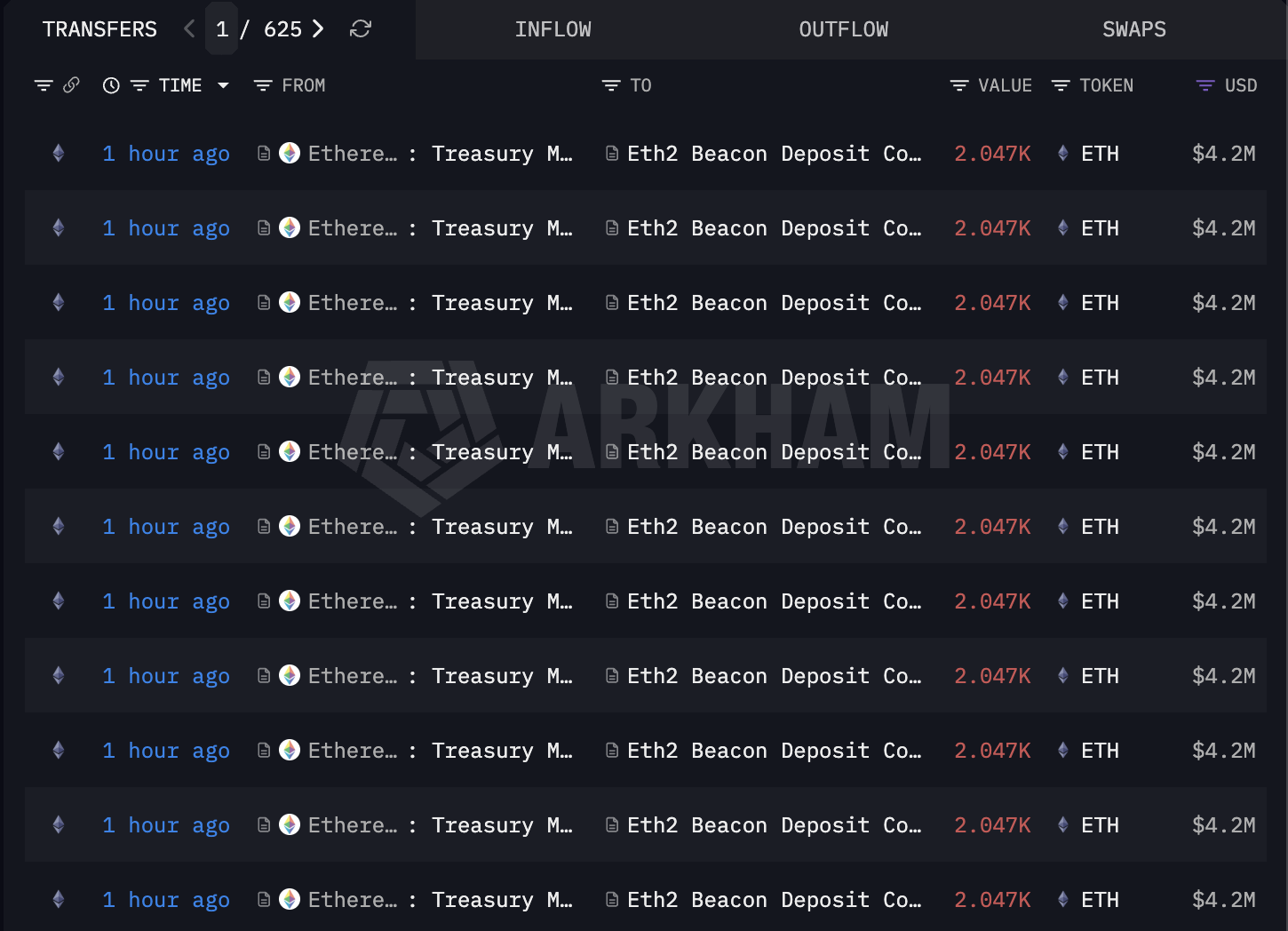
According to Arkham Intel data, the Ethereum Foundation executed 11 transactions approximately one hour ago (at time of writing), transferring 2,047 ETH — worth roughly $4.2 million — per batch from its multisig wallet directly to the ETH 2.0 Beacon Deposit Contract.
Ethereum Foundation Transfers | Credit: Arkham Intel
In total, the foundation staked approximately 22,517 ETH, valued at around $46.2 million at current prices, marking the largest single staking event in the foundation’s history.
By depositing directly into the Beacon Chain, the foundation is actively participating in network validation rather than holding ETH passively.
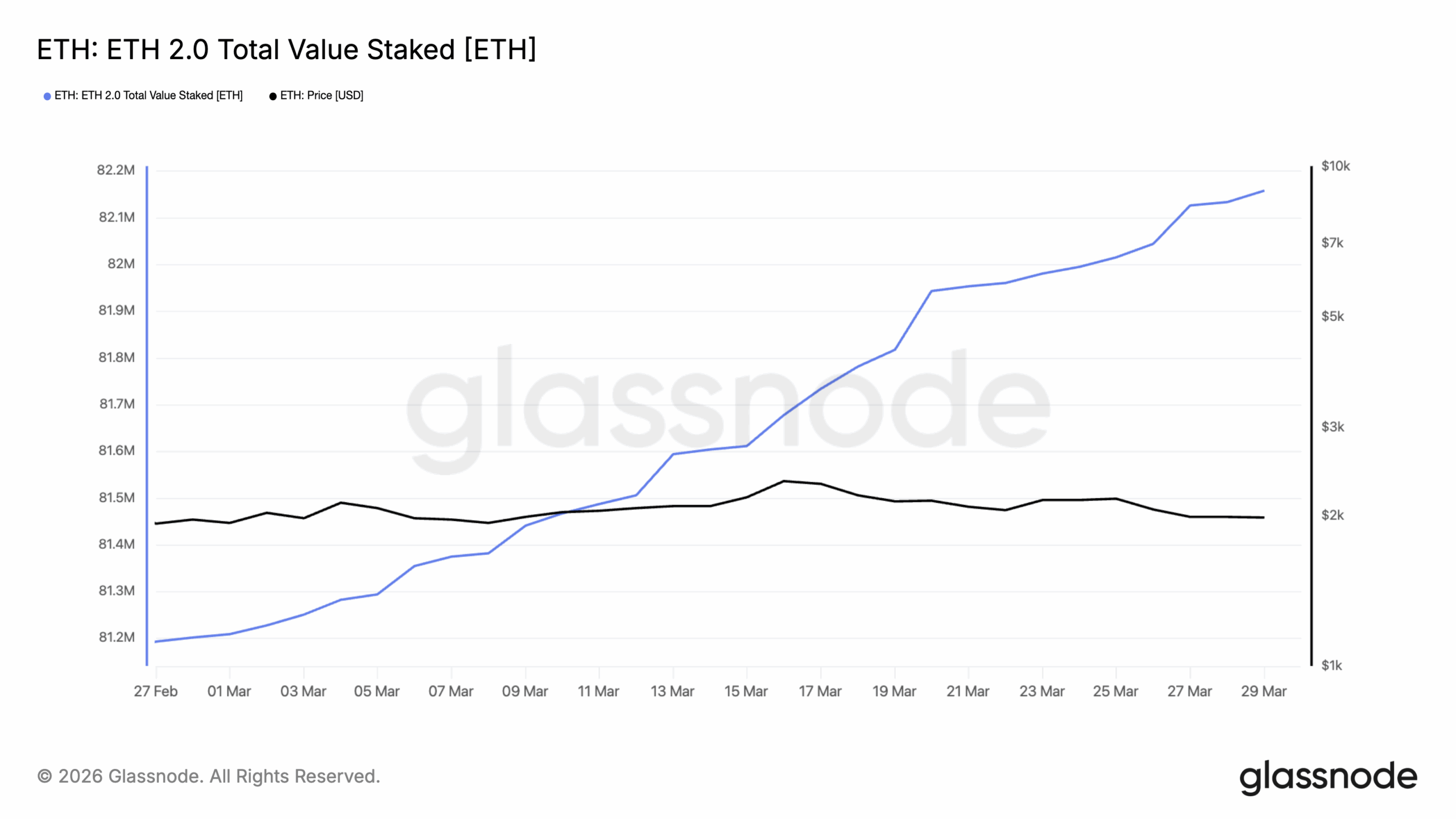
This signals long-term conviction in the blockchain and reduces the coin’s circulating supply, a trend that may push up ETH’s value in the short term. As of this writing, the total value of coins staked on the Ethereum network sits at 82 million ETH.
However, amid macro uncertainty and weakening broader sentiment, ETH’s price may take longer to reflect this.
Institutional and Retail Demand Are Both Weakening
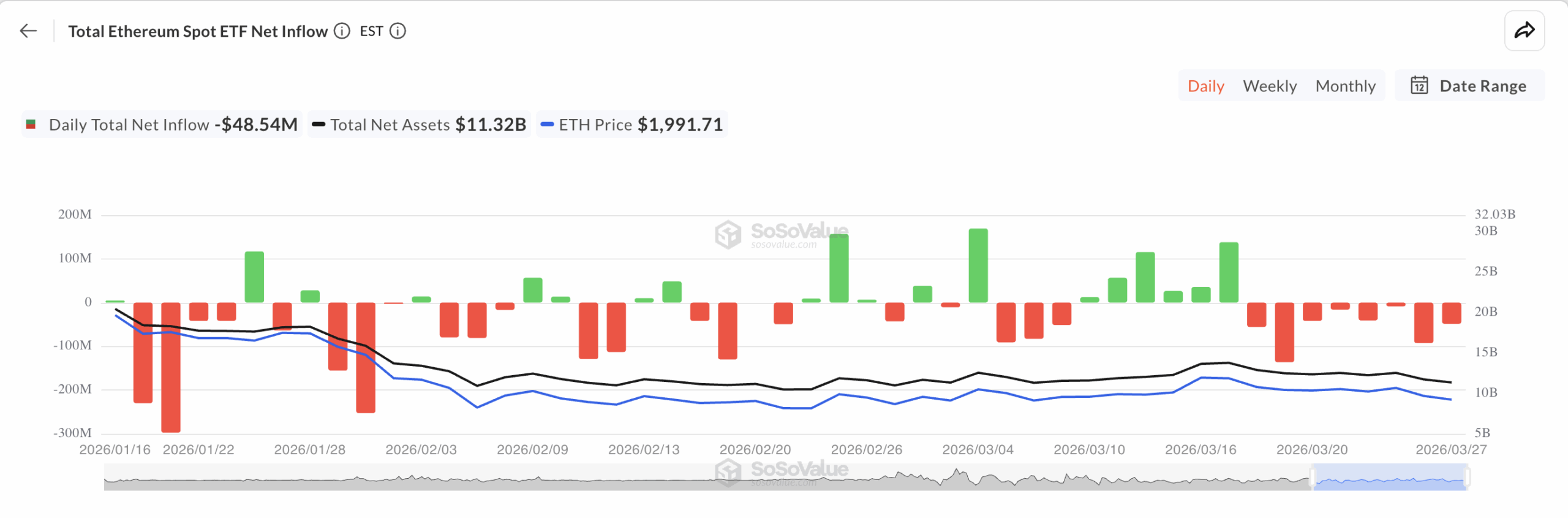
According to SosoValue, ETH spot ETFs have now seen eight straight days of net outflows. Per the data provider, the streak — which began on March 18 — has totaled $448 million in cumulative net outflows over the period.
Total Ethereum Spot ETF Net Inflow | Credit: SosoValue
Total net assets across Ethereum spot ETF products now stand at $11.32 billion, down sharply from the $13 billion seen earlier in the month.
Sustained outflows like this are a direct signal of weakening institutional demand. When spot ETF products record consecutive net outflows, it means more capital is exiting these vehicles than entering.
With new address creation at a monthly low, organic demand for ETH remains weak.
When fresh wallet activity dries up like this, it signals that new capital is not flowing in at the pace needed to absorb selling pressure.
This further heightens the risk that ETH will maintain its sideways trend or enter a decline in the meantime.
ETH Options Traders Are Buying More Protection Than Upside
In today’s options market, demand for puts is also rising, reflecting a tilt toward downside protection among derivatives traders.
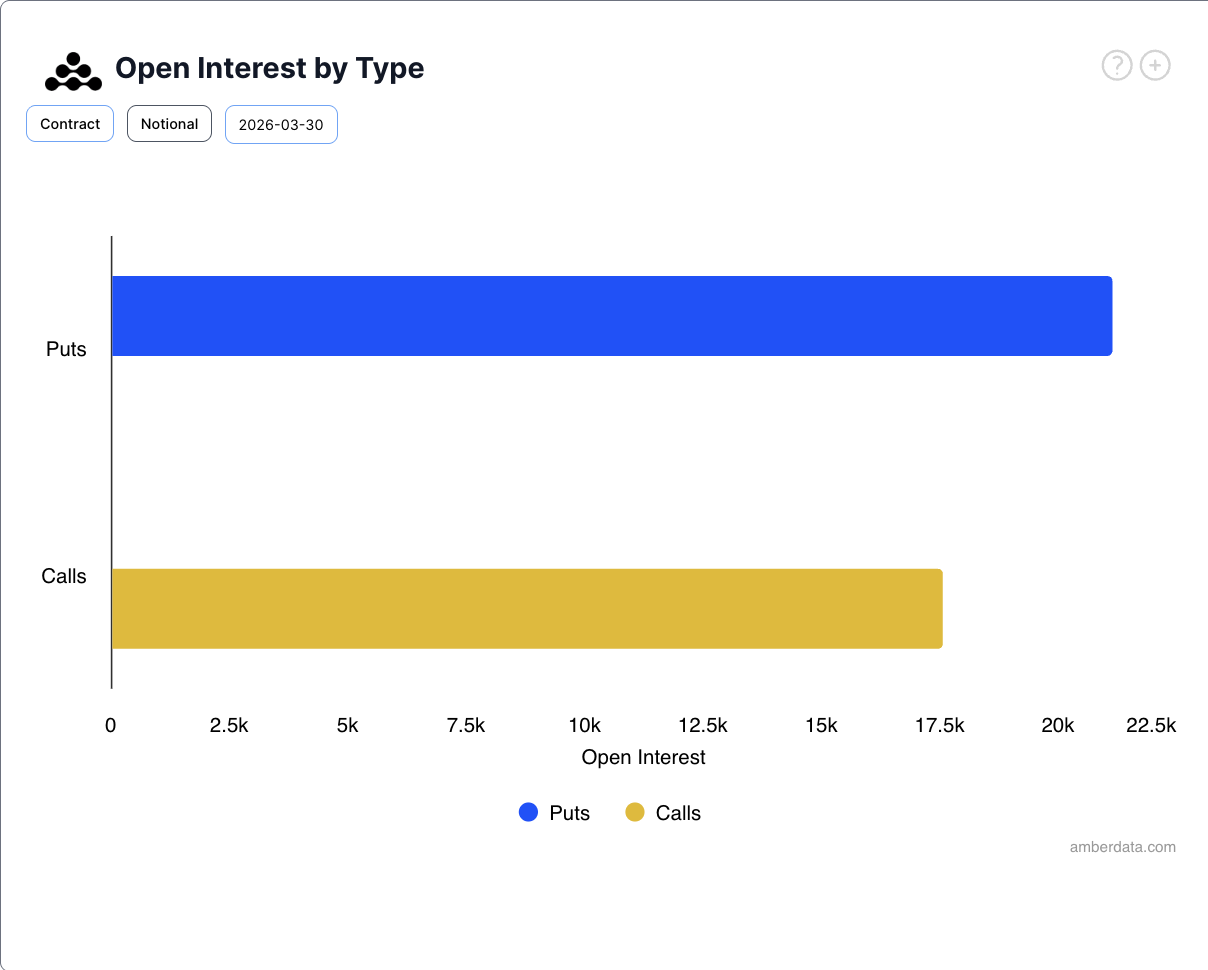
Per Deribit’s options data for March 30, put open interest stands at 22,000 contracts, meaningfully outpacing call open interest at roughly 17,500 contracts.
The gap between the two signals that options traders are currently more focused on hedging against further downside than positioning for a rally.
This bearish skew further confirms ETH’s near-term price weakness.
Key Technical Indicators Are Flashing Bearish Signals
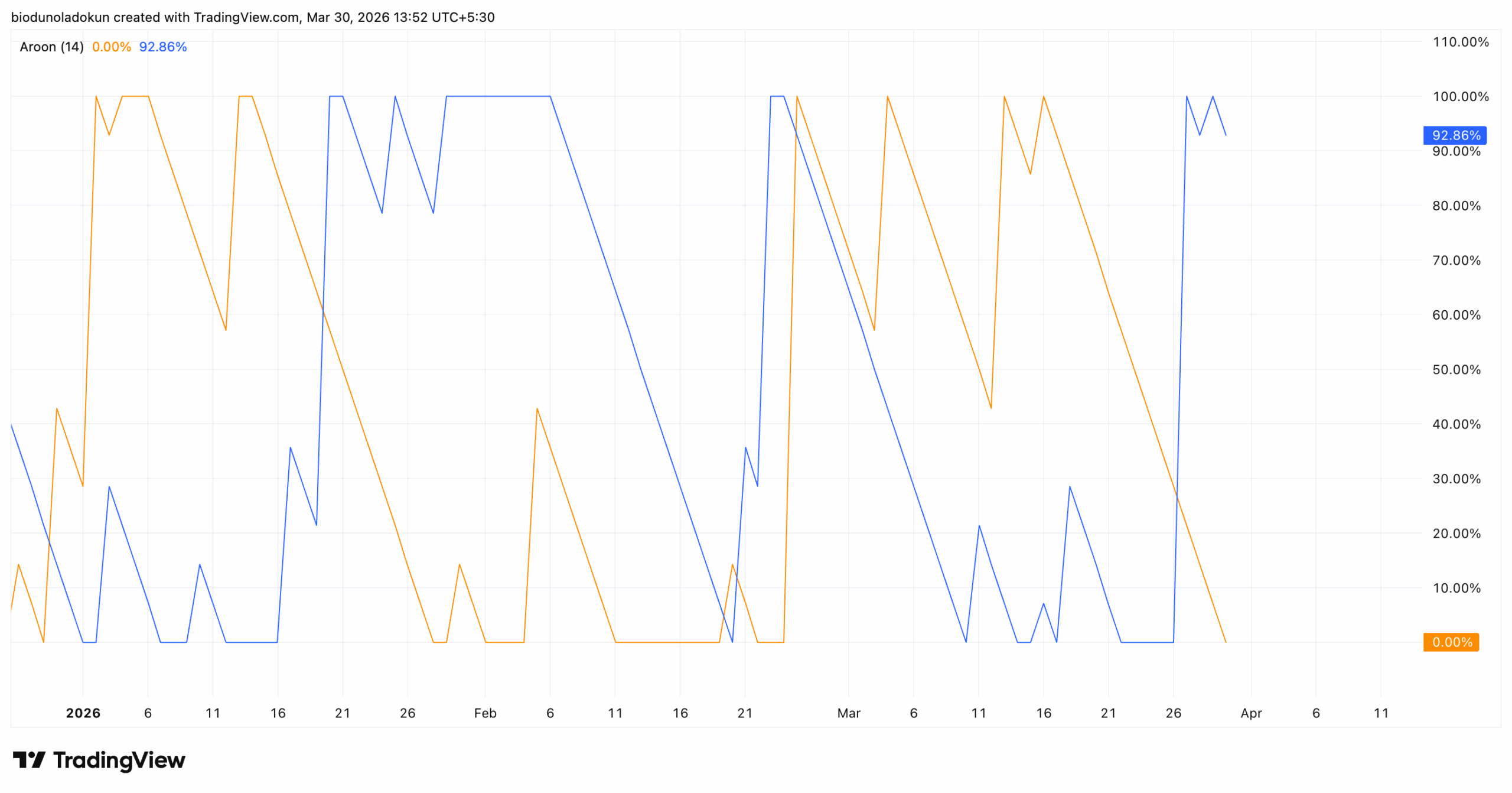
On the daily chart, readings from ETH’s Aroon Indicator reinforce this cautious outlook. As of this writing, the Aroon Up Line is at 0% while the Aroon Down Line is at 92.86%.
The Aroon indicator measures the strength and direction of a trend. It consists of two lines: the Aroon Up, which tracks the time since the last high, and the Aroon Down, which tracks the time since the previous low.
When an asset’s Aroon Down is near 100 while its Aroon Up is simultaneously near 0, it means new lows are being made frequently, with sellers firmly in control.
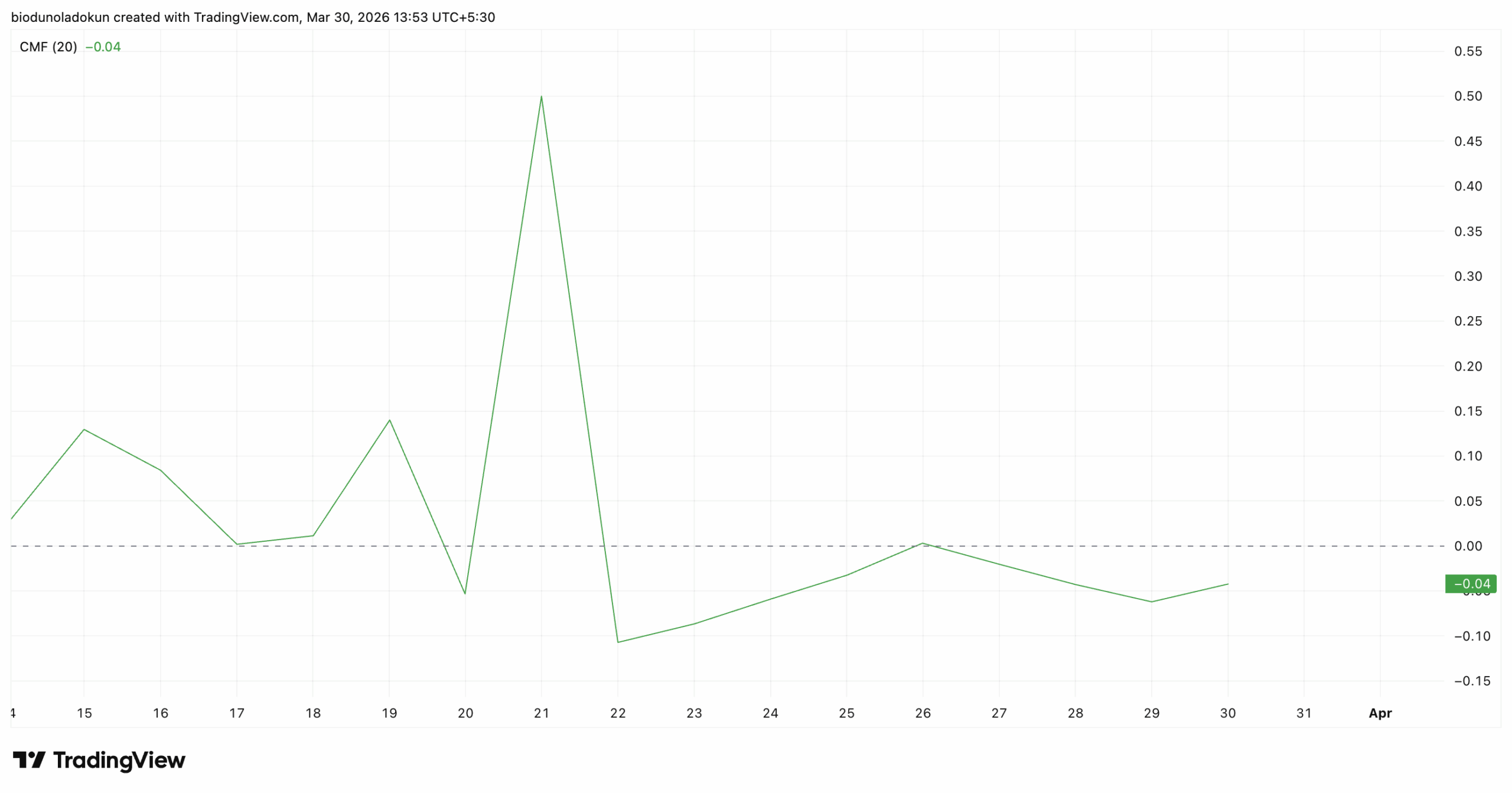
The CMF indicator measures the flow of capital into and out of an asset. When its value is positive, it indicates that buying pressure dominates, suggesting that capital is flowing into the asset.
However, a negative CMF reading, such as the one observed for ETH, signals that selling pressure is stronger and that money is leaving the market.
What To Expect?
Ethereum currently trades at $2,058, below the 0.786 Fibonacci retracement level at $2,149, a zone that has acted as a key ceiling throughout March and which the token has repeatedly failed to reclaim.
If new demand for ETH remains weak, its near-term price trajectory will remain under pressure regardless of the Ethereum Foundation’s staking efforts.
In this scenario, a break below its immediate support floor at $1,911 is likely. Should the bulls fail to defend this level, it could lead to a steeper decline towards $1,728.
On the other hand, if buying activity recovers, institutional demand rockets, and broad sentiment improves, ETH could break above the $2,149 resistance.
It could attempt to trade at $2,380 if a daily close above the 0.786 Fib retracement level is successful. [You-may-like]
Disclaimer:
The information provided in this article is for informational purposes only. It is not intended to be, nor should it be construed as, financial advice. We do not make any warranties regarding the completeness, reliability, or accuracy of this information. All investments involve risk, and past performance does not guarantee future results. We recommend consulting a financial advisor before making any investment decisions.
Abiodun Oladokun is a Research Analyst at CCN, where he covers cryptocurrency markets with a focus on on-chain analysis, technical assessments, and emerging trends across decentralized finance (DeFi), real-world assets (RWA), artificial intelligence (AI), decentralized physical infrastructure networks (DePIN), Layer 2s, and meme coins.
Prior to CCN, he served as a Senior On-Chain Analyst at BeInCrypto, producing market reports spanning diverse crypto sectors.
Before that, he conducted technical analysis and market assessments of various altcoins at AMBCrypto, where he also contributed long-form quarterly research papers on DeFi, NFTs, DAOs, and scaling architectures, leveraging on-chain platforms including Messari, Santiment, DefiLlama, and Dune Analytics.
He began his crypto career as a research analyst at SixthSense DAO, developing blockchain forensic tools to trace the history of stolen assets.
Abiodun is a lawyer called to the Nigerian Bar and the founder of Ilé Ijó, a Lagos-based electronic dance music collective.