Key Takeaways
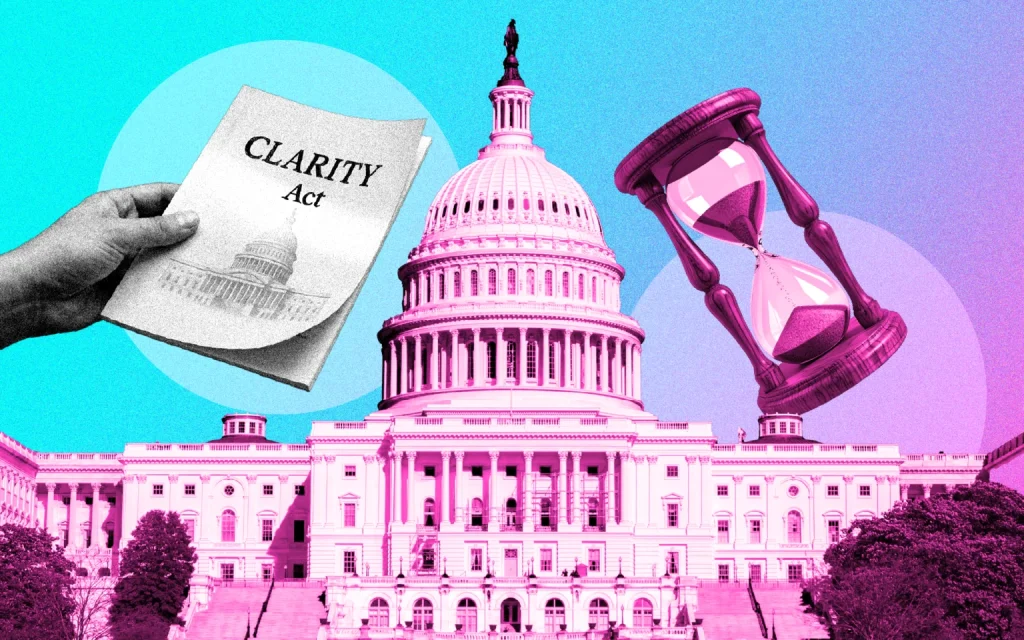
- Senator Elizabeth Warren launched a sweeping attack on the CLARITY Act, tying crypto to Jeffrey Epstein, investor fraud, excessive leverage and banking risk.
- Warren introduced multiple amendments targeting tokenization loopholes, crypto exposure in banking and investor protections — but several key proposals failed.
- Despite the heated rhetoric, crypto-friendly lawmakers continued advancing the bill, signaling growing momentum for U.S. digital asset legislation.
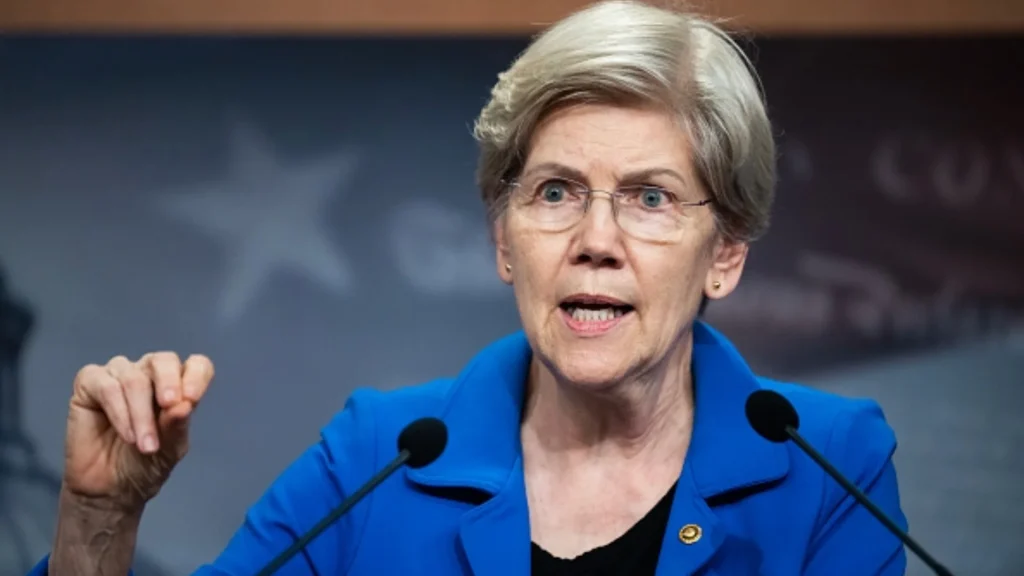
Senator Elizabeth Warren threw nearly every major crypto fear into the Senate debate this week.
Jeffrey Epstein, Tornado Cash, excessive leverage, retirement risks, banking crashes and even echoes of “Operation Chokepoint 2.0.”
And despite the barrage, she still lost.
During today’s Senate Banking Committee session on the CLARITY Act, Warren delivered one of her sharpest attacks yet on the crypto industry.
She argued the bill would weaken investor protections, open dangerous loopholes and expose the broader financial system to unnecessary risk.
But while her warnings dominated parts of the hearing, several of her highest-profile amendments ultimately failed to gain enough support.
Warren Brings Epstein Into the Crypto Debate
One of the most explosive moments came when Warren invoked Jeffrey Epstein while arguing for Amendment 66.
Warren argued that Epstein understood crypto’s value early on as a way to move money discreetly outside traditional oversight channels.
But she also stressed that crypto alone was not the story.
Major Wall Street banks continued servicing Epstein for years after his 2008 conviction while allegedly ignoring glaring warning signs.
She singled out institutions including JPMorgan, Deutsche Bank and Bank of America,.
Warren referenced disclosures tied to thousands of transactions and over $1 billion in reported financial activity linked to Epstein between 1998 and 2013.
“What did the banks know, and when did they know it?” Warren asked the committee.
Her amendment sought to force federal banking regulators to release confidential supervisory records tied to Epstein and known associates.
She argued that hidden examination files could reveal failures by both banks and regulators to stop illicit financial activity earlier.
The exchange quickly became one of the hearing’s most politically charged moments.
Republican lawmakers questioned how the proposal related to the CLARITY Act at all, with one senator bluntly responding:
“The Epstein files have nothing to do with this bill.”
Another senator pressed Warren on how regulators would define “co-conspirators” under the amendment, prompting a tense back-and-forth over court records and already-identified associates such as Ghislaine Maxwell.
Despite the headlines the exchange generated, the amendment failed in an 11-13 vote, adding another defeat to Warren’s broader push for tougher crypto-related restrictions during the hearing.
Warren Says CLARITY Act Leaves Door Open for Terror Financing
Warren also escalated the debate by arguing the CLARITY Act does not go far enough on sanctions enforcement and crypto money laundering.
During the hearing, she warned that terrorist organizations, sanctioned states and criminal networks increasingly rely on crypto infrastructure to move funds outside the traditional banking system.
“While we’re at war, Iran is openly gearing up to collect crypto fees from oil tankers to pass through the Strait of Hormuz,” Warren said, adding that sanctioned entities and illicit actors are increasingly using digital assets to evade restrictions.
According to Warren, the bill effectively leaves regulators without enough authority to isolate decentralized platforms that repeatedly facilitate illicit transactions.
“What purpose does Tornado Cash serve except to hide where the money came from and where the money’s going?” Warren asked. “It’s the terrorists, it’s the money launderers, it’s Iran, it’s sanctioned entities.”
Her amendment sought to explicitly restore sanctions authority over decentralized crypto platforms tied to illicit finance.
Supporters of the CLARITY Act, including Sen. Cynthia Lummis, pushed back.
She argued the legislation already strengthens anti-money laundering and sanctions enforcement provisions while giving law enforcement more tools to investigate illicit activity.
The amendment ultimately failed in another 11-13 committee vote.
Warren Warns Crypto Could Trigger Another Financial Crisis
Warren also used the hearing to push for far tighter restrictions on how banks interact with digital assets, reviving arguments that resemble a return to “Operation Chokepoint 2.0.”
The senator repeatedly warned that integrating crypto deeper into the banking system could recreate the same kind of excessive leverage and speculative risk-taking that contributed to the 2008 financial crisis.
“When this blows up the economy, I hope everybody remembers that,” Warren said during the debate over another amendment addressing leverage and investor protections.
She separately attacked provisions allowing banks to:
- Lend against crypto collateral,
- Trade digital asset derivatives,
- Hold crypto directly,
- and interact with decentralized finance protocols.
According to Warren, the legislation weakens parts of the Dodd-Frank framework by opening the door to riskier proprietary trading involving digital assets.
The ‘Tokenization Loophole’ Fight
Perhaps Warren’s most direct clash came over Amendment 74, where she warned the bill creates a “tokenization loophole” that could allow companies to bypass securities laws by issuing blockchain-based tokens instead of traditional shares.
She argued the proposal could expose pension funds and retirement accounts to poorly regulated crypto-linked products while weakening fraud enforcement.
“My amendment would require investment advisors and other entities in the financial system to develop and implement processes to protect investors,” Warren said.
But Sen. Lummis strongly opposed the measure, arguing it unfairly singled out digital assets and created unnecessary litigation risk.
The amendment failed by another narrow 11-13 vote.
Industry Reaction to the CLARITY Act Committee Vote
Crypto regulation is only beginning, not ending
“It was inevitable that financial regulation would be applied to crypto given the similarities with traditional finance, and fortunate for the industry that the first significant step was taken by a favorably disposed administration,” says Angus Scott, Founder of the Solana Research Institute.
“The CLARITY Act is likely to be merely a first step down a long regulatory road rather than the last word on the subject.
The history of financial regulation since the dawn of the electronic age shows that rule-making happens as a result of changing social attitudes to risk, reward and privilege, combined with the periodic need to shut stable doors that no-one had noticed were left open. History also shows that the unintended consequences of rules are often at least as important as the intended ones.
The ongoing controversy around stablecoin interest in the CLARITY Act suggests we have not yet reached social consensus on the desirability of disruptive change to the financial system. Whether Washington has fully absorbed that regulatory uncertainty is itself a competitive disadvantage is another open question: the UAE, Singapore and Hong Kong have not waited for American consensus to form, and the pace of innovation in blockchain finance is likely to create many more opportunities for horses to bolt before the regulatory fence is complete. Expect a lot more regulatory engagement to come.”
Bipartisan momentum remains the key challenge
“The bill cleared committee 15-9, which is a real result, but it only means something if it marks the beginning of genuine bipartisan momentum rather than the extent of it,” says Markus Levin, co-founder of XYO.
Republicans can’t reach 60 votes on the floor without Democratic support, and the hearing today made clear how much work remains on that front.
What the session exposed is the continuation of bipartisan policy divide. Republicans treated this as a market structure bill. Democrats treated it as an ethics and enforcement bill. Both concerns are legitimate, but they were debated as if addressing one requires abandoning the other.
The Trump conflict-of-interest argument consumed more of today’s session than it probably should have. Democrats repeatedly cited Trump’s memecoin, World Liberty Financial, and broader corruption concerns as reasons the bill can’t move without enforceable ethics guardrails. Those are legitimate concerns but fall outside this committee’s jurisdiction and have to enter the bill at a later stage, which means blocking committee passage over language that couldn’t legally be added here doesn’t produce the guardrails Democrats are asking for. It just burns time in a window that’s already closing before the May 21 recess.
Several members on both sides acknowledged real progress on jurisdiction, disclosures, and consumer protection, and that negotiating space needs to hold and expand. If it does, there’s a credible path to 60 votes. If today’s result was the extent of Democratic movement rather than the beginning of it, the November midterms will change the political math entirely for Republican support, and the next realistic window to pass this isn’t 2027. It’s 2030.”
Crypto Momentum Keeps Growing in Washington
Despite Warren throwing everything she could at the bill.
From Tornado Cash and Iran sanctions to Jeffrey Epstein, banking leverage, tokenization loopholes and more than 40 proposed amendments.
The CLARITY Act still cleared the Senate Banking Committee in a bipartisan 15-9 vote.
That outcome mattered politically because Democrats were widely viewed as holding the deciding votes on whether the legislation could survive committee scrutiny at all.
In the end, two Democrats — Senators Ruben Gallego and Angela Alsobrooks — broke ranks to support the bill.
They helped push one of the most significant crypto market structure proposals in US history one step closer to the Senate floor.
The hearing itself stretched for hours and exposed just how wide the divide remains over crypto’s future in the American financial system.
Lawmakers clashed over DeFi, investor protections, banking access, sanctions enforcement, Trump’s crypto ties and whether digital assets represent innovation or systemic risk.
But beyond the political theater, the broader takeaway was hard to ignore: crypto legislation is no longer confined to the fringe of Washington policy debates.
Just a few years ago, proposals involving stablecoins, tokenization and digital asset market structure struggled to gain serious traction in Congress.
Now lawmakers are actively negotiating how crypto integrates into mainstream finance — not whether it should exist at all.
The CLARITY Act still faces additional hurdles before becoming law.
But after surviving one of the most combative committee hearings crypto legislation has faced yet, the momentum behind US crypto regulation appears stronger than ever.
Recommended Secure Partners
The information provided in this article is for informational purposes only. It is not intended to be, nor should it be construed as, financial advice. We do not make any warranties regarding the completeness, reliability, or accuracy of this information. All investments involve risk, and past performance does not guarantee future results. We recommend consulting a financial advisor before making any investment decisions.

Insha Zia is the News Editor at CCN. Based in Dubai, United Arab Emirates, he ensures the CCN newsroom provides value to readers by educating, informing, and engaging them with accurate and timely coverage.
Before joining CCN, Insha was a Senior Journalist at DailyCoin, where his career in crypto journalism took off. At DailyCoin he garnered ample experience by covering some of the biggest news in the crypto industry, especially in the Cardano ecosystem, and maintain solid relations with KOLs in the industry.
Insha has worked as a ghostwriter and a developer for three years. He has co-authored numerous articles in reputable publications, including Hackernoon, Yahoo Finance, and Nasdaq. He also has experience as a Solidity Developer and a Data Analyst.
Insha’s developer and journalist backgrounds go hand in hand when educating readers on technically complex concepts within the crypto space. He values accuracy, transparency, and delivering valuable insights to his readers.
Insha firmly believes education can propel the mass adoption of the crypto space. He is committed to giving CCN readers a greater understanding of the technology using his technical background.
Insha earned a Bachelor of Science in Computer Systems Engineering at the University of Engineering and Technology, Peshawar, in 2022. His technical foundation includes expertise in quantitative and qualitative research, data analysis, programming languages, and cybersecurity.
His comprehensive skill set enables him to communicate complex concepts to crypto readers with authority and clarity, making his articles both informative and engaging for his audience.
Insha is determined to take CCN to the top of the industry. When he’s not working on his next article or editing, Insha enjoys playing video games, mainly in FPS and MMORPG genres. He also loves playing soccer and has supported Arsenal since he was six.