Key Takeaways
- If implemented at scale, Iran’s proposed toll system could absorb a significant share of newly mined Bitcoin.
- While the scenario is structurally bullish in theory, the actual effect on price hinges on several factors.
- Sanctions pressure and restrictions on traditional financial rails are pushing countries to explore alternatives.
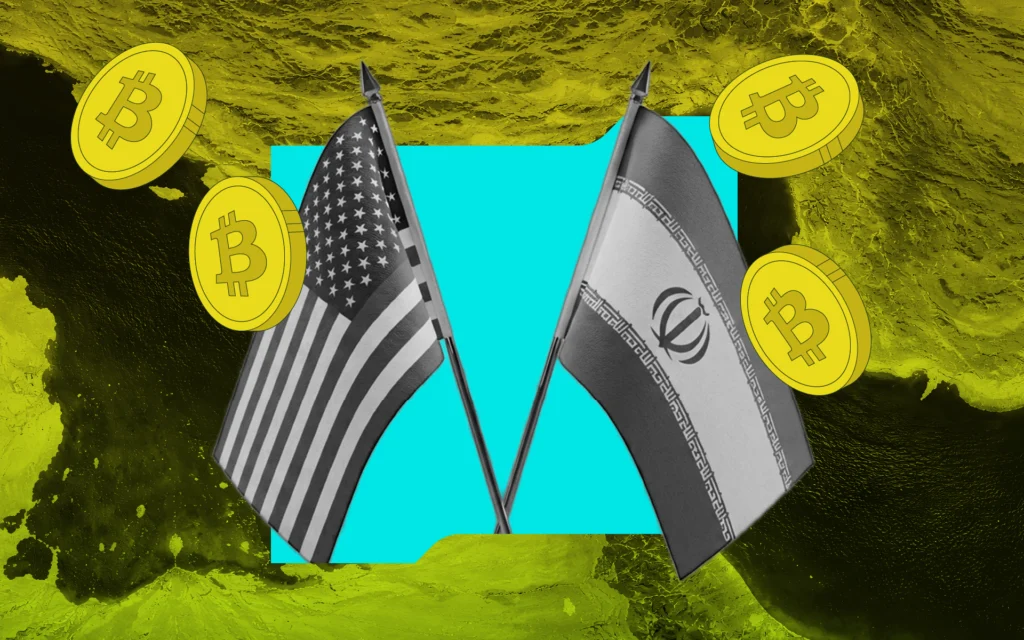
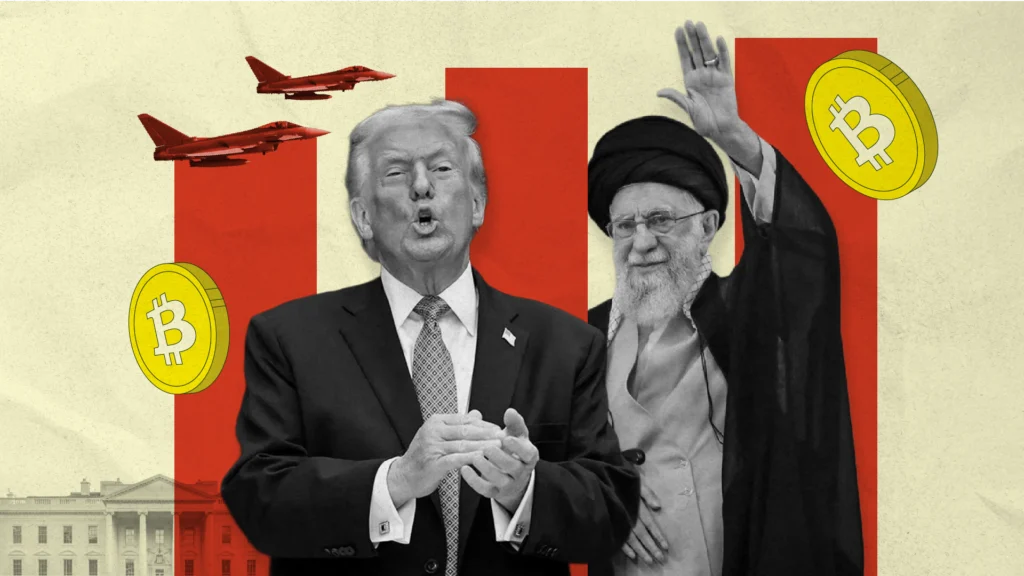
Iran’s proposal to charge oil tankers crypto tolls for passage through the Strait of Hormuz could create a significant new source of demand for Bitcoin.
Some analysts estimate it could absorb more than half of its daily new supply.
The plan, emerging during a fragile ceasefire between Iran and the U.S., has placed a dramatic new angle on what has been an extremely volatile time for the world and its markets.
Chokepoint Meets Fixed-Supply
Iran has indicated it may charge around $1 per barrel for oil shipments transiting the strait, one of the world’s most critical energy chokepoints handling roughly a fifth of global oil flows.
Based on pre-conflict volumes, that would equate to roughly $20 million in daily toll revenue.
At current Bitcoin prices, this translates to about 280 BTC per day, compared with roughly 450 BTC issued daily by the network.
That suggests a single geopolitical bottleneck could theoretically absorb close to 60% of the new Bitcoin supply.
If those assumptions held in practice, it would mark a shift toward structural and non-speculative demand for Bitcoin.
Unlike most current activity, which is driven by investors and traders, a tolling system tied to global oil flows would represent transactional demand anchored in real-world trade.
If those flows were sustained and the Bitcoins collected were not immediately sold, it could reduce market liquidity.
What It Could Do To Bitcoin Price
In supply-demand terms, persistent buying pressure against a fixed issuance rate would be expected to support prices over time.
If Bitcoin received through toll payments were accumulated rather than sold, it could contribute to upward price pressure.
The effect may then be amplified if the wider market saw the development as evidence of growing real-world adoption.
However, the price impact would depend heavily on how the flows are handled in practice.
If Bitcoin were quickly converted into fiat or other currencies, the net effect on price could be limited.
Bitcoin’s Risks And Constraints
There are significant uncertainties around whether such a system could function effectively at scale.
Shipping operations are highly time-sensitive, and reports have shown that Bitcoin transactions can take minutes or longer to confirm.
With this in mind, some crypto users have argued that delays in payment verification could disrupt vessel scheduling, particularly in a congested corridor like the Strait of Hormuz.
Legal and compliance risks also pose challenges.
Many shipowners, insurers and logistics providers operate within Western regulatory frameworks and may be unwilling to participate in a system that could expose them to sanctions risk.
Price volatility presents another complication.
Because tolls would be denominated in dollars but paid in Bitcoin, fluctuations in its value could introduce uncertainty for both payers and recipients during settlement.
Sanctions Pressure
The proposal comes as Tehran seeks to retain oversight of maritime traffic through Hormuz during ceasefire negotiations with Washington.
Iranian officials have said vessels would be required to submit cargo details in advance and pay tolls in digital currencies shortly after approval, in a system designed to minimize exposure to sanctions enforcement, the Financial Times reported on Wednesday.
Hamid Hosseini, a spokesperson for Iran’s Oil, Gas and Petrochemical Products Exporters’ Union, told the publication that the country aimed to collect tolling fees for all ships passing through.
“Iran needs to monitor what goes in and out of the strait to ensure these two weeks aren’t used for transferring weapons,” Hosseini said.
Adding: “Everything can pass through, but the procedure will take time for each vessel, and Iran is not in a rush.”
Why Bitcoin and Not Stablecoins?
Stablecoins such as USDT and USDC dominate crypto trading volumes and are widely used in cross-border payments.
However, some in the industry have noted they may be less viable in a sanctions-sensitive environment like Hormuz.
Unlike Bitcoin, stablecoins are issued by centralized entities that retain the ability to freeze or block transactions.
“The U.S. Treasury is set to propose joint rulemaking … requiring [stablecoin issuers] to implement risk control frameworks with the ability to identify, block, and freeze suspicious transactions,” crypto news outlet Wu Blockchain reported.
The proposals would also require issuers to monitor activity and support law enforcement investigations by tracing transactions.
This creates a key vulnerability for sanctioned actors.
Payments made in stablecoins could be halted or seized if linked to restricted entities.
This could risk their reliability as a settlement tool in politically sensitive trade flows.
Limited Reopening
Iran has signaled that any reopening of the Strait of Hormuz will be tightly managed and conditional.
A senior Iranian official said the waterway could resume operations in a “limited” format under Tehran’s control within days, ahead of talks with U.S. counterparts.
But parallel reporting suggests those flows would be sharply constrained, with Iran indicating to mediators that only a small number of vessels — potentially around a dozen per day — would be allowed through.
Such levels would remain far below pre-conflict traffic and are unlikely to meaningfully ease supply bottlenecks that have built up during the disruption.
At the same time, Washington appears to be exploring its own role in any future arrangement.
U.S. President Donald Trump said he was considering a cooperative framework with Iran to oversee toll collection.
“We’re thinking of doing it as a joint venture,” he said in an interview with ABC News.
It comes after the President posted that the U.S. would “suspend the bombing and attack” of Iran for two weeks.
Celebrations of Bitcoin As Neutral Settlement
Some crypto analysts say the proposal reflects a shift in how Bitcoin is perceived in geopolitically sensitive trade flows.
“Whether this proposal ultimately materializes or not is secondary. The signal itself is what matters,” crypto author Jesse Tevelow wrote on X.
Tevelow argued that Bitcoin’s appeal lies in its resistance to external control.
“No bank can freeze Bitcoin funds. No intermediary can censor it. No foreign government can seize it mid-transaction,” he said.
In an environment where sanctions and restrictions on access to global payment systems have become more common, he described Bitcoin as “a neutral, permissionless settlement layer that exists outside traditional geopolitical control.”
He said this characteristic makes Bitcoin more attractive than both fiat systems and centrally issued digital assets in contested regions.
“If even a fraction of this proposal were to be implemented, it would mark the first time Bitcoin is explicitly positioned as a tool for resolving — or at least navigating — a global conflict,” Tevelow said.
He added that the framing alone signals a shift in how nation-states may view the asset.
“It signals that nation-states now recognize Bitcoin not just as a speculative asset, but as an unparalleled sovereign infrastructure,” he wrote.

Kurt Robson is a London-based reporter at CCN, specialising in the fast-moving worlds of crypto and emerging technology. He began his career covering local news in Cornwall after graduating from Falmouth University with First Class Honours in Journalism. There, he cut his teeth on everything from council meetings to missing swans.
He quickly rose through the ranks to become a frontline journalist at several of the UK’s leading national newspapers. Over the years, he has interviewed musicians and celebrities, reported from courtrooms and crime scenes, and secured multiple front-page exclusives.
Following the upheaval of the COVID-19 pandemic, Kurt shifted his focus to technology journalism—just ahead of the AI boom. With a natural curiosity and a trained eye for emerging trends, he has found a new rhythm in reporting on innovation.
At CCN, Kurt's work focuses on the cutting edge of crypto, blockchain, AI, and the evolving digital world. Drawing on his background in people-first reporting and his deep interest in disruptive tech, Kurt delivers stories that are insightful, entertaining, and human-centric.