Key Takeaways
- The US Senate Banking Committee will review more than 100 proposed amendments to the CLARITY Act on May 14.
- Stablecoin yield products remain a major point of contention.
- Industry executives are divided on the bill’s impact.
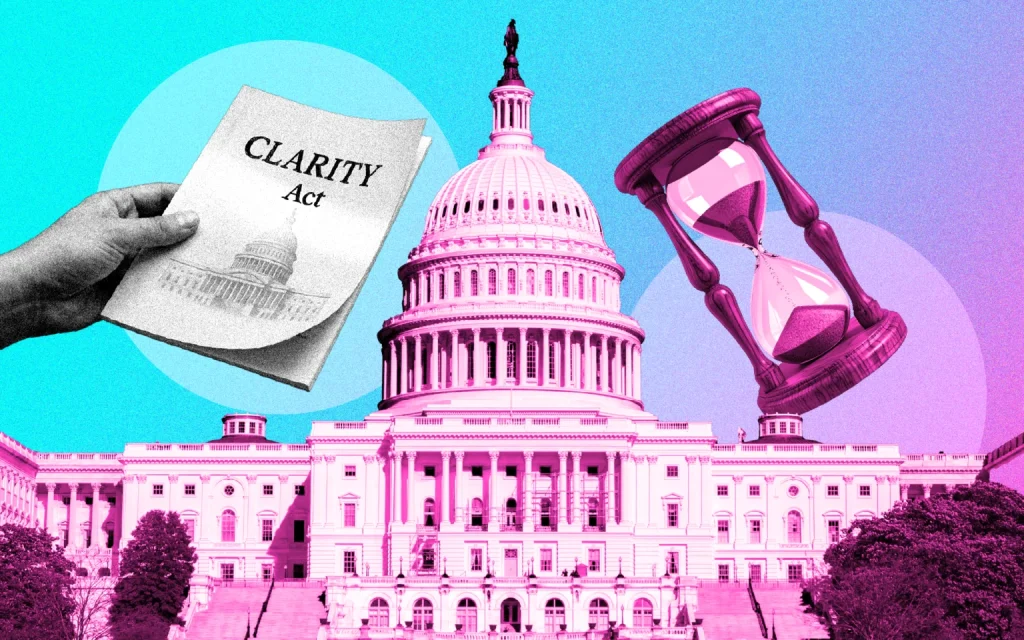
The US Senate Banking Committee is preparing to review more than 100 proposed amendments to the CLARITY Act on May 14, highlighting continued disagreements and obstacles to passing the landmark bill.
Most of the proposed changes were submitted by Democratic lawmakers, including more than 40 amendments from Senator Elizabeth Warren, according to reports from POLITICO and industry journalists.
It comes as industry executives respond to the progress of the act, with many claiming it could have a profound impact on the competitiveness of the US.
Stablecoin Provisions Continue To Drive CLARITY Act Disputes
The committee’s markup session follows the release of an updated version of the bill earlier this week.
CLARITY Act’s revised draft expanded to 309 pages from January’s 278-page proposal and revived negotiations that had slowed after Coinbase withdrew from talks.
Debate around stablecoin yield products remains one of the central sticking points in negotiations.
Several lawmakers are pushing for tighter language governing digital assets that could resemble traditional deposit accounts.
Senators Jack Reed and Tina Smith proposed amendments aimed at strengthening standards for products that offer users returns similar to interest payments.
Banking groups have argued that some stablecoin products could compete directly with savings accounts if they allow issuers to distribute rewards tied to reserve income.
Crypto companies, meanwhile, say reward programs are widely used across trading platforms and help support customer activity and liquidity.
The American Bankers Association has stepped up lobbying efforts ahead of the committee vote, with reports indicating the group contacted Senate offices thousands of times in recent days.
Ethics In Question
Senator Chris Van Hollen introduced a proposal that would prohibit senior government officials and their families from owning or promoting crypto-related businesses.
Another amendment from Senator Catherine Cortez Masto seeks to create legal protections for software developers who do not hold or control customer funds.
Supporters of the bill argue the framework could replace years of enforcement-led policymaking with clearer rules for the industry.
Critics, however, warn the legislation could leave regulators with insufficient oversight of rapidly expanding crypto products.
Industry Executives Respond To CLARITY Act
Many crypto and financial technology executives said the outcome of the May 14 markup could shape the future direction of digital asset regulation in the US.
Anil Oncu, chief executive of Bitpace, told CCN that the dispute surrounding stablecoin yield reflected broader challenges in applying existing financial rules to blockchain-based products.
“Existing financial regulations were not built for digital-native payment systems,” Oncu said.
They added that the Act should focus on “adding assurance and control.”
Oncu said while yield-bearing stablecoins can offer advantages, he said it needs to be “fully backed by high-quality liquid assets and subject to clear supervisory oversight.”
Meanwhile, Jason Rindahl, chief executive of Nebula DeFi, said lawmakers appeared to be making progress by distinguishing between products that function like bank deposits and crypto reward systems.
Rindahl said clearer regulatory boundaries could encourage investment in the US and reduce incentives for crypto firms to expand overseas.
Evan Auyang, group president at Animoca Brands, also said the legislation carried broader implications for US competitiveness.
Auyang noted how jurisdictions including the EU, Hong Kong and Singapore had already introduced digital asset frameworks that were attracting investment and blockchain development activity.
Viv Diwakar, head of the Canton Foundation, said delays to the bill could prolong uncertainty for firms using blockchain technology in financial infrastructure and settlement systems.
“…it would continue treating speculative crypto activity and blockchain-based market infrastructure as though they are the same thing,” Diwaker said.
He added that without the distinction of digital assets as instruments and blockchain networks as the rails, legislation “will continue to lag behind the reality of finance moving on-chain, rather than help shape it.”
Arthur Hayes Not Convinced
Not all executives believe the CLARITY Act will materially change the long-term outlook for Bitcoin or the broader digital asset market.
Speaking at the Consensus 2026 conference, BitMEX co-founder Arthur Hayes downplayed the significance of pending US crypto legislation.
He argued that macroeconomic conditions and global liquidity remain the primary forces driving digital asset prices.
Hayes said efforts to establish clearer rules for stablecoins and crypto markets would have limited impact without broader monetary expansion from central banks.
“Regulation alone does not create value for these assets,” Hayes said.
He argued that Bitcoin’s growth since 2009 demonstrated that the market had already expanded without formal regulatory clarity.
Hayes also said regulation was more likely to benefit centralized crypto businesses and financial institutions than decentralized assets themselves.
Top Trending Crypto Articles

Kurt Robson is a London-based reporter at CCN, specialising in the fast-moving worlds of crypto and emerging technology. He began his career covering local news in Cornwall after graduating from Falmouth University with First Class Honours in Journalism. There, he cut his teeth on everything from council meetings to missing swans.
He quickly rose through the ranks to become a frontline journalist at several of the UK’s leading national newspapers. Over the years, he has interviewed musicians and celebrities, reported from courtrooms and crime scenes, and secured multiple front-page exclusives.
Following the upheaval of the COVID-19 pandemic, Kurt shifted his focus to technology journalism—just ahead of the AI boom. With a natural curiosity and a trained eye for emerging trends, he has found a new rhythm in reporting on innovation.
At CCN, Kurt's work focuses on the cutting edge of crypto, blockchain, AI, and the evolving digital world. Drawing on his background in people-first reporting and his deep interest in disruptive tech, Kurt delivers stories that are insightful, entertaining, and human-centric.