Bitcoin’s “silent IPO” reflects early holders selling into institutional demand. Here’s why price is flat now and how this liquidity shift positions the next bull run. | Credit: Hameem Sarwar/CCN.com
Share
Key Takeaways
Despite record highs in the S&P 500, tech stocks, and gold, Bitcoin remains stagnant, trading sideways even in a risk-on environment.
According to Wall Street veteran Jordi Visser, Bitcoin is undergoing a “silent IPO”.
Like early investors selling shares after a traditional IPO, Bitcoin’s oldest holders are realizing profits.
The asset is shifting from early cypherpunks and libertarians to global institutions like BlackRock and Fidelity.
By every traditional measure, financial markets are thriving. The S&P 500 hovers near record highs, tech stocks continue to surge, and gold has smashed through $4,300.
It’s a full-blown risk-on environment: money is flowing, confidence is back, and liquidity is abundant.
Yet amid this exuberance, Bitcoin, the asset that once defined volatility and investor enthusiasm, seems frozen. Its price action has been dull, sideways, and frustratingly indecisive. For months, it has refused to rally alongside other risk assets.
To the casual observer, this appears to be a weakness. But according to Wall Street veteran Jordi Visser, president and Chief Investment Officer of Weiss Multi-Strategy Advisers, the explanation might be far more profound. Bitcoin, he argues, isn’t broken; it’s maturing. What the crypto market is witnessing isn’t stagnation. It’s a “silent IPO.”
Why Bitcoin’s Price Stagnation Doesn’t Mean the Bull Market Is Over
Crypto sentiment right now is bleak. Social media feeds are full of traders lamenting Bitcoin’s inability to “pump” with the broader market. The emotional whiplash is understandable, after all, nearly every bullish catalyst has already arrived:
Bitcoin ETFs have been launched successfully and are experiencing steady inflows.
Institutional adoption is accelerating.
The U.S. passed the GENIUS Act, bringing long-awaited regulatory clarity.
There’s no major hack, fraud, or crackdown undermining confidence.
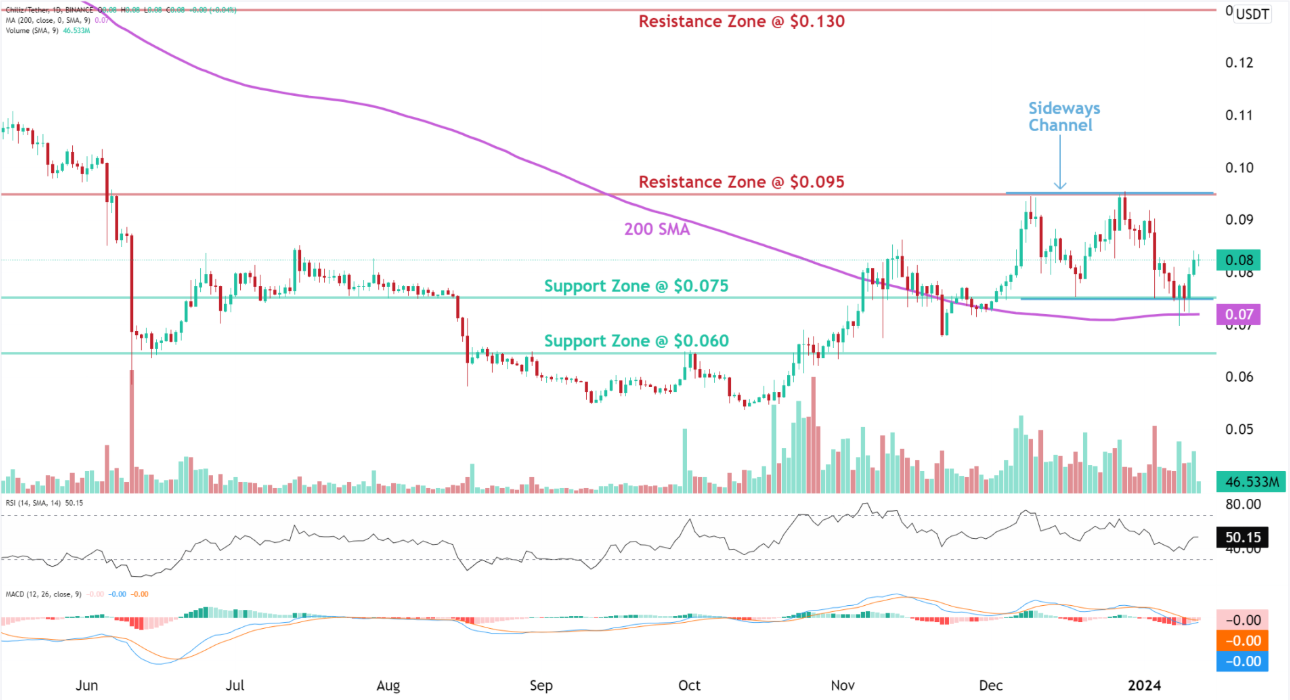
And yet, Bitcoin remains stuck in a holding pattern.
Bitcoin patterns. | Credit: TradingViews
Visser, who has spent decades navigating both traditional finance and crypto markets, sees the disconnect differently. “Everyone’s looking at this wrong,” he says. “What if Bitcoin isn’t broken? What if it’s finally having its TradFi version of an IPO?”
Bitcoin Is Experiencing the Closest Thing to an IPO Moment
To understand Visser’s argument, it is helpful to recall what an IPO is.
In traditional markets, early investors and founders eventually reach a moment where they must realize gains, diversify, and exit their concentrated positions. That’s not failure; it’s a sign of success. The company goes public, ownership expands, and new investors step in to carry the next chapter of growth.
Bitcoin, of course, never had an IPO as it isn’t a company. But the economic dynamics are strikingly similar. Its earliest adopters, like miners, cypherpunks, and long-term believers, took extraordinary risks when the network was young. Now, after 15 years of growth and global recognition, many are sitting on generational wealth.
And for the first time in Bitcoin’s history, the market has sufficient liquidity to allow them to exit without destabilizing the price. ETFs, institutional custody solutions, and deep order books have enabled the sale of billions of BTC into steady demand.
This is the liquidity event Bitcoin never had.
Bitcoin’s Sideways Price Action Resembles Post-IPO Distribution, Not Weakness
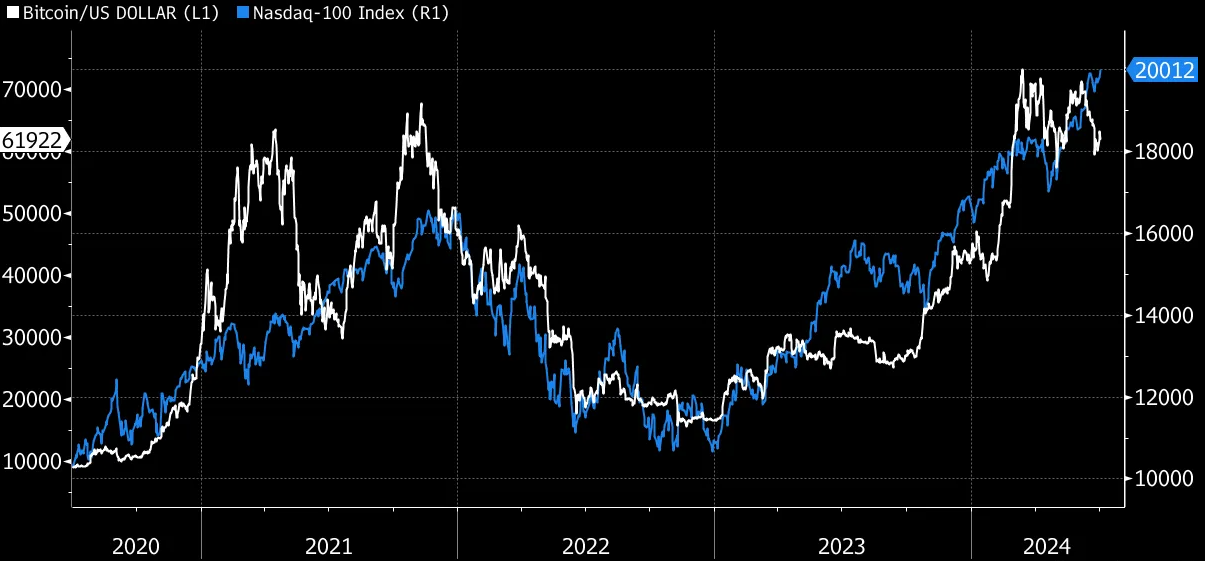
Historically, Bitcoin has moved in near lockstep with the Nasdaq, rising and falling with shifts in global risk appetite. However, since late 2024, that correlation has begun to break down. The Nasdaq continues to surge, yet Bitcoin grinds sideways.
To most traders, that’s a red flag. But Visser notes this pattern mirrors what happens when a company’s early investors are distributing and not dumping their holdings during and after an IPO.
Bitcoin’s price correlation with Nasdaq. | Credit: Bloomberg News
When insiders sell into strength, price action flattens even as broader market conditions remain bullish. The stock isn’t falling because there’s panic; it’s consolidating because there’s orderly profit-taking.
That’s precisely what Bitcoin’s chart looks like now. It’s not collapsing; it’s digesting.
On-Chain Evidence Shows Orderly Distribution, Not Capitulation
The data support this thesis.
In a recent Galaxy Digital earnings call, CEO Mike Novogratz revealed the firm had sold $9 billion worth of Bitcoin for a single client. That’s not retail panic; that’s a massive, methodical exit by one of Bitcoin’s original whales.
Dormant coins, untouched for five or ten years, are now in motion again.
“Old hands” are selling, but slowly and strategically.
Steady ETF inflows and institutional bids balance the selling.
These aren’t panic exits. They’re planned liquidity events, the crypto equivalent of insider distribution in a maturing asset.
Why Early Bitcoin Holders Are Selling Now — And Why It Makes Sense
Imagine being one of those early adopters.
You mined Bitcoin in 2010 or bought it at $100. You survived Mt. Gox, China’s bans, and years of mockery from traditional finance. Now, you’re wealthy beyond imagination, but you’ve also aged, changed, and diversified your life.
For over a decade, you couldn’t sell without crashing the market. Today, you can. ETFs and institutional custody have created a legitimate off-ramp. Selling now isn’t betrayal; it’s the realization of a long-term bet that paid off.
As Visser puts it: “They’re not selling because they’ve lost faith. They’re selling because they’ve won.”
A Flat Bitcoin Market Doesn’t Equal Failing Fundamentals
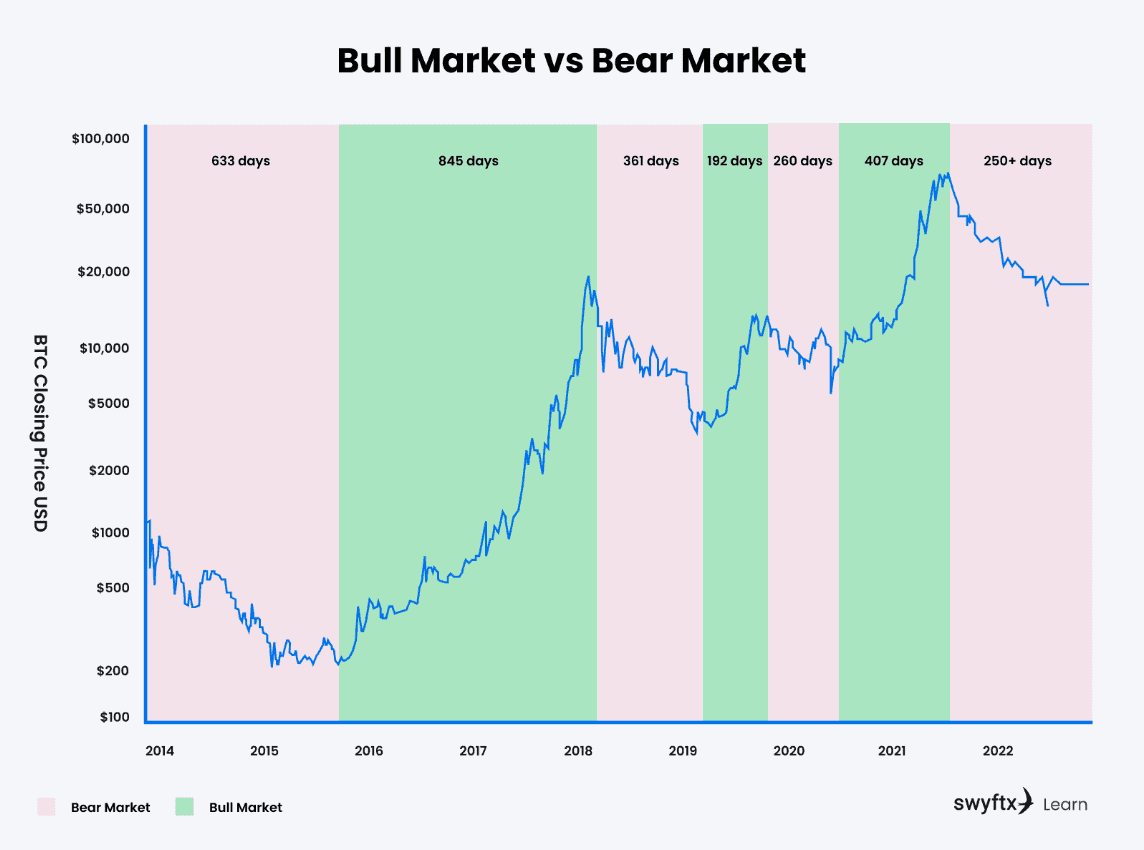
The crypto community has endured enough pain to recognize true bear markets. 2018 brought regulatory fear and exchange failures. 2020 brought global panic and liquidity crises. In both cases, Bitcoin collapsed because confidence vanished.
Bitcoin’s bull vs. bear market. | Credit: Changelly
That’s not what’s happening now.
Instead:
Bitcoin’s fundamentals are stronger than ever.
Institutional products are thriving.
The halving occurred seamlessly.
Network hash rate is at record highs.
Tokenization and the use of stablecoins are expanding rapidly.
This isn’t fear. It’s fatigue. Bitcoin isn’t dying; it’s evolving.
Bitcoin Is Following a Classic Post-IPO Consolidation Pattern
The parallels with traditional IPO behavior are uncanny.
When Amazon went public in 1997, early investors who’d made 100 times their initial investment sold heavily, and the stock remained stagnant for nearly two years. Google and Facebook followed the same script: long periods of post-IPO consolidation before resuming their growth trajectories.
Bitcoin Is Shifting From Ideology to Institutional Ownership
As we know, Bitcoin was born from rebellion. Its early adopters were libertarians and technologists who sought freedom from centralized systems. Those ideals powered its rise, but they also kept ownership highly concentrated among a small group of believers.
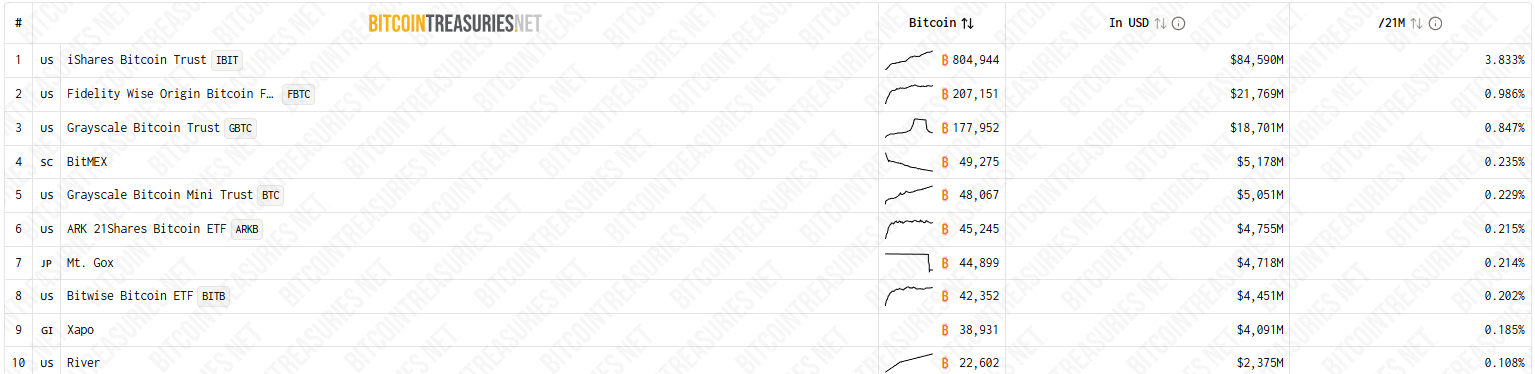
Bitcoin ETFs largest holders. Credit: BitcoinTreasuries.net
Now, that ownership is shifting. The new holders like BlackRock, Fidelity, sovereign funds, and retail investors via ETFs, don’t care about ideology. They care about diversification, stability, and long-term returns.
Something is lost in that transition, but something much larger is gained. The network is becoming antifragile through distribution.
In markets, concentration is fragile and distribution is strong.
When a handful of wallets hold a significant share of the supply, any major sale can significantly impact the market. As ownership spreads across millions of investors, that risk dissipates.
Bitcoin is shifting from the hands of a few to the hands of many, a crucial milestone in its transformation from a speculative asset to a durable store of value.
Each transfer from an original whale to a new holder through an ETF, exchange, or treasury adds structural resilience. Volatility is moderated. Liquidity deepens. Bitcoin becomes boring, and that’s precisely what institutional investors want.
What Comes Next for Bitcoin’s Market Cycle
So what comes next? Visser outlines several key takeaways for investors:
Patience is essential: Distribution phases can last anywhere from 6 to 18 months. Bitcoin may be closer to completion than most think, but it isn’t over yet.
Volatility will decline: Expect fewer 80% crashes and fewer 10 times rallies, according to Wisser. Bitcoin is entering its blue-chip era.
Correlation will return: Once distribution is complete, Bitcoin will likely move in tandem with risk assets again, more smoothly.
Sentiment lags structure: The pain phase ends only after the heavy selling finishes. By the time confidence returns, the opportunity will already have passed.
Bitcoin’s “Silent IPO” Marks Its Transition Into Maturity
Every transformative technology follows a similar lifecycle.
The internet, personal computers, mobile phones, and now AI all began as speculative dreams before maturing into global infrastructure. The early believers reaped life-changing rewards; the later adopters brought stability and scale.
Bitcoin is in a similar transition: from a revolutionary idea to an institutional foundation.
The “silent IPO” isn’t a collapse. It’s the bridge between eras. The early believers are finally realizing their gains, and the institutions are stepping in to carry the asset forward.
That shift may frustrate traders chasing volatility, but it’s a monumental win for Bitcoin’s legitimacy. The network is proving it can absorb billions in sales without breaking a sweat. That’s not weakness: that’s strength.
Bitcoin’s sideways drift isn’t a failure of fundamentals. It’s the natural digestion phase of success, a massive, decentralized liquidity event transferring ownership from visionaries to institutions.
The OG whales are getting their liquidity moment. They earned it. What they leave behind is a stronger, more decentralized, and more stable Bitcoin, one ready for actual institutional-scale adoption.
The volatility that defined its birth is giving way to the stability that will determine its adulthood.
The term “silent IPO,” coined by investor Jordi Visser, refers to Bitcoin’s current transition phase, similar to when a private company goes public. Early holders (or “whales”) are gradually selling portions of their holdings to new institutional investors via ETFs and regulated markets, spreading ownership without dramatic price moves.
Why is Bitcoin’s price moving sideways despite bullish news?
Bitcoin’s stagnant price reflects distribution, not weakness. Large, early holders are selling methodically into strong institutional demand, balancing buying and selling pressure. This process helps keep prices stable, even as adoption and liquidity grow.
How is Bitcoin’s silent IPO different from a bear market?
In past bear markets, Bitcoin has fallen sharply due to panic and a loss of confidence. The current phase exhibits stability, with steady ETF inflows, improving regulatory clarity, and healthy on-chain activity. This is a consolidation phase; not a crash.
Why is this phase important for Bitcoin’s evolution?
This period marks Bitcoin’s shift from a speculative, high-risk asset to a mainstream financial instrument. The “silent IPO” represents maturity, a redistribution of wealth and power from early visionaries to long-term, institutional stewards of the network.
Disclaimer:
The information provided in this article is for informational purposes only. It is not intended to be, nor should it be construed as, financial advice. We do not make any warranties regarding the completeness, reliability, or accuracy of this information. All investments involve risk, and past performance does not guarantee future results. We recommend consulting a financial advisor before making any investment decisions.
Giuseppe Ciccomascolo began his career as an investigative journalist in Italy, where he contributed to both local and national newspapers, focusing on various financial sectors.
Upon relocating to London, he worked as an analyst for Fitch's CapitalStructure and later as a Senior Reporter for Alliance News. In 2017, Giuseppe transitioned to covering cryptocurrency-related news, producing documentaries and articles on Bitcoin and other emerging digital currencies. He also played a pivotal role in establishing the academy for a cryptocurrency exchange website. Crypto remained his primary area of interest throughout his tenure as a writer for ThirdFloor.


 Easy
Easy