Traders are no longer limited to trading floors in Canary Wharf and New York; they now gather in crypto-focused social media circles. | Credit: Pexels.
Share
Key Takeaways
Platforms like TikTok, X, Reddit, and Discord have become central hubs for crypto information.
Online social media groups provide open access to insights and emotional support, helping newcomers and enthusiasts navigate a volatile crypto landscape.
However, prominent voices like Elon Musk can trigger major price movements with a single post on memecoins like Dogecoin.
Bitcoin and the wider crypto industry have put the world of investment opportunities into the hands of millions, and they’re communicating on social media.
No longer are traders limited to trading floors in Canary Wharf and New York. They now gather in countless Discord servers, X threads, and Reddit channels.
Our Top Crypto Sports Betting Partners:
Sponsored
Disclosure
We sometimes use affiliate links in our content, when clicking on those we might receive a commission at no extra cost to you. By using this website you agree to our terms and conditions and privacy policy.
In Britain, Ofcom’s July survey found that 52% of adults now use social media for news, with usage soaring to 82% among 16–24-year-olds.
TikTok alone now reaches 11% of U.K. adults for news, up from just 1% in 2020.
This has coincided with the rise of crypto assets in the country. The FCA’s 2024 consumer research estimates that around 7 million U.K. adults (12%) own cryptoassets, up from 10% in 2022.
According to the agency, 28% of crypto buyers say they used social media as part of their research before purchasing, 38% used online forums, and 36% relied on friends and family.
However, one in ten admitted that they had done no research at all.
Across the pond in the U.S., a Pew Research survey in February 2024 found 63% of U.S. adults lack confidence in the safety and reliability of crypto.
This skepticism coexists with rising ownership and hyper-online discourse that moves prices.
Memes to Market Moves
Online discourse and leading figures with large followings have played a major role in moving markets for years.
Academic research in 2023 found that Elon Musk’s tweets produced statistically significant price and volume reactions in Dogecoin.
Starting to feel like The @DOGE has real potential
This also coincides with X accounts that push engagement to pump-and-dump events, creating social buzz with short-term spikes.
However, this is often not the most valuable part of social media for investors, who frequently seek communities with varied information and viewpoints to make their decisions.
Community Pros
The use of crypto communities on platforms like X and Reddit helps investors access a range of expertise from enthusiasts and self-led researchers.
Unlike the gated research reports of banks, community spaces bring together enthusiasts, developers, and independent researchers.
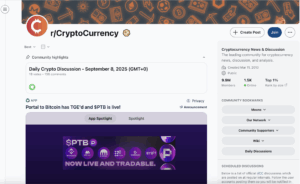
On Reddit’s r/CryptoCurrency, for example, over 9 million members share daily discussions and tips on blockchain upgrades.
Reddit’s r/CryptoCurrency has over 9 million users | Source: Reddit
For newcomers to the industry, this open exchange is often the first port of call for learning about crypto beyond sometimes-biased single entities.
Online enthusiasts with years of experience can share advice with newcomers on things like long-term value and avoiding panic-selling.
Communities also bring emotional support to what can be an isolating and stressful experience, especially when dealing with fast-changing, volatile markets.
Community Cons
However, the same mechanics that make community spaces so helpful can also be mobilized in damaging ways.
In 2022, Chainalysis found that 24% of new tokens launched that year had the characteristics of pump-and-dump schemes.
Crypto communities thrive on fast takes and memes, but that environment can sometimes reward exaggeration over accuracy.
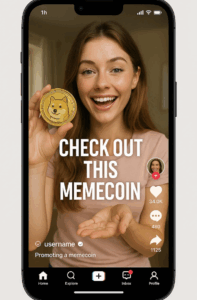
Influencers can often have an impact on memecoin pricing | Source: Sora.
A charismatic influencer who has built trust over time can post a bullish thread on X or a “hidden gem” video on TikTok, and within hours that sentiment can spread across the internet.
Unlike regulated financial research, there is often no disclosure of conflicts of interest.
A paid promotion or insider holding may appear as “independent analysis,” leaving trusting investors exposed to scams.
City of London Police reported that crypto continued to be the most common asset fraudsters claimed to be investing in, accounting for 66% of all reports.
Kurt Robson is a London-based reporter at CCN, specialising in the fast-moving worlds of crypto and emerging technology. He began his career covering local news in Cornwall after graduating from Falmouth University with First Class Honours in Journalism. There, he cut his teeth on everything from council meetings to missing swans.
He quickly rose through the ranks to become a frontline journalist at several of the UK’s leading national newspapers. Over the years, he has interviewed musicians and celebrities, reported from courtrooms and crime scenes, and secured multiple front-page exclusives.
Following the upheaval of the COVID-19 pandemic, Kurt shifted his focus to technology journalism—just ahead of the AI boom. With a natural curiosity and a trained eye for emerging trends, he has found a new rhythm in reporting on innovation.
At CCN, Kurt's work focuses on the cutting edge of crypto, blockchain, AI, and the evolving digital world. Drawing on his background in people-first reporting and his deep interest in disruptive tech, Kurt delivers stories that are insightful, entertaining, and human-centric.