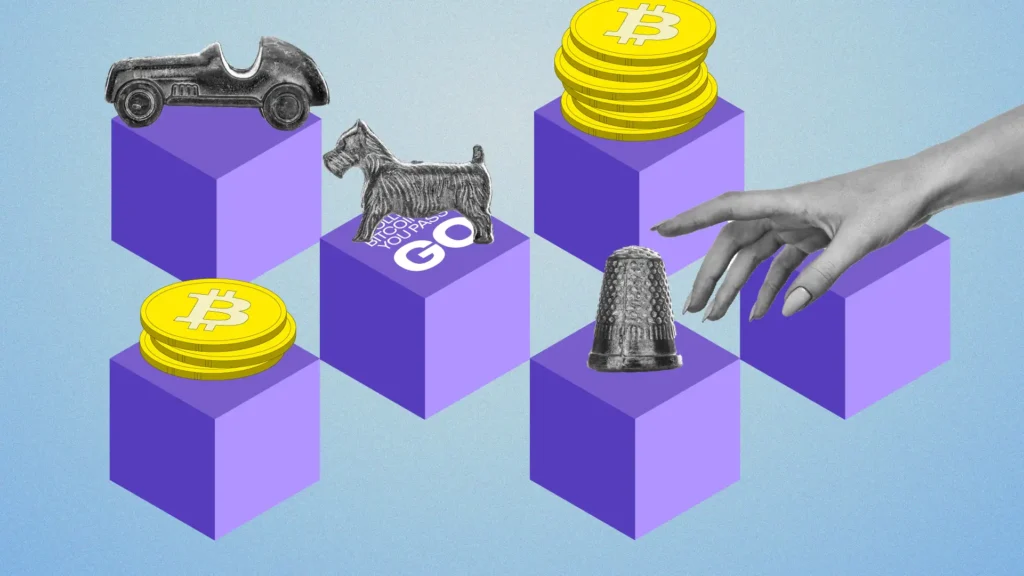
Classic board games are being reimagined digitally, not just ported, with new mechanics that generate billions in revenue.
Hybrid systems like the Infinity Game Table blend physical play with digital automation, pointing to a “mixed” future of board gaming.
Blockchain experiments like The Monopolist showcase tokenized ownership, but also raise issues of fairness, UX, and speculation.
The challenge for developers is balance: preserve social fun and strategy while integrating technology responsibly.
Ancient Egypt’s proliferation of board games has persisted across over 5,000 years of human evolution. Despite the ability to transport ourselves to a fully-realized virtual world, through VR headsets, a good old physical gaming session, be it a card-based tournament or a game of chess, remains a timeless ritual.
But the physical board and cardboard tokens are no longer the only canvas for these classics. The 2010s introduced fully digitized, mobile, and PC versions of Monopoly, Catan, and countless others.
Now, the next evolution of digital board games can be witnessed through Web3 and blockchain experiments.
Let’s dive deeper.
Our Top Crypto Sports Betting Partners:
Sponsored
Disclosure
We sometimes use affiliate links in our content, when clicking on those we might receive a commission at no extra cost to you. By using this website you agree to our terms and conditions and privacy policy.
From Board to Screen: How Digital Adaptations Are Reimagining Classic Games
The transition from physical boards to digital versions is hardly new. For decades, developers have ported chess, Scrabble, and Risk into video games and apps. But what’s changing now is more than the porting, it’s a reimagining of the gameplay itself.
A prime example is Monopoly Go!, launched as a mobile app in 2023 by Scopely. While this version keeps the Monopoly branding, it transforms the mechanics into a casual, event-powered loop designed for mobile engagement. Players move solo around the board, unlock themed mini-events, and progress through monetized systems rather than the hours-long head-to-head sessions you might think of. The result? Over $5 billion in revenue across two years.
Hasbro will also be modernizing the original board game itself. A version of the game called Monopoly App Banking removes the need for a human banker, converting the position to an app to mitigate cheating and accelerate play.
Other games have followed suit.
Scythe: Digital Edition streamlines a popular but complex board game, automating the game’s resource management so you can focus on the play. Carcassonne – Tiles & Tactics digitizes the tile-laying classic, offering online multiplayer and expansions at the tap of a button.
The key shift here is convenience and scale. Digital adaptations speed up play, reduce arguments, and allow asynchronous matches to take place across the world. They also unlock live events, dynamic boards, and analytics, or streamlining that physical boards could never provide.
Hybrid Board Games: Bridging Physical Play with Digital Power
Between fully physical and fully digital lies a hybrid approach. These are physical board games enhanced with apps, sensors, or digital overlays, keeping the tactile joy of tokens while adding computational power.
An experimental example is DungeonMaker, a hybrid board game (HBG) that projects board layouts onto an actual surface, tracks physical tokens, and even uses fabrication to damage or modify game pieces as needed.
Commercially, devices like the Infinity Game Table by Arcade1Up are taking off. It’s a touchscreen coffee table loaded with digital board games like Monopoly or Scrabble, hence the infinity moniker. The product includes Wi-Fi for online play, zoomable boards, and even haptic feedback.
These hybrid approaches help solve the problem of “bookkeeping drag,” or the downtime during times of management, such as when the Monopoly banker has to count and hand out money. Companion apps now automate dice rolls, spawn enemies, and can even track inventory. No more dealing with manual trading in Catan.
This convergence suggests a near-future where board gaming is neither purely physical nor purely digital, per se, but a seamless blend of both.
Blockchain Enters the Board Game Arena
Now, the boldest experiments are happening on Web3 technology, where mechanics collide with non-fungible tokens (NFTs), token economies, and smart contracts. In these systems, property cards, dice rolls, or even the board itself can be tokenized, and tokenization means players can trade or even monetize their holdings.
Case studies
The Monopolist: The Monopolist reimagines Monopoly as a play-to-earn real estate strategy game, complete with its own governance token (MONO) and NFT-based properties. It otherwise operates similarly to the base game, with players collecting rental fees while trying to own more properties than their competitors.
EdChess: A Telegram-integrated version of Chess, EdChess has players competing in the classic game of intelligence to earn $TON.
Battletabs: Blockchain-based Battleship comes to you in the form of Battletabs. Players bet crypto on each match, with smart contract actions ensuring fair actions and player input.
Why blockchain?
Why do these games use the blockchain? Largely to provide ownership and profit potential:
True digital ownership: Players retain lasting control over their game assets through NFT technology, which exists independently of publishers.
Transparency and fairness: Smart contracts automate game processes like collecting rent in Monopoly while ensuring fairness through verifiable randomness.
Real-world value: Players can stake, rent, or trade assets for real-world value.
Interoperability: Building off of digital ownership, players can, in theory, move their winnings across blockchain networks thanks to token standards like Ethereum’s ERC-721.
It’s also important to note a player’s familiarity with these classic games. It’s much easier to learn a new technology through the lens of something you’re used to, such as a tokenized chess piece or Monopoly property.
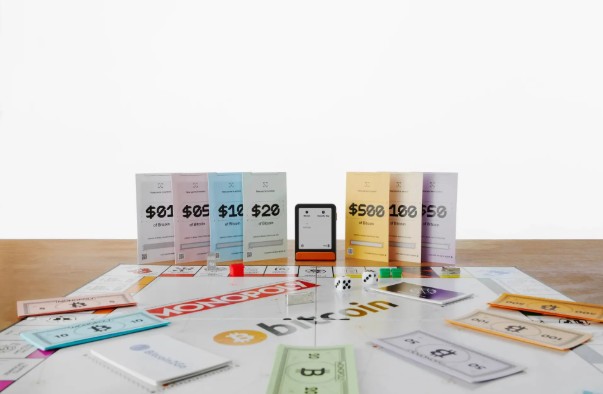
Ledger has a Monopoly-focused collaboration as well. | Source: Ledger
The Challenges of Blockchain Board Games
While blockchain adds new layers and profit potential, it also introduces tension:
Fairness: Early adopters often scoop up scarce assets before the general public gets involved in a game. If Monopoly tiles or pieces are permanently scarce NFTs, newcomers may find themselves at an unwinnable disadvantage. Without mechanics like seasonal resets or rental systems, the game risks cementing inequality.
User experience friction: For most mainstream players, creating a crypto wallet, understanding/paying gas fees, and worrying about security can be a massive deterrent. If every dice roll or property trade requires a laggy on-chain confirmation paired with a transaction cost, the experience could become unbearable. While the nature of turn-based games can help soften the blow of this delay, it can still be frustrating for the unaware player.
Economic instability: Volatility is common in crypto. If an in-game currency suddenly crashes in value, a player’s carefully built property empire could become worthless overnight. Conversely, if token prices skyrocket, wealthy speculators may buy up a ton of low-priced assets, raising the barrier of entry for new players.
Board games have endured for millennia because they strike a balance between strategy, luck, and social connection. Now, they’re entering new territory. From billion-dollar mobile apps like Monopoly Go! to hybrid game tables and blockchain-based experiences, these classics are pushing their previous boundaries.
But with every innovation comes trade-offs. Digital versions sacrifice some of the tactile joy of playing a physical game while eliminating the in-person benefits of competing with your friends locally. Blockchain projects promise ownership and interoperability, but they flirt with speculation and volatility.
If the Web3 industry finds the right balance, preserving fun while layering in technology, classics like Monopoly could thrive in formats our ancestors never imagined. If not, they risk becoming cautionary tales of over-monetization.
Conclusion
Board games have survived for over 5,000 years because they connect people through play. Now, as they cross into mobile apps, hybrid tables, and blockchain platforms, they stand at a crossroads.
If developers can balance tradition with innovation, preserving fun while unlocking digital scale, classics like Monopoly and Chess could thrive in entirely new forms. If not, they risk losing the timeless magic that made them endure in the first place.
FAQs
Could blockchain board games face gambling regulations?
Yes. If players stake crypto or trade NFTs with real value, regulators may categorize the games as online gambling, which can bring strict licensing requirements.
What role might AI play in the evolution of board games?
AI could act as an adaptive opponent, referee, or even a dungeon master, providing storylines and challenges that evolve dynamically.
Are physical board games at risk of becoming obsolete?
Unlikely. Physical play taps into nostalgia, tactility, and face-to-face interaction, which digital formats can’t fully replace. Both formats are sure to coexist.
Could blockchain make board games interoperable?
In theory, yes. A Monopoly property NFT could one day be usable in another blockchain-based game. In practice, interoperability is rare and requires industry-wide standards.
Disclaimer:
The information provided in this article is for informational purposes only. It is not intended to be, nor should it be construed as, financial advice. We do not make any warranties regarding the completeness, reliability, or accuracy of this information. All investments involve risk, and past performance does not guarantee future results. We recommend consulting a financial advisor before making any investment decisions.
Max Moeller is a Chicago‑based writer and video editor passionate about games, tech, and crypto. Whether it’s crafting clear, insightful articles or piecing together engaging video retrospectives, he’s driven by curiosity and takes pride in keeping things human. Since 2017, Max has been published in a variety of notable crypto magazines.


 Easy
Easy