The firm’s Bitcoin treasury framework remains intact, with disciplined accumulation and a stated 10-year target of 210,000 BTC.
Structural catalysts, including a potential London Stock Exchange uplisting, FTSE index inclusion, and UK regulatory normalization, can materially expand institutional access ( if eligibility and liquidity thresholds are met).
SWC stock behaves like a leveraged BTC proxy, leaving limited downside protection from core operations.
Continuous ATM issuance, even with safeguards, dilutes per-share value unless BTC appreciation materially outpaces issuance.
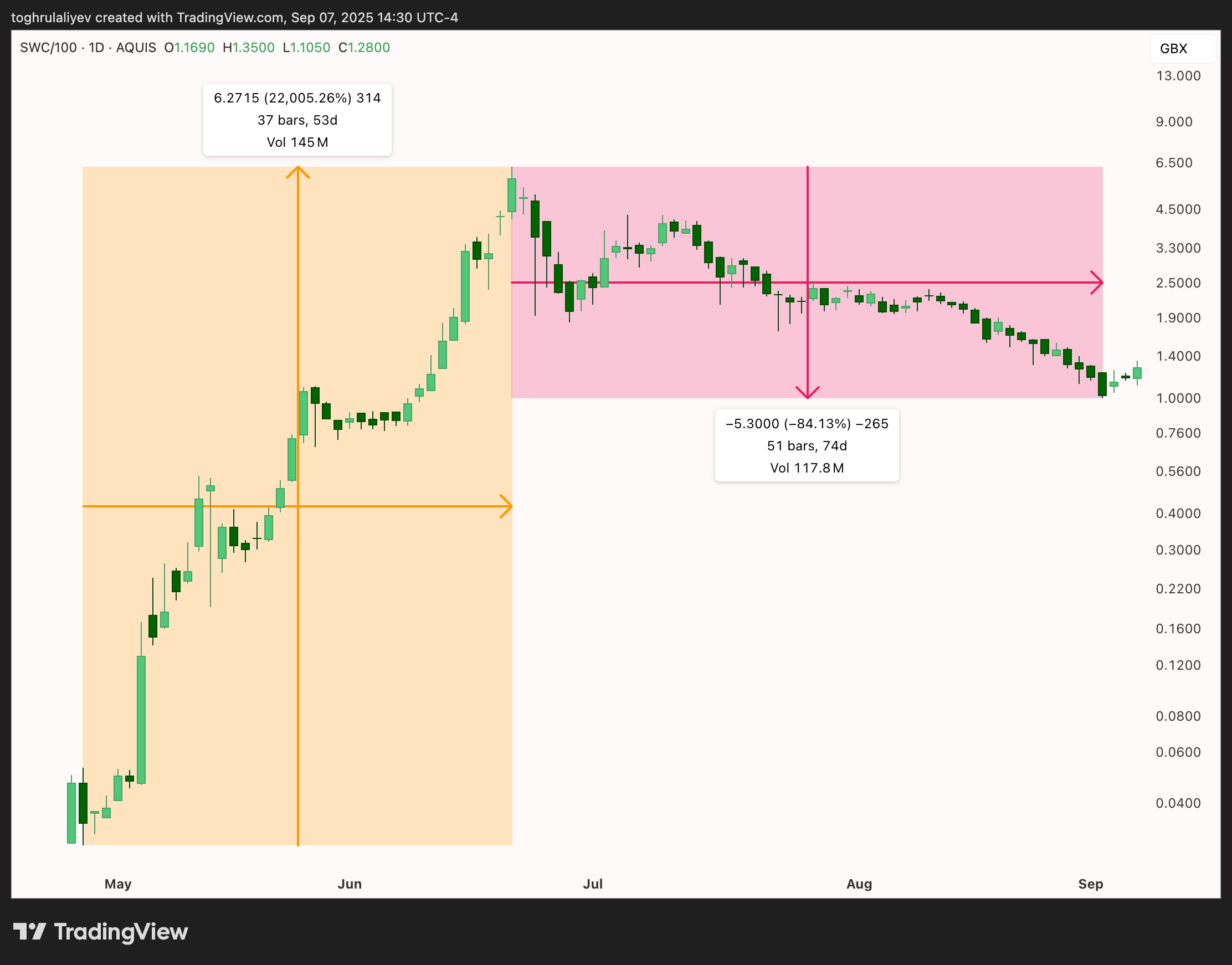
The Smarter Web Company (SWC) is a UK-based web services firm that has transformed its balance sheet through a bold Bitcoin (BTC) treasury strategy. After a meteoric rise in Q2 2025, it was one of the best-performing UK IPOs ever, surging over 22,000% post-listing to £6.30 per share.
But as breathtaking as the ascent was, the descent proved just as brutal. In only 11 weeks, the stock dropped 84%, sliding to £1 as of September 1 (Figure 1).
This issue of CCN Reports reviews The Smarter Web Company’s price action, covering both the rapid surge and subsequent retracement. The analysis outlines the key drivers of recent volatility, explains why the current share price does not reflect the company’s fundamentals, and identifies the catalysts that could unlock value.
Try Our Recommended Crypto Exchanges
Sponsored
Disclosure
We sometimes use affiliate links in our content, when clicking on those we might receive a commission at no extra cost to you. By using this website you agree to our terms and conditions and privacy policy.
The Smarter Web Company is a UK-based web design agency founded in 2009 by Andrew Webley, serving over 250 active clients across property, recruitment, charity, sports, hospitality, retail, and financial sectors. The company operates through a scalable, service-based model with three core offerings and has been profitable for 15 consecutive years:
Readymade Web Design (£795)
Bespoke Web Design Lite (£3,495)
Pro packages (£4,995).
Its revenues combine long-term contracts with one-off project fees. Roughly 30% of total revenue is derived from annual hosting charges (£247 per client) and ongoing service contracts, complemented by initial design fees and optional add-ons. In 2024, this model produced gross margins of 94%, and in the first four months of 2025, SWC reported turnover of £176,000 with net profit of £93,000.
The economics are supported by a proprietary Content Management System that allows clients to self-manage websites, reducing ongoing labor requirements while maximizing revenue per work hour. With client relationships averaging six years and project scopes ranging from 8 to 80 work hours, the company has created a system that consistently converts limited time into recurring profitability. Additional offerings in SEO, logo design, copywriting, and online marketing extend revenue opportunities and give the firm exposure to the UK’s £658 million web design services market.
SWC has outlined clear expansion strategies focusing on client base growth beyond the current 250+ active clients, service diversification to increase per-client revenue, and integration of AI efficiency tools to enhance operational performance.
Nonetheless, the company functions first and foremost as a Bitcoin treasury firm, with its web design operations playing a secondary role in the market’s perception and valuation.
SWC Stock Price Rise Following IPO Launch
Trump Tariff Shock And IPO Timing
SWC’s share price increase in Q2 2025 is best understood as the product of multiple overlapping factors.
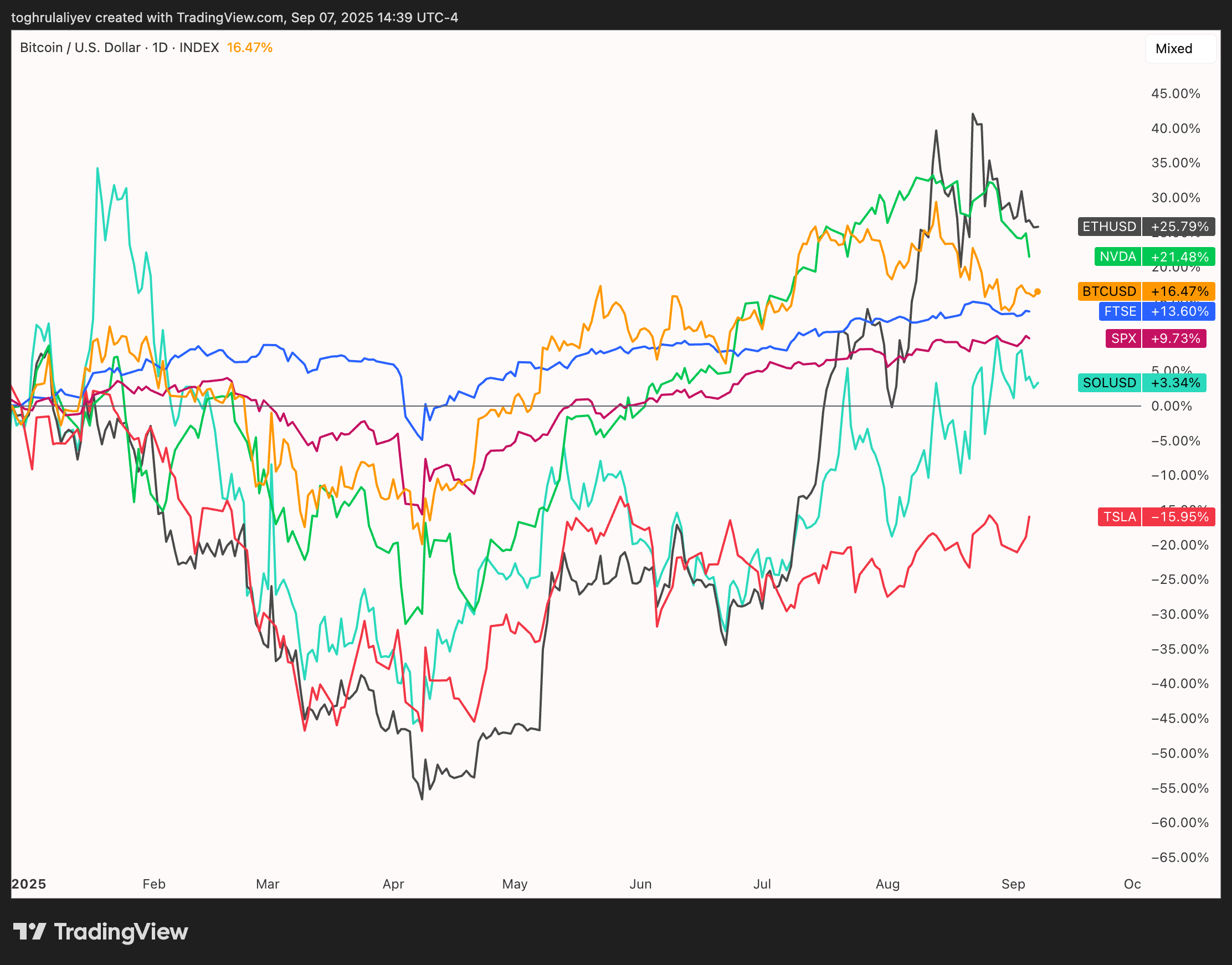
Figure 2: Crypto and Equity Price Performance in 2025 | Credit: TradingView, Toghrul Aliyev (@itsToghrul)
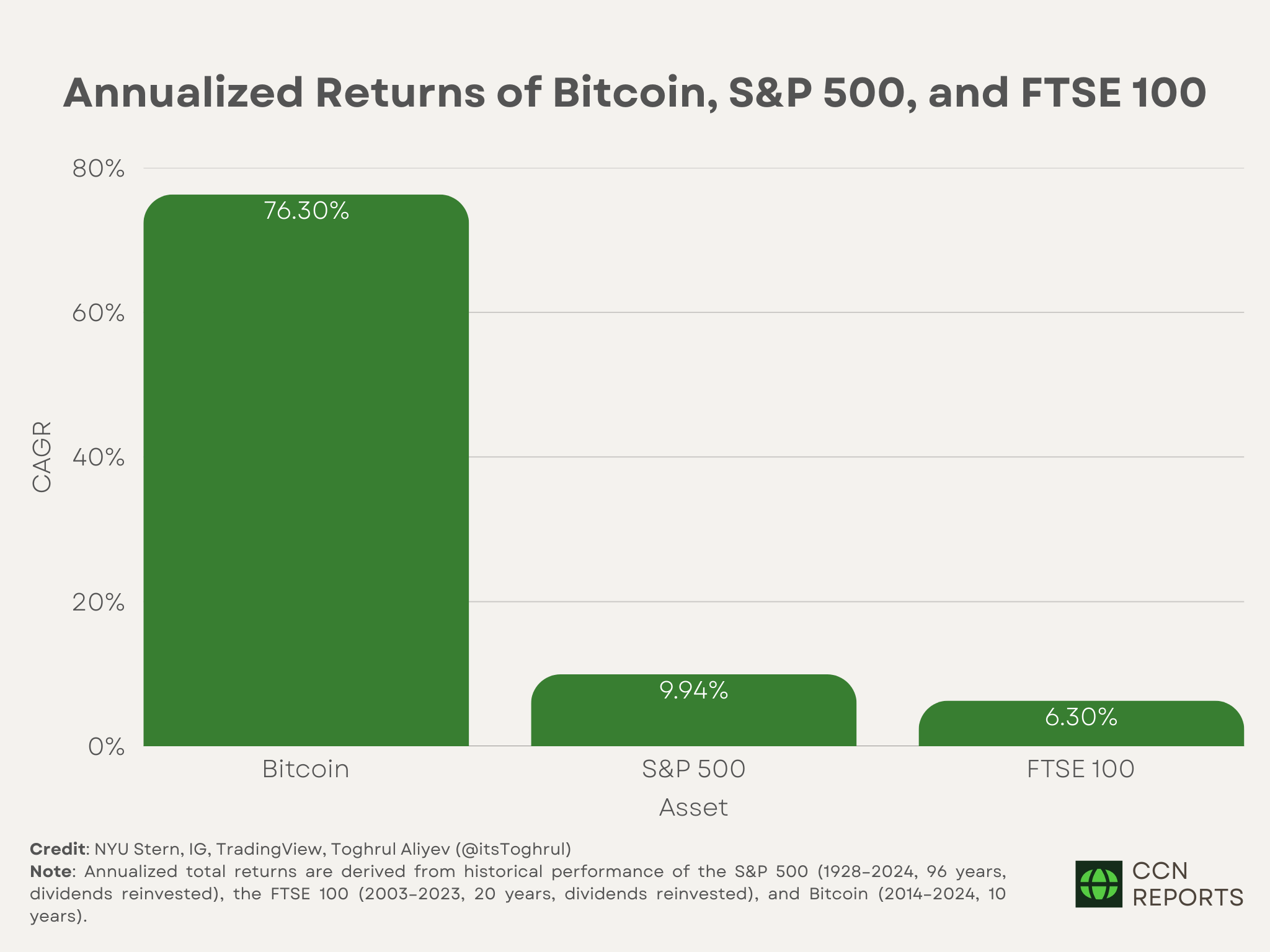
BTC: fell from $109,354 on Jan 20 to $74,441.2 on Apr 7, then surged to a new all-time high of $124,277 on Aug 14 — a 67% rebound in just 3.5 months, compared to its 10-year annualized return of about 76.3%.
S&P 500: dropped from 6,147.43 on Feb 19 to 4,835.04 on Apr 7, before recovering to 6,532 on Sep 5 — a 35% jump in under 5 months, versus its 96-year annualized return of roughly 9.94%.
FTSE 100: slid from 8,909.8 on Mar 3 to 7,532 on Apr 7, then bounced back to 9,332 on Aug 22 — a 24% rise in just over 4 months, compared to its 20-year annualized return of around 6.3% (Figure 3).
Figure 3: Annualized Returns of Bitcoin, S&P 500, and FTSE 100 | Credit: NYU Stern, IG, TradingView, Toghrul Aliyev (@itsToghrul)
As the examples above show, deeper drawdowns lead to stronger recoveries. AllianceBernstein reports that across eight U.S. equity declines of more than 20% since 1950, average gains from the lows were 51% after one year and 82% after three years. Morgan Stanley’s review of thousands of U.S. stocks reinforces this point, showing that while many individual names never reclaim prior highs, broad indices such as the S&P 500 can still deliver sustained compounding. After a 58% decline, returns reached 25% annualized over five years and 17% over ten years.
The aggressive rebound is also known as the “rubber-band effect” or “rubber-band theory”. When markets are stretched far from equilibrium, they tend to rebound strongly once the distortion is released. Utrecht University’s century-long analysis of global stock returns shows that mean reversion explains 25–40% of the variation in three- to five-year returns.
Not to mention that markets love clarity and punish uncertainty. Once investors gained clarity on U.S. tariff policy under President Trump, sentiment began to stabilize and risk appetite returned. Research confirms why: a cross-country study covering nearly 40 markets between 2009 and 2018 shows that higher financial uncertainty depresses long-term equity returns in most cases.
Although SWC’s IPO came after the tariff-driven selloff, the company benefited from the powerful rebound that followed. Market-wide recoveries of this scale lift sentiment across all asset classes, which creates an environment where even newly listed firms can see amplified momentum.
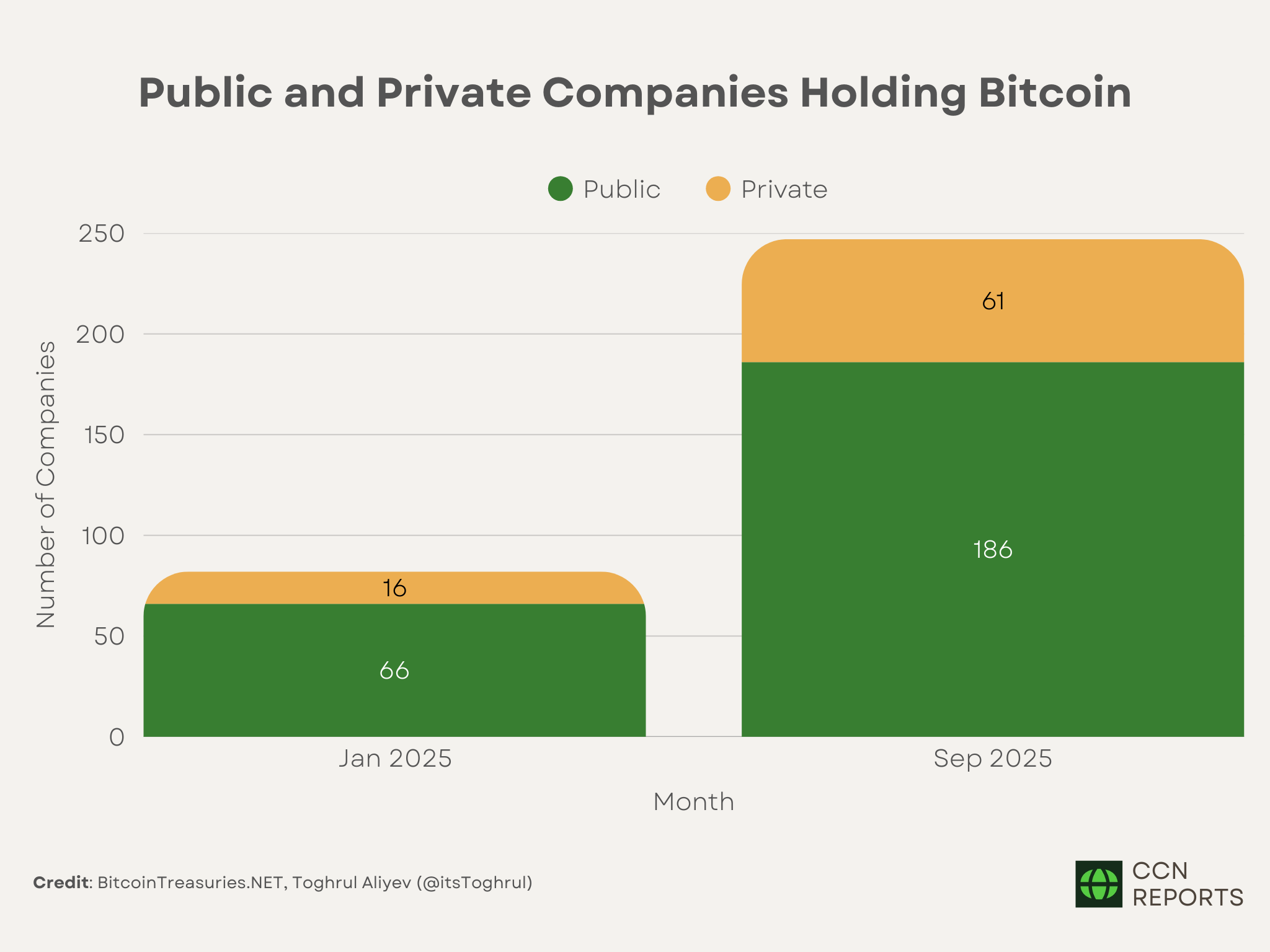
In addition to timing, another reason behind SWC’s parabolic surge was the broader wave of enthusiasm for Bitcoin Treasury Companies. 2025 was a breakout year for the model. In January, only 66 public and 16 private firms held BTC on their balance sheets. By September, that number had grown to 186 public and 61 private (Figure 4).
Figure 4: Public and Private Companies Holding Bitcoin | Credit: BitcoinTreasuries.NET, Toghrul Aliyev (@itsToghrul)
Alongside Bitcoin treasuries, a new wave of altcoin treasury firms also emerged. Companies such as SBET, BMNR, DFDV, and UPXI began applying the same reserve model but with Ethereum and Solana.
Yet no firm captured investor attention more than Metaplanet in Japan. Although the company first adopted BRS in Q2 2024, it only began implementing it aggressively in 2025.
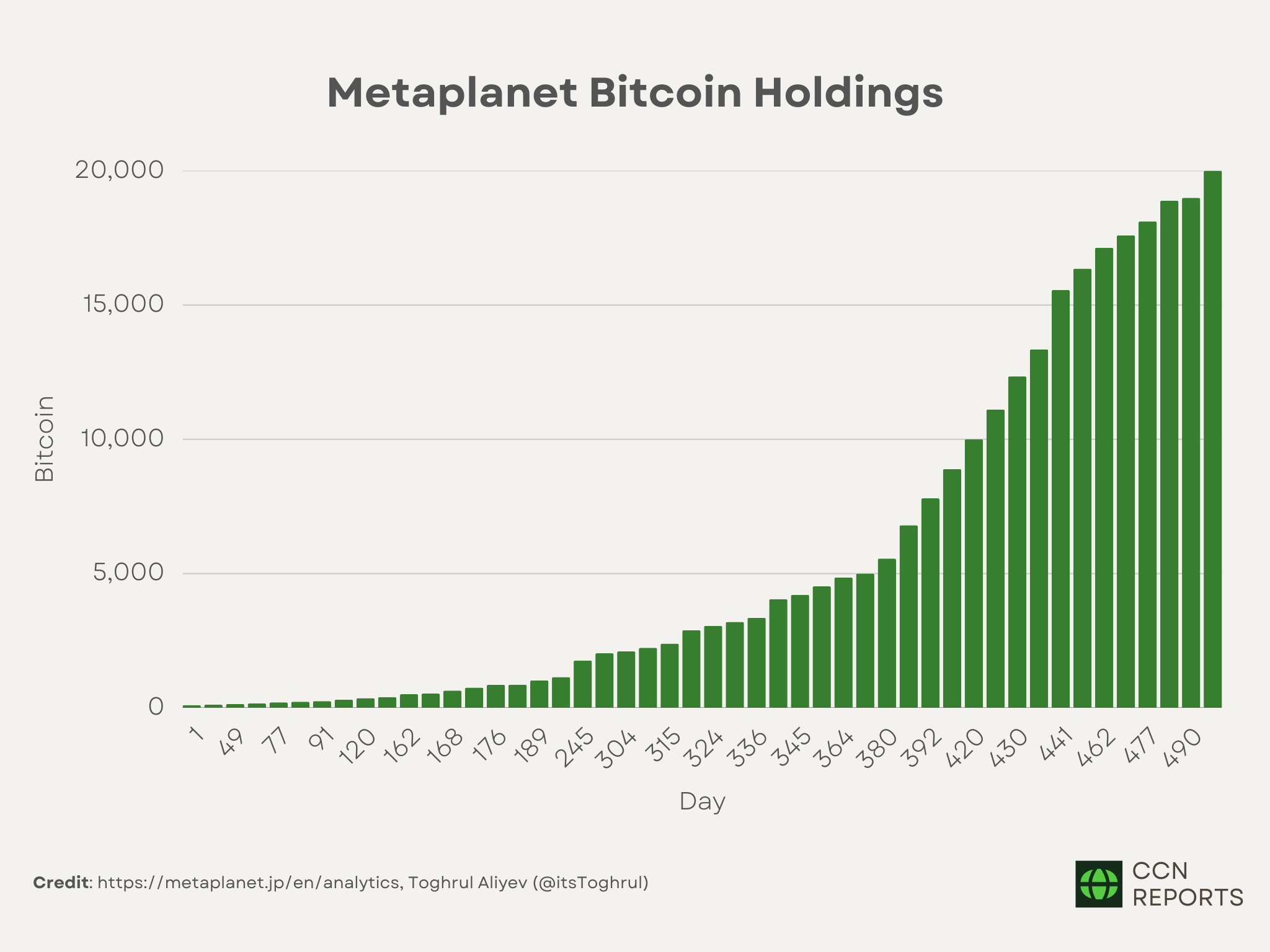
From February 17 to June 2025, Metaplanet expanded its BTC reserves from about 2,000 to 10,000 BTC, a fivefold increase, and by September, holdings had reached 20,000 BTC, a tenfold rise (Figure 5).
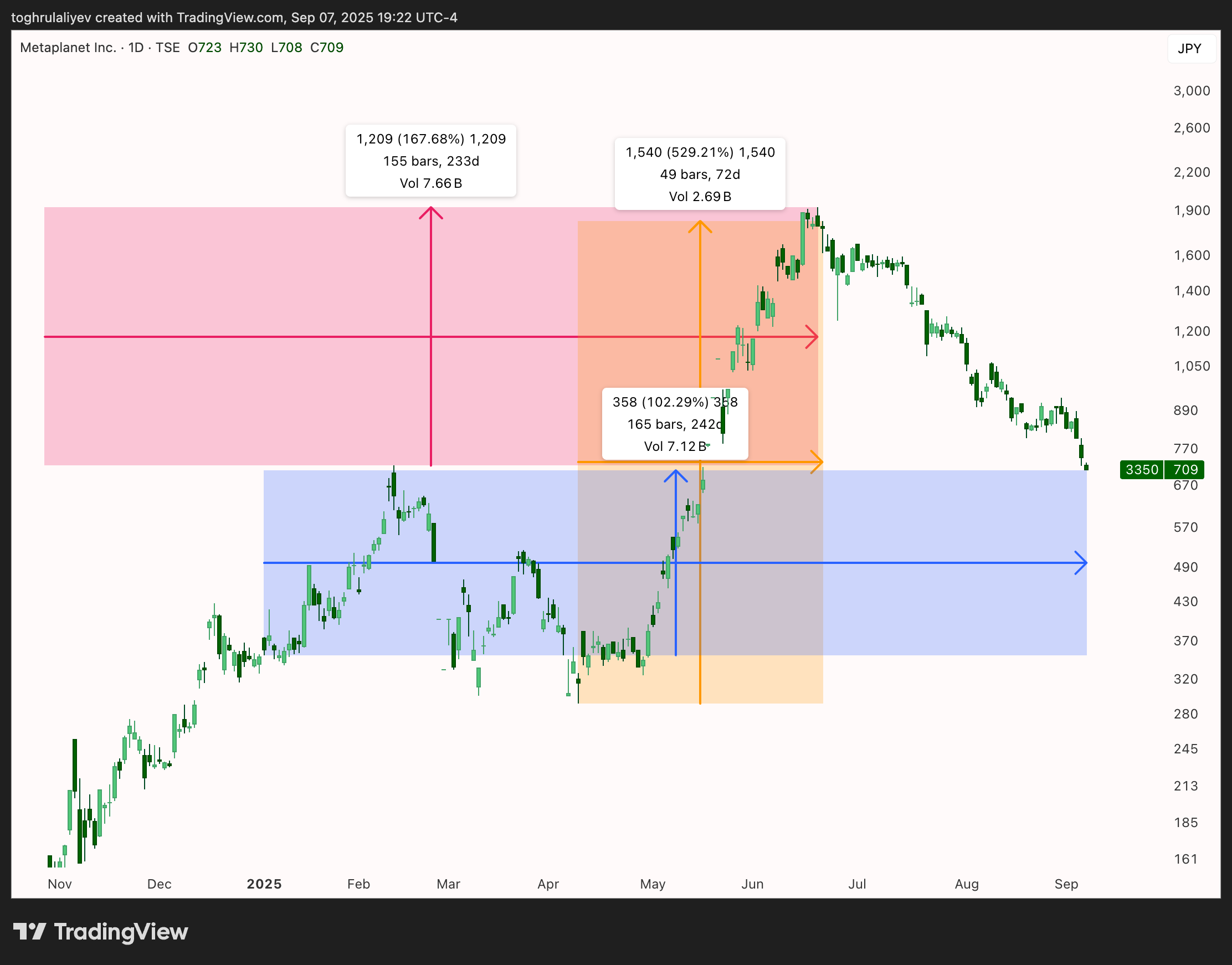
Its aggressive accumulation was also reflected in the stock price, which rose 168% from the February high to the June all-time high. When measured from the April low to that June peak, the return reached 563%, and on a year-to-date basis, the stock delivered 102% (Figure 6).
What is important is that Metaplanet became the second proof point, after Strategy (MSTR), that the corporate treasury model works. And if it worked in Japan, then there was every reason to believe it could work in the UK as well.
SWC as a De Facto Spot Bitcoin ETF for UK Investors
SWC’s popularity also came from its role as a stand-in for a spot Bitcoin ETF, which does not exist in the UK market. The absence of such a product leaves investors with very few regulated options for direct BTC exposure. SWC fills that gap by accumulating Bitcoin, publishing regular updates on holdings, and tracking NAV per share in a way that closely mirrors ETF mechanics. For investors unable to access U.S.-listed products such as BlackRock’s IBIT or Grayscale’s GBTC, SWC serves as the closest alternative.
Because its shares are listed not only on Aquis in the UK but also in Frankfurt and on U.S. OTC markets, SWC’s reach goes far beyond its domestic investor base. That structure allows access for UK investors, European buyers, and even Americans searching for outsized returns and positioning SWC as the next Strategy or Metaplanet. In this sense, SWC operates as a cross-border proxy for spot Bitcoin exposure at a time when demand for such vehicles is accelerating.
That role explains its popularity in the market, but it also exposes the imbalance between perception and fundamentals. Although SWC’s core business is profitable, the scale of profitability is not enough to support a valuation above £300 million. At present, the company’s fate is fully tethered to Bitcoin price swings, which makes its business model almost indistinguishable from a leveraged Bitcoin fund rather than a diversified operating company or a true ETF.
SWC Outpaced Competitors in Bitcoin Treasury Growth
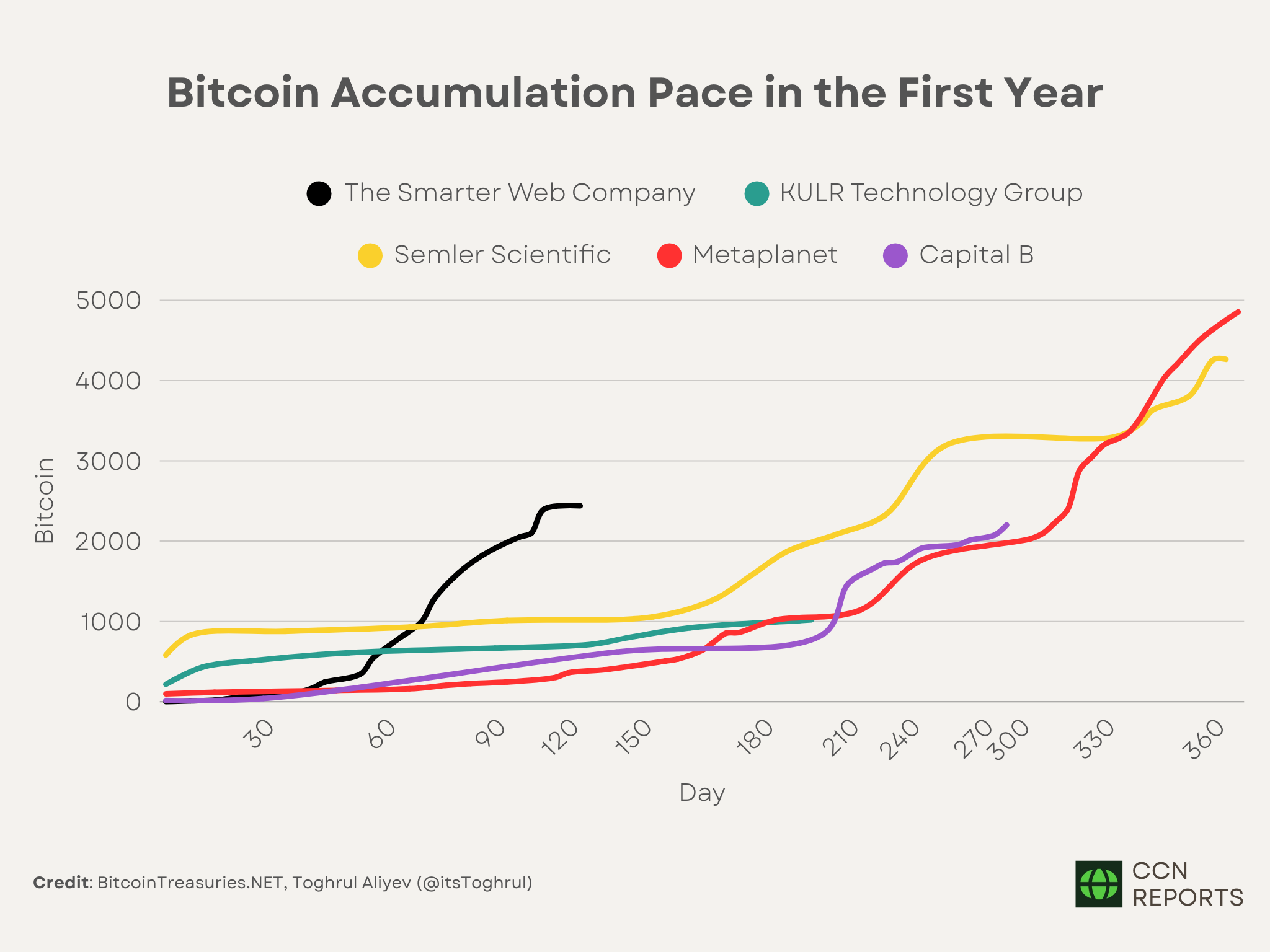
The final piece of The Smarter Web Company’s growth story lies in the accumulation speed. Despite accumulating Bitcoin in smaller absolute amounts compared to Strategy (MSTR), SWC’s pace of growth has been faster than almost every other listed company. In its first four months as a public firm, SWC added 2,440 BTC, which exceeds the speed of peers such as Capital B, KULR Technology Group, Metaplanet, and Semler Scientific over the same period (Figure 7).
Figure 7: Bitcoin Accumulation Pace in the First Year | Credit: BitcoinTreasuries.NET, Toghul Aliyev (@itsToghrul)
The rapid accumulation created SWC’s primary moat on top of being the first mover in the UK market, and it continues to anchor the company’s positioning. Although purchases have slowed in recent months, the deceleration is not unique to SWC. The entire Bitcoin treasury space experiences similar pauses, particularly during the summer, when volatility and trading activity are lower.
Most companies accumulate Bitcoin through at-the-market (ATM) equity offerings. An ATM allows a firm to sell newly issued shares directly into the open market at prevailing prices.
The flexibility of the program gives management discretion to raise capital as needed, but it is not without constraints. A company cannot simply issue shares whenever it wishes, because the effectiveness of an ATM depends heavily on liquidity and volatility in the market. Selling too much stock into weak demand risks pushing the price lower, eroding both shareholder value and the efficiency of the raise.
For example, Billett, Floros & Garfinkel (2016) demonstrate that liquidity and volatility are the most critical factors for the pricing and impact of ATM offerings. Because shares are sold at market prices with no marketing or underwriter support, issuers are highly vulnerable to adverse price movements when demand is soft. Their study also shows that companies must avoid issuing a high percentage of daily market volume in any single session to minimize price impact.
Seasonality further explains why accumulation slowed in recent months. Kamstra et al. (2009) identify a “summer volume drought,” documenting that trading activity and liquidity fall sharply during vacation periods, with September historically delivering weaker returns and higher risk. A cross-crypto study finds the same effect in digital assets, with volatility, trading volume, and spreads on the ten largest cryptocurrencies consistently lower during summer months compared to the rest of the year.
This is why many treasury companies, including SWC, implement strict issuance safeguards. The standard practice is to avoid selling on days when the stock is under pressure and to limit issuance as a share of daily trading volume. In SWC’s case, new shares are only sold on days when the share price is rising and are capped at 20% of daily volume.
Understanding Why SWC Stock Is Down After Its Big Rally
Unfortunately, despite all the bullish drivers, the stock fell sharply from its all-time high of £6.30 to £1.00 as of September 1, marking an 84% decline (Figure 1).
The good thing is that it was not driven by poor leadership. Rather, it was the result of a confluence of factors related to market mechanics, valuation, seasonality, and increased competition.
ATM Equity Programs and Their Impact on Stock Performance
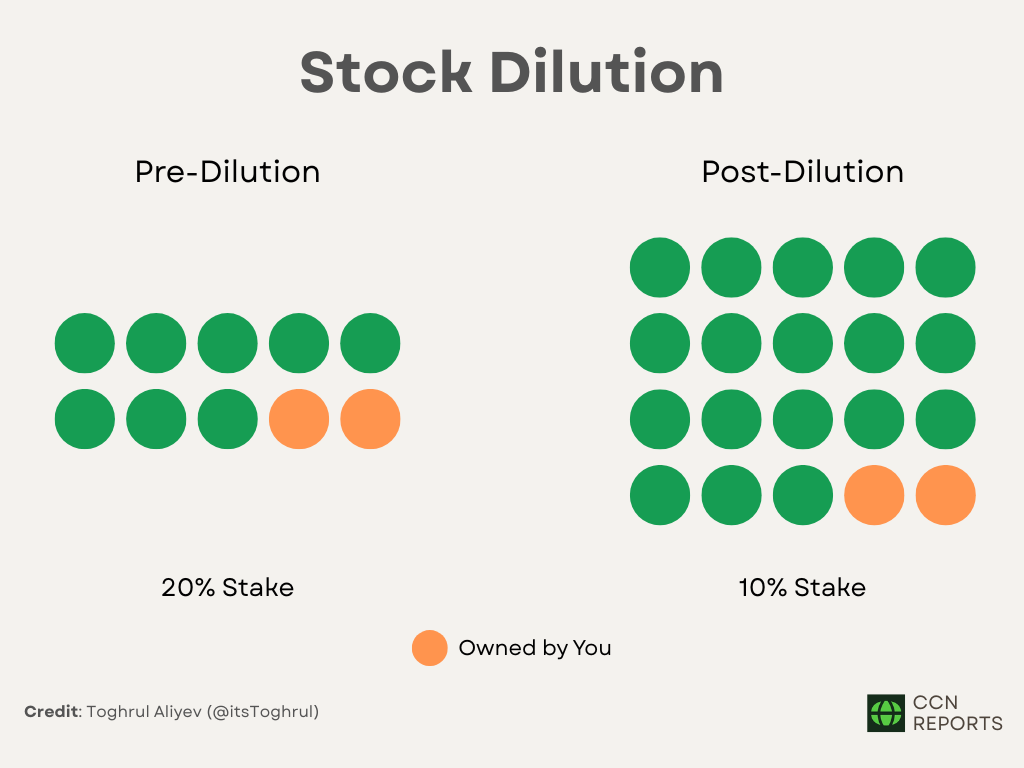
While SWC’s at-the-market (ATM) offering is a strategic tool for accumulating Bitcoin, it is still a form of share issuance. No matter how accretive the use of proceeds may be, in this case, buying an appreciating asset like BTC, the mechanism itself introduces new shares into the market (Figure 8).
Even with safeguards in place mentioned earlier, the cumulative effect of a continuous ATM program is an expansion of the share float. In a bull market with voracious demand, this new supply is easily absorbed. However, when sentiment cools, the same level of issuance can tip the supply-demand balance, forcing the price to find a lower equilibrium.
In effect, an ATM program acts as a hidden tax on long-term investors, moving value from the shareholder base to the company treasury. The only scenario in which holders benefit is if Bitcoin’s appreciation outpaces the pace of dilution by a wide margin. If BTC fails to deliver such returns, the cumulative effect is erosion of per-share value, regardless of how disciplined the issuance appears.
Unsustainable SWC mNAV Over Bitcoin Holdings
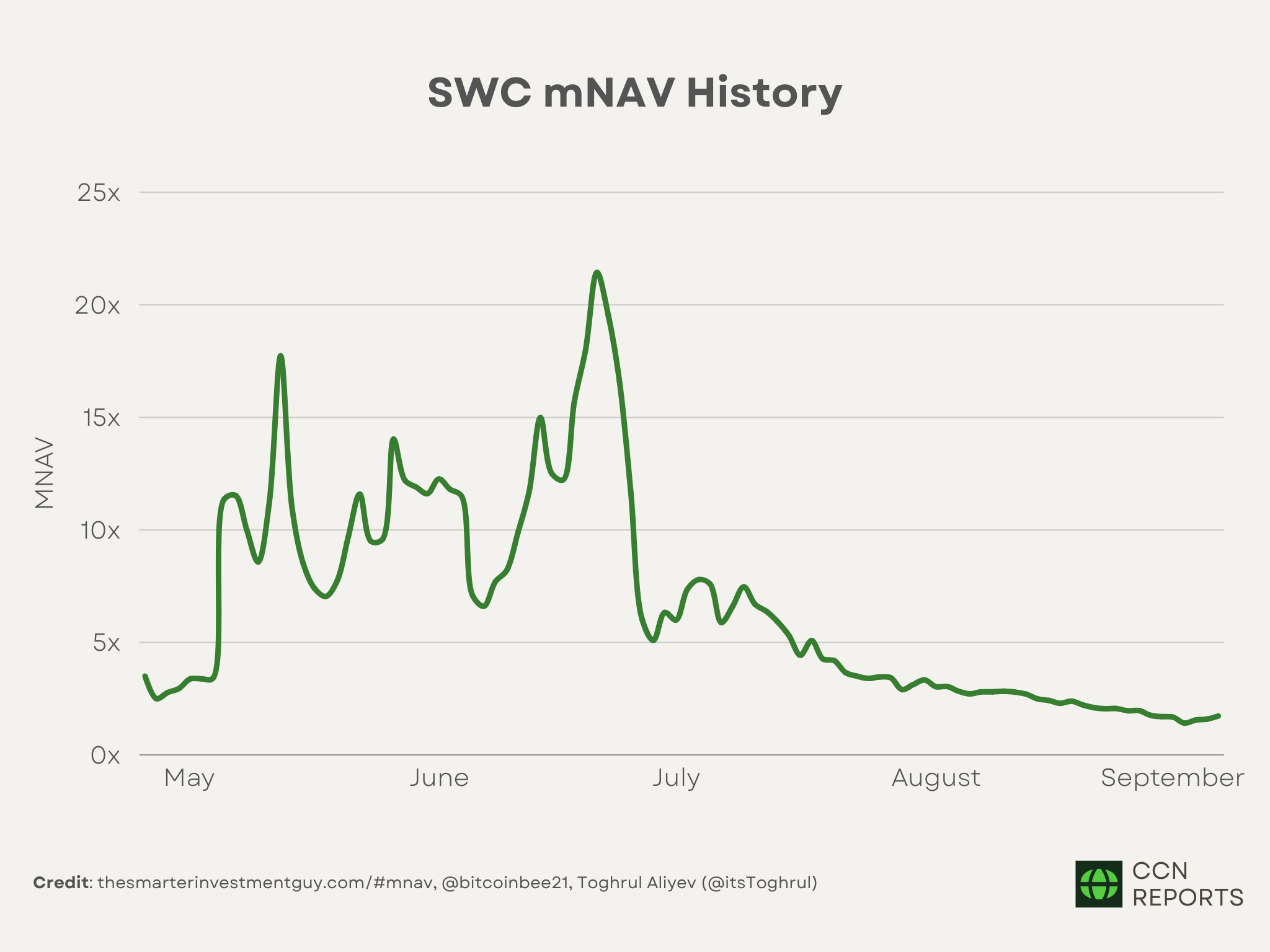
At its peak of £6.30 per share, SWC was trading at over 21x premium to its Net Asset Value (Figure 9).
In other words, investors were paying over 21 dollars for every one dollar of assets the company owned.
While a premium is expected for Bitcoin treasury companies, as it reflects factors like management expertise, pace of accumulation, first-mover advantage, and the convenience of a regulated wrapper, a 21x premium is a classic sign of speculative excess. At that level, investors are no longer making rational decisions; they are gambling.
For comparison, even during the height of market euphoria in November 2024, MSTR only reached an mNAV premium of around 4×. So, SWC’s extreme valuation was simply detached from fundamentals and at the same time reflected outright market mania due to momentum trading and the narrative of it becoming the “next Strategy” or “next Metaplanet” in the UK.
Such valuation anomalies are inherently unstable. The work of economists like Robert Shiller on speculative bubbles demonstrates that asset prices driven by “irrational exuberance” eventually face a sharp correction as they revert to their fundamental value. The 84% decline in SWC’s share price was, in large part, the necessary and unavoidable deflation of this valuation bubble.
Seasonal Headwinds and Sector-Wide Underperformance
As noted earlier, summer months and September are historically difficult for markets. They show lower liquidity and weaker returns. The phenomenon is called the “summer doldrums” and the “September Effect,” and it is a well-documented market anomaly that impacts asset classes across the board, from traditional equities to cryptocurrencies. SWC’s sharp correction occurred precisely within this period of historical weakness, which means the company was caught in a seasonal tide.
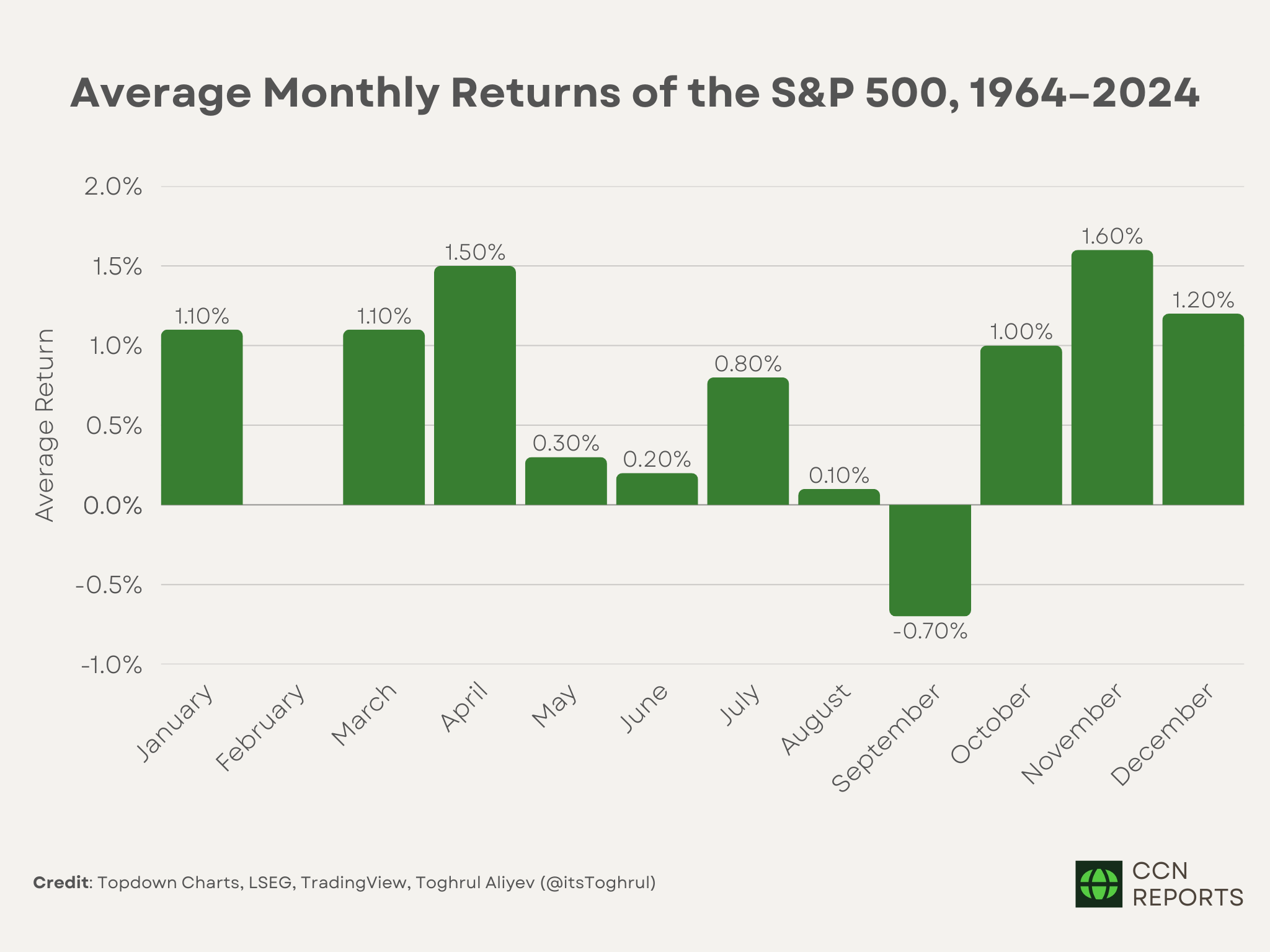
Analysis of the S&P 500 from 1964 to 2024 shows that September is the worst-performing month, posting an average return of -0.7%. More broadly, the period from May through September delivers muted returns compared to the rest of the year as trading volumes decline due to summer holidays. Another factor is that institutional investors defer major portfolio decisions until the fourth quarter.
Figure 10: Average Monthly Returns of the S&P 500, 1964-2024 | Credit: Topdown Charts, LSEG, TradingView, Toghrul Aliyev (@itsToghrul)
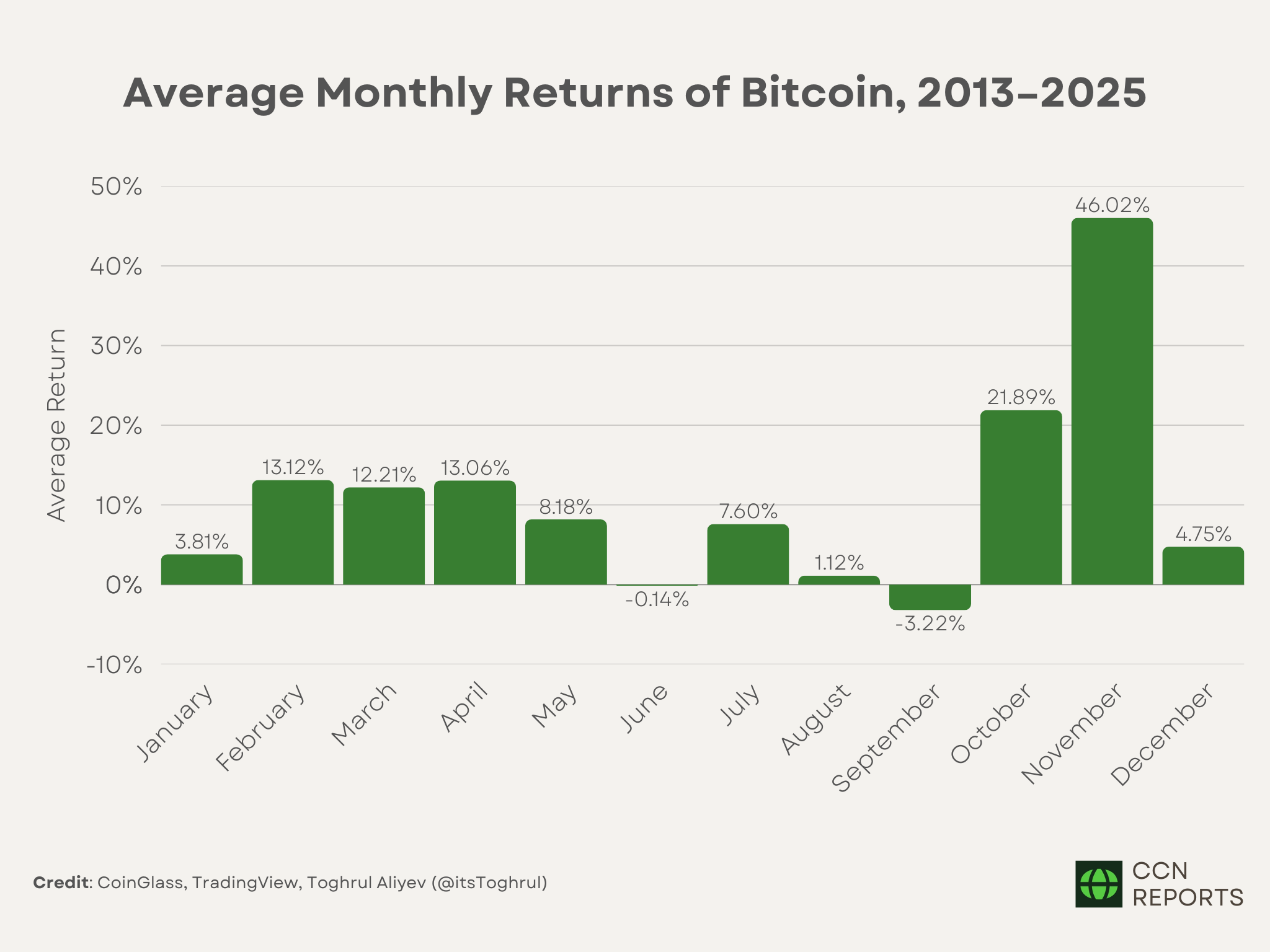
The seasonal pattern is also present in the cryptocurrency market. Since 2013, Bitcoin’s average return in September has been -3.22%, making it the asset’s most negative month. June and August also tend to lag, especially compared with the strong rallies seen later in the year.
Figure 11: Average Monthly Returns of Bitcoin, 2013-2025 | Credit: CoinGlass, TradingView, Toghrul Aliyev (@itsToghrul)
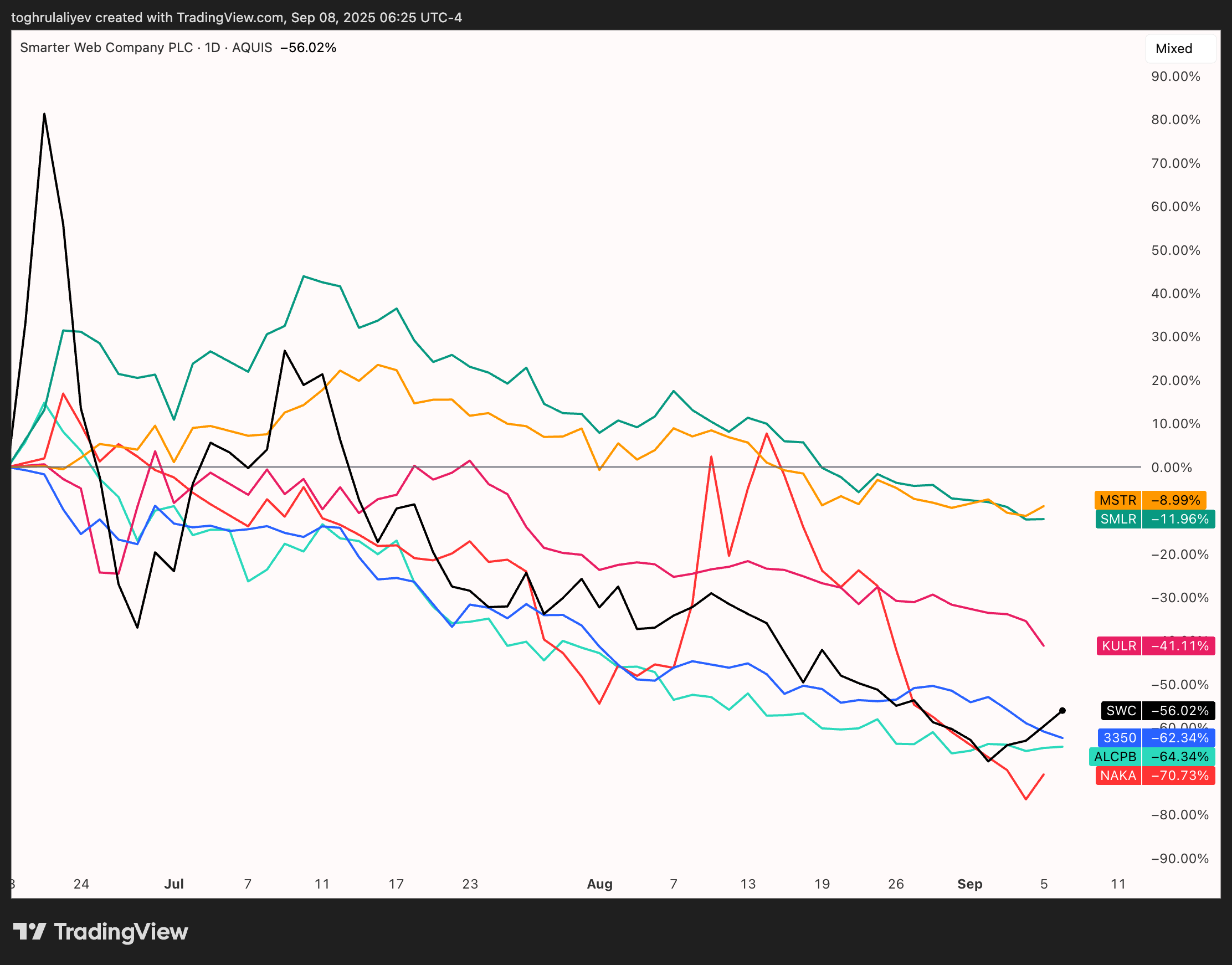
All of this demonstrates that SWC was not operating in a vacuum. The weakness extended across markets during this time of year, and the Bitcoin treasury sector was no exception. Since the June 2025 highs, the entire group has corrected. Metaplanet, The Smarter Web Company, Capital B, Strategy, and others have all fallen between 9% and 70% (Figure 12).
Heavy drawdowns like these show that systemic and seasonal forces added pressure across the sector. Although seasonality and thin summer liquidity increased the speed and depth of the fall, the decline would have been severe even without those conditions.
Increased Competition and Capital Fragmentation
Valuation pressure also came from within the sector itself. More companies now follow the Bitcoin treasury model, which spreads investor capital across a wider field. When only Strategy and a few early adopters were available, scarcity drove higher premiums. By September 2025, with more than 180 public firms holding Bitcoin, that scarcity disappeared.
For UK investors in particular, the launch of Satsuma Technology created a direct domestic alternative to The Smarter Web Company. The result is capital fragmentation and lower valuation multiples across the sector.
The Unavoidable Cycle of Profit-Taking
Finally, a 22,000% gain in a matter of weeks creates an enormous incentive for early investors to take profits. No asset goes up in a straight line, and after a rally of that magnitude, a period of consolidation and profit-taking is expected.
Such violent reversals are characteristic of speculative bubbles. Prices detach from intrinsic value when momentum buyers drive valuations to extremes. Early holders then sell into strength, and once the upward pressure eases, confidence breaks. Selling feeds on itself: each drop in price triggers more exits, drawing in short-term traders and late entrants who cannot withstand losses. What begins as profit-taking turns into a self-reinforcing cycle of liquidation.
Behavioral finance studies, such as Terrance Odean’s work on investor behavior, confirm that investors are highly motivated to realize significant gains. The initial surge was driven by new buyers piling in, but as the price reached its zenith, the balance of power shifted from buyers to sellers.
SWC’s 84% Drop Represents a Buying Opportunity
With the drivers of SWC’s rally and subsequent correction already examined, the focus now shifts to why the current pullback represents a buying opportunity.
The Path to the London Stock Exchange and FTSE Index Inclusion
A significant and near-term catalyst for The Smarter Web Company is its ambition to transition its listing from the Aquis Stock Exchange to the London Stock Exchange (LSE). A move to a major exchange would not only enhance the company’s credibility but also significantly improve liquidity and attract a much broader base of institutional investors.
The company’s leadership is taking concrete steps to prepare for this transition. One of these steps is the appointment of Albert Soleiman as Chief Financial Officer. Soleiman brings over twenty years of financial and leadership experience, including his role as CFO of CMC Markets PLC, a member of the FTSE 250 index.
Inclusion in an FTSE index, such as the FTSE 250, is a major medium- to long-term driver. It would force a significant amount of passive, index-tracking capital to flow into the stock.
Must list on the Main Market, typically the Premium Segment, regulated by the FCA.
Minimum 10% of shares must be in public hands.
Normally requires a three-year trading record supported by revenue, along with robust financial reporting and adequate working capital for the next 12 months.
Must appoint a sponsor, prepare a Registration Document and Prospectus, and comply with the UK Corporate Governance Code for premium listings.
Shares must have an accurate, reliable market price and must pass a liquidity test to ensure they are traded frequently enough.
For UK-incorporated companies to be eligible for the index, they must have a free float of 10% or more.
The company must be listed on an eligible LSE market segment. Following market reforms, this is now the Equity Shares in Commercial Companies (ESCC) category.
An IPO must rank 225th or higher based on its closing share price on the first day of unconditional dealings.
It must also have an investable market capitalisation (IMC) of at least £1 billion.
If it qualifies and is otherwise eligible, the company will be placed into either the FTSE 100 or FTSE 250, depending on whether its ranking meets or exceeds the auto-include thresholds (90th for FTSE 100; 225th for FTSE 250)—after the close of its fifth day of trading.
Any delay in this transition leaves SWC exposed to the drawbacks of its current listing. Should SWC remain on the Aquis Stock Exchange, it would likely continue to grapple with lower liquidity compared to the main market of the LSE. Aquis is tailored to smaller, growth-oriented companies and typically records much lighter trading volumes. With fewer buyers and sellers, even modest transactions can cause large swings in the share price.
Low liquidity also widens the spread between the bid and the ask, which raises trading costs for investors. A wider spread means that investors must pay more to acquire shares and receive less when selling them.
The problem extends to larger trades, too. Institutional investors, who operate with significant capital, may avoid SWC if they cannot buy or sell large positions without moving the price against themselves. A limited ability to execute sizable trades reduces the appeal of the stock to this group, which in turn keeps overall liquidity thin.
Remaining on Aquis would also limit the company’s ability to manage At-The-Market (ATM) offerings. In a market with few buyers, new shares from the ATM program can outpace demand and push the price lower. If the share price stays weak, SWC would need to issue even more shares to raise the same amount of capital, creating greater dilution for existing shareholders and driving up the company’s cost of capital.
Lastly, without the FTSE index inclusion, SWC would miss the automatic inflows from passive institutional funds. The company must instead persuade institutions to invest based solely on its fundamentals. In addition, reliance on retail investors becomes more pronounced. Retail flows are more reactive to short-term news and speculation, which leaves the share price more vulnerable to sudden shifts in sentiment.
The Evolving and Favorable UK Regulatory Landscape
A second major catalyst comes from regulatory reform in the UK.
On April 29, 2025, HM Treasury released a near-final draft legislation that would bring core crypto activities inside the financial services perimeter. In practical terms, platforms, custody, dealing/arranging, staking, and UK stablecoin issuance would fall under FCA authorization.
In parallel, the FCA is widening listed, regulated access to digital assets. From October 8, 2025, retail investors may buy crypto ETNs that trade on recognized UK exchanges, subject to the Restricted Mass Market Investment rules (appropriateness tests, risk warnings, and conduct standards). Although this is not a spot ETF, it materially broadens regulated pathways to Bitcoin exposure in the UK and reduces the policy overhang.
Taken together, the UK reforms create a more predictable and institutional-grade environment for digital assets, which directly strengthens the investment case for the Smarter Web Company. A deeper investor base and clearer regulatory framework support higher liquidity, greater portfolio inclusion by asset managers, and the potential for easier recognition within benchmarks such as the FTSE or listings on the LSE, all of which can enhance valuation and capital flows into SWC.
U.S. Fed Rate Cuts in 2025: Fuel for Risk Asset Performance
Beyond the company-specific and regulatory catalysts, macroeconomic tailwinds also support the bullish thesis.
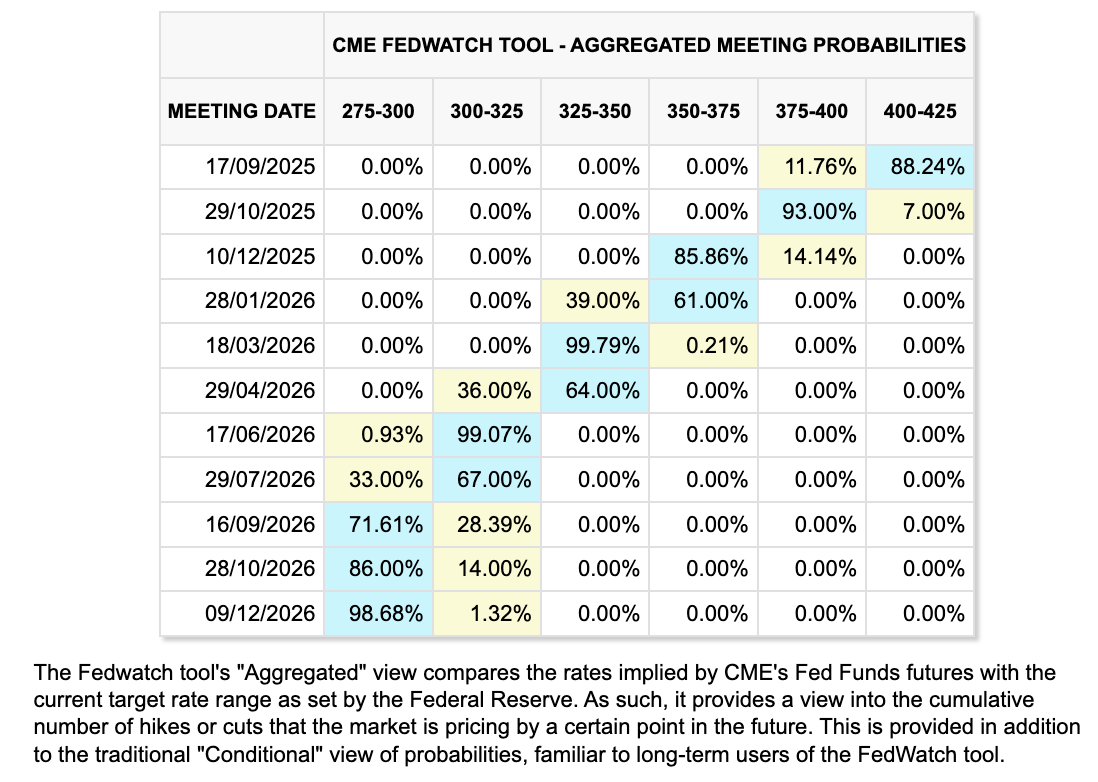
The U.S. Federal Reserve is positioned to implement an estimated three rate cuts in 2025, with market participants currently pricing in approximately 100 basis points of reduction across the year.
Figure 13: US Federal Reserve Interest Rate Probabilities | Credit: CME FedWatch
Monetary easing directly benefits risk assets, including Bitcoin treasury companies. Research demonstrates that Federal Reserve rate cuts fundamentally alter liquidity conditions and investor behavior patterns, creating a more favorable environment for investing.
When the Federal Reserve reduces the federal funds rate, it decreases borrowing costs across the economy while simultaneously reducing returns on traditional safe-haven assets like Treasury bonds and bank deposits. Investors then seek higher-yielding alternatives, with empirical evidence showing that excess liquidity consistently flows into riskier assets during rate-cutting cycles.
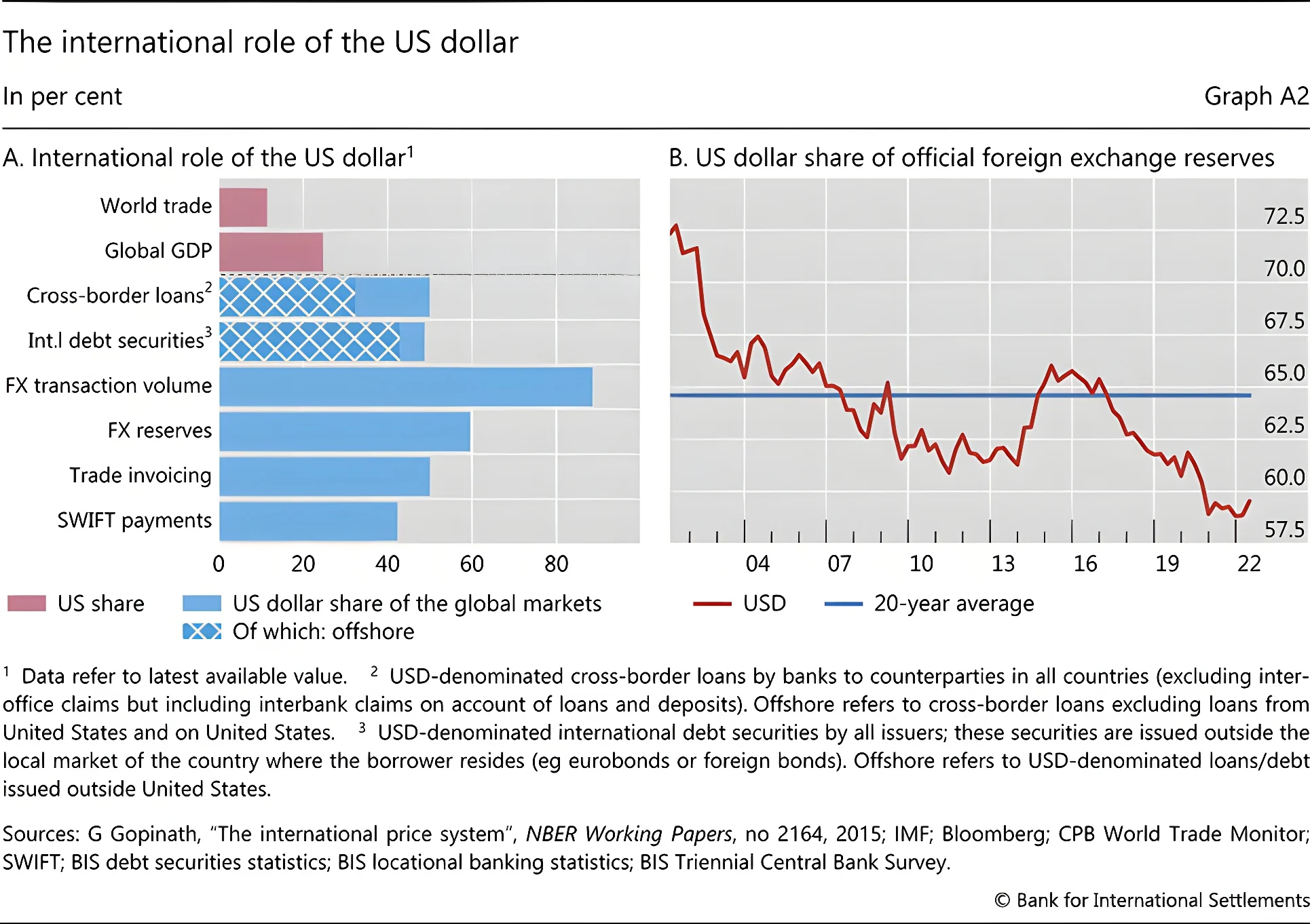
What is interesting is that the spillover effects of US monetary policy extend far beyond American borders due to the dollar’s dominant position in global finance. It accounts for 88% of foreign exchange transactions, 58% of official reserves, and serves as the primary currency for international trade invoicing (Figure 14).
Figure 14: The International Role of the U.S. Dollar | Credit: Bank for International Settlements
Academic research confirms that Federal Reserve policy decisions generate substantial international spillovers and have “significantly larger impact than ECB monetary policy on real and financial variables in the rest of the world.” It means that US rate cuts create worldwide liquidity expansion, benefiting risk assets across international markets, including the UK, where SWC operates.
Strong Q4 Returns in Post-Halving Years for Bitcoin
The final catalyst comes from Bitcoin’s well-known four-year cycle. Historically, the halving year tends to produce positive returns, the following year sees a peak, typically in late Q4, then a bear market emerges in year three, followed by another recovery in year four. This pattern has repeated across multiple cycles.
Whether the cycle persists in the current environment is uncertain. Macroeconomic conditions differ from prior cycles, with higher interest rates, shifting liquidity into treasuries and ETFs, and significant institutional participation in Bitcoin. There is simply no guarantee that the traditional cycle will play out in 2025.
However, if the cycle theory continues to hold, Bitcoin would be expected to top in November or December 2025. Even if the cycle breaks down, history shows that October and November remain seasonally strong months for Bitcoin, with positive returns recorded across most years since 2013 (Figure 11).
The Smarter Web Company’s valuation is tightly correlated with its Bitcoin reserves, which means any sustained rally in BTC prices will mechanically lift NAV per share. If Bitcoin follows its historical Q4 strength, SWC’s book value should rise accordingly.
Beyond the NAV effect, market rallies bring renewed euphoria, as seen in June 2025, when SWC traded at a 21× mNAV premium. A similar, though likely more moderate, expansion of the premium could occur in another bull phase, amplifying upside for equity holders.
Conclusion
The essence of successful investing rests on four principles: commit only the money you are prepared to lose, build in a large margin of safety, allow time horizons of at least three to five years, and focus on quality companies.
The challenge comes when those principles meet a sector with little operating history: Bitcoin treasury companies. They are entirely new, with no decades of operating history, no long track record of performance, and no established research base that provides clarity on outcomes. Their models exist in uncharted territory, which magnifies both the risk and the opportunity.
In such cases, the only valid reason to sell is if the story changes. If management abandons its strategy, if capital allocation begins to favor insiders over shareholders, or if decisions betray incompetence, then investor confidence has reason to collapse. Until then, the core thesis remains intact.
For The Smarter Web Company, the story has not changed. The firm continues to follow its treasury strategy with discipline and has set out a ten-year target of 210,000 BTC.
If investors bet on Bitcoin itself, then SWC offers a magnified expression of that bet. For those who accept the risks, the company’s valuation weakness is not necessarily a verdict on failure but rather the natural volatility of a new asset class. In the long run, patience, discipline, and alignment with quality are what matter. The stock has already shown how fast sentiment can change. The next move could be just as violent, but in the opposite direction.
Disclaimer:
The information provided in this article is for informational purposes only. It is not intended to be, nor should it be construed as, financial advice. We do not make any warranties regarding the completeness, reliability, or accuracy of this information. All investments involve risk, and past performance does not guarantee future results. We recommend consulting a financial advisor before making any investment decisions.
Toghrul Aliyev is the Head of Research who began his journey in crypto in 2021. It all started with a Reddit post that went viral, leading to a writing position while he was still in medical school. As he learned more about crypto, he became deeply interested in it and decided to focus entirely on this field after completing his medical degree and becoming a doctor.
Toghrul specializes in thorough research, always aiming to find details others might miss. He also has a strong understanding of stocks, real-world asset tokenization, and related areas. He is skilled in Python and SQL, which he uses to improve his crypto analysis through data analytics and data science.
When he’s not working, Toghrul enjoys sports, hiking, reading philosophy, such as Seneca's works, and playing story-driven video games.