Key Takeaways
- A California federal judge certified a class of investors, allowing claims that NVIDIA hid over $1 billion in undisclosed crypto-mining GPU sales.
- Plaintiffs accuse NVIDIA and CEO Jensen Huang of downplaying crypto-driven Gaming segment revenue, leading to a sharp stock drop when miner demand collapsed in late 2018.
- Following SEC scrutiny and the Supreme Court’s denial of NVIDIA’s appeal, the lawsuit moves forward.
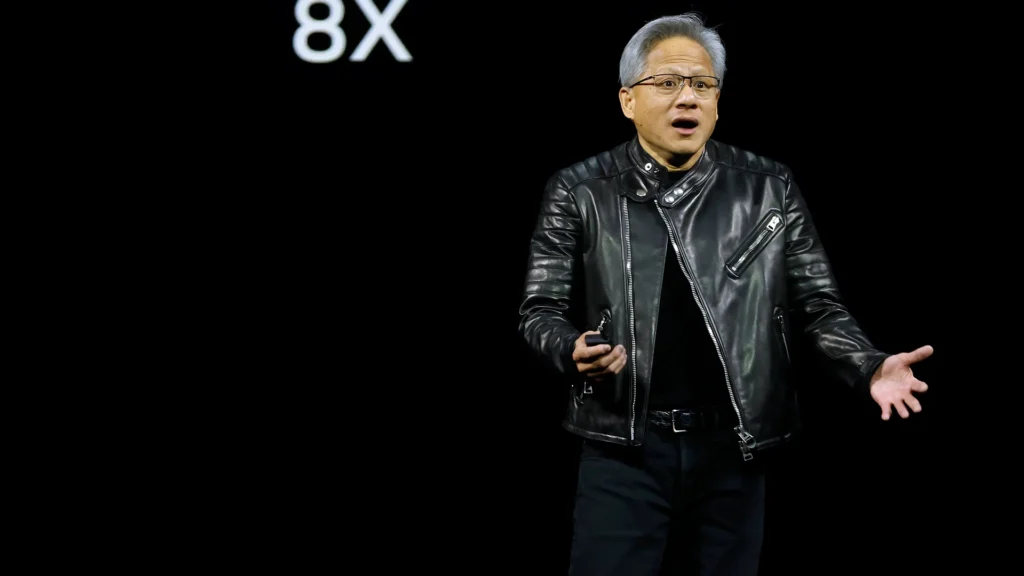
NVIDIA Corporation and its CEO, Jensen Huang, are now facing a certified class-action lawsuit alleging that the company hid more than $1 billion in cryptocurrency mining-related GPU sales during the 2017-2018 boom.
With NVIDIA now a dominant force in AI chips, the case revives uncomfortable questions about its historical dependence on crypto mining.
Class-Action Lawsuit Against NVIDIA
The suit claims NVIDIA misclassified massive crypto-driven revenue under its Gaming segment, downplaying exposure to the volatile crypto market and misleading shareholders about the sustainability of its explosive growth.
The plaintiffs, led by a Swedish investment firm, argue that NVIDIA executives knowingly understated the role of crypto miners in driving the gaming segment revenue.
Internal documents, former employee testimony, and independent analyses suggest the company earned at least $1.1 billion to $1.35 billion more from crypto-related GPU sales than it publicly disclosed, primarily GeForce gaming cards sold to miners but booked as standard gaming demand.
NVIDIA repeatedly told investors that crypto mining accounted for only a “small” portion of its business, with most exposure limited to dedicated Crypto SKUs in its OEM segment.
In reality, the lawsuit claims the bulk of the flow went through consumer GeForce cards, especially in high-demand markets like China.
When crypto prices crashed in late 2018, NVIDIA slashed revenue guidance, citing excess inventory and fading miner demand.
Its stock plunged more than 28.5% in just two trading days, wiping out billions in market value and triggering the original 2018 lawsuit.
Judge Haywood S. Gilliam Jr. certified the class after NVIDIA failed to prove its statements had no impact on its stock price.
An internal email from a senior vice president even suggested the company’s valuation stayed elevated precisely because of those public assurances.
A case management conference is set for April 21, 2026.
NVIDIA’s Crypto Mining Connection: From Boom to Bust
NVIDIA has long prized its GPUs for more than just gaming.
Their parallel processing power made them ideal for proof-of-work crypto mining.
As Bitcoin surged from around $1,000 to nearly $20,000, miners snapped up GeForce cards in droves, creating a parallel revenue stream that NVIDIA struggled to separate from its core gaming business.
Company executives closely tracked crypto sales through weekly reports and China-specific data, showing that 60-70% of GeForce revenue there was tied to miners at peak times.
NVIDIA even launched specialized “Crypto SKUs” to channel some demand, but the lawsuit alleges the majority of miner purchases still appeared in Gaming results.
Publicly, leaders like Huang and then-CFO Colette Kress minimized the exposure, framing growth as driven by “strong organic demand from gamers.”
This crypto connection proved double-edged. It supercharged fiscal 2018 revenues. Gaming sales soared but left NVIDIA vulnerable when mining profitability evaporated.
The resulting channel inventory glut forced price cuts and slower growth, exposing the hidden volatility investors claim they were never warned about.
Analysts estimate the alleged concealment cost investors up to $3.8 billion in losses tied to the stock drop.
The 2022 SEC settlement saw NVIDIA pay a $5.5 million fine for inadequate disclosures in two fiscal 2018 quarters, without admitting wrongdoing.
Regulators found crypto mining was a “significant element” of Gaming revenue growth, yet it went unmentioned in 10-Q filings.
The class-action suit builds on that, accusing NVIDIA of securities fraud under the Exchange Act.
It survived dismissal in the lower court, an appeal win, and NVIDIA’s unsuccessful bid to the Supreme Court.
The certification now paves the way for potential discovery, trials, and substantial damages if plaintiffs prevail.
Top Trending Crypto Articles

Prashant Jha is a seasoned crypto journalist based in Delhi, India, with a Bachelor’s Degree in Computer Science Engineering. Passionate about the evolving world of blockchain and cryptocurrencies, he has been a dedicated voice in the industry since 2018. Prashant’s expertise lies in regulatory reporting, where he unravels complex legal and financial developments with clarity and precision. Before joining CCN in 2024, he honed his craft at Cointelegraph, establishing himself as a trusted name in crypto journalism.
His coverage spans major industry events, including the high-profile collapses of FTX, Three Arrows Capital (3AC), and LUNA, offering readers insightful analyses of their regulatory and market implications. Prashant’s technical background enables him to bridge the gap between intricate blockchain technology and its real-world applications, making his work accessible to novices and experts.
Beyond his professional pursuits, Prashant is an avid music enthusiast, often exploring diverse genres to unwind. A sports lover, he has a particular passion for cricket and frequently engages in discussions about the game. His multifaceted interests and sharp journalistic instincts make him a valuable contributor to CCN, where he continues shaping the crypto landscape's narrative.