Key Takeaways
- Alibaba invested $35 million in Singapore fintech MetaComp to expand stablecoin payment infrastructure after China blocked similar plans domestically.
- Beijing halted Ant Group and other firms from issuing stablecoins in Hong Kong to protect the digital yuan and maintain monetary control.
- Chinese companies are increasingly backing regulated stablecoin projects overseas, particularly in Singapore, to support global trade and reduce transaction costs.
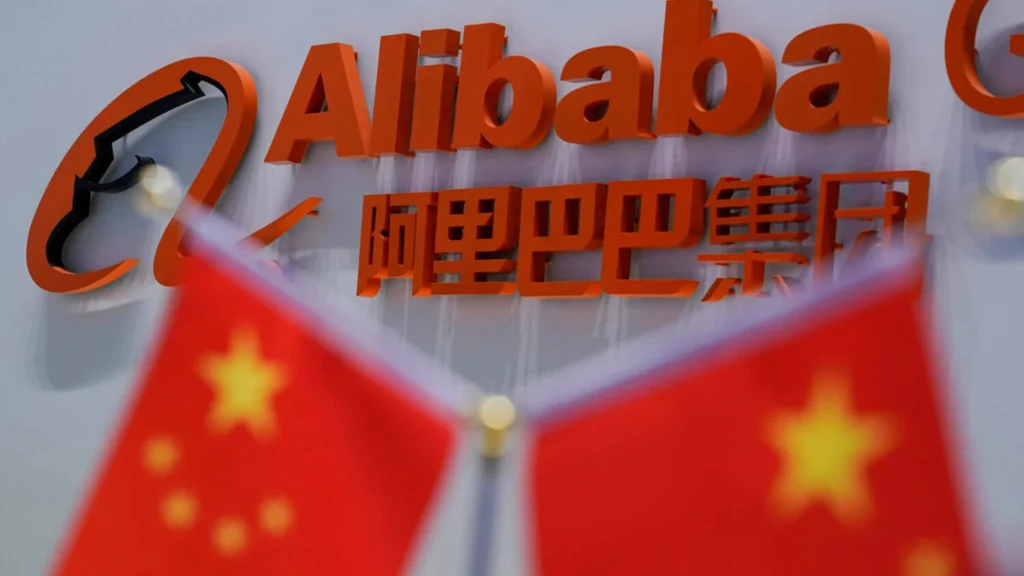
E-commerce giant Alibaba has backed a funding round for Singapore-based fintech MetaComp, helping the firm raise $35 million in just three months.
The investment signals Alibaba’s growing focus on building stablecoin-based payment infrastructure overseas after regulators in Beijing blocked similar initiatives closer to home.
For Chinese companies eager to participate in the global stablecoin ecosystem, Singapore has emerged as one of the few jurisdictions where innovation can proceed within a clear regulatory framework.
MetaComp’s StableX Network and Expansion Plans
MetaComp Pte. Ltd. operates at the intersection of traditional finance and digital assets, combining fiat payment rails with stablecoin infrastructure.
The latest Pre-A+ funding round, led by Alibaba and including Spark Venture and existing shareholders, builds on the $22 million Pre-A round completed in December 2025.
Financial advisory firm 100Summit Partners facilitated both financings.
At the center of MetaComp’s platform is the StableX Network, which bridges traditional currencies and stablecoins in real time.
The system enables fiat-to-stablecoin conversions in under three seconds while maintaining regulatory compliance.
MetaComp holds a Major Payment Institution license from the Monetary Authority of Singapore (MAS), allowing it to provide Digital Payment Token (DPT) services and cross-border money transfers.
Its affiliate, Alpha Ladder Finance Pte Ltd, operates under Capital Markets Services (CMS) and Recognised Market Operator (RMO) licenses, enabling the company to offer tokenized real-world assets and securities-based wealth products.
“This funding accelerates our StableX Network expansion across high-growth corridors in Asia, the Middle East, Africa, and Latin America,” said Tin Pei Ling, Co-President of MetaComp. “We are building the future where fiat and stablecoin networks operate seamlessly as one integrated Web2.5 architecture.”
The new capital will support geographic expansion and the development of AI-powered payment infrastructure known internally as the “Agent-Skills-MCP” architecture, designed to automate compliant payments and wealth services.
For Alibaba, the investment places the company closer to the center of Asia’s emerging digital payments ecosystem without directly issuing its own stablecoin.
Why China Blocked Domestic Stablecoins
Alibaba’s overseas investment comes against the backdrop of stricter oversight inside China.
In late 2025, regulators, including the People’s Bank of China (PBOC) and the Cyberspace Administration of China (CAC), instructed Ant Group and other major companies, including JD.com, to halt plans for issuing stablecoins in Hong Kong.
The decision surprised many observers because Hong Kong had introduced a stablecoin licensing framework that was expected to attract large Chinese technology firms.
However, Beijing viewed privately issued tokens — especially those linked to the yuan or Hong Kong dollar — as a potential challenge to the digital yuan (e-CNY) and to broader monetary sovereignty.
Regulators ultimately rejected proposals for offshore yuan-linked stablecoins and reinforced existing restrictions on private token issuance tied to onshore assets.
The move aligned with China’s longstanding approach to cryptocurrency markets since its 2021 blanket ban, prioritizing state-controlled digital currency systems over private alternatives.
The Offshore Strategy for Stablecoin Innovation
Despite domestic restrictions, demand for stablecoin infrastructure among Chinese companies remains strong.
The appeal is largely practical. Stablecoins can help businesses hedge against currency volatility, settle cross-border payments faster, and reduce reliance on traditional systems such as SWIFT.
These advantages are particularly relevant for companies involved in Belt and Road Initiative trade flows, where faster and cheaper settlement could significantly reduce transaction costs.
As a result, Chinese firms are increasingly exploring stablecoin initiatives through offshore investments and partnerships rather than direct issuance.
MetaComp’s focus on USD-backed and multi-stablecoin payment rails fits neatly into this strategy.
By operating from Singapore, the company can serve international trade and remittance markets while staying outside mainland China’s regulatory perimeter.
Growing Interest in Stablecoin Infrastructure
Alibaba is not alone in pursuing this approach.
Ant Group has reportedly explored partnerships with global stablecoin issuers such as Circle, pending regulatory approvals, and has applied for stablecoin-related licenses in Singapore, Hong Kong, and Luxembourg.
Alibaba’s cross-border e-commerce division has also examined the concept of “deposit tokens” as an alternative mechanism for digital payments.
Meanwhile, JD.com has paused its Hong Kong stablecoin initiative but continues to explore tokenized supply-chain finance systems.
Smaller fintech firms and state-linked investors have taken similar steps, quietly funding platforms in Singapore, Dubai, and other jurisdictions with clearer regulatory frameworks.
Singapore’s approach has been particularly attractive.
MAS has emphasized strict compliance requirements — including AML protections, consumer safeguards, and interoperability standards — while still allowing innovation in digital asset infrastructure.
Innovation Moves Where Regulation Allows
Stablecoin adoption across the Asia-Pacific region could expand rapidly in the coming years.
Even modest adoption levels could save billions of dollars in payment and settlement costs, particularly for international trade and remittances.
At the same time, China continues promoting the e-CNY as its preferred digital payment system while warning against private currencies that might weaken central oversight.
That dual approach has created a clear pattern: while state policy limits private digital currencies domestically, innovation continues through offshore partnerships and regulated international platforms.
Alibaba’s investment in MetaComp highlights that strategy.
Rather than issuing its own stablecoin, the company is positioning itself as a strategic backer of the infrastructure likely to power the next generation of global digital payments.
Top Trending Crypto Articles

Prashant Jha is a seasoned crypto journalist based in Delhi, India, with a Bachelor’s Degree in Computer Science Engineering. Passionate about the evolving world of blockchain and cryptocurrencies, he has been a dedicated voice in the industry since 2018. Prashant’s expertise lies in regulatory reporting, where he unravels complex legal and financial developments with clarity and precision. Before joining CCN in 2024, he honed his craft at Cointelegraph, establishing himself as a trusted name in crypto journalism.
His coverage spans major industry events, including the high-profile collapses of FTX, Three Arrows Capital (3AC), and LUNA, offering readers insightful analyses of their regulatory and market implications. Prashant’s technical background enables him to bridge the gap between intricate blockchain technology and its real-world applications, making his work accessible to novices and experts.
Beyond his professional pursuits, Prashant is an avid music enthusiast, often exploring diverse genres to unwind. A sports lover, he has a particular passion for cricket and frequently engages in discussions about the game. His multifaceted interests and sharp journalistic instincts make him a valuable contributor to CCN, where he continues shaping the crypto landscape's narrative.