Key Takeaways
- Larry Fink stated in BlackRock’s 2026 shareholder letter that its crypto business could generate $500 million in annual revenue within five years.
- BlackRock has rapidly expanded its crypto presence, with total digital asset-linked AUM nearing $150 billion in just two years.
- Surging institutional adoption of crypto, driven by ETFs and tokenization, positions BlackRock to capitalize on mainstream finance’s shift toward digital assets.
BlackRock is no longer testing crypto—it’s building a business around it.
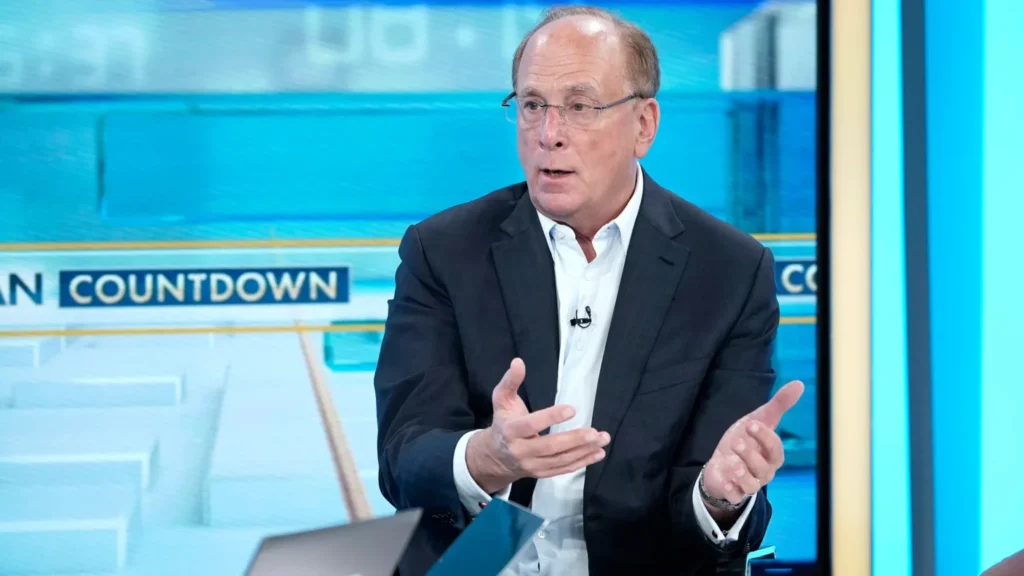
In his 2026 annual letter to shareholders, CEO Larry Fink made one of his clearest statements yet on the firm’s ambitions: digital assets could soon become a major revenue engine, generating up to $500 million annually within five years.
For a company that once approached crypto cautiously, the shift is unmistakable, and it reflects a broader transformation across global finance.
BlackRock’s Crypto Bet Is Getting Bigger
Fink’s projection comes as BlackRock’s crypto footprint has already reached significant scale.
The firm now manages close to $150 billion in digital asset-linked products, a figure built in just a few years as institutional demand accelerated.
In the shareholder letter, titled “Growing with Your Country: Thoughts from a Long-Term Optimist,” Fink grouped digital assets alongside other key growth areas, including private markets and active ETFs.
“Private markets for insurance, private markets for wealth, digital assets, and active ETFs—we believe all of these could become $500 million revenue sources over the next five years,” he wrote.
The framing matters. Crypto is no longer treated as a side experiment—it sits alongside BlackRock’s most important future revenue drivers.
Fink tied that outlook to a broader thesis: tokenization and blockchain technology could reshape how financial markets operate, much like the internet did in the 1990s.
His comments also come amid ongoing market volatility, with Bitcoin trading around $71,000 at the time, reinforcing his long-term view over short-term price swings.
From Skepticism to Scale
BlackRock’s rise in crypto has been fast—and deliberate.
The turning point came in January 2024, when the firm launched its spot Bitcoin ETF, the iShares Bitcoin Trust (IBIT), following regulatory approval in the U.S.
What followed was one of the most successful ETF launches in history.
IBIT rapidly climbed to tens of billions in assets, at one point approaching $100 billion in AUM faster than any ETF before it. As of March 2026, it manages roughly $55 billion and generates an estimated $250 million in annual fees.
That alone accounts for a significant portion of the $500 million revenue target Fink outlined.
But BlackRock’s crypto strategy extends beyond Bitcoin exposure.
The firm has expanded into tokenized assets through its BUIDL fund, now the largest tokenized treasury product globally with more than $2 billion in assets.
It also manages tens of billions tied to stablecoins and other digital asset products, pushing its total crypto-linked AUM close to $150 billion.
Institutions Are Driving the Shift
BlackRock’s push into crypto mirrors a wider shift among institutional investors.
Digital assets, once dismissed as speculative, are increasingly viewed as part of diversified portfolios.
Surveys suggest a growing share of institutional investors plan to increase their crypto exposure in 2026, supported by regulated products like ETFs and clearer market infrastructure.
Several macro factors are driving this change.
Rising U.S. debt levels, concerns about currency debasement, and the search for alternative stores of value have pushed institutions toward assets like Bitcoin.
At the same time, tokenization is opening new use cases—allowing real-world assets such as bonds, real estate, and private equity to be traded more efficiently.
BlackRock has positioned itself at the center of this trend.
Its Bitcoin ETF alone captures a significant share of institutional flows, particularly among registered investment advisors.
Meanwhile, tokenized products offer new ways to access yield, liquidity, and global markets without the constraints of traditional systems.
Competitors like Fidelity and Ark Invest have entered the space, but BlackRock’s scale—managing more than $14 trillion in total assets—gives it a distinct advantage.
A Long-Term Play on Financial Infrastructure
Fink’s latest comments reinforce a broader message: crypto is becoming part of the financial system’s core infrastructure, not just a new asset class.
The $500 million revenue target is notable, but it’s also symbolic.
It reflects how quickly digital assets have moved from the margins into the strategic plans of the world’s largest asset manager.
From ETFs to tokenized funds, BlackRock is betting that the next phase of finance will run, at least in part, on blockchain rails.
And if that bet plays out, crypto won’t just be another investment category—it will be embedded in how global markets function.

Prashant Jha is a seasoned crypto journalist based in Delhi, India, with a Bachelor’s Degree in Computer Science Engineering. Passionate about the evolving world of blockchain and cryptocurrencies, he has been a dedicated voice in the industry since 2018. Prashant’s expertise lies in regulatory reporting, where he unravels complex legal and financial developments with clarity and precision. Before joining CCN in 2024, he honed his craft at Cointelegraph, establishing himself as a trusted name in crypto journalism.
His coverage spans major industry events, including the high-profile collapses of FTX, Three Arrows Capital (3AC), and LUNA, offering readers insightful analyses of their regulatory and market implications. Prashant’s technical background enables him to bridge the gap between intricate blockchain technology and its real-world applications, making his work accessible to novices and experts.
Beyond his professional pursuits, Prashant is an avid music enthusiast, often exploring diverse genres to unwind. A sports lover, he has a particular passion for cricket and frequently engages in discussions about the game. His multifaceted interests and sharp journalistic instincts make him a valuable contributor to CCN, where he continues shaping the crypto landscape's narrative.