Key Takeaways
- Nvidia CEO Jensen Huang says Bitcoin converts excess energy into a portable form of money.
- His comments challenge years of criticism over Bitcoin’s electricity use.
- Supporters argue the network increasingly relies on stranded and renewable energy sources.
For more than a decade, Bitcoin’s critics have pointed to one thing above all else: its energy consumption.
But this week, one of the world’s most influential technologists flipped that argument on its head.
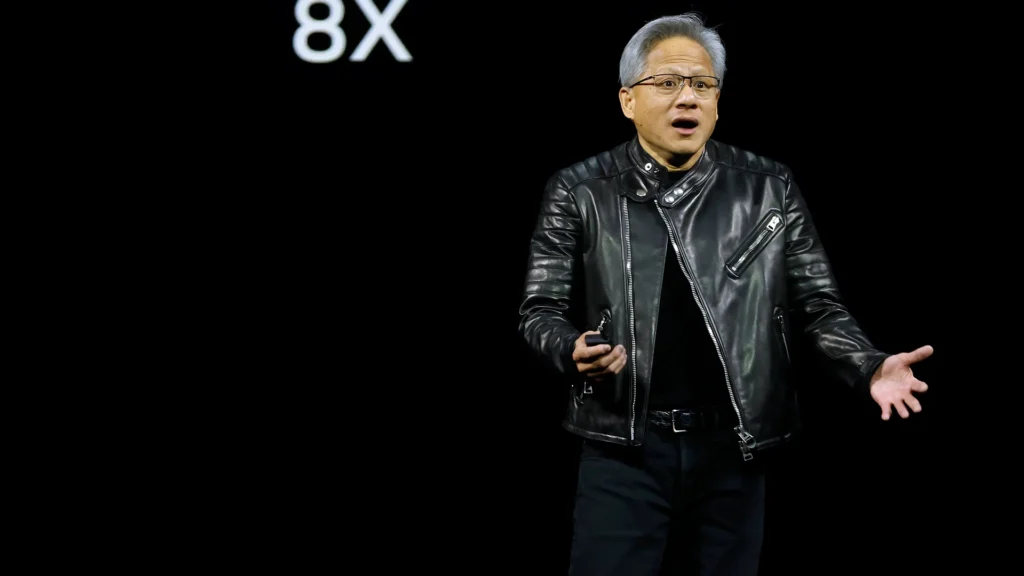
During a panel on AI and energy, Nvidia CEO Jensen Huang described Bitcoin not as an environmental burden but as a mechanism for turning unused electricity into a globally transferable asset.
Coming from the man whose chips power most of modern AI infrastructure, the framing immediately rippled across the industry.bi
Huang’s Argument: Bitcoin as an “Energy Porter”
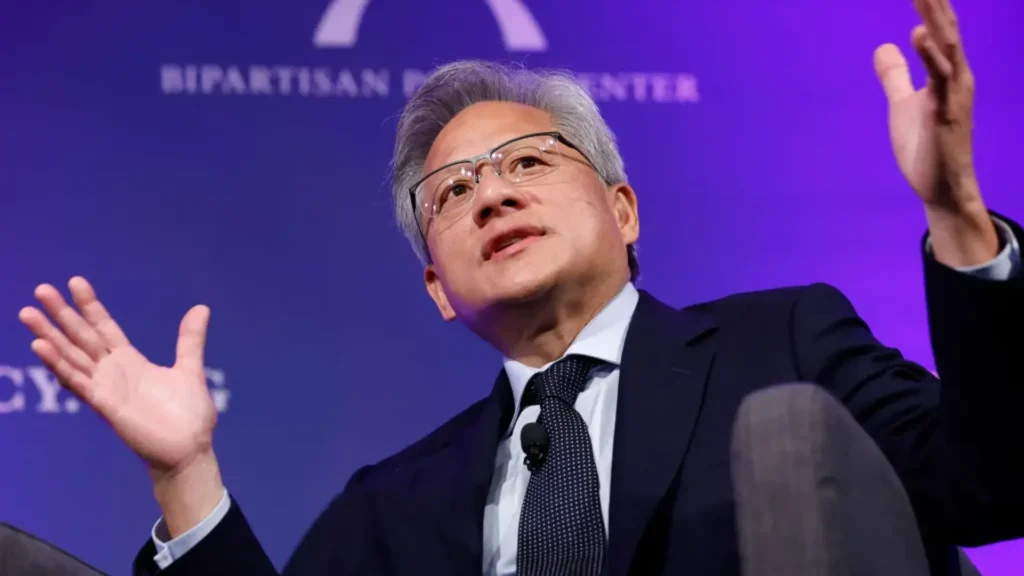
Speaking on a panel titled “The Future of AI and Energy,” Huang sketched out a simple but provocative thesis:
Bitcoin is a tool for monetizing stranded or excess power—allowing energy to “travel” across borders in the form of digital currency.
He compared Bitcoin mining to a kind of economic conversion process:
Bitcoin takes excess energy, stores it as currency, and allows that value to move anywhere in the world.
The remark landed because it reframed a longstanding critique.
For years, detractors have accused miners of “wasting” electricity.
Huang, by contrast, argued that the energy is not destroyed but transformed—captured, priced, and redistributed through a decentralized network.
His framing resonated with miners who already tap into unconventional energy sources such as:
- flared natural gas at oil fields,
- surplus hydropower in remote regions,
- geothermal output in Iceland,
- or underutilized wind and solar capacity.
In these contexts, Bitcoin doesn’t compete with households for electricity—it absorbs power that would otherwise be wasted.
Has Nvidia’s CEO Ended the “Energy-Intensive” Narrative?
Not quite—but his comments add heavyweight support to a growing counterargument.
Bitcoin researchers and mining executives have long argued that the network is increasingly powered by renewables or energy that has no alternative buyer.
Over the past three years, estimates suggest that more than half of the network’s hashrate is now sourced from renewable energy, a significant change from the pre-2021 era.
While many of these arguments have been made before, Huang’s stature gives them new visibility.
Unlike traditional Bitcoin advocates, Huang is not a crypto evangelist; he is a mainstream technology leader whose company has little direct stake in Bitcoin mining.
Instead, he profits from the opposite, as mining giants around the world power down their Bitcoin mining farms to chase better profits in AI.
That distinction matters. When a CEO overseeing hundreds of billions of dollars in market capitalization suggests Bitcoin serves as a global energy sink—and not an environmental threat—it forces policymakers and analysts to revisit old assumptions.
Why Huang’s Comments Matter Beyond Crypto
Bitcoin proponents often describe the network as “digital energy” or “thermodynamic money,” arguing that proof-of-work ties currency issuance to real-world physics.
Huang’s framing aligns with that philosophy but grounds it in an economic reality:
- Energy is produced unevenly across the world.
- Much of it cannot be stored or transported efficiently.
- Bitcoin mining creates a buyer of last resort for this stranded power.
That model encourages innovation in areas like microgrids, modular data centers, and renewable-heavy mining operations.
In many regions, miners help stabilize local grids by absorbing excess load during off-peak hours and powering down during shortages.
Huang’s remarks don’t resolve the debate—but they significantly complicate the narrative that Bitcoin simply wastes electricity.

Prashant Jha is a seasoned crypto journalist based in Delhi, India, with a Bachelor’s Degree in Computer Science Engineering. Passionate about the evolving world of blockchain and cryptocurrencies, he has been a dedicated voice in the industry since 2018. Prashant’s expertise lies in regulatory reporting, where he unravels complex legal and financial developments with clarity and precision. Before joining CCN in 2024, he honed his craft at Cointelegraph, establishing himself as a trusted name in crypto journalism.
His coverage spans major industry events, including the high-profile collapses of FTX, Three Arrows Capital (3AC), and LUNA, offering readers insightful analyses of their regulatory and market implications. Prashant’s technical background enables him to bridge the gap between intricate blockchain technology and its real-world applications, making his work accessible to novices and experts.
Beyond his professional pursuits, Prashant is an avid music enthusiast, often exploring diverse genres to unwind. A sports lover, he has a particular passion for cricket and frequently engages in discussions about the game. His multifaceted interests and sharp journalistic instincts make him a valuable contributor to CCN, where he continues shaping the crypto landscape's narrative.