Bitcoin could be poised for another major rally if concerns over the US growing debt burden and fiscal deficits return to the forefront of investor attention, according to BlackRock Managing Director Robert Mitchnick.
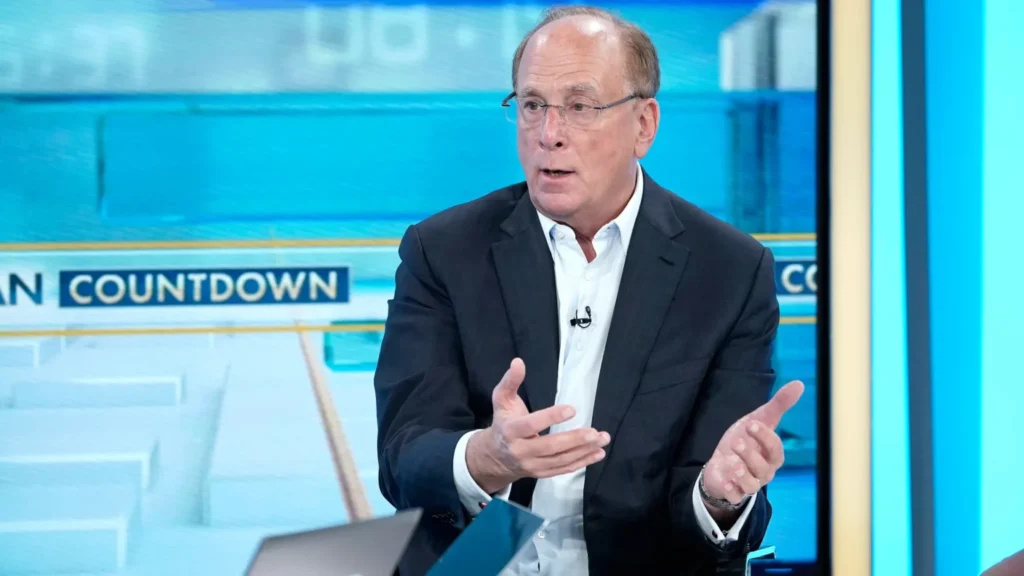
Speaking in a recent interview, Mitchnick argued that Bitcoin’s next significant move higher may be driven less by crypto-specific developments and more by mounting fears surrounding government borrowing, deficit spending, and potential monetary debasement.
The comments come as Bitcoin trades around $64,500 and investors increasingly look ahead to the 2026 US midterm elections, a period that could reignite debates over fiscal sustainability and public debt.
Mitchnick’s remarks underscore a growing institutional narrative that positions Bitcoin as a hedge against inflationary monetary policies and excessive government spending, much as gold has traditionally served that role.
AI Investment Boom Has Overshadowed Bitcoin
According to Mitchnick, Bitcoin’s recent sluggish performance can be partly attributed to the overwhelming investor focus on artificial intelligence-related opportunities.
He noted that capital has increasingly flowed into AI companies and projects, diverting attention from alternative asset classes such as cryptocurrencies and precious metals.
The trend has been evident across public and private markets, with high-profile AI investments and technology offerings attracting billions of dollars in fresh capital.
“It’s been a tough stretch for Bitcoin since last October,” Mitchnick said, adding that the weakness went beyond crypto markets.
Gold and other traditional inflation hedges have also faced pressure as investors prioritize exposure to the rapidly expanding AI sector.
The BlackRock executive described AI as “sucking a lot of the oxygen out of the room,” suggesting that enthusiasm surrounding the technology has temporarily reduced demand for assets typically viewed as stores of value or hedges against macroeconomic uncertainty.
Despite the slowdown, Mitchnick believes the factors that historically supported Bitcoin’s investment case have not disappeared and could re-emerge as dominant market themes over the coming year.
US Debt and Deficits Could Spark the Next Bitcoin Rally
Mitchnick identified America’s deteriorating fiscal position as the single most important factor that could reignite Bitcoin’s upward trajectory.
The United States continues to grapple with multi-trillion-dollar deficits and a rapidly expanding national debt, issues that have become increasingly contentious in Washington.
As lawmakers approach another election cycle, debates surrounding government spending and fiscal responsibility will intensify.
“I think certainly if we start to see US debt levels and the deficit situation come back into focus, we’ll start to see probably a renewal in that momentum,” Mitchnick said.
BlackRock manager suggested that political disputes tied to the upcoming midterm elections could place greater scrutiny on long-term fiscal sustainability, bringing concerns about government borrowing back into mainstream market discussions.
For Bitcoin supporters, these concerns strengthen the asset’s appeal as an alternative monetary system with a fixed supply cap of 21 million coins.
Unlike fiat currencies, the government cannot print or expand the supply of Bitcoin, a characteristic many investors view as protection against excessive money creation.
Fear of Money Printing Remains Bitcoin’s Core Driver
While Mitchnick acknowledged that Federal Reserve interest-rate policy will remain an important variable for markets, he emphasized that fiscal conditions may ultimately have a greater impact on Bitcoin’s long-term performance.
“The fiscal situation is very much the most important driver that we’re going to see in the next year or so alongside what’s going to happen with interest rates,” he said.
BlackRock executive Mitchnick further argued that fears surrounding excessive borrowing and the possibility of future money printing remain fundamental to Bitcoin’s investment thesis.
“The more fear there is over the borrowing level and the risk of money printing, that is ultimately the most important fundamental driver ahead,” he stated.