Key Takeaways
- Citrini Research argues that Wall Street’s blockchain expansion could create better investment opportunities than Bitcoin and Ethereum alone.
- CCN examines five cryptocurrencies that could benefit from the Wall Street boom.
- The firm warns that greater institutional adoption of blockchain does not necessarily translate into higher token prices.
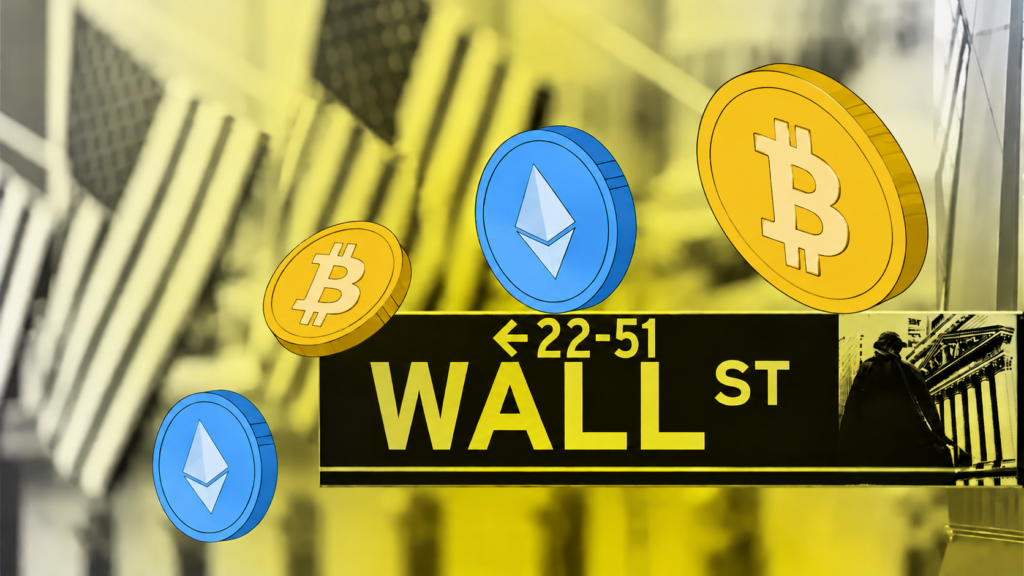
Wall Street’s move onto blockchain could create a new generation of crypto winners, but Bitcoin and Ethereum may not capture the biggest gains.
That’s the investment thesis emerging from an Oct. 8 report by Citrini Research, which argues that the convergence of artificial intelligence and tokenized financial assets could transform global markets.
In its 79-page report, Breaking the Wall, the firm suggests the biggest opportunities may lie with platforms that profit from trading and other financial activity as traditional assets move on-chain.
Citrini Says Blockchain May Finally Have Found Its Purpose
For much of its existence, crypto has struggled to establish a compelling use case beyond speculation, according to Citrini.
The firm argues that decentralized finance has largely operated separately from traditional markets, limiting its ability to serve investors seeking exposure to stocks and other established assets.
However, that separation is now beginning to change.
In its Oct. 8 report, Citrini points to the growing tokenization of traditional financial assets and the emergence of AI as two developments that could accelerate blockchain adoption.
“Blockchains have finally found their raison d’être,” the firm wrote.
Tokenization allows conventional financial assets to be represented digitally on blockchain networks, potentially enabling them to move between applications.
That could create opportunities for decentralized exchanges and other services built around those assets.
However, Citrini’s central question is not simply whether blockchain adoption will accelerate, but who stands to profit from it.
Wall Street’s Blockchain Expansion Is Already Taking Shape
Citrini argues that the shift toward blockchain-based financial markets is no longer purely theoretical.
Its report highlights the growing availability of tokenized financial instruments, including equities, government securities and commodities.
Citrini highlighted the introduction of Robinhood’s Stock Tokens as a development that is helping expand tokenized equities beyond individual trading platforms.
“This has snowballed to more chains,” Citrini wrote.
That could allow financial assets to interact with trading applications rather than remain confined to a single provider.
For example, a supported tokenized security could potentially be transferred between compatible platforms.
Citrini also pointed to Hyperliquid’s role during the March escalation of the Iran conflict, when traders used blockchain derivatives to gain exposure to oil price movements outside conventional market hours.
The firm described the episode as an early indication of blockchain’s growing relevance to financial markets.
“Since then, RWA adoption has really shifted into higher gear,” the report stated.
However, blockchain trading volumes do not necessarily represent the same type of activity as conventional securities markets.
Why Bitcoin and Ethereum Might Not Capture the Biggest Gains
Citrini Research argues that Wall Street’s blockchain expansion could create major investment opportunities without necessarily sending Bitcoin and Ethereum to new highs.
“We can’t assume that majors, primarily BTC and ETH, will make new ATHs on this,” Citrini wrote, according to CoinDesk.
“Even if they do, there are better expressions.”
Bitcoin’s investment appeal remains closely tied to its role as a store of value and scarcity, while Ethereum provides infrastructure for smart contracts.
However, Citrini argues that the biggest opportunities may lie with platforms that generate revenue as traditional financial assets move onto blockchain networks.
“The relevant question for any investor isn’t simply whether more assets become tokenized. It’s where the economics accrue,” the firm wrote.
For example, decentralized lending platforms could earn fees from loans backed by tokenized securities.
Those financial benefits would not necessarily flow directly to BTC or ETH holders.
5 Crypto Tokens That Could Benefit From Wall Street’s Blockchain Boom
Citrini’s research examines a broader range of crypto projects positioned to benefit from tokenization.
CCN has selected five cryptocurrencies from the projects discussed in coverage of Citrini’s research, examining how each could benefit from Wall Street’s blockchain expansion.
1. Chainlink (LINK): Connecting Wall Street to Blockchain
Chainlink could play an important role in connecting traditional financial institutions with blockchain networks.
Its infrastructure allows decentralized applications to access external information, including financial market data.
That capability could become increasingly valuable if tokenized stocks and other securities begin moving between blockchain-based financial platforms.
However, growing demand for Chainlink’s services does not necessarily guarantee equivalent growth in LINK’s market value.
The investment case depends partly on how increased network usage translates into demand for the token.
2. Ondo Finance (ONDO): Bringing Traditional Assets On-Chain
Ondo Finance represents one of the more direct connections between crypto and traditional financial markets.
The company has developed products designed to provide blockchain-based exposure to conventional financial instruments, including US government securities.
Its broader expansion into tokenized financial products places it within the market Citrini believes could grow substantially.
If investors increasingly seek access to traditional assets through blockchain networks, platforms such as Ondo could attract additional activity.
However, the success of Ondo’s financial products does not automatically translate into financial returns for ONDO holders.
3. Aave (AAVE): Turning Tokenized Assets Into Loan Collateral
Aave could benefit from another potential consequence of tokenization: the ability to borrow against financial assets without having to sell them.
The decentralized lending protocol already allows users to deposit supported cryptocurrencies and borrow other assets against their holdings.
As tokenization expands, similar arrangements could potentially support a wider range of financial instruments.
For example, an investor holding eligible tokenized securities might eventually be able to use those assets as collateral within decentralized lending markets.
However, this would depend on the assets being supported by the relevant lending platform and meeting its risk requirements.
Regulatory restrictions, liquidity concerns, and collateral valuation risks could also limit adoption.
4. Uniswap (UNI): A New Market for Tokenized Trading
Uniswap could become another beneficiary if traditional financial instruments increasingly trade through decentralized exchanges.
The protocol allows users to exchange supported digital assets through liquidity pools rather than conventional order books.
A wider selection of tokenized securities could potentially increase demand for blockchain-based trading infrastructure.
However, the opportunity comes with substantial regulatory and commercial uncertainty.
Not all tokenized securities can legally be traded on permissionless exchanges, and financial institutions may prefer regulated trading venues.
There is also no guarantee that additional trading volume would directly increase UNI’s value.
5. Maple Finance (SYRUP): Institutional Lending Moves On-Chain
Maple Finance focuses on blockchain-based lending and financial products, making it another potential beneficiary of institutional adoption.
Unlike platforms primarily associated with retail crypto trading, Maple has developed services aimed at borrowers and investors seeking structured lending opportunities.
The expansion of tokenized financial assets could create additional opportunities for lending platforms to manage credit and collateral.
But lending growth introduces risks beyond crypto price volatility.
Borrower defaults and collateral losses could undermine returns even if institutional demand increases.
XRP Shows Why Blockchain Adoption Doesn’t Guarantee Higher Token Prices
The disconnect between institutional adoption and crypto prices has become a recurring frustration among XRP holders.
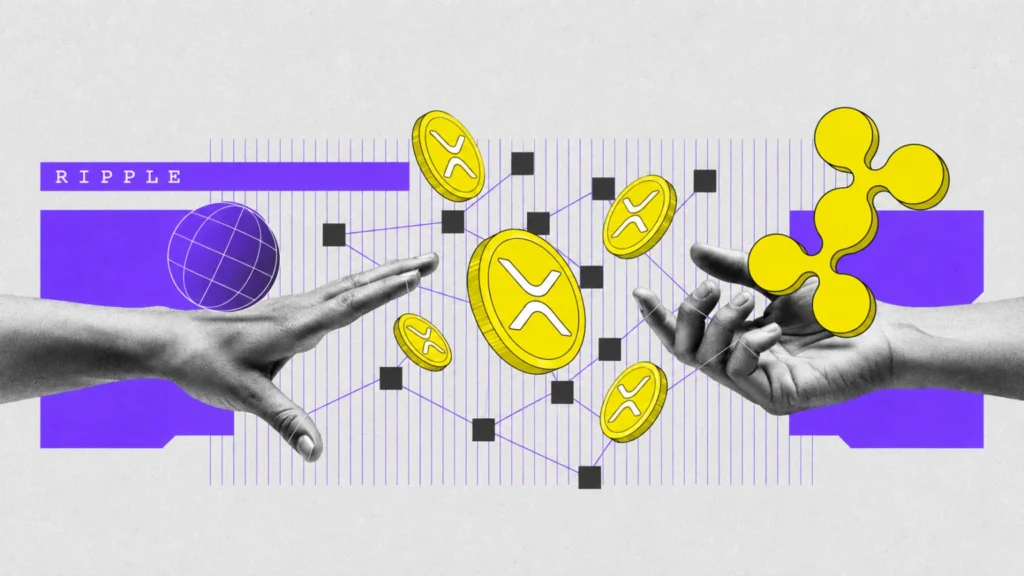
Ripple has expanded its presence in traditional finance through acquisitions and financial services, but some investors have questioned how much of that success actually benefits XRP.
The concern has become particularly relevant as Ripple pushes deeper into Wall Street through its prime brokerage and institutional financing operations.
While these developments could strengthen Ripple’s position in traditional finance, not all its services require customers to buy or use XRP.
That distinction illustrates a broader risk underlying Citrini’s investment thesis.
A blockchain platform could attract substantial institutional activity without generating equivalent returns for holders.
Similar questions apply to the five alternative cryptocurrencies selected by CCN.
Decentralized exchanges could generate substantial trading fees without necessarily distributing those earnings to token holders.
Could Wall Street’s Biggest Crypto Winners Be Smaller Tokens?
Citrini’s research suggests the next phase of blockchain adoption could look very different from previous crypto market cycles, with traditional financial assets and AI potentially driving demand.
“The worlds of traditional finance and crypto are merging,” the firm wrote.
It argues that blockchain networks could increasingly support financial products used by mainstream institutions, while AI agents create demand for infrastructure that operates continuously.
“AI agents move programmatically, 24/7, across applications,” the report stated.
However, the investment opportunity remains uncertain.
For investors considering smaller cryptocurrencies, the challenge is determining whether the platforms benefiting from tokenization will deliver meaningful economic value to their token holders.
Citrini’s research suggests Wall Street’s blockchain expansion could create a new generation of crypto winners.
But as Ripple’s expansion into Wall Street demonstrates, winning institutional business does not necessarily mean winning over cryptocurrency investors.
Top Trending Crypto Articles
The information provided in this article is for informational purposes only. It is not intended to be, nor should it be construed as, financial advice. We do not make any warranties regarding the completeness, reliability, or accuracy of this information. All investments involve risk, and past performance does not guarantee future results. We recommend consulting a financial advisor before making any investment decisions.

Kurt Robson is a London-based reporter at CCN, specialising in the fast-moving worlds of crypto and emerging technology. He began his career covering local news in Cornwall after graduating from Falmouth University with First Class Honours in Journalism. There, he cut his teeth on everything from council meetings to missing swans.
He quickly rose through the ranks to become a frontline journalist at several of the UK’s leading national newspapers. Over the years, he has interviewed musicians and celebrities, reported from courtrooms and crime scenes, and secured multiple front-page exclusives.
Following the upheaval of the COVID-19 pandemic, Kurt shifted his focus to technology journalism—just ahead of the AI boom. With a natural curiosity and a trained eye for emerging trends, he has found a new rhythm in reporting on innovation.
At CCN, Kurt's work focuses on the cutting edge of crypto, blockchain, AI, and the evolving digital world. Drawing on his background in people-first reporting and his deep interest in disruptive tech, Kurt delivers stories that are insightful, entertaining, and human-centric.