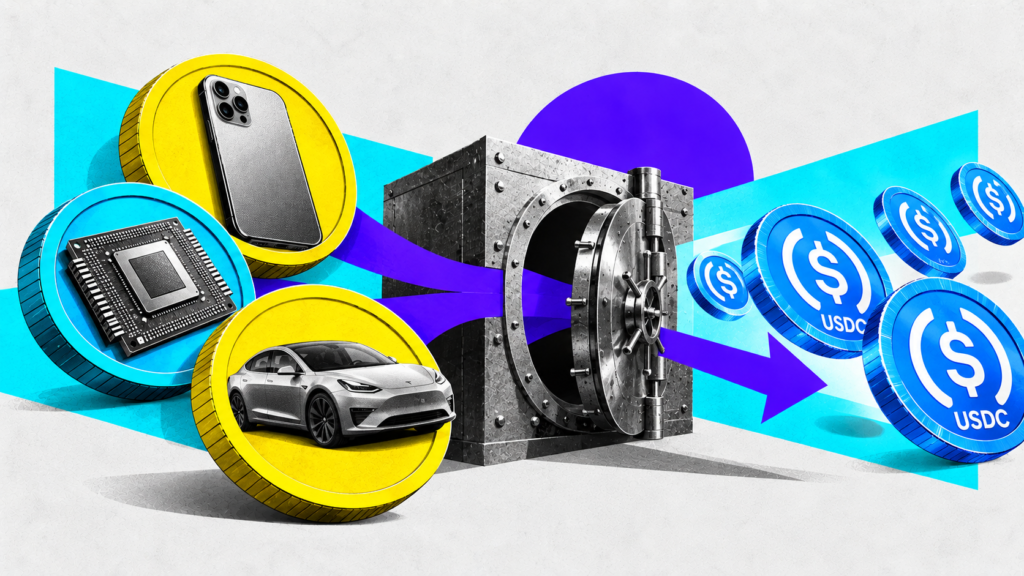
Owners of seven Coinbase tokenized US technology stocks can now use them to borrow USDC on Aave V4, bringing equity exposure into a decentralized lending market on Base.
The launch covers tokens representing Apple, Amazon, Alphabet, Meta, Microsoft, Nvidia and Tesla.
The service is available to eligible users outside the US. It lets them keep exposure to the stocks while borrowing against the tokens, although a falling collateral value could put a loan at risk of liquidation.
The stocks themselves cannot be borrowed through the market at launch.
How the Tokenized Stocks Back a USDC Loan
Users can deposit any combination of AAPLc, AMZNc, GOOGLc, METAc, MSFTc, NVDAc and TSLAc into Aave’s Equities Hub and borrow USDC against them.
The seven assets share a lending market, but each has its own collateral factor, which determines how much borrowing capacity it contributes.
The initial risk parameters range from 65% for Meta and Tesla tokens to 79% for Microsoft. Nvidia’s factor is 70%, while Apple’s is 78%.
A user posting $10,000 worth of NVDAc, for example, would have less initial borrowing capacity than one posting the same value of MSFTc. Borrowing up to the permitted limit would leave little room for a decline in the collateral’s value.
Aave has placed the assets in a dedicated hub. USDC suppliers who enter it explicitly opt into lending against tokenized equities, rather than taking that exposure through Aave’s other markets on Base.
The initial parameters also set caps on the amount of each stock token that can be supplied and on USDC borrowing.
What Token Holders Own and What They Can Redeem
The tokens are certificates issued by Coinbase Onchain SPV Ltd, rather than shares recorded directly in a holder’s name.
According to Aave’s description of the structure, the underlying shares are held in segregated accounts at Alpaca Securities, while the issuer holds them in trust for token holders. That gives holders economic exposure to the underlying equities rather than a synthetic claim based solely on their prices.
Aave then reinvests dividends after applicable fees and withholding tax.
An onchain multiplier adjusts each token’s claim on the underlying shares to account for those reinvestments and events such as stock splits, without changing the number of tokens in a wallet.
There is a distinction in access for buyers. Coinbase limits primary minting and redemption to approved institutional partners.
An Aave risk assessment notes that secondary-market buyers must complete the issuer’s vesting process before gaining redemption rights. Coinbase offers the securities under Regulation S to eligible non-US persons in permitted jurisdictions.
24/7 Loans Meet a Stock-Market Price Feed
Aave users can generally supply collateral, borrow, repay, and withdraw around the clock. The stock-linked prices used to assess that collateral follow a different schedule.
Chainlink’s tokenized equity feeds publish prices on a 24/5 basis and combine the underlying share price with Coinbase’s corporate-action multiplier.
During weekends and US market holidays, a feed holds its last published price. Interest can still accrue on a loan even when the displayed collateral value remains unchanged.
A large move in the underlying stock may therefore become visible to the lending market when pricing resumes, creating a particular risk for positions with little borrowing headroom.
The platform can also pause affected reserves during corporate actions while their multiplier updates are ongoing.
Aave expects to consider more Coinbase tokenized stocks and GHO as another borrowable asset, subject to governance and risk review.
For now, the launch tests whether stock-backed borrowing can work continuously onchain, even though its collateral still depends on securities markets with closing hours.