Key Takeaways
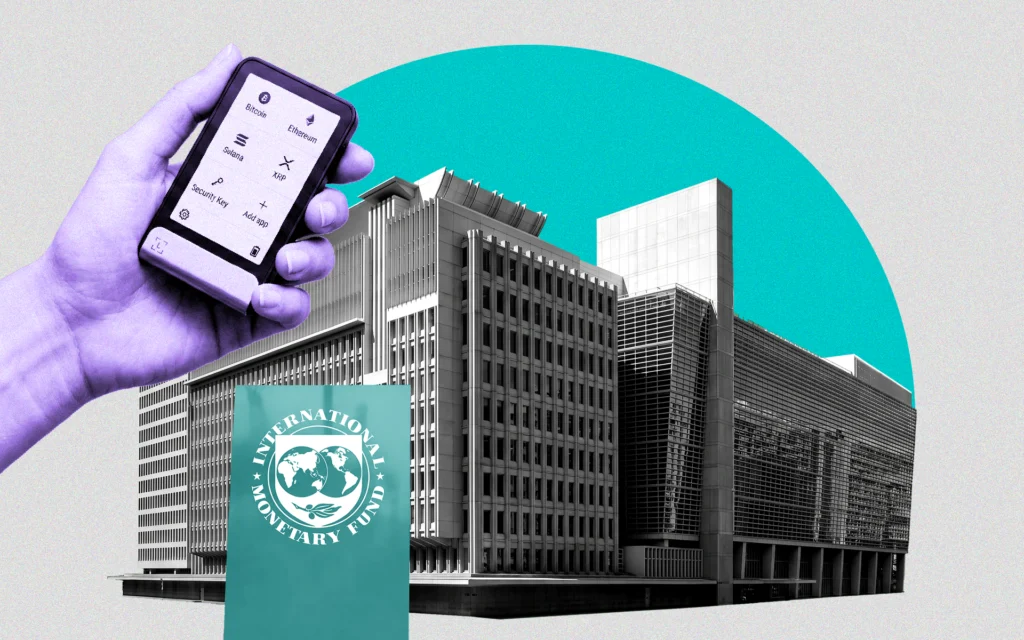
- BIS researchers have built a proof of concept on the XRP Ledger that lets users verify whether official statistical data came from its claimed publisher and whether it has been altered.
- The system works with SDMx, the international data standard backed by institutions including the IMF, World Bank, ECB, BIS, and United Nations, but the IMF and World Bank did not participate in the XRPL test.
- The prototype published data in 3–5 seconds and verified it in 1–2 seconds, although it ran on XRPL DevNet rather than a production deployment.
The XRP Ledger has appeared in a new Bank for International Settlements research project, but this time the use case has nothing to do with moving money.
A BIS working paper published Sept. 2 details a blockchain-based system designed to make official economic statistics independently verifiable.
Researchers implemented the proof of concept on the XRP Ledger, allowing users to check both who published a dataset and whether its contents have been changed.
Notably, the BIS did not announce that IMF or World Bank statistics are now being published on XRPL.
Instead, the system works with Statistical Data and Metadata eXchange (SDMX), a standard sponsored by the BIS, IMF, World Bank, ECB, Eurostat, OECD, UN, and the International Labor Organization.
That means the architecture could potentially be applied to datasets distributed by those institutions if adopted.
How the BIS XRP Ledger Test Works
The researchers are trying to solve a fairly straightforward problem: official data can be copied, redistributed, and increasingly consumed by AI systems, making it harder for users to establish whether a file is authentic.
Instead of putting an entire economic dataset on XRPL, the system creates a cryptographic fingerprint of it.
Multiple fingerprints can then be bundled into a Merkle root, which is anchored in an XRPL transaction. Anyone receiving the dataset can recalculate its fingerprint and compare it with the immutable onchain record.
The paper describes blockchain as effectively functioning as a public, timestamped notary.
In the prototype, a single XRPL transaction can represent thousands of datasets. Tests using files ranging from 10KB to 8MB produced median publication times of 3–5 seconds, while individual verification took 1–2 seconds. The researchers stress that these were controlled DevNet tests, not a hardened production system.
Why XRPL? And Does This Benefit XRP?
The paper says XRPL was selected for its low nominal fees, fast finality, developer resources, and existing technical research on its consensus mechanism. But the design is deliberately blockchain-agnostic.
That is positive for XRPL’s institutional credentials, but it should not automatically be interpreted as a major new source of XRP demand.
The worked example sends only 10 drops (0.00001 XRP) and includes the Merkle root in the transaction memo. The objective is data anchoring, not the use of XRP as a liquidity or settlement asset.
XRP nevertheless traded around $1.02 on Sept. 3, up roughly 2% over 24 hours, with a market capitalization near $64 billion.
XRPL Joins a Bigger Blockchain Infrastructure Race
The project also lands as traditional financial infrastructure rapidly moves toward blockchain.
SWIFT’s blockchain ledger went live for initial use in July, with 17 banks across six continents preparing tokenized-deposit transactions. HSBC and Standard Chartered completed their first live cross-border transaction on Aug. 19.
But XRPL is not directly competing with SWIFT in this BIS experiment. Swift’s ledger coordinates bank-issued tokenized deposits for payments; the BIS prototype uses XRPL to verify data authenticity.
A closer competitor is Chainlink. The US Department of Commerce previously worked with Chainlink to bring Bureau of Economic Analysis data, including GDP and PCE figures, onchain. The BIS paper explicitly cites the project and proposes future integration with Chainlink alongside XRPL.
The researchers also envision verified statistics feeding tokenized bonds, derivatives, inflation-linked products, regulatory reporting and AI agents. An IMF climate dashboard is cited as one example of a public dataset that could benefit from independent verification.
So the bigger story is not that the IMF or World Bank has adopted XRP Ledger. BIS researchers have demonstrated that the same blockchain behind XRP can serve as a verification layer for data used by global financial institutions and have produced a working prototype to prove it.
Top Trending Crypto Articles
The information provided in this article is for informational purposes only. It is not intended to be, nor should it be construed as, financial advice. We do not make any warranties regarding the completeness, reliability, or accuracy of this information. All investments involve risk, and past performance does not guarantee future results. We recommend consulting a financial advisor before making any investment decisions.

Dr. Guneet Kaur is a senior editor at CCN.com and a Science Fellow at Exponential Science. She is a fintech and blockchain expert with extensive experience in digital finance education, blockchain ecosystems, and cryptocurrency markets. She has worked with global media such as Cointelegraph, as well as education and blockchain platforms, to design and lead strategic content and learning initiatives. As an educator and assessor for top-tier executive programs, she bridges real-world fintech trends with academic insight.
Dr. Kaur is also a published researcher and peer reviewer across fintech and data science journals, including Financial Innovation Journal and International Journal of Big Data Intelligence and Applications. Her work spans data-driven analysis, Web3 innovation, and technical content development. With a strong foundation in both industry and academia, she translates complex financial technologies into practical applications, empowering learners, professionals, and institutions across the rapidly evolving digital finance landscape.