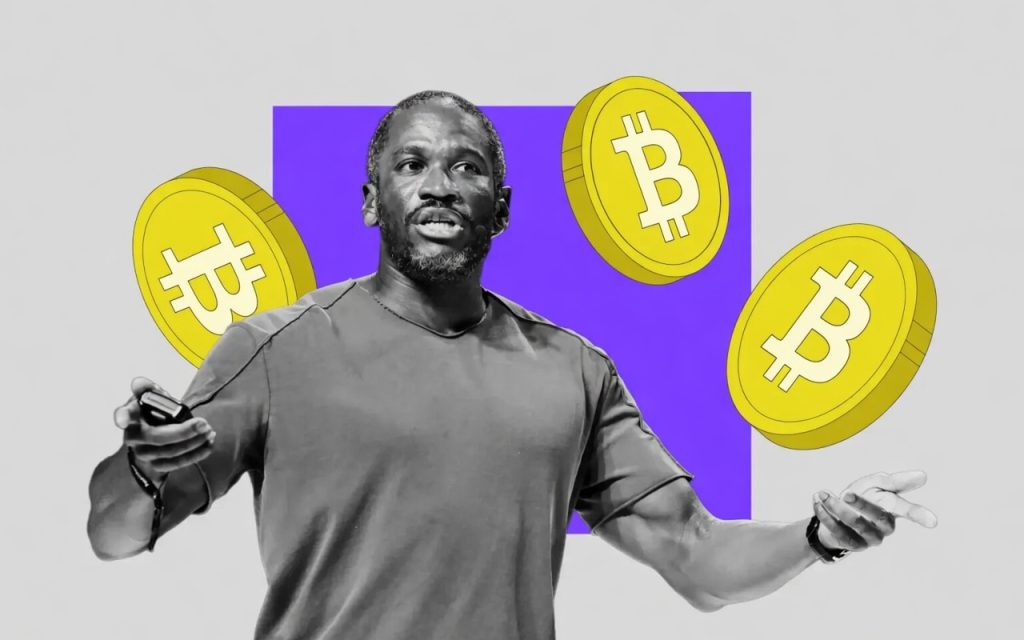
Bitcoin has entered a new bull market as the US Treasury prepares to inject more dollar liquidity into financial markets, according to BitMEX co-founder and Maelstrom chief investment officer Arthur Hayes.
In his latest essay, Same Same But Different, Hayes argued that Treasury Secretary Scott Bessent’s expansion of longer-dated bond buybacks represents a form of indirect money printing.
Although the initial increase remains relatively modest, Hayes expects the government to deploy larger interventions if Treasury yields continue rising.
Bitcoin rallied after Bessent announced additional buybacks on Aug. 19. Hayes believes that reaction demonstrates the cryptocurrency’s sensitivity to changes in global liquidity and signals the beginning of a potentially much larger move.
Treasury Buybacks Could Release More Dollar Liquidity
The Treasury plans to increase long-duration bond buybacks by approximately $20 billion during the next fiscal quarter. By repurchasing older notes and bonds, the government can support their prices and place downward pressure on yields.
Hayes considers the current amount insignificant compared with America’s roughly $40 trillion debt stock.
However, he sees it as the opening stage of a policy that could expand dramatically if the benchmark 10-year Treasury yield approaches 5%.
That level matters because mortgages, corporate bonds, and several forms of consumer credit are priced against the 10-year yield. A sustained move above 5% could raise borrowing costs, weaken economic activity, and create pressure on the government to intervene.
Hayes believes Bessent could finance larger buybacks by issuing more short-term Treasury bills.
The Federal Reserve already purchases bills through its Reserve Management Purchases program, creating bank reserves that add liquidity to the financial system.
Hayes Sees a Repeat of the 2023 Bitcoin Setup
Hayes compared Bessent’s current approach with former Treasury Secretary Janet Yellen’s issuance strategy in late 2023.
At the time, the Treasury increased its reliance on bills rather than longer-dated bonds.
Higher bill yields encouraged money-market funds to shift approximately $2.4 trillion out of the Federal Reserve’s reverse repo facility and into government securities.
Those funds could then circulate through the financial system rather than remaining parked at the Fed. The resulting liquidity coincided with gains in Bitcoin and the Nasdaq 100, even as the central bank maintained high interest rates and reduced its balance sheet.
Hayes argues that investors who focus exclusively on Federal Reserve rate decisions risk overlooking the Treasury’s influence.
He describes Bitcoin as a “global liquidity smoke alarm” that often signals a policy shift before traditional markets fully recognize it.
Bitcoin’s rally following the Aug. 19 buyback announcement may therefore indicate that traders expect additional liquidity measures.
Bitcoin Could Rally Despite Sharp Corrections
Hayes outlined several possible paths for Treasury policy. His most bullish scenario would see Bessent promise unlimited buybacks of Treasuries with maturities of 10 years or longer whenever yields exceed 5%.
A more likely outcome, he said, involves progressively larger buybacks alongside other liquidity measures. One option could be to draw down the Treasury General Account, which reportedly holds around $1 trillion, to finance additional bond purchases.
The bearish scenario would require Washington to reduce spending, lowering the need for financial intervention. Hayes considers that unlikely with elections approaching and both political parties facing pressure to support economic growth.
“Whether Bessent pumps fast or slow, Bitcoin will continue its rally,” Hayes wrote.
However, he warned that the climb would not be uninterrupted. Greater liquidity could bring higher volatility and “savage mini-corrections,” making leverage particularly dangerous for anyone who is not a full-time trader.
Hayes said Maelstrom is now operating at maximum risk, with Bitcoin, Ether, Ethena and Ether.fi among its principal positions.
His central thesis remains clear: Treasury-led liquidity creation, not necessarily Federal Reserve rate cuts, could power the crypto market’s next major bull run.