Key Takeaways
- The 30-year Treasury yield fell below 5.20% after reaching 5.337%, its highest level since 2007.
- The Treasury will increase long-term bond buybacks from $2 billion to at least $4 billion per operation between Sept. 9 and Nov. 4.
- Bitcoin rose above $65,000 as falling yields, a weaker dollar and improving liquidity expectations supported risk assets.
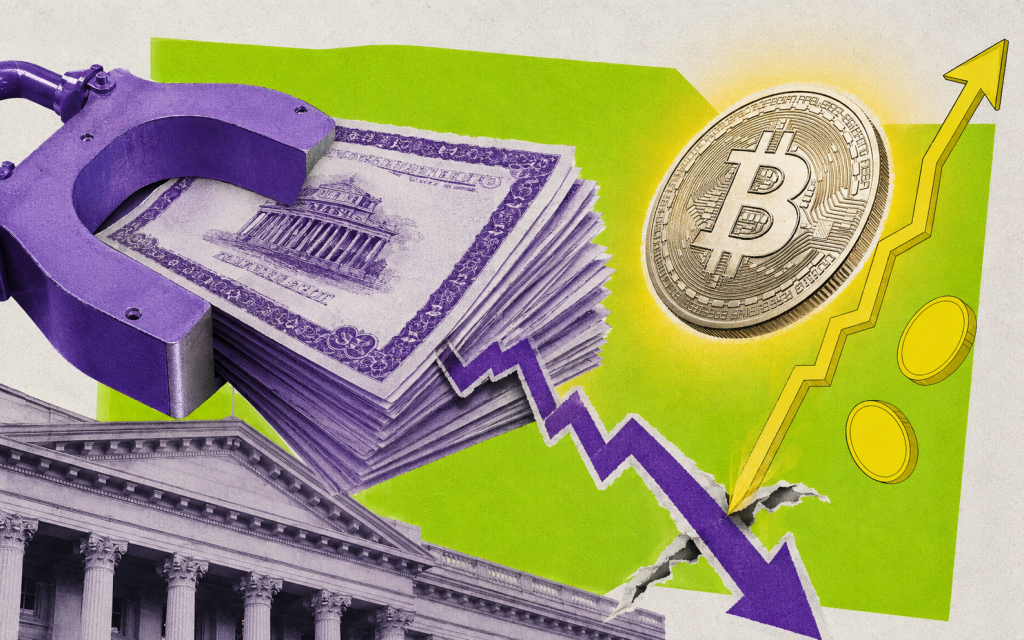
The US Treasury has doubled the size of its long-term bond buybacks after the 30-year yield reached its highest level since 2007, triggering a sharp reversal across bonds and a rally in Bitcoin.
The 30-year Treasury yield touched 5.337% before falling as low as 5.189%, while Bitcoin climbed above $65,000. Lower yields, a weaker dollar and expectations of easier financial conditions also lifted other cryptocurrencies, stocks and gold.
Although traders interpreted the move as a liquidity signal, the program does not constitute quantitative easing. The Treasury plans to repurchase existing debt to improve market functioning, while the Federal Reserve creates bank reserves when it conducts QE.
Treasury Expands Long-Term Debt Buybacks
The Treasury Department will increase the maximum size of each liquidity-support buyback for bonds in the 10-to-20-year and 20-to-30-year sectors from $2 billion to at least $4 billion.
The larger operations will begin on Sept. 9 and continue through Nov. 4, when the Treasury will provide another update during its next Quarterly Refunding.
A buyback allows the government to purchase previously issued bonds before they mature. The operation removes less-liquid securities from the market, supports their prices and can pull yields lower.
Treasury officials said strong participation and a steady supply of high-quality offers drove the decision. They described the program as an attempt to improve liquidity rather than target a specific interest rate.
However, the timing attracted attention. The announcement followed a bond selloff that pushed the 30-year yield to 5.34%, while the country’s total public debt approached $40 trillion.
The government must also continue financing large deficits and refinancing maturing obligations.
Falling Yields Give Bitcoin a Lift
Bitcoin rose as the yield reversal reduced the appeal of long-term government bonds relative to non-yielding assets. When Treasury yields fall, investors receive a smaller return for holding comparatively safe debt and may become more willing to buy assets such as Bitcoin and gold.
A weaker dollar added to the momentum because investors typically price Bitcoin in dollars. Easier financial conditions can also increase market liquidity and encourage greater risk-taking.
The announcement’s signaling effect may have mattered more than its direct financial impact. The Treasury market exceeds $30 trillion, making an additional $2 billion per operation relatively small.
Nevertheless, investors interpreted the change as evidence that officials had become sensitive to disruption at the long end of the bond market.
That interpretation encouraged comparisons with “QE lite,” but the distinction remains important.
Treasury buybacks replace older debt with cash raised through the government’s broader financing operations. They do not expand the Federal Reserve’s balance sheet or directly inject newly created reserves into banks.
Is the Treasury Move Really Bullish for Bitcoin?
The immediate reaction favored Bitcoin, but the longer-term outlook remains less certain. Sustained declines in nominal and inflation-adjusted yields would strengthen the case for BTC, particularly if the dollar continues weakening.
Bitcoin could also benefit if investors view the buybacks as an early sign that fiscal pressures will eventually push policymakers toward rate cuts or broader liquidity support. Concerns about debt monetization, inflation and currency debasement have historically reinforced Bitcoin’s appeal as a scarce asset.
However, the buybacks do not solve the forces that drove yields higher, including heavy government borrowing, persistent inflation and rising term premiums. If inflation forces the Federal Reserve to keep monetary policy restrictive, yields could rebound and pressure crypto prices.
For now, the Treasury has provided a bullish liquidity signal, not a guarantee of lasting monetary easing. Bitcoin’s next move will depend on whether falling yields and a weaker dollar persist after the initial market reaction.
The information provided in this article is for informational purposes only. It is not intended to be, nor should it be construed as, financial advice. We do not make any warranties regarding the completeness, reliability, or accuracy of this information. All investments involve risk, and past performance does not guarantee future results. We recommend consulting a financial advisor before making any investment decisions.

Giuseppe Ciccomascolo began his career as an investigative journalist in Italy, where he contributed to both local and national newspapers, focusing on various financial sectors.
Upon relocating to London, he worked as an analyst for Fitch's CapitalStructure and later as a Senior Reporter for Alliance News. In 2017, Giuseppe transitioned to covering cryptocurrency-related news, producing documentaries and articles on Bitcoin and other emerging digital currencies. He also played a pivotal role in establishing the academy for a cryptocurrency exchange website. Crypto remained his primary area of interest throughout his tenure as a writer for ThirdFloor.