How do data detectives track market risks before they hit? | Credit: CCN.com
Share
Key Takeaways
On-chain analysts can’t stop a crash, but by tracking capital movement, leverage, and sentiment, they can spot the storm before it hits.
Metrics like MVRV-Z, SOPR, and exchange inflows may highlight overheating or capitulation zones, useful for risk probability, not exact outcomes.
On-chain analysis reflects blockchain activity, but misses off-chain catalysts (regulation, institutional moves, or macro policy shifts).
Even advanced AI models interpret patterns, not future events. Treat outputs as probabilistic insights, never financial forecasts.
In crypto, every bull run comes with whispers of ghosts, the unseen patterns that precede panic, liquidation, and collapse.
Behind the scenes, a growing group of analysts is watching the blockchain’s pulse for exactly those signs.
They are on-chain forensic analysts, digital sleuths who track the flow of money across exchanges, bridges, and smart contracts.
Once focused solely on tracing stolen assets and criminal transactions, these “crypto detectives” now play a broader role: identifying systemic risks and early warning signals before they ripple through the market.
The question is: can they actually see a crash coming before it hits?
Turning Blockchain Chaos into Clarity: The Power of On-Chain Analysis
When Bitcoin launched in 2009, its promise was radical transparency: every transaction visible on a public ledger. But transparency doesn’t mean clarity. Billions of transactions now span thousands of tokens, automated contracts, and pseudonymous wallets.
That complexity, ironically, became crypto’s Achilles’ heel, and its solution. Firms like Nansen, Glassnode, TRM Labs, and Chainalysis have built tools that convert blockchain noise into financial telemetry.
Today, on-chain analysis offers something traditional markets can’t: real-time insight into capital movement, 24 hours a day, without intermediaries.
And occasionally, those insights have proven prophetic.
On-Chain Warnings: How Blockchain Data Foreshadowed Crypto’s Biggest Crises
From algorithmic stablecoins to major exchanges, the past few years have tested crypto’s promise of transparency. In each crisis, such as Terra, FTX, and Binance withdrawals, on-chain data offered early signals long before headlines broke. These moments showed how blockchain analytics can both expose fragility and restore confidence.
Terra’s Collapse (2022): The First Major Red Flag
In early 2022, months before the $60 billion Terra ecosystem imploded, several on-chain analysts began raising alarms.
Data showed unusually high UST withdrawals from Anchor Protocol and large stablecoin minting patterns that didn’t align with organic demand.
Nansen’s analysts identified a handful of wallets that “broke the peg”, swapping hundreds of millions in UST for USDC and DAI.
CryptoQuant flagged declining Bitcoin reserves at the Luna Foundation Guard, suggesting the project was spending BTC to defend the peg.
Those insights didn’t prevent the collapse, but they documented it in real-time, providing regulators and investors with the first comprehensive post-mortem of how algorithmic stablecoins could unravel.
FTX and Alameda: The Exchange That Blinked
Fast-forward to 2022 again. In the weeks leading up to FTX’s collapse, on-chain data indicated a quiet storm was forming.
Analytics dashboards detected large, stablecoin outflows from FTX wallets and transfers of FTT tokens to Alameda Research, a trading firm.
Whale watchers on Twitter, using tools like Arkham Intelligence, pointed out that the exchange’s on-chain balances had fallen by more than half in less than a week. At the same time, executives insisted withdrawals were “normal.”
Those on-chain warnings became evidence of FTX’s liquidity crisis, a case study in how blockchain transparency could have served as an early alarm if markets had been paying closer attention.
Binance Scrutiny Wave (2023): Data-Driven Anxiety
In December 2023, a surge of withdrawals occurred at Binance following reports of regulatory pressure in the U.S.
Unlike in previous panics, on-chain analytics provided real-time reassurance. Nansen data showed that Binance processed billions in withdrawals without delay, and that wallet reserves remained intact.
This time, the transparency worked in reverse, calming markets instead of spooking them.
Over $19 billion in leveraged positions were liquidated within 24 hours (Oct. 10-11), marking a record single-day wipeout.
Bitcoin plunged more than 14% from its recent highs (dropping to around $104,783) and Ethereum declined around 12% in the same period.
Many altcoins fared far worse, some tumbling 40%-70% intraday before partial recoveries.
The crash was exacerbated by thin liquidity, especially over the weekend, making forced liquidations more impactful, when large orders hit shallow order books, price slippage amplified losses.
Markets were already vulnerable: Open interest and leverage in derivatives had reached elevated levels, making the system fragile to any sudden move.
The 24/7 nature of crypto meant there was no natural “cooling-off” period as with traditional markets, so cascading liquidations continued unchecked.
The crash was predictable in pattern (overleverage + thin liquidity + macro shock) but not predictable in timing or exact trigger. On‐chain analysts provided important risk signals, but structural fragilities alone weren’t enough to say when or how hard the crash would hit.
How On-Chain Forensics Actually Works
Behind those timely insights are robust analytics pipelines that sift through millions of transactions per day. Here’s what allows on-chain experts to separate signal from noise.
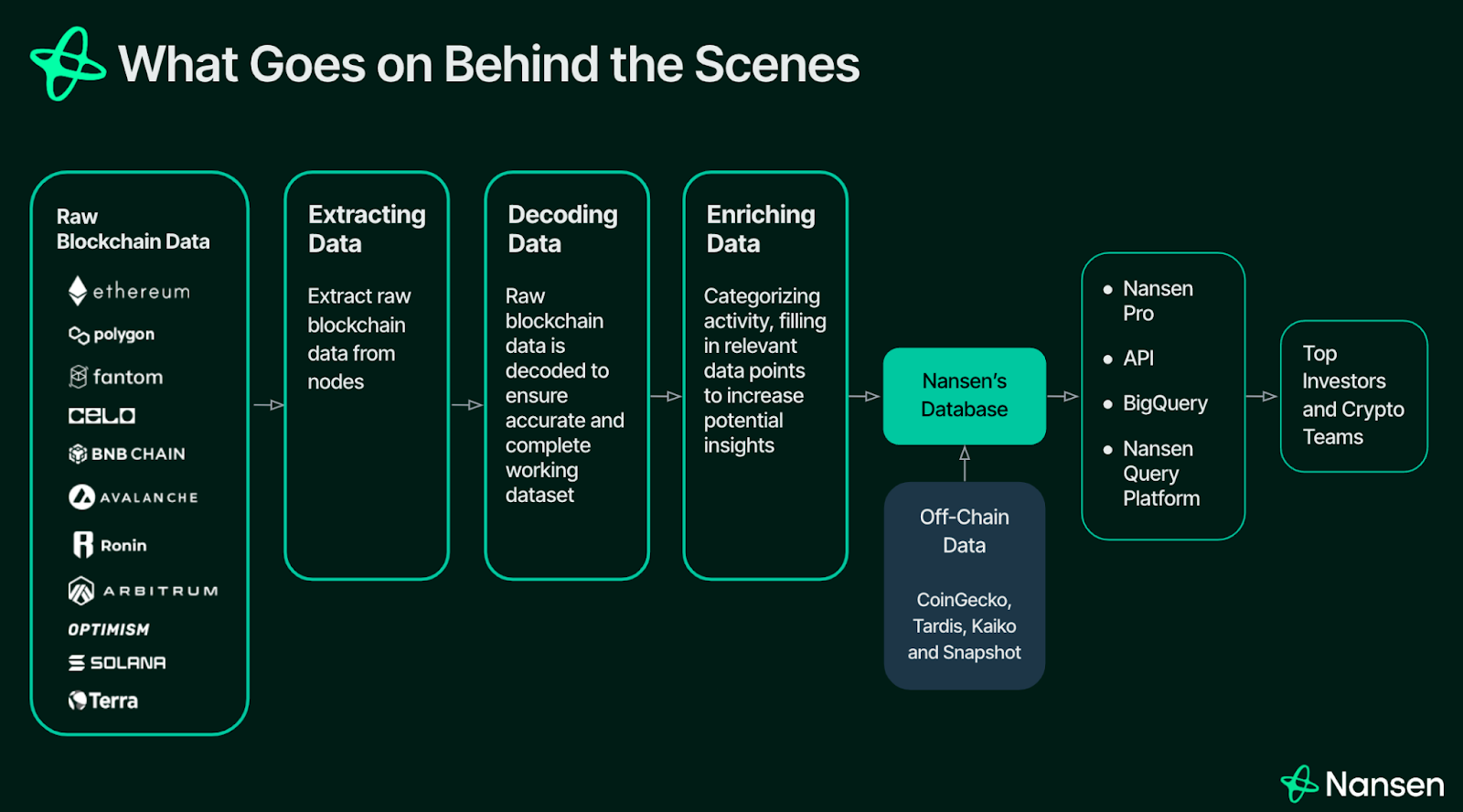
1. Graph Analytics and Clustering
Every transaction contains a sender, a receiver, an amount, and a timestamp. Analysts use graph models to connect wallets likely controlled by the same entity.
How on-chain analysys work. | Credit: Nansen
Clusters like “Exchange Hot Wallets” or “DeFi Whales” emerge, allowing investigators to see where capital is flowing and when it starts to flee.
2. Behavioral Pattern Detection
It’s not just that money moved; it’s how. Analysts look for early stress indicators:
Whale movements: Sudden outflows from top exchange wallets often precede volatility.
Stablecoin imbalances: rapid minting or redemption of USDT, USDC, or DAI can signal risk-off sentiment.
Bridge congestion: spikes in cross-chain transfers may indicate that users are fleeing ecosystems in trouble.
3. Off-Chain Correlation
Market chatter, news events, and sentiment analysis help connect blockchain activity to real-world triggers.
When price rumors align with data (e.g., falling reserves plus negative news), that’s often when analysts raise the alarm.
4. Risk Scoring and Attribution
Forensic firms now assign risk scores to wallets based on their behavior.
If a high-risk address (linked to hacks or laundering) starts interacting with exchanges or liquidity pools, it can warn of contagion risk long before a crisis breaks publicly.
Why On-Chain Analysis Needs More Than Math
No algorithm alone can declare a definite crash. Analysts often blend quantitative alerts with human interpretation: the art of context.
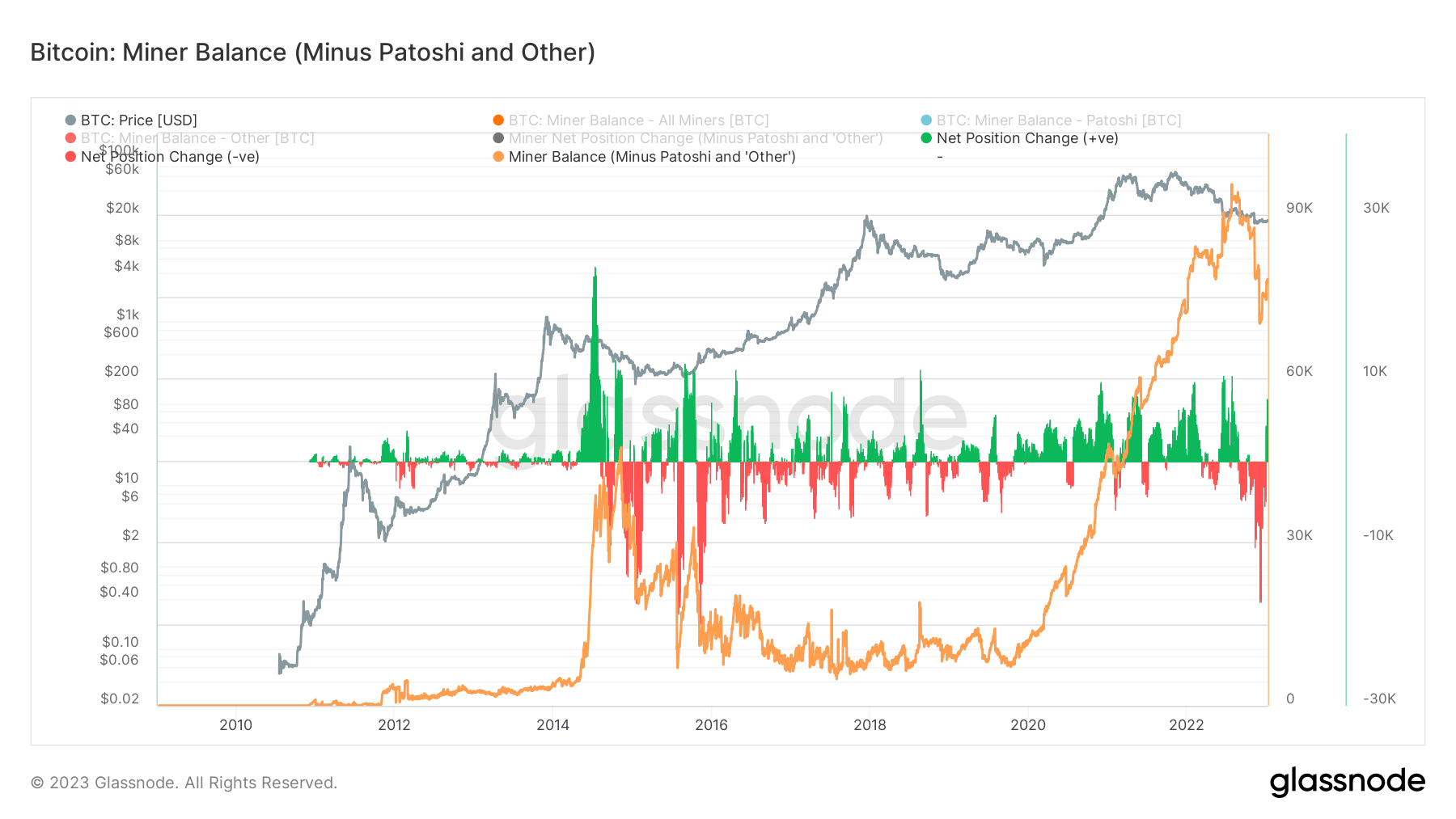
Take the so-called “miner capitulation” indicator: in prior market cycles, analysts have noticed that when Bitcoin miners begin selling heavily from their wallets, it often foreshadows price drawdowns.
Bitcoin miner balance. | Credit: Glassnode
Similarly, large inflows to exchanges during euphoric rallies, as observed on-chain, have historically preceded local tops, as whales prepare to sell.
On-chain analytics, therefore, isn’t fortune-telling. It’s contextual pattern recognition, a blend of behavioral economics and digital forensics.
On-Chain Intelligence as Financial Infrastructure
The shift from curiosity to necessity is already happening.
Exchanges now rely on real-time forensic alerts to comply with AML/KYC standards.
Funds and traders use on-chain data to assess counterparty risk.
Regulators use it for compliance investigations and enforcement actions.
For major market makers and custodians, blockchain data has become a form of risk radar. When paired with AI, it can detect anomalies faster than traditional audit systems ever could.
When Transparency Isn’t Enough: The Hidden Gaps in On-Chain Insight
Despite its power, on-chain analysis has its limitations and blind spots.
Privacy coins (like Monero) and some mixers obscure flows.
Layer-2 networks and off-chain order books can mask liquidity movement until it’s too late.
And critically, data doesn’t equal decision: sometimes the market sees risk and rallies anyway.
On-chain L1 and L2. | Credit: Glassnode
There’s also the problem of reflexivity: when everyone watches the same data, behavior changes. A sudden spike in stablecoin outflows may now trigger fear more quickly. Accelerating the very event analysts are warning about.
Reducing Surprise, Not Risk: What On-Chain Data Really Offers
In truth, blockchain analytics can’t stop contagion, but it can shorten it.
By turning invisible capital movements into visible signals, analysts make it harder for bad actors to hide losses or manipulate markets undetected.
The goal isn’t to predict every downturn, but to reduce the surprise factor that has haunted crypto since its early days.
On-chain data won’t replace regulation or due diligence. But it can make markets fairer by exposing stress before it becomes systemic.
Predictive Analytics and the Evolution of On-Chain Intelligence
The field is evolving quickly.
AI models can now automatically classify laundering and spoofing behaviors.
Cross-chain analytics is becoming the new standard, with tools that track liquidity across Ethereum, Solana, and Cosmos in real time.
Retail-friendly platforms like MetaSleuth and Arkham are democratizing forensic insight, allowing anyone to track whale wallets or monitor exchange reserves.
Soon, predictive models may become part of every major exchange’s infrastructure, scanning for “market health signals” like a financial weather radar.
On-chain analysis can’t banish volatility, but it can reveal its shape before it hits. From Terra to FTX to the next unknown event, the data has been there all along; the challenge is learning how to listen to it.
The blockchain doesn’t forget, and it doesn’t lie. And in a market where the next crash can start with a single transaction, that truth might be the crypto world’s best defense.
ChatGPT’s Outlook on the Next Crypto Crash
Based on current data (as of Oct. 31, 2025), ChatGPT believes the crypto market is in a high-risk phase, not yet a crash, but close.
ChatGPT response. | Credit: ChatGPT
The overall market cap has dropped to around $3.7 trillion, sentiment has shifted to “fear,” and leveraged positions now dominate trading. These conditions create a setup where any strong external shock, such as a macro downturn, regulatory hit, or large liquidation wave, could trigger a sharp, market-wide correction.
Bitcoin hovering near $109K–$110K and total crypto cap testing $3.6 trillion are key thresholds. A decisive break below either could unleash a chain reaction across major assets like Ethereum, Solana, and other altcoins.
ChatGPT’s view: the next crypto crash isn’t guaranteed, but the probability of a broad correction in the next 1–3 months is high unless liquidity and sentiment improve fast.
However, it’s vital to treat this as analytical commentary, not financial advice. AI models interpret data patterns, they don’t predict the future or account for sudden geopolitical or regulatory shocks.
How to Protect Yourself from the “Crypto Market Curse”
The crypto market moves fast, but fortunes rise and fall overnight. Here’s how to stay safe when volatility strikes:
On-chain forensics is the practice of analyzing blockchain transactions to trace the movement of digital assets. It helps investigators identify suspicious patterns, link wallets to illicit activities, and recover stolen or laundered funds. Every transaction on public blockchains, such as Bitcoin and Ethereum, leaves a digital footprint that can be analyzed and mapped.
Who are on-chain detectives?
They’re specialized analysts who use blockchain data to uncover hacks, scams, money laundering, and sanctions evasion. Some work for private firms such as TRM Labs, Elliptic, and Chainalysis, while others collaborate with law enforcement agencies or crypto exchanges to track stolen assets.
Can blockchain activity really be anonymous?
Not completely. While wallet addresses don’t reveal personal identities, the blockchain’s transparency means every movement is permanently recorded. Once a wallet is tied to a real-world entity, for example, through an exchange or a seized account, all its past activity becomes traceable.
Why are cross-chain investigations complex?
Funds can move between blockchains through bridges and DeFi protocols, making tracking harder. Traditional analytics focused on single chains, but new forensic tools now monitor multi-chain liquidity flows in real time, closing the gap that criminals once exploited.
Disclaimer:
The information provided in this article is for informational purposes only. It is not intended to be, nor should it be construed as, financial advice. We do not make any warranties regarding the completeness, reliability, or accuracy of this information. All investments involve risk, and past performance does not guarantee future results. We recommend consulting a financial advisor before making any investment decisions.
Giuseppe Ciccomascolo began his career as an investigative journalist in Italy, where he contributed to both local and national newspapers, focusing on various financial sectors.
Upon relocating to London, he worked as an analyst for Fitch's CapitalStructure and later as a Senior Reporter for Alliance News. In 2017, Giuseppe transitioned to covering cryptocurrency-related news, producing documentaries and articles on Bitcoin and other emerging digital currencies. He also played a pivotal role in establishing the academy for a cryptocurrency exchange website. Crypto remained his primary area of interest throughout his tenure as a writer for ThirdFloor.


 Easy
Easy