14 Tokenized Funds Leading the $10B On-Chain Asset Boom |
Credit: Veroni
Share
Key Takeaways
Tokenized funds surpassed $10 billion in value by September 2025.
BlackRock leads with $2.9B in BUIDL, but DeFi-native issuers are catching up.
Products span Treasuries, credit, venture, equities, and DeFi vaults.
Tokenization is becoming a core bridge between traditional finance and blockchain.
Traditional finance and blockchain are no longer living in separate worlds. A quiet shift is underway as global investment giants and crypto-native startups race to move real-world assets (RWA) on-chain.
Tokenized funds have become the bridge between these two worlds, transforming how investors gain access to markets and how capital flows across the globe.
BlackRock leads the pack with its BUIDL money market fund, but fast-growing players like Ondo Finance, Superstate, and Spiko are challenging its dominance. Traditional asset managers, fintech innovators, and DeFi-native protocols are converging, reshaping the structure of global finance in real time.
This article explores the 14 leading tokenized fund issuers, what drives their growth, and how they are shaping the future of the $10B on-chain asset boom.
Why Tokenized Funds Matter in 2025
Tokenization lets investors access RWA directly on-chain. It transforms how people interact with financial markets by offering faster settlement, 24/7 access, and lower entry costs than traditional systems. Demand is surging across the spectrum, from global institutions to everyday investors seeking new opportunities.
New Trending Crypto Wallet Offers
Sponsored
Disclosure
We sometimes use affiliate links in our content, when clicking on those we might receive a commission at no extra cost to you. By using this website you agree to our terms and conditions and privacy policy.
Original asset: Anything from cash and stocks to real estate, commodities, or artwork.
Ledger of origin: The asset is officially registered here, such as the Securities Exchange Commission (SEC) for securities or the Bitcoin network for BTC.
Token issuer: Companies like BlackRock, Circle, or Securitize create a secure on-chain asset representation.
Destination ledger: Deployed on blockchains like Ethereum, Solana, or Avalanche, which improve settlement, liquidity, and interoperability.
Tokenized asset: The final digital token mirrors the value of the original asset, from USDC and WBTC to tokenized treasuries and private equity funds.
This process unlocks a new financial infrastructure where traditional markets meet blockchain speed. Assets become more accessible, transparent, and efficient, driving the rapid adoption of tokenized funds worldwide.
Top 14 Tokenized Asset Issuers Leading the Market in 2025
The tokenized asset market has exploded to over $10 billion in total value locked (TVL) as of September 2025, driven by institutional adoption, regulatory clarity, and seamless integration with decentralized finance (DeFi) protocols.
This boom reflects a shift toward programmable, 24/7 tradable RWAs, with tokenized treasuries, credit, and equities leading the charge.
Securitize stands out as the platform behind five of the 14 leading funds in this report, including BlackRock BUIDL, Apollo ACRED, VanEck VBILL, Blockchain Capital BCAP, and Hamilton Lane’s offering, underscoring its role in driving institutional adoption of tokenized funds.
1. BlackRock
The largest asset manager in the world has turned tokenization into a proving ground for institutional adoption, making Treasuries usable as on-chain collateral across DeFi.
Focus: Money market tokenization
Flagship fund: BUIDL, tokenized fund with $2.9B AUM as of September 2025
Edge: Unmatched trust and scale from institutional clients, enabling seamless on-chain treasury management for decentralized autonomous organizations (DAOs) and protocols.
Next comes Ondo Finance, the DeFi-native challenger building liquidity bridges around Treasuries.
2. Ondo Finance
As one of the first movers in DeFi treasuries, Ondo has become the go-to bridge for institutions experimenting with tokenized yields.
Focus: Tokenized U.S. treasuries and bonds
Flagship fund: OUSG token, pegged to short-term treasuries with $670M AUM.
Edge: Seamless integration between DeFi liquidity and real-world yields, now expanded to XRP Ledger for institutional access.
After Ondo, WisdomTree demonstrates how traditional regulation and tokenization can work hand in hand.
3. WisdomTree
A publicly traded asset manager, WisdomTree, uses tokenization to extend its ETF expertise, proving that compliance and digital rails coexist.
Focus: Tokenized fixed-income and ETFs
Flagship fund: WisdomTree Prime platform products, with WTGXX tokenized fund at $486M AUM as of July 2025
Edge: Combines regulatory strength with user-friendly digital onboarding, now supporting stablecoin reserves and multi-chain expansion.
Next in line, Tradable pushes equity investing on-chain with retail-focused alternatives.
4. Tradable
This platform shows how traditional equity products can be bundled and reissued on-chain, targeting a new generation of retail investors.
Focus: Tokenized equities and structured products
Flagship fund: Retail-driven equity bundles with $1.7B AUM in tokenized alternative assets.
Edge: Makes traditional stock exposure accessible on-chain, now integrated with ZKsync for efficient DeFi composability, or the ability of different protocols and tokens to work together like building blocks, letting one application plug into another seamlessly.
Meanwhile, the Superstate takes the safe-haven route by introducing tokenized short-term debt.
5. Superstate
ETF veterans manage Superstate’s USTB fund. Its strength lies in transparent NAV pricing and a DeFi-ready design.
Focus: Tokenized treasuries and short-term debt
Flagship fund: USTB token with $275M AUM as of September 2025.
Edge: Built by ex-WisdomTree leadership, leveraging deep ETF expertise for continuous NAV pricing and DeFi utility.
In contrast, Spiko takes tokenization straight into high-yield territory.
6. Spiko
A pure DeFi-native, Spiko built its brand by offering structured returns that appeal to crypto traders seeking risk and rewards beyond treasuries.
Focus: Crypto-native structured yield products
Flagship fund: On-chain high-yield vaults with $400M AUM in first year.
Edge: Appeals to DeFi-native investors chasing higher returns, now with Chainlink CCIP for cross-chain liquidity.
At the other end of the spectrum, Franklin Templeton delivers regulated tokenized mutual funds.
7. Franklin Templeton
One of the earliest traditional asset managers to register a tokenized mutual fund, Franklin Templeton shows incumbents are not standing still.
Focus: Tokenized mutual funds
Flagship fund: BENJI, one of the first SEC-registered tokenized funds with $420M AUM launched on Avalanche.
Edge: Credibility as a traditional giant moving early into tokenization, enabling P2P transfers and USDC conversions.
Venture exposure, however, is the domain of Blockchain Capital.
8. Blockchain Capital
The firm turns its venture capital track record into a tokenized product, offering exposure to early-stage projects usually out of retail’s reach.
Focus: Tokenized venture capital portfolios
Flagship fund: BCAP token, representing a $2B portfolio with NAV of $23.58 per token as of September 2025.
Edge: Provides retail and institutional investors with early-stage crypto exposure and a proven track record of unicorn investments.
For a safer bet, OpenEden tokenizes Treasury bills with transparency.
9. OpenEden
Positioning itself as a trusted Treasury gateway, OpenEden emphasizes transparency, ratings, and regulated collateral in its growth strategy.
Focus: Tokenized U.S. treasury bills
Flagship fund: TBILL token with $281M TVL as of September 2025
Edge: Combines transparency with real-world, regulated collateral and the global credit rating agency, Moody’s A rating, and multi-chain support.
In private credit, Apollo is setting the tone.
10. Apollo
The private credit giant is extending its reach into tokenized markets, giving DeFi access to an asset class that was once fully gated.
Focus: Tokenized private credit and alternative assets
Flagship fund: Apollo Digital Credit platform (ACRED) with more than $100 M AUM as of June 2025
Edge: Opens access to traditionally locked institutional-grade assets, now integrated with Solana DeFi for leveraged yields.
From credit markets, VanEck is channeling its ETF power into tokenization.
11. VanEck
With decades of ETF innovation reaching $500 million in August 2025 and an award of best performing fund over two years, in 2025, VanEck is now translating its scale into tokenized products, starting with Treasuries on blockchain rails.
Focus: Tokenized ETFs and crypto exposure (primarily through ETFs like DAPP/DAVV for digital assets equity, and VBILL for tokenized treasuries).
Flagship fund: Digital Assets: VanEck Digital Transformation ETF (DAPP) with around $302M AUM as of August 29, 2025.
Edge: Bridges traditional ETF investing with blockchain-native rails, now offering tokenized treasuries on multiple chains.
Risk-taking investors turn to Midas.
12. Midas
At the DeFi frontier, Midas combines automated strategies, high-yield vaults, and investment products in DeFi, where users deposit crypto. The protocol automatically reallocates funds into different yield-earning techniques to attract younger, risk-tolerant capital.
Focus: DeFi-native yield strategies
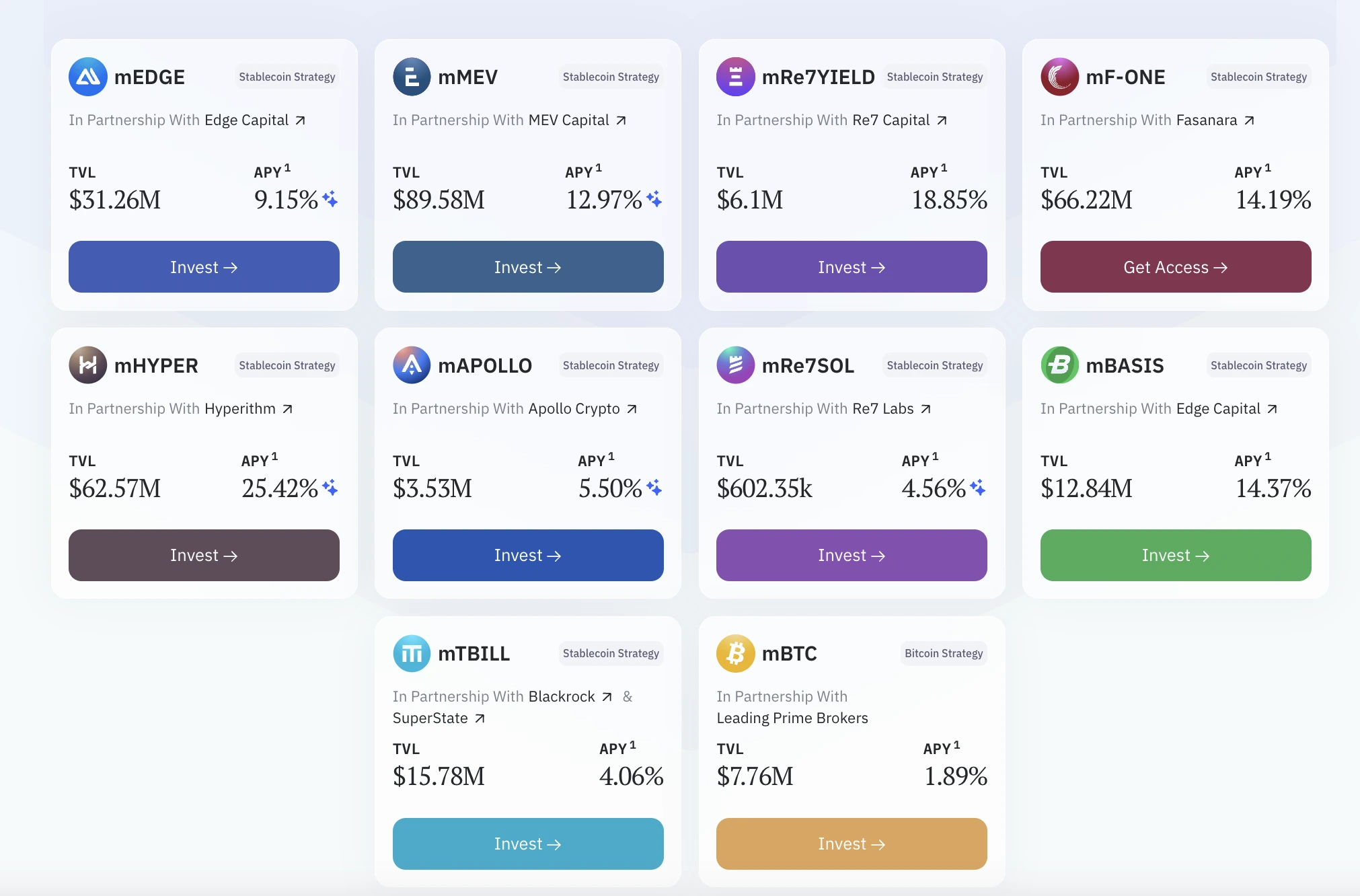
Flagship fund: Midas Yield Vaults grew from $30M to more than $300M in TVL in four months, showing strong demand for its liquid yield tokens. By mid-2025, new products on Etherlink, such as mBASIS and mTBILL, had already locked in $11M.
Edge: High-risk, high-reward products attracting younger crypto investors, with automated yield optimization across DeFi protocols.
Meanwhile, Republic has taken tokenization into crowdfunding.
13. Republic
Through the Republic Note token, the platform enables broader participation in startup equity and crowdfunding, decentralizing venture access.
Focus: Tokenized startup equity and crowdfunding
Flagship fund: Republic’s Note token reflects $299 in circulation now tied to a portfolio of 766 assets from 632 companies. It’s reshaping access to startup investing.
Edge: Democratizes early-stage startup investments, enabling P2P transfers and dividends from a 750-asset portfolio.
Finally, Hamilton Lane opens up private equity.
14. Hamilton Lane
As one of the first private equity managers to tokenize a flagship vehicle, Hamilton Lane has expanded access by lowering minimums and pushing evergreen structures on-chain.
By September 2025, tokenized funds had grown into a $10B market, led by giants like BlackRock and Franklin Templeton alongside crypto-native challengers like Ondo, Spiko, and Midas.
This growth shows how institutional credibility and DeFi innovation converge in a single space.
The mix of products ranges from Treasuries and mutual funds to private credit, venture portfolios, and high-risk DeFi vaults. Each issuer plays a distinct role: some expand access for retail investors with lower entry points.
In contrast, others remain gated to professionals but use tokenization to streamline operations and attract new capital.
As adoption accelerates, tokenized funds prove that real-world blockchain assets are not a niche experiment but a growing financial infrastructure. The competition among incumbents and startups is reshaping access, liquidity, and the very structure of global markets.
Can anyone invest in these companies’ tokenized funds?
Not always. BlackRock’s BUIDL and Franklin Templeton’s BENJI are typically restricted to institutional or accredited investors. Republic and OpenEden target retail investors, while Hamilton Lane and Apollo often require high-net-worth or professional investor status.
How do I know if I qualify as an investor?
In the U.S., accredited investor status requires $200K+ annual income or $1M+ net worth (excluding primary residence); some funds demand “qualified purchaser” status ($5M+ in investments). In Europe, Asia, or Latin America, similar professional/sophisticated investor criteria apply, based on wealth or experience.
What are the minimum investments for these tokenized funds?
Tokenization lowers barriers. For example, Hamilton Lane’s tokenized funds via Securitize start at $20K–$25K (down from $5M) and Ondo offers liquid tokens with minimums often below $1,000.
How do I invest if I qualify?
Invest through platforms like Securitize, Coinbase Institutional, or Fireblocks after KYC/AML onboarding and investor status verification. For DeFi-native funds (Ondo, Spiko, Midas), buy tokens directly on supported blockchains. Regulated funds (BlackRock, Franklin Templeton) require subscription via official platforms.
Disclaimer:
The information provided in this article is for informational purposes only. It is not intended to be, nor should it be construed as, financial advice. We do not make any warranties regarding the completeness, reliability, or accuracy of this information. All investments involve risk, and past performance does not guarantee future results. We recommend consulting a financial advisor before making any investment decisions.
Dr. Lorena Nessi is an award-winning journalist and media technology expert with 15 years of experience in digital culture and communication. Based in Oxfordshire, UK, she combines academic insight with hands-on media practice.
She holds a PhD in Communication, Sociology, and Digital Cultures, and an MA in Globalization, Identity, and Technology.
Lorena has taught at Fairleigh Dickinson University, Nottingham Trent University, and the University of Oxford. She is a former producer for the BBC in London, with additional experience creating television content in Mexico and Japan.
Her research focuses on digital cultures, social media, technology, capitalism, and the societal impact of blockchain innovation.
She has written extensively on digital media and emerging technologies, with her work featured in both academic and media platforms. Her Web3 expertise explores how blockchain technologies shape culture, economics, and decentralized systems.
Outside of work, Lorena enjoys reading science fiction, playing strategic board games, traveling, and chasing adventures that get her heart racing. A perfect day ends with a relaxing spa and a good family meal.


 Easy
Easy