Bitroots CEO Owen Vaughan on How Bitcoin Provenance Could Create a Market for Certified Green Coins.
Share
For years, Bitcoin has carried a paradox at its core: a digital asset that is both transparent and anonymous. Every transaction is recorded forever on a public ledger, yet every coin is indistinguishable from another.
Bitcoin’s fungibility, the idea that each satoshi is identical and interchangeable, has long been central to its design.
But what if some Bitcoins could carry a story? What if investors could verify where a Bitcoin was mined, how it was powered, and who contributed to its creation without compromising its fungibility?
That question drives Dr. Owen Vaughan, CEO of Bitroots, a company building the world’s first Bitcoin provenance platform. This system allows the traceability of individual satoshis from their moment of creation, without altering Bitcoin’s base protocol.
“We like to think of it as giving each satoshi a birth certificate,” Dr. Vaughan told CCN.
“We don’t change Bitcoin; we just add off-chain data that records where and how it came into existence.”
Try Our Recommended Crypto Exchanges
Sponsored
Disclosure
We sometimes use affiliate links in our content, when clicking on those we might receive a commission at no extra cost to you. By using this website you agree to our terms and conditions and privacy policy.
Dr. Vaughan explains that two recent technical innovations have made this possible: non-custodial mining pools and ordinal theory.
1. Non-Custodial Mining Pools
Traditionally, mining pools collect the rewards for solving Bitcoin blocks into a single address they control, before distributing payouts to participants. This structure makes it impossible to know which miner was responsible for which coins.
Non-custodial pools, such as Ocean, flip that model. Instead of paying the pool operator, the block reward is distributed directly to individual miners in the Coinbase transaction.
“That means I get paid directly from the block reward,” says Dr. Vaughan. “Those satoshis were issued to me. On a block explorer, you can see 100 outputs in the Coinbase transaction, one for each miner.”
This allows the origin of each freshly minted satoshi to be linked to a specific data center or operator. It’s a crucial step in establishing Bitcoin’s provenance, identifying where a coin was born.
2. Ordinal Theory
Next comes the problem of tracking coins as they move across the ledger. Here, Dr. Vaughan invokes ordinal theory, a protocol developed in recent years to index every satoshi ever mined.
Most know ordinals from the NFT-like “inscriptions” trend of 2023-2024, but the underlying idea runs deeper. Ordinal theory provides a way to track every satoshi from issuance to its current owner by matching inputs and outputs in each transaction.
“Every satoshi has a position in the ledger,” Dr. Vaughan explains. “The first satoshi in the first input goes to the first satoshi in the first output, and so on. It’s a logical way to trace satoshis as they’re transacted.”
By combining non-custodial pool issuance and ordinal mapping, Bitroots can reconstruct a continuous provenance chain from the time a satoshi is mined to its presence in today’s wallets.
Understanding Provenance Without Compromising Fungibility in Bitcoin
At first glance, this seems to challenge Bitcoin’s sacred fungibility. If coins can be traced, does that not make them less interchangeable? Dr. Vaughan argues otherwise.
“We don’t write anything to the blockchain,” he emphasizes. “We don’t tag or alter the coins. The provenance data lives off-chain, so on-chain, every bitcoin remains equal.”
In other words, provenance exists outside the Bitcoin protocol, much like how an art collector might keep certificates of authenticity for paintings, without changing the artworks themselves.
And unlike blockchain analytics tools that tie addresses to identities, Bitroots’ model does not associate coins with owners. It tracks origins, not ownership.
“We’re not saying Owen owned it and sold it to you,” says Dr. Vaughan. “We just say, three hops ago, this coin was produced by Hive Mining in Canada using hydropower, for example.”
That distinction between provenance and ownership is key. Bitroots aims to make Bitcoin more transparent without becoming a surveillance tool.
Can Green Bitcoin Trade at a Premium?
The idea of “green Bitcoin”, coins verifiably mined using renewable energy, has gained traction among institutional investors and ESG-focused funds. Dr. Vaughan believes a green premium already exists.
He points to examples from the gold market, where initiatives like Fairmined Gold certify ethically sourced bullion that trades at a 2-4% premium.
“It doesn’t make other gold worth less,” he explains. “It just means some buyers are willing to pay more for gold whose origins they can verify.”
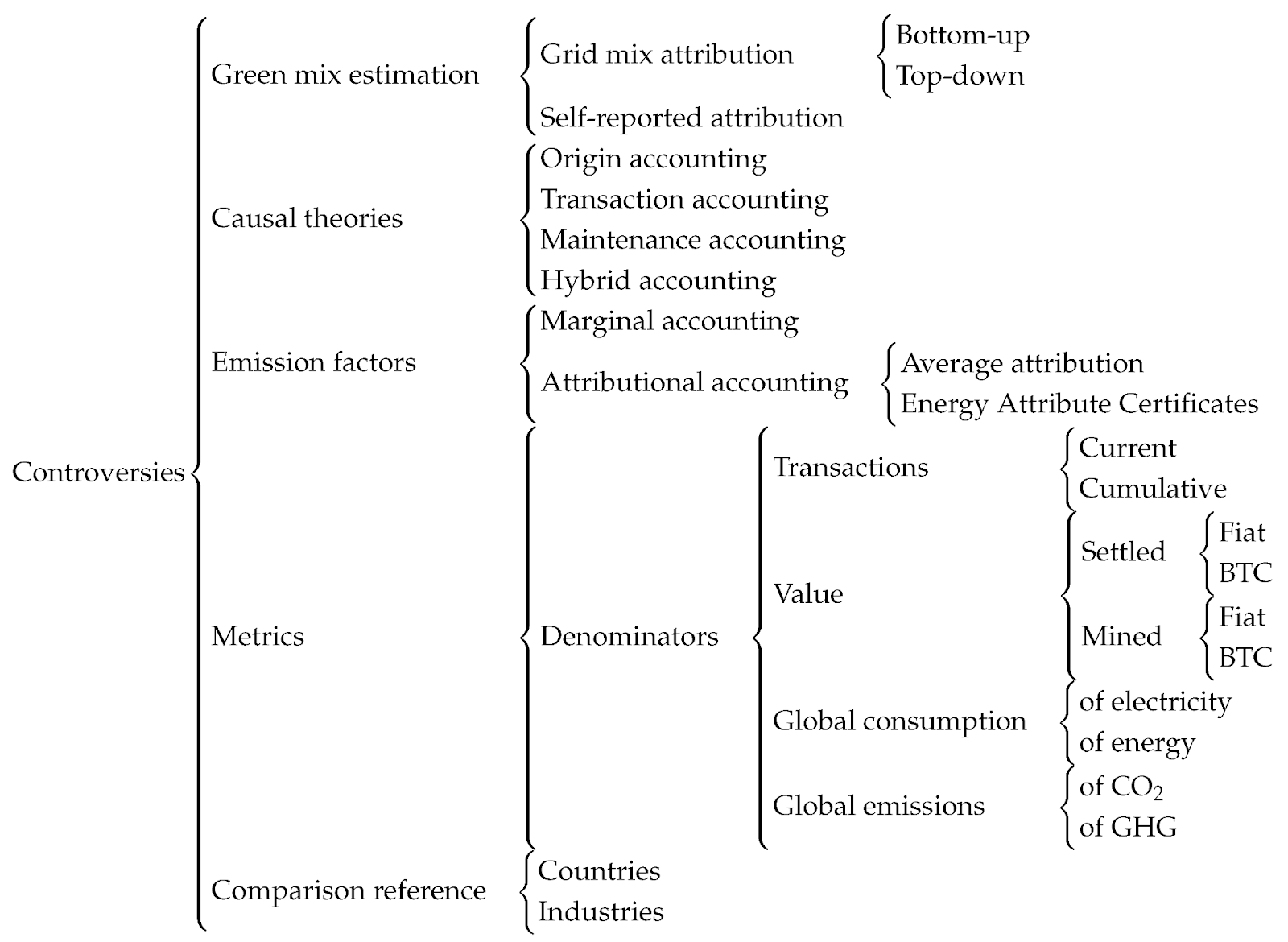
Different approaches to ascertaining the environmental impact of Bitcoin mining. | Credit: Juan Ignacio Ibanez and Alexander Freier
Similarly, miners who prove their coins were produced with renewable energy can sell them directly to ethical funds at a markup. Dr. Vaughan mentions that some are already doing so at up to 5% above the market price.
Bitroots’ platform makes that possible: It issues digital certificates tied to verified data center audits, showing the miner’s energy composition, location, and sustainability standards.
“Imagine being able to say: this Bitcoin was mined in the USA using 100% hydropower,” says Dr. Vaughan. “Some people will place a high value on verifying such attributes.”
Bitcoin Mining as a Catalyst for Renewable Energy Development
For Dr. Vaughan, the story goes beyond emissions. He sees Bitcoin as a financial catalyst for renewable growth, especially in developing regions.
He cited Ethiopia’s Grand Renaissance Dam, one of Africa’s most significant hydroelectric projects. The dam generates more energy than the national grid can currently use, leaving excess capacity idle.
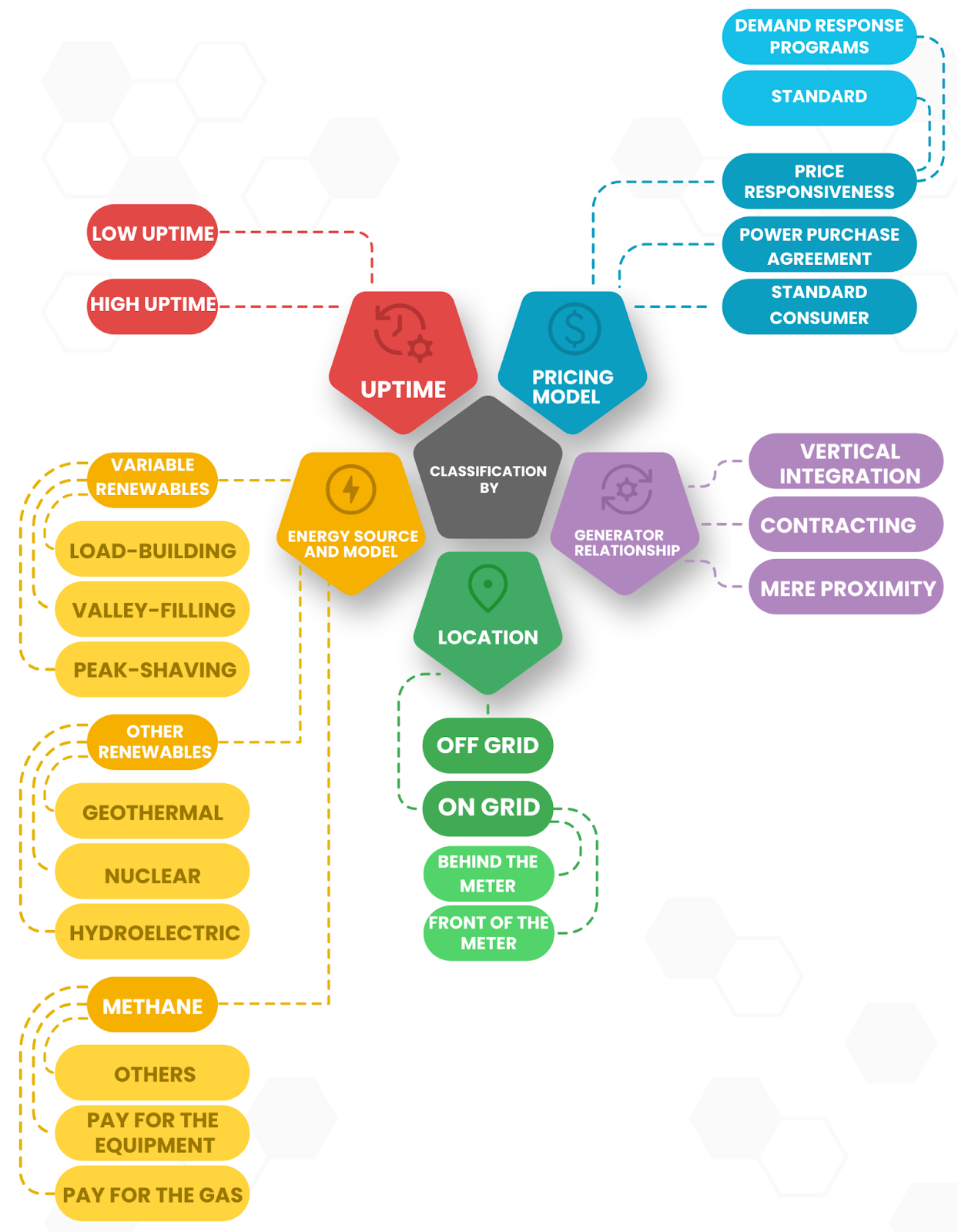
A typology of low-carbon mining models per defining factor. | Credit: Juan Ignacio Ibanez and Alexander Freier
“They invited Bitcoin miners to come in and buy that surplus energy,” Dr. Vaughan says proudly.
“Those operations help fund grid expansion. I have some mining machines financing power access in Africa.”
It’s a vivid counterpoint to Bitcoin’s critics: rather than draining energy, miners can stabilize grids, monetize stranded power, and finance renewable buildout.
The Question of “Tainted” Bitcoin and the Limits of Anonymity
If provenance adds value to green Bitcoin, what happens to “tainted” ones, such as coins linked to hacks or sanctions?
Dr. Vaughan acknowledges that technologies like CoinJoin or tumblers can obscure histories, but they don’t erase them.
“Ordinal theory still maps every satoshi. The less we know about a coin’s history, the more risk there is, and the less valuable it becomes.”
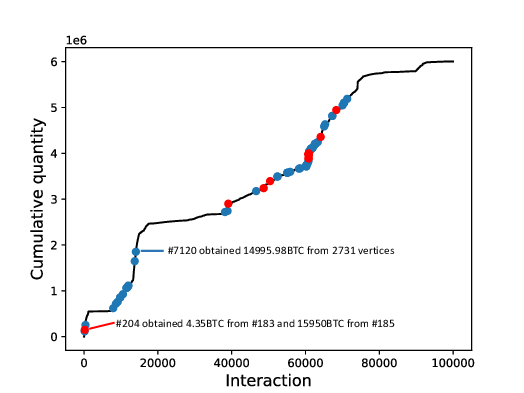
Provenance alerts in Bitcoin. | Credit: Chrysanthi Kosyfaki
Ultimately, Dr. Vaughan argues, provenance isn’t about policing. It’s about risk management and informed choice.
“If we can tell a fund: this coin was mined renewably in North America, that’s information. What the market does with it is up to them.”
Bitroots and the Rise of Certified “Green” Bitcoin
Bitroots’ platform is already live in pilot form, offering what Dr. Vaughan calls provenance certificates for newly minted coins.
Each certificate lists:
The data center where the Bitcoin was mined.
Its energy composition and audit date.
Compliance with international ESG audit standards like ISAE 3000.
Vaughan envisions integration with exchanges like Coinbase and significant institutional funds like BlackRock, allowing investors to filter or pay premiums for certified coins.
“We want Bitroots to become the de facto standard for renewable Bitcoin certification,” he says.
“So anyone, anywhere, can buy Bitcoin they can trust.”
Thinking of Satoshi: Dr. Vaughan’s Vision of a Transparent Bitcoin
When asked what he would say to Satoshi Nakamoto about Bitcoin, Dr. Vaughan didn’t hesitate.
“I’d say this is what you started, free-market economics,” he said. “We’re not fixing prices. We’re giving the market more information and letting it decide what Bitcoin is worth. That’s the ultimate expression of Satoshi’s vision.”
Dr. Vaughan sees provenance as an integral part of Bitcoin’s mainstream infrastructure five years from now, not a niche ESG tool.
With over 40% of miners already using renewable energy, he believes the demand for verifiable, auditable Bitcoin will only grow.
“We want to make people proud to own their Bitcoin,” Dr. Vaughan says. “When you buy a coin, you’re not just buying an asset; you’re financing the future of clean energy.”
Disclaimer:
The information provided in this article is for informational purposes only. It is not intended to be, nor should it be construed as, financial advice. We do not make any warranties regarding the completeness, reliability, or accuracy of this information. All investments involve risk, and past performance does not guarantee future results. We recommend consulting a financial advisor before making any investment decisions.
Giuseppe Ciccomascolo began his career as an investigative journalist in Italy, where he contributed to both local and national newspapers, focusing on various financial sectors.
Upon relocating to London, he worked as an analyst for Fitch's CapitalStructure and later as a Senior Reporter for Alliance News. In 2017, Giuseppe transitioned to covering cryptocurrency-related news, producing documentaries and articles on Bitcoin and other emerging digital currencies. He also played a pivotal role in establishing the academy for a cryptocurrency exchange website. Crypto remained his primary area of interest throughout his tenure as a writer for ThirdFloor.


 Easy
Easy