Why Tokenization at Scale Failed and How To Fix It: Insights From Rob Holmes
Share
Tokenization transforms how assets are created, traded, and accessed, but scaling it for real-world adoption still faces technical and regulatory challenges.
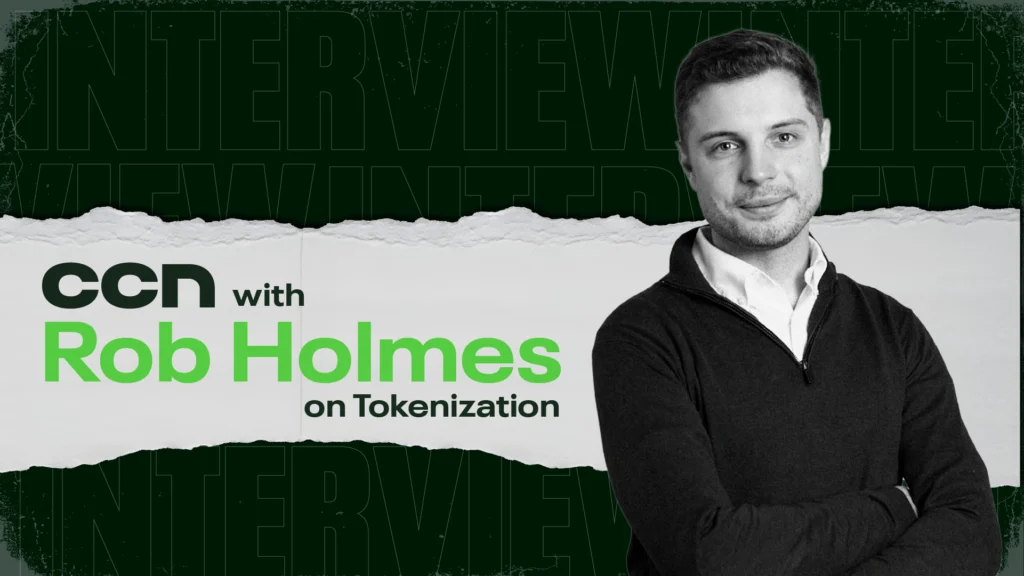
In an interview with CCN, Rob Holmes, Web3 and growth strategist, shared his views on what is needed to make tokenization viable at scale, from the economics of high-throughput networks like Hedera to the importance of regulatory clarity and enterprise trust.
His insights shed light on why the next wave of tokenization could finally deliver on its promises of accessibility, liquidity, and compliance.
Try Our Recommended Crypto Exchanges
Sponsored
Disclosure
We sometimes use affiliate links in our content, when clicking on those we might receive a commission at no extra cost to you. By using this website you agree to our terms and conditions and privacy policy.
High-throughput public networks like Hedera process over 10,000 transactions per second natively at Layer 1, compared to Ethereum’s base layer (L1) capacity of roughly 15–30. This difference has driven institutional players to seek out both high-performance L1s and Layer 2 scaling solutions.
This difference is crucial for scaling tokenized assets, where even a small delay or fee increase can affect adoption. Analysts argue that congestion-related costs were one of the biggest obstacles during Ethereum’s decentralized finance (DeFi) boom.
“Those capable of handling thousands of transactions per second with near-instant finality directly affect the cost, liquidity, and scalability of asset tokenization,” Holmes said.
“More capacity means avoiding congestion pricing and keeping transaction fees low and more predictable.”
Lower, predictable fees also make tokenizing lower-value assets such as invoices, carbon credits, and micro real estate shares possible.
This opens the door for fractional ownership models, which are gaining attention as a way to democratize access to traditionally exclusive investment opportunities.
Holmes added that this will make such networks appealing for enterprise and institutional adoption while enabling tokenizing of smaller assets, reducing investment thresholds, and improving access for everyday users.
He also pointed out that high throughput could enable “real-time or streaming yield or dividend payouts, which could lead to faster capital recycling and improve the investment experience for investors.”
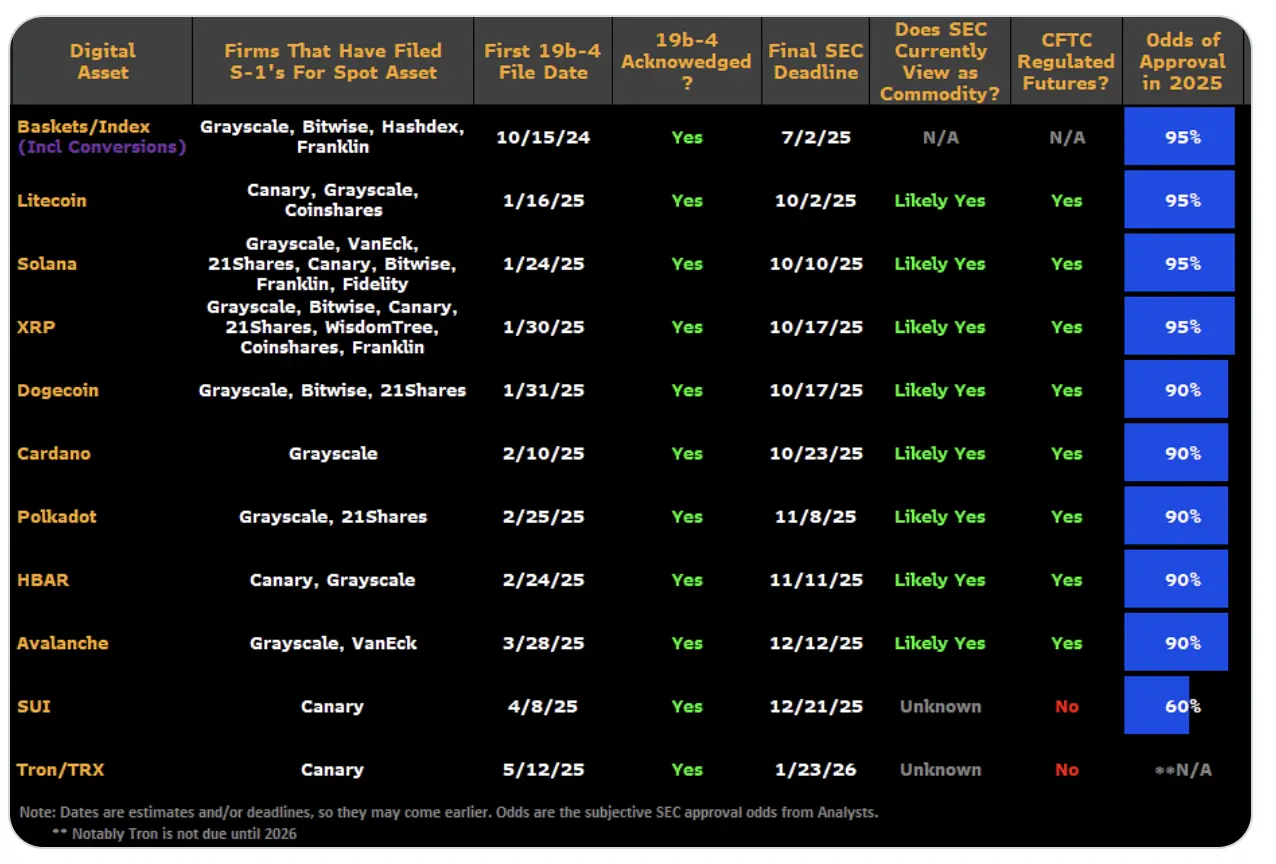
Institutional interest in tokenization is also visible in exchange-traded funds (ETF) filings. Grayscale and BlackRock have submitted Hedera (HBAR) spot ETF applications, with Bloomberg analysts putting approval odds near 90–95%.
Hedera has also appeared on the DTCC list, signaling readiness for launch once the SEC gives clearance. Approval could come as early as October, potentially opening major on-ramps for institutional capital.
Global Regulatory Frameworks for Tokenized Assets: Balancing Innovation and Compliance
The lack of harmonized global rules has been a sticking point for banks and funds that want to offer tokenized products.
Industry players like BlackRock and Franklin Templeton have called for clearer definitions of digital securities, and regulators in the EU and Singapore are now introducing pilot regimes for tokenized assets.
Holmes emphasized that regulatory progress must balance innovation with compliance. “The key is balance. Securities acts in respective countries need to evolve, but not in a way that makes compliance so complex and costly that it stifles innovation at the earliest stages,” he said.
He pointed to Suno, a project in Colombia, as an example of why regulatory flexibility matters. Suno began by tokenizing distributed mini solar farm infrastructure, averaging 1MW without facing heavy compliance burdens. This allowed them to experiment and attract over 3,500 retail investors to grow a $6M portfolio.
“That regulatory ‘space’ gave them proof of market fit and validated the business case,” Holmes explained. With this evidence, Suno is now preparing a prospectus for the EU, demonstrating what Holmes called a “natural progression” from experimentation to full compliance.
This case shows how regulatory “sandboxes” or open legal environments can accelerate innovation. Suno’s success mirrors similar stories in Switzerland’s DLT Act and the UK’s Financial Conduct Authority sandbox, which allowed fintech projects to grow before formal licensing.
Holmes concluded that regulators should create “graduated paths to compliance—lighter regimes that don’t stifle early experimentation and encourage potential earlier-stage institutional involvement, with clear routes to more stringent oversight as projects scale.”
Such staged approaches are now being explored in the EU’s MiCA framework and Japan’s security token guidelines, signaling a move toward global convergence that could unlock cross-border tokenized markets.
Building Liquidity and Trust in the Next Wave of Tokenization
First-wave tokenization often focused on technology but overlooked secondary market depth. Without buyers and sellers, tokenized funds or real estate shares remained illiquid, frustrating investors. New efforts from platforms like Ondo Finance and Polygon Labs aim to build liquidity pools and connect tokenized products to DeFi infrastructure.
“The truth is first-wave tokenization largely failed to deliver – particularly on the enhanced liquidity promise – the majority of these assets trade infrequently,” Holmes noted.
Enterprises also weigh governance models, looking for networks with transparent councils or on-chain decision-making processes.
Hedera, for example, uses a governing council of global enterprises, which Holmes says reassures institutional players that the network won’t be dominated by a single actor.
Enterprises seeking to build secondary markets will need assurance of sufficient on-chain liquidity. However, Holmes clarified that this consideration only becomes critical after addressing “foundational trust concerns – security, compliance, and governance.”
Liquidity, he explained, is not just about speed but about giving confidence that tokenized assets “won’t be trapped in a closed system.”
Disclaimer:
The information provided in this article is for informational purposes only. It is not intended to be, nor should it be construed as, financial advice. We do not make any warranties regarding the completeness, reliability, or accuracy of this information. All investments involve risk, and past performance does not guarantee future results. We recommend consulting a financial advisor before making any investment decisions.
Dr. Lorena Nessi is an award-winning journalist and media technology expert with 15 years of experience in digital culture and communication. Based in Oxfordshire, UK, she combines academic insight with hands-on media practice.
She holds a PhD in Communication, Sociology, and Digital Cultures, and an MA in Globalization, Identity, and Technology.
Lorena has taught at Fairleigh Dickinson University, Nottingham Trent University, and the University of Oxford. She is a former producer for the BBC in London, with additional experience creating television content in Mexico and Japan.
Her research focuses on digital cultures, social media, technology, capitalism, and the societal impact of blockchain innovation.
She has written extensively on digital media and emerging technologies, with her work featured in both academic and media platforms. Her Web3 expertise explores how blockchain technologies shape culture, economics, and decentralized systems.
Outside of work, Lorena enjoys reading science fiction, playing strategic board games, traveling, and chasing adventures that get her heart racing. A perfect day ends with a relaxing spa and a good family meal.


 Easy
Easy