Why HIVE Digital’s Green Bitcoin Mining Strategy Is Winning Big With AI
Share
Companies that began as pure Bitcoin miners are increasingly repositioning themselves as diversified digital infrastructure providers, addressing both emerging technology demands and environmental concerns.
One of the voices leading this transition is Frank Holmes, Executive Chairman and co-founder of HIVE Digital Technologies. A long-time advocate for Bitcoin mining’s strategic role in modern energy markets, Holmes also serves as CEO and Chief Investment Officer of U.S. Global Investors, a mutual fund and asset management firm.
Holmes has helped shape HIVE’s growth from high-efficiency Bitcoin mining into one of the leanest data center infrastructures now optimized for growing AI workloads. In a recent interview with CCN, he discussed this transformation and how HIVE is positioning itself at the intersection of blockchain, AI and sustainable computing.
Why Nasdaq Matters: Visibility That Opens Doors
Holmes explained that the Nasdaq listing was primarily about exposure and institutional access. Holmes mentioned that “the Nasdaq gave us exposure,” he said. “A lot of global family offices, institutions will not buy Canadian-listed stock. They want Nasdaq.”
SPOTTED: The HIVE team linking up with Bitcoin mining royalty in the heart of NYC. 🏙️🐝
Listed on Nasdaq for visibility: Holmes said, “The Nasdaq gave us exposure.” Many institutions avoid Canadian-only listings.
Drawing attention from major tech firms: The move positioned HIVE alongside big tech, attracting companies like Intel and Nvidia.
Going Green Before It Was Cool: HIVE’s Early Sustainability Edge
HIVE was early to integrate green energy into its mining operations. Holmes emphasized that this approach created competitive advantages beyond environmental benefits. “Intel reached out to us because we were green,” he said. “Nvidia reached out because we were green.”
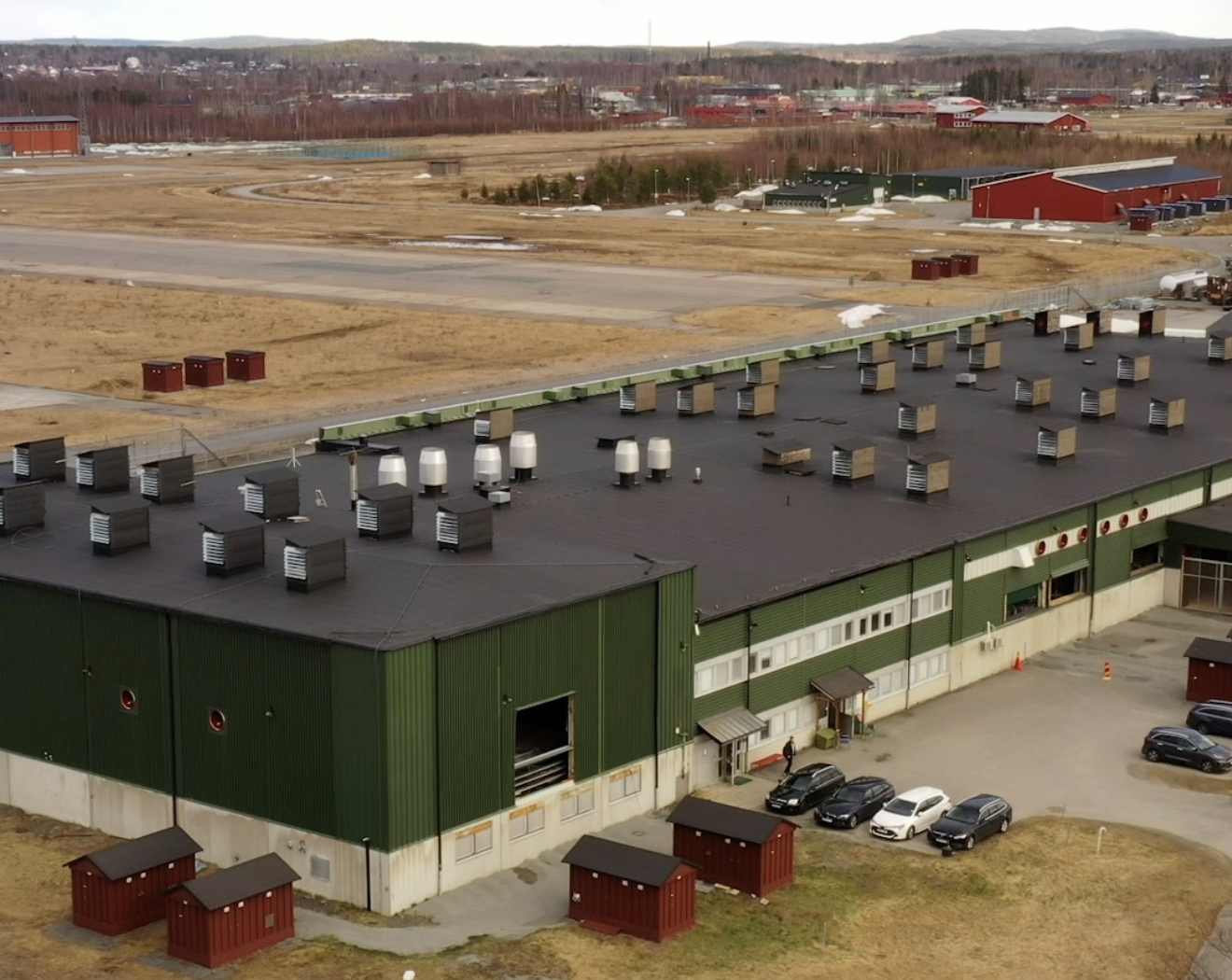
Holmes added that Hive facilities, designed for energy and thermal efficiency, have value beyond Bitcoin. “These are data centers. These are not warehouses with computers and fans,” Holmes said. “They’re real data centers. They’re compute assets.”
HIVE’s 32 MW facility in Boden, Sweden. The HIVE (ice hockey) ARENA in Boden, Sweden
HIVE’s 32 MW facility in Boden, Sweden. The HIVE (ice hockey) ARENA in Boden, Sweden
Since its inception in 2017, HIVE has operated in Iceland, Sweden and Canada, strategically choosing regions with abundant green energy. Holmes also pointed to their latest expansion explaining how HIVE is operating in Paraguay.
“We have low-cost hydro, and we’re mining down there. Each location reinforces HIVE’s approach to building sustainable, high-performance infrastructure across borders,” Holmes explained.
He also noted that hydro remains his preferred energy source for long-term operations. “Hydro is reliable. It’s constant. You don’t have the same disruptions as with solar or wind,” he said. “When it rains, that dam is full and we’ve got energy. You can’t say the same with wind or clouds.”
Each location, he explained, reinforces HIVE’s approach to building sustainable, high-performance infrastructure across borders.
HIVE’s 32 MW facility in Boden, Sweden. The HIVE (ice hockey) ARENA in Boden, Sweden
Why Traditional Bitcoin Rigs Can’t Pivot to AI or HPC
Holmes explained that traditional Bitcoin rigs don’t adapt well to diversified compute, this means that most Bitcoin mining rigs, typically ASICs, are designed solely for one function, hashing SHA-256.
In contrast, diversified compute tasks like AI or rendering require flexible, general-purpose hardware like GPUs but HIVE’s newer buildouts are structured differently.
“We realized early on that if you’re building for mining, you might as well build for the next layer,” Holmes said.
The next layer? High-performance computing (HPC) in the following manner:
Buzz HPC fuels growth: High‑margin GPU rentals for AI compute run at $2–2.50/hour vs $0.12/hour for Bitcoin mining
AI low-volatility income: Holmes notes BUZZ HPC revenue is high-margin and steadier than Bitcoin.
Massive barrier to AI scaling: AI infrastructure costs roughly 10 times more than Bitcoin mining to build.
Single-minded on Bitcoin scale: Built out to 13 EH/s with plans for 25 EH/s, aiming for 2–3% of global hashrate.
Balanced treasury strategy: Holds 2,201 BTC ($251.73M value) as at August 5, 2025, and avoids early selling, using mining as a reserve engine.
We’ve entered a new industrial era:
🛢️ Data is the new oil ⚙️ Compute is the new horsepower.
Washington is all-in on AI, the infrastructure race is on, and HIVE is leading from the ground up. 🐝
— HIVE Digital Technologies (@HIVEDigitalTech) July 28, 2025
Are Low Bitcoin Transaction Fees a Long-Term Risk to Mining?
When asked if declining Bitcoin transaction fees or on-chain activity is risky to HIVE’s mining model, Holmes replied, “Think short term, yes. Long term, no.” He noted that while short-term fluctuations can affect daily revenue, they don’t undermine Bitcoin mining’s long-term value.
HIVE focuses on block rewards and infrastructure, treating mining as a reserve engine rather than a transactional business.
Barriers to Entry in AI Compute Are 10x Greater Than Mining
Holmes emphasized just how capital-intensive AI infrastructure has become.
“It costs ten times more to build an AI compute facility than a Bitcoin mining site,” he said. “That creates a serious moat, only those already operating at scale can afford to reallocate resources and compete.”
Despite the heavy cost of entry, Holmes argued that HIVE is uniquely positioned because of its lean and disciplined approach.
“We make nearly $900,000 a day in revenue with just 25 employees. It’s not just about scale, it’s about discipline,” he said.
HIVE’s philosophy, according to Holmes, is to avoid bloated operational structures.
“We don’t want 200 employees. We want Navy SEALs.”
He added that with over $6 million in annual revenue per employee, HIVE’s efficiency rivals top-tier tech companies like Nvidia, in annual revenue per employee, a byproduct of its refusal to scale through excessive HR or marketing spend.
Why HIVE Avoids B2C Mining and Altcoin Expansion
When asked about expanding into solo or consumer-facing mining, Holmes was direct:
“You have to deal with customers. You have to deal with refunds. You have to deal with noise. It’s not scalable, it’s a distraction.”
While HIVE has the technical capacity to support such operations, Holmes made it clear that retail infrastructure isn’t part of the company’s focus.
Holmes also acknowledges that “while HIVE scales its operations, it’s equally disciplined about what not to pursue.”
On altcoins, Holmes was even more blunt. “We’re like an 18-wheeler on a dirt road,” he said. “If we mine those smaller coins, we distort the network.” The firm avoids assets whose scale could overwhelm the ecosystem, preferring to stay within robust, high-capacity networks like Bitcoin.
Bitcoin Mining as the Gateway to AI Compute Infrastructure
For Holmes, Bitcoin mining isn’t the endgame, it’s the gateway.
“We’re not betting on just Bitcoin,” he said. “We’re building what comes next.”
According to Holmes, today’s energy-efficient, thermally optimized mining sites are quietly laying the foundation for tomorrow’s high-demand compute infrastructure.
And what comes next, he argued, is a wave of geopolitical and industrial AI deployment, where sovereign data control becomes critical. Countries won’t just want access to AI, they’ll want to own the infrastructure that powers and protects it.
“That includes military, intelligence and industrial applications,” Holmes said. “In those cases, an outsourced compute becomes a liability.”
HIVE’s long-term strategy is rooted in controlling the full physical stack, such as power, chips, cooling and location, that enables advanced computing. Bitcoin mining, Holmes said, was simply the economic catalyst that made these sites viable.
“Bitcoin mining created the initial economic logic,” he explained. “But the next chapter is about leveraging them as sovereign-ready infrastructure.”
From early builds in Iceland to recent expansion into Paraguay, HIVE has consistently focused on green-powered, energy-stable regions, not just for mining, but for building real compute infrastructure.
“These are data centers. They’re compute assets,” Holmes emphasized.
Whether it’s securing Bitcoin or preparing for a sovereign AI-driven future, Holmes made one thing clear: HIVE is building for more than just this cycle.
Disclaimer:
The information provided in this article is for informational purposes only. It is not intended to be, nor should it be construed as, financial advice. We do not make any warranties regarding the completeness, reliability, or accuracy of this information. All investments involve risk, and past performance does not guarantee future results. We recommend consulting a financial advisor before making any investment decisions.
Andrew Kamsky is a chart analyst and writer with a background in economics and ACCA certification. He has held roles at a Big Four firm, a fintech bank, and a listed bank specializing in currency hedging. His work explores Bitcoin, macro trends, and market structure. Outside finance, he's passionate about music, travel, and neon design.


 Easy
Easy