Japan’s 10-year yield hits 2.18%, putting $1.2T in U.S. Treasuries in focus and raising concerns over dollar debasement and Bitcoin liquidity risks. | Credit: CCN.
Share
Key Takeaways
Japan’s 10-year government bond yield hit 2.18%, the highest since 1999, signaling a structural shift away from decades of ultra-low rates.
Japan is the largest foreign holder of U.S. Treasuries, with roughly $1.2 trillion in holdings, making its bond market decisions globally significant.
Rising domestic yields could reduce Japan’s appetite for U.S. Treasuries, either by slowing new purchases or, in stress scenarios, forcing sales to meet local funding needs.
Short-term effects could be negative for Bitcoin and risk assets, as higher yields typically tighten global liquidity and reduce speculative leverage.
Japan’s government bond market is flashing signals that reach far beyond Tokyo. The 10-year Japanese government bond (JGB) yield recently touched 2.18%, its highest level since 1999, reviving concerns about global debt sustainability, U.S. dollar stability, and downstream liquidity risks for risk assets, including Bitcoin.
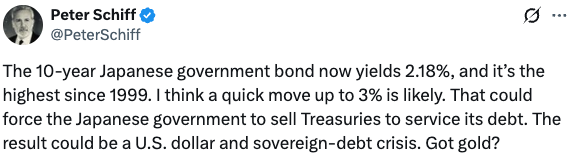
The move has drawn attention from market commentators such as Peter Schiff, who warned that a rapid climb toward 3% could force Japan to sell U.S. Treasuries to service its own debt, potentially triggering stress across global sovereign bond markets.
Whether or not Schiff’s most extreme scenario materializes, the underlying dynamics are worth understanding.
This article explains why Japan’s rising yields matter, how they connect to U.S. Treasuries and the dollar, and why crypto markets should be paying attention.
Why Japan’s 10-Year Bond Yield Surge Matters for Global Markets
For decades, Japan has been the poster child of ultra-low yields. The Bank of Japan’s yield curve control (YCC) policy kept long-term rates near zero, enabling the government to sustain one of the highest debt-to-GDP ratios in the world without immediate fiscal pressure.
That equilibrium is now shifting.
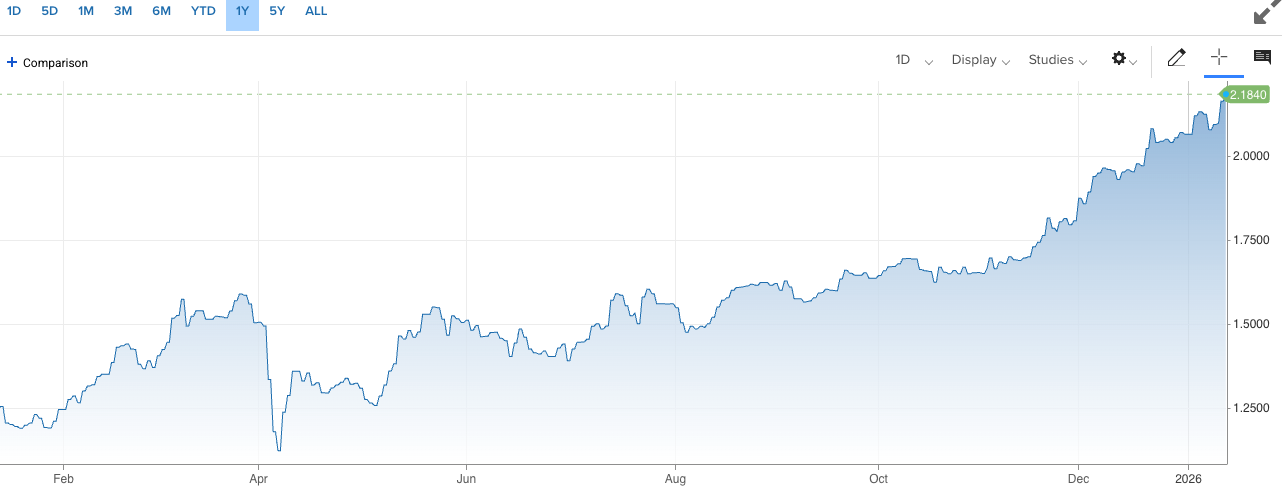
Japan 10-year bond yield. | Credit: CNBC
A 10-year yield above 2% may not sound dramatic by global standards, but for Japan, it represents a significant shift in policy. Higher yields increase debt-servicing costs, pressure public finances, and reduce the incentive for domestic institutions to deploy capital abroad in search of yield.
Japan’s Treasury Holdings and Their Impact on US Government Debt and Dollar Debasement
According to U.S. Treasury International Capital (TIC) data, Japan held approximately $1.20 trillion in U.S. Treasury securities as of October 2025, up from roughly $1.06 trillion at the end of 2024. This makes Japan the single largest foreign creditor of the U.S. government, ahead of China, the UK, and Belgium.
Foreign official institutions collectively hold nearly $3.9 trillion of U.S. Treasuries, forming a critical pillar of U.S. debt financing. Japan’s participation has historically been stable, reflecting long-term reserve management rather than speculative trading.
However, rising domestic yields change the calculus.
If Japanese government bonds begin offering higher risk-free returns at home, Japanese institutions, including pension funds, insurers, and banks, may repatriate capital or reduce incremental Treasury purchases. In a more stressed scenario, some holdings could be sold to meet domestic funding needs.
Could Japan Sell US Treasuries? Risks to the Dollar and Sovereign Debt
Peter Schiff’s argument hinges on this feedback loop: higher Japanese yields lead to Treasury sales, putting pressure on U.S. bond prices, which in turn lead to higher U.S. yields, ultimately culminating in dollar instability.
While an immediate crisis is far from guaranteed, the mechanics are fundamental. U.S. Treasury markets rely heavily on foreign demand to absorb massive issuance driven by fiscal deficits. Reduced foreign participation forces either higher yields to attract buyers or greater reliance on domestic buyers, including the Federal Reserve.
Correlation between Japanese bonds and USD. | Credit: Peter Schiff X profile
If the Fed is compelled to absorb excess supply, the result is effectively monetization of debt, which feeds long-term concerns about dollar debasement. This does not necessarily mean a sudden collapse of the dollar, but rather a gradual erosion of purchasing power and confidence.
Gold advocates like Schiff view this as bullish for hard assets. Increasingly, Bitcoin is part of that same macro conversation.
What Rising Bond Yields Mean for Bitcoin, Crypto Liquidity, and Risk Assets
Higher sovereign yields might seem bearish for Bitcoin, as they typically tighten financial conditions due to higher risk-free rates. Indeed, in the short term, rising yields can reduce speculative appetite and drain liquidity from crypto markets.
However, the longer-term implications are more nuanced.
Bitcoin sits at the intersection of two competing forces:
Liquidity cycles: When global liquidity tightens, Bitcoin tends to suffer.
Monetary credibility cycles: When confidence in fiat systems erodes, Bitcoin’s scarcity narrative strengthens.
If Japan’s yield shock contributes to stress in U.S. Treasury markets and forces renewed monetary intervention, Bitcoin could benefit from the same dynamics that have historically supported gold: distrust in sovereign debt sustainability and concerns about fiat dilution.
That said, there is also a liquidity risk. Treasury market volatility can spill over into funding markets, leading to increased collateral haircuts and reduced leverage availability across the financial system. In such environments, even “hedge” assets can experience drawdowns as investors sell what they can to meet margin calls.
Japan Steps Up Its Intervention Threats
The dollar is mostly softer, but the consolidative tone persists. The yen remains the notable exception. Japanese officials have taken several steps up the intervention ladder with heightened warnings.
The market initially extended the greenback’s gains to JPY159.45 before taking some profits and pushing the dollar to around JPY158.60.
“The market senses it is on thin ice, but many look for an intervention-inspired drop to buy the dollar cheaper,” Bannockburn Capital Markets analysts told CCN.
“Bond markets seem well behaved in the face of a five-day, 11% rally in oil prices.”
The U.S. 10-year yield frayed the 4.20% cap in recent days but is near a four-day low now below 4.15%.
“The weak yen and higher JGB yields seem to go hand-in-hand, but it has not deterred Japanese equities from setting record highs.”
Global Debt Stress and the End of Ultra-Low Interest Rates
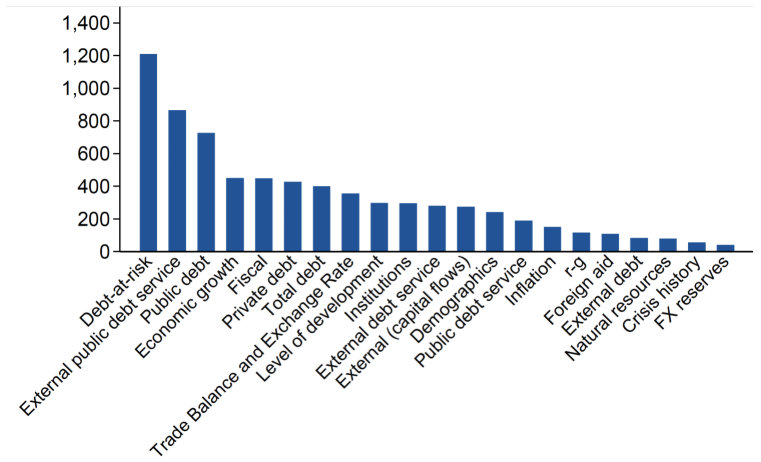
Japan’s rising yields are not an isolated phenomenon. They reflect a broader global adjustment after years of financial repression.
As inflation reasserts itself and central banks step back from unlimited bond support, governments with significant debt burdens face difficult trade-offs.
Global debt details. | Credit: CEPR
Japan’s position is especially delicate because of its scale and its deep integration into global capital flows. Even modest portfolio shifts by Japanese institutions can move markets.
For now, Japan continues to hold, and even modestly increase, its Treasury exposure. But the trend bears watching closely. A sustained rise toward 3% on the 10-year JGB would signal that the era of costless debt is truly coming to an end.
Japan Yields, US Treasuries, Dollar Debasement and Bitcoin Risk
Japan’s 10-year yield reaching 2.18% is more than a domestic milestone. It highlights vulnerabilities in the global sovereign debt system, raises questions about continued foreign support for U.S. Treasuries, and reopens debates around dollar debasement.
For Bitcoin and crypto markets, the signal is mixed: tighter liquidity in the near term, but potentially stronger structural tailwinds if monetary credibility erodes.
As global bond markets adjust to a higher-rate reality, investors across traditional finance and crypto alike are being forced to confront the same question: what happens when the world’s largest debt holders can no longer ignore the cost of servicing it?
Why is Japan’s 10-year government bond yield important?
Japan has operated under ultra-low interest rates for decades. A 10-year yield above 2% signals a potential structural shift in Japanese monetary policy, with implications for government debt servicing and global capital flows.
Why does Japan’s bond market matter to the U.S.?
Japan is the largest foreign holder of U.S. Treasuries, with roughly $1.2 trillion in holdings. Changes in Japan’s domestic yields can influence whether Japanese institutions continue buying U.S. debt or begin reallocating capital back home.
Does a higher Japanese yield mean Japan will sell U.S. Treasuries?
Not necessarily. Japan has historically been a stable holder of Treasuries. However, higher domestic yields increase the incentive to repatriate capital, which could reduce future Treasury demand or, in extreme cases, lead to selective selling.
How could Treasury selling affect the U.S. dollar?
Reduced foreign demand for Treasuries may push U.S. yields higher or force greater reliance on Federal Reserve intervention. Over time, this can fuel concerns about debt monetization and dollar debasement, even without an immediate currency crisis.
Disclaimer:
The information provided in this article is for informational purposes only. It is not intended to be, nor should it be construed as, financial advice. We do not make any warranties regarding the completeness, reliability, or accuracy of this information. All investments involve risk, and past performance does not guarantee future results. We recommend consulting a financial advisor before making any investment decisions.
Giuseppe Ciccomascolo began his career as an investigative journalist in Italy, where he contributed to both local and national newspapers, focusing on various financial sectors.
Upon relocating to London, he worked as an analyst for Fitch's CapitalStructure and later as a Senior Reporter for Alliance News. In 2017, Giuseppe transitioned to covering cryptocurrency-related news, producing documentaries and articles on Bitcoin and other emerging digital currencies. He also played a pivotal role in establishing the academy for a cryptocurrency exchange website. Crypto remained his primary area of interest throughout his tenure as a writer for ThirdFloor.


 Easy
Easy