‘Gold Will Replace USD as Reserve Asset as Dollar Debasement Deepens,’ Warns Peter Schiff — Market Implications Explained
Share
Key Takeaways
Schiff argues that strong money must rest on assets with real limits, which shapes his stance on gold and his rejection of digital assets that depend on trust in code.
His early prediction before the 2008 crisis built a lasting reputation, but his long call for a major dollar decline has not unfolded, which keeps his record under debate.
His message stresses the need for systems that protect savings from policy mistakes and from risks created by debt.
His voice keeps attention on inflation, counterparty exposure, and the role of trust in markets as finance moves further into digital systems.
In the world of finance, few figures spark more passionate debate than Peter Schiff. Love him or loathe him, he is never far from the headlines.
His name is a constant fixture, surfacing when Bitcoin (BTC) hits a new high and when gold moves, sparking a heated debate about the very nature of value.
Schiff built a career on strong views, sharp criticism of government policy and economics, and the belief that sound money comes from scarce and tangible assets. Those ideas place him at the center of a fundamental argument in modern finance.
This article explains who Peter Schiff is, how he built his career, why he dismisses Bitcoin as a scam, why he trusts gold as a store of value, and what his views reveal about the future of finance.
Schiff’s Challenge to the Digital Future: Why His Views Still Shape the Crypto Debate
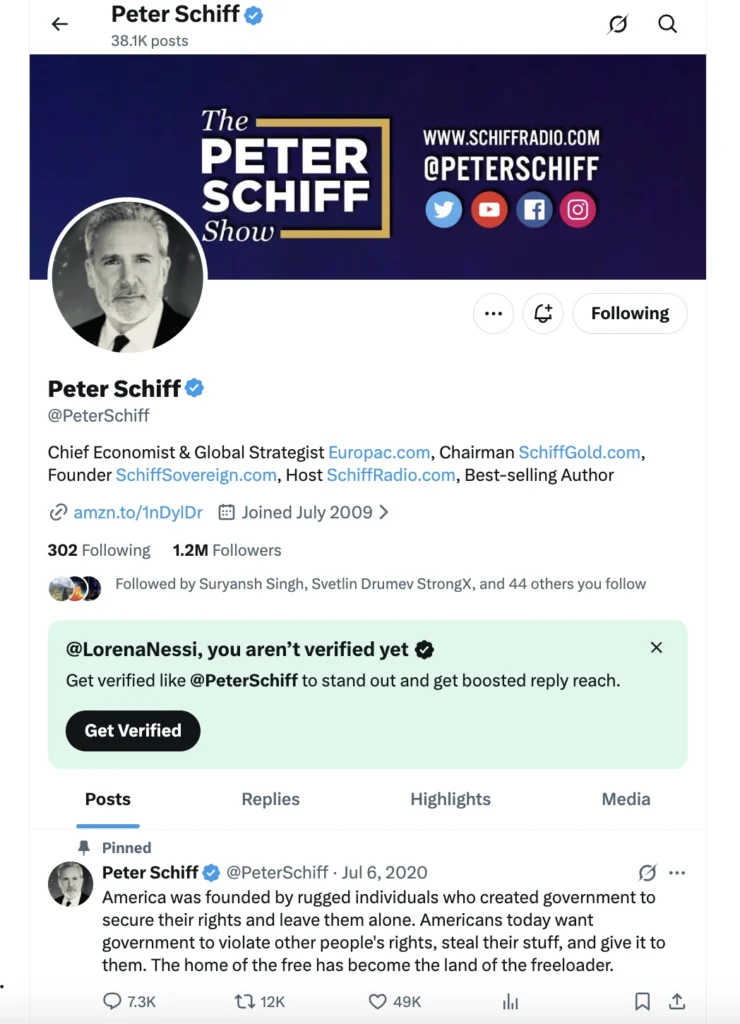
Schiff questions the bright digital future that many in crypto describe. With 1.2 million followers on X and a strong presence in the field, his message travels far and wide.
PeterSchiff Profile | Source: @PeterSchiff on X Source
Schiff’s argument focuses on inflation and debt. He thinks that loose policy weakens trust in money. His views come from long work in investment advisory and macroeconomic analysis.
This approach guides his belief that Bitcoin has no support from real economic activity. He sees it as speculation shaped by emotion and hope. That stance places him on the opposite side of a crypto industry built on code and decentralization.
Supporters cite his early warnings about weak lending rules before the 2008 crisis. They say he stays consistent in a field shaped by hype. Critics argue that he rejects digital systems without conducting thorough studies.
They also say his long predictions about a dollar collapse did not materialize. His role sits between these views because he speaks from a long record in global markets. His voice keeps attention on value, trust, and how systems protect savings.
To understand his views, it is helpful to examine his personal history. Early experiences often shape how someone views the world at large, including specific ideas around money and risk.
How Schiff’s Worldview Took Shape: Early Influences and First Steps in Finance
Schiff’s views come from a mix of personal history and early experiences in finance. His childhood, education, and early years in the market laid the foundation for his beliefs. These parts of his life created the framework he later used to judge money, risk, and economic policy.
Peter Schiff: Key Facts at a Glance
Schiff’s background reflects early exposure to debates about money and the role of the state.
His first years in finance strengthened his belief in scarce assets.
Field
Detail
Insight
Birth date
March 23, 1963
Raised during strong inflation
Birth place
New Haven, Connecticut
Early exposure to policy debate
Education
B.S. Finance, UC Berkeley
Formed strict market views
First job
Stockbroker, early 1990s
Learned value in scarce assets
Firm start
Euro Pacific Capital, 1996
Built focus on global markets
Main role
CEO and chief global strategist at Euro Pacific Precious Metals
Promotes gold as core asset
Schiff grew up during the inflation of the 1970s and witnessed the dollar’s real strength erode before he reached adulthood. That period shaped his belief that fiat systems fail when policy weakens trust in money.
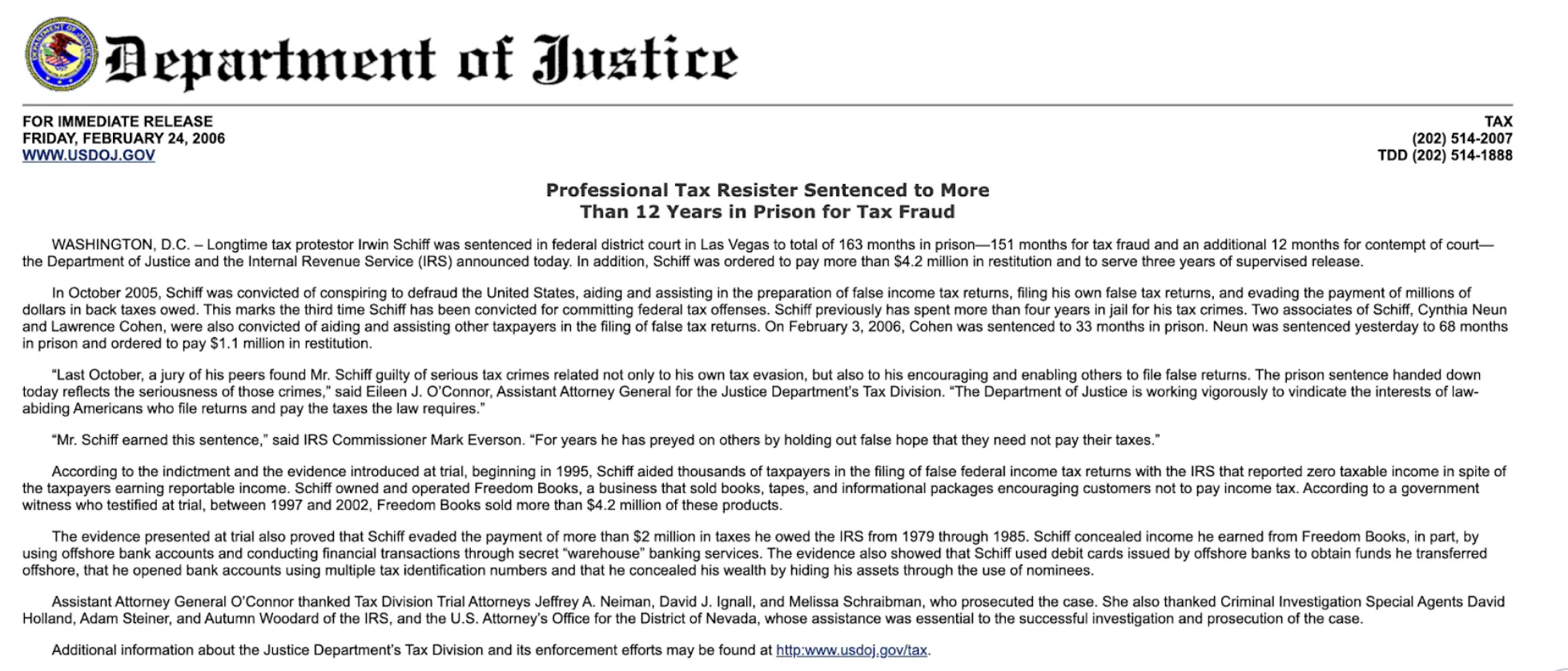
His father, Irwin Schiff, became known for public fights with tax authorities and later served time for tax offenses. That history taught Schiff that state power can erode personal freedom and influence the workings of money.
His years at UC Berkeley placed him in classrooms that favored Keynesian ideas, while he studied Austrian economists on his own. This split pushed him into a contrarian path that guided his later work.
U.S. Department of Justice press release dated February 24, 2006 announcing the sentencing of Irwin Schiff, Peter Schiff’s father | Source: Department of Justice Source
Peter Schiff’s first job as a stockbroker in the early 1990s exposed him to clients who chased fast gains and lost savings in market swings. That experience strengthened his interest in scarce assets.
He started Euro Pacific Capital in 1996 after he warned about risks in the market and felt ignored. That step confirmed his belief that investors should limit exposure to the dollar and seek value outside the system.
His warnings about the housing bubble gained attention in 2008 when the crisis unfolded. That moment shaped his image as a critic who trusts hard assets more than financial promises.
These steps created a worldview shaped by early shocks and long study. Each stage pushed Schiff toward a belief that systems fail when policy ignores risk and when savings rely on trust without real support.
Schiff later carried these beliefs into the firm he built. Euro Pacific Asset Management grew from the company he launched in 1996 and now operates as a privately held adviser in Puerto Rico with more than one billion dollars under management.
He leads it as CEO and chief strategist, which keeps his views central to its approach. The firm reflects his long-held idea that real value comes from assets with clear limits and minimal reliance on policy.
It also aligns with his interest in metals, which he promotes as a stable answer to systems shaped by debt and shifting rules.
Peter Schiff’s Books: The Ideas That Built His Public Voice
Schiff expanded his influence through books that underline his views on money, policy, and financial risk. Each title reflects a stage in his thinking and the themes that shaped his public identity.
Key Books by Peter Schiff
Crash Proof: How to Profit from the Coming Economic Collapse (2007): His most recognized work. It outlined the risks in housing and credit before the 2008 crisis and built his reputation as a warning voice.
The Little Book of Bull Moves (2008): A guide that explained how he thinks investors should navigate weak policy and global imbalances.
How an Economy Grows and Why It Crashes (2010): A narrative that explains basic economic ideas through stories and examples.
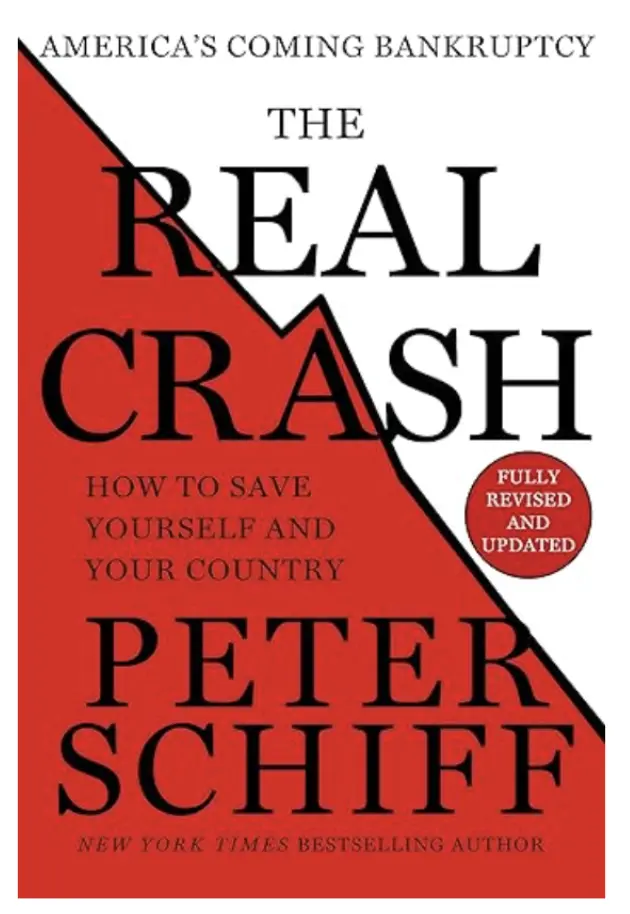
The Real Crash: America’s Coming Bankruptcy (2012): A longer argument about debt, policy errors, and the risk of a major crisis in the United States.
Schiff’s book | Source: Amazon
These books highlight the major themes that define Schiff’s work. They focus on debt risk, weak policy, and the search for assets that can hold value when trust fades.
They also show how his public message grew from ideas he studied for decades.
This makes his position on gold and his criticism of Bitcoin easier to understand because both come from the same belief that stable systems need real limits and clear support.
Why Peter Schiff Rejects Bitcoin and Still Trusts Gold
Schiff’s position on Bitcoin and gold comes from the same core belief. He argues that money needs support from real activity and must hold value without faith in policy or code.
That view grew from early exposure to inflation, long study of economic history, and years advising clients during market swings.
Peter Schiff arguments and posts | Source: @PeterSchiff on X
Schiff’s Views on Bitcoin
He sees no tie between Bitcoin and real economic output.
Emotion-driven price: He argues that the price depends on hope and fear.
No physical anchor: He says digital scarcity lacks support from the physical world.
Sharp loss risk: He believes the system can move fast and expose holders to steep declines.
Weak protection: He argues that network activity cannot protect savings when sentiment turns or when policy limits access.
Long global use: He points to the long record of gold in trade and savings.
Inflation support: He cites periods when gold held value in inflation cycles.
Tangible asset: He trusts its scarcity because it exists outside financial systems.
Real activity tie: He argues that gold moves with confidence in real output, not emotion, like fear of missing out (FOMO).
Schiff’s stance shows a split between two visions of money. Bitcoin reflects a digital system shaped by code. Gold reflects a physical system shaped by long use.
This contrast explains why he supports one and rejects the other, and why his voice remains central in debates about trust and value.
The Future of Finance: Is Peter Schiff’s Warning Still Relevant?
The debate about money’s future often comes down to two paths.
One path claims value must come from something scarce and tangible.
The other claims value can grow from decentralized systems that rely on code.
Schiff stands on the first path and crypto stands on the second. This divide shapes the development of the next era of finance.
Schiff’s Record: Insight, Misses, and the Gray Zone
Schiff’s record shows moments of clear insight. His warnings in 2006 and 2007 about weaknesses in housing and credit gained attention after the 2008 crash.
Those calls strengthened his reputation and brought his message into mainstream debate across television and online platforms. That period shaped his long-term profile as a critic of policy and debt.
His record also includes predictions that did not unfold. He spoke about a major dollar decline for years, often tying it to debt growth and policy mistakes. Many expected a sharp fall, yet the dollar remained steady through 2025. It held firm even as tariffs and global shifts shaped new pressures. Critics say this gap between forecast and outcome shows how fixed beliefs can shape economic analysis.
Schiff still has supporters who see value in his warnings. They argue that he focuses on debt risk and the erosion of trust in systems that depend on expanding credit.
Critics view this as a narrow perspective that overlooks the dollar’s global role and policy shifts that can strengthen demand. This tension keeps his record in a gray zone that shapes debate but avoids simple labels.
What Schiff’s Warning Means for the Future
The lesson in Schiff’s message extends beyond asset choice. Schiff urges attention to risk and the need for systems that protect savings.
His arguments raise questions about inflation, counterparty risk, and the development of trust in markets.
These concerns matter whether someone holds gold, Bitcoin, or cash. His voice keeps scarcity, discipline, and accountability in focus as finance moves deeper into a digital age.
Why does Schiff focus so heavily on asset scarcity?
He believes scarcity limits excess creation and protects savings from policy shifts that erode value.
How does Schiff define financial safety in the modern economy?
He links safety to assets that hold purchasing power without relying on complex systems or external trust.
Why do his views matter even for Bitcoin supporters?
His arguments highlight weaknesses in systems that depend on sentiment or access, which helps shape stronger market practices.
What role does Schiff play in discussions about the future of money?
He acts as a long-standing critic who keeps attention on discipline, stability, and the real cost of policy decisions.
Disclaimer:
The information provided in this article is for informational purposes only. It is not intended to be, nor should it be construed as, financial advice. We do not make any warranties regarding the completeness, reliability, or accuracy of this information. All investments involve risk, and past performance does not guarantee future results. We recommend consulting a financial advisor before making any investment decisions.
Dr. Lorena Nessi is an award-winning journalist and media technology expert with 15 years of experience in digital culture and communication. Based in Oxfordshire, UK, she combines academic insight with hands-on media practice.
She holds a PhD in Communication, Sociology, and Digital Cultures, and an MA in Globalization, Identity, and Technology.
Lorena has taught at Fairleigh Dickinson University, Nottingham Trent University, and the University of Oxford. She is a former producer for the BBC in London, with additional experience creating television content in Mexico and Japan.
Her research focuses on digital cultures, social media, technology, capitalism, and the societal impact of blockchain innovation.
She has written extensively on digital media and emerging technologies, with her work featured in both academic and media platforms. Her Web3 expertise explores how blockchain technologies shape culture, economics, and decentralized systems.
Outside of work, Lorena enjoys reading science fiction, playing strategic board games, traveling, and chasing adventures that get her heart racing. A perfect day ends with a relaxing spa and a good family meal.


 Easy
Easy