Key Takeaways
- Ethereum co-founder Vitalik Buterin said L2s that largely replicate Ethereum while adding more centralization do not offer much value.
- He argued that stronger L2 designs should begin with real application needs, especially when some functions belong off-chain.
- Buterin also pointed to Ethereum’s next scaling priorities, including more data scaling through PeerDAS and continued work on compute scaling.
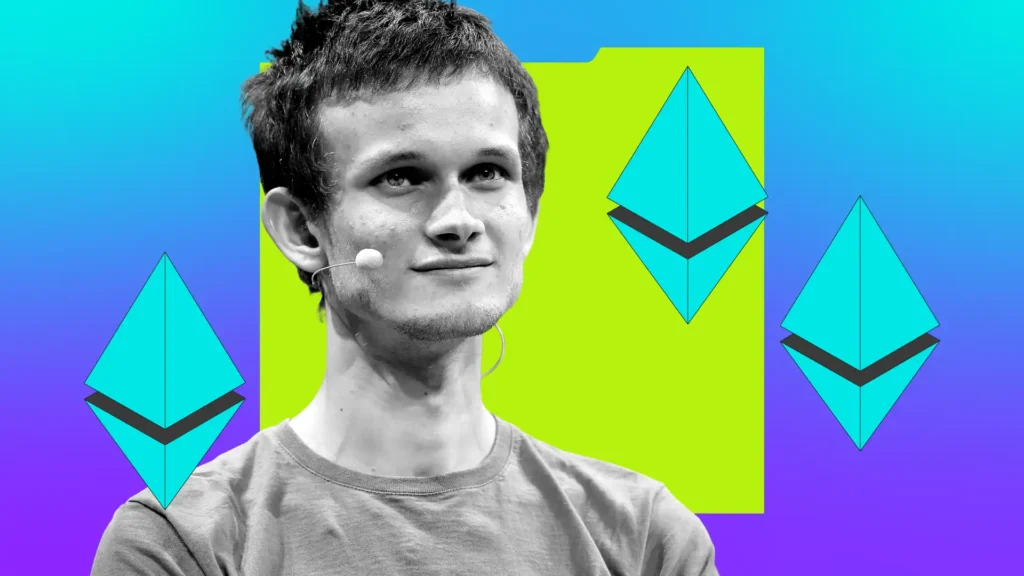
Ethereum co-founder Vitalik Buterin used his appearance at the Hong Kong Web3 Festival on April 20 to draw a sharper line around which Layer-2 (L2) development he thinks is worth pursuing.
During the event, Buterin said an L2 that copies Ethereum, scales it up and becomes more centralized is “meaningless,” arguing that the stronger path is to build around concrete application demands instead of launching generic replicas.
The comments land at a time when Ethereum’s rollup-centric roadmap has already produced a crowded L2 landscape.
Buterin’s framing suggests that the next stage may depend less on multiplying lookalike chains and more on whether new networks introduce infrastructure that specific use cases actually need.
Buterin’s Sharper Standard for L2s
Buterin said the first step in deciding which kind of L2 makes sense is understanding which does not.
In his view, the weak model is simple: take Ethereum, raise throughput, accept more centralization and stop there. That, he suggested, does not add much substance.
His alternative is more demanding.
A meaningful L2, he said, should start with the application itself and ask what functions need to happen off-chain, what infrastructure is required beyond Ethereum L1 and how those components fit together.
Examples from the speech included ENS and privacy-oriented applications, where some functions may sit outside the main chain while key guarantees remain anchored to Ethereum.
That message runs counter to a familiar reflex in the Ethereum ecosystem.
Over the past two years, many L2 launches have leaned on standardization, EVM compatibility and ecosystem familiarity.
Buterin’s latest comments point toward specialization and clearer architectural intent.
Data Scaling and Compute Scaling Stay Central
Buterin paired that L2 critique with a broader message about Ethereum’s technical direction.
He said the network still needs more data scaling so that more data can be published on-chain, highlighting PeerDAS as an important next step.
He also pointed to compute scaling as another major priority for the network’s future.
That fits Ethereum’s broader roadmap.
Data availability upgrades support rollups and related systems that post compressed transaction data or proofs back to Ethereum.
Compute scaling addresses how the base layer can support more demanding activity while preserving verifiability and composability.
In the same Hong Kong remarks, Buterin also referenced continued increases in the gas limit, progress on zkEVM and longer-term work on quantum resistance.
Buterin’s Message for Builders
For developers and investors, the speech reads as a warning against treating L2 proliferation as an end in itself.
Under Buterin’s framing, the harder question is which networks justify their existence through distinct design choices, specific user needs and infrastructure that does more than reproduce Ethereum with weaker decentralization.
That raises the bar for new launches.
General-purpose branding may not be enough.
Builders may need to explain what problem their network solves, why its off-chain components belong there and how Ethereum still functions as the settlement and trust anchor underneath.
This Fits a Broader 2026 Message
Buterin’s latest comments build on arguments he has already been making this year.
In February, he pushed back against “copypasta” EVM chains and suggested the old case for multiplying generic L2s was getting weaker as Ethereum itself continues to scale.
That debate has already shaped ecosystem decisions.
ENS Labs said in February that ENSv2 will be deployed exclusively on Ethereum, dropping its earlier Namechain L2 plan and giving the broader discussion a concrete example inside the ecosystem.
Top Trending Crypto Articles

PhD, researcher and writer exploring AI, blockchain, and the philosophy of tech, with a focus on DeScAI, governance, and trust.