Key Takeaways
- Vitalik Buterin says Ethereum’s long-standing gaps in P2P networking expertise are finally being addressed.
- PeerDAS, a major step forward for data availability and network performance.
- Buterin acknowledges the Foundation spent years prioritizing scaling and consensus over P2P improvements—a trade-off now being corrected.
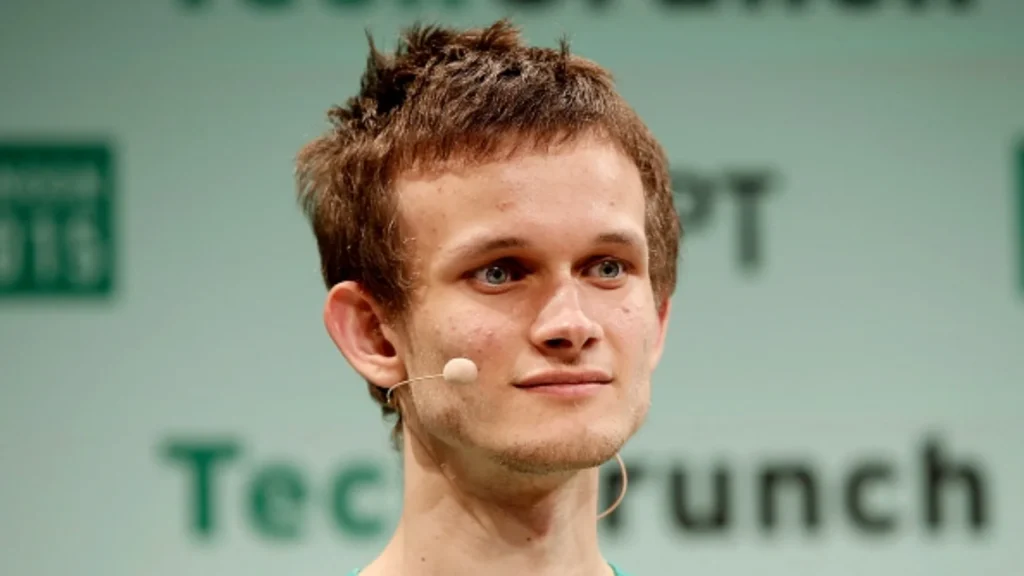
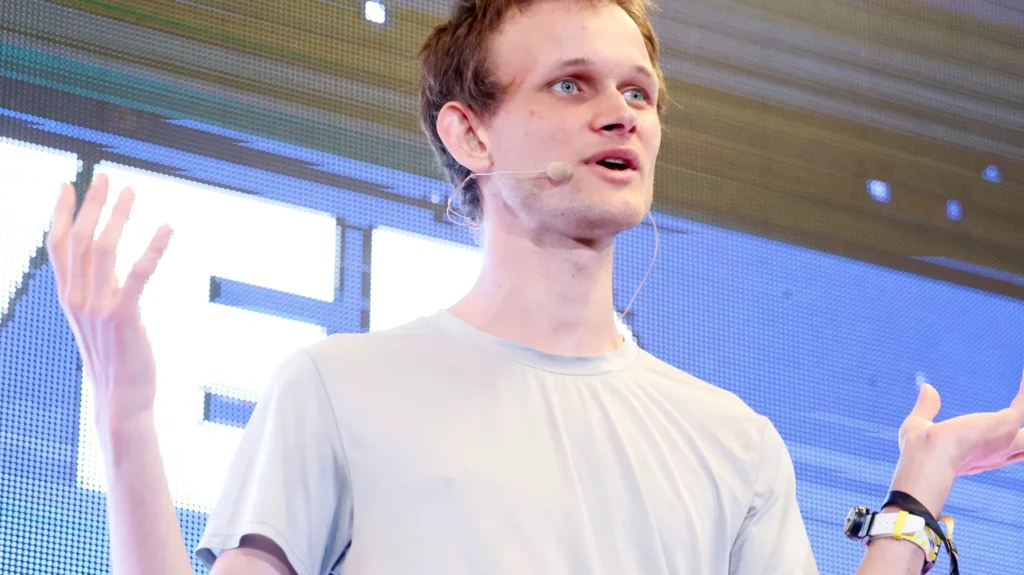
For years, Ethereum co-founder Vitalik Buterin has pressed the Ethereum Foundation to take its peer-to-peer networking layer more seriously.
While the project became a global leader in scaling research and cryptoeconomic design, he argued, the fundamentals of how Ethereum nodes communicate with each other lagged behind.
This week, Buterin suggested the tide is finally turning.
In a post highlighting the progress of PeerDAS—short for Peer Data Availability Sampling—Buterin pointed to the system as evidence that Ethereum is closing one of its most persistent technical gaps.
“For Years, I Complained”: Vitalik Says P2P Was the Missing Expertise
Buterin didn’t mince words.
He acknowledged that for much of Ethereum’s history, P2P networking simply wasn’t a priority inside the foundation:
“For years, I’ve complained internally at the EF that we do not have enough expertise at P2P… we take the P2P networking layer for granted. I think that’s no longer true, and PeerDAS shows it.”
It was a rare public admission of a blind spot that developers had long suspected.
While Ethereum pushed boundaries in consensus design, fee markets, and rollup-centric scaling, the underlying gossip layer—how nodes share blocks, transactions, and data—received far less investment.
The consequence: occasional propagation delays, node “staleness,” and periods where parts of the network struggled to keep up during heavy activity.
Today’s Ethereum is far more scalable than the one that launched in 2015—but until recently, the P2P layer hadn’t caught up.
Why Ethereum’s P2P Progress Took a Hit?
Ethereum’s early development prioritized block production and validation over network propagation efficiency.
For instance, delays in P2P data dissemination can lead to “staleness” in nodes, where some nodes lag behind others, increasing the risk of reorganizations or uneven data availability.
Buterin claimed that this oversight stemmed from resource allocation, as EF teams excelled in theoretical cryptoeconomics and consensus, but treated P2P as a “granted” commodity, akin to assuming reliable internet infrastructure without optimizing it.
Buterin has previously criticized P2P shortcomings, referencing P2P bottlenecks in prior writings, such as his 2023 posts on network latency.
PeerDAS as Proof of Progress
Buterin pointed to PeerDAS as the clearest sign yet that the Ethereum Foundation has finally leveled up its approach to peer-to-peer networking.
DAS (Data Availability Sampling) first arrived with EIP-4844 in the Dencun upgrade back in March 2024.
That change allowed light clients and validators to verify rollup data—known as blobs—without downloading them in full, boosting layer-2 throughput to roughly 100 kB/s per blob.
PeerDAS takes that foundation and extends it across Ethereum’s P2P layer.
Rather than relying on any centralized or specialized availability systems, PeerDAS uses existing gossip protocols, libp2p, and the broader networking stack to more efficiently spread blob samples among peers.
The upgrade officially went live as part of the Fusaka hard fork on Dec. 3, 2025, making PeerDAS the centerpiece of the network’s next phase of scaling.
By distributing the sampling workload across the network, PeerDAS lowers bandwidth requirements for full nodes while preserving the decentralization properties that DAS was designed to protect.

Prashant Jha is a seasoned crypto journalist based in Delhi, India, with a Bachelor’s Degree in Computer Science Engineering. Passionate about the evolving world of blockchain and cryptocurrencies, he has been a dedicated voice in the industry since 2018. Prashant’s expertise lies in regulatory reporting, where he unravels complex legal and financial developments with clarity and precision. Before joining CCN in 2024, he honed his craft at Cointelegraph, establishing himself as a trusted name in crypto journalism.
His coverage spans major industry events, including the high-profile collapses of FTX, Three Arrows Capital (3AC), and LUNA, offering readers insightful analyses of their regulatory and market implications. Prashant’s technical background enables him to bridge the gap between intricate blockchain technology and its real-world applications, making his work accessible to novices and experts.
Beyond his professional pursuits, Prashant is an avid music enthusiast, often exploring diverse genres to unwind. A sports lover, he has a particular passion for cricket and frequently engages in discussions about the game. His multifaceted interests and sharp journalistic instincts make him a valuable contributor to CCN, where he continues shaping the crypto landscape's narrative.