Key Takeaways
- Ripple, Circle, and three other crypto firms have received conditional approval to operate as national trust banks in the U.S.
- The move marks a major regulatory milestone for crypto firms seeking deeper integration with the banking system.
- While the approval does not directly affect XRP, Ripple’s inclusion could strengthen its institutional footprint over time.
The U.S. banking system has quietly opened its doors to some of the crypto industry’s biggest players.
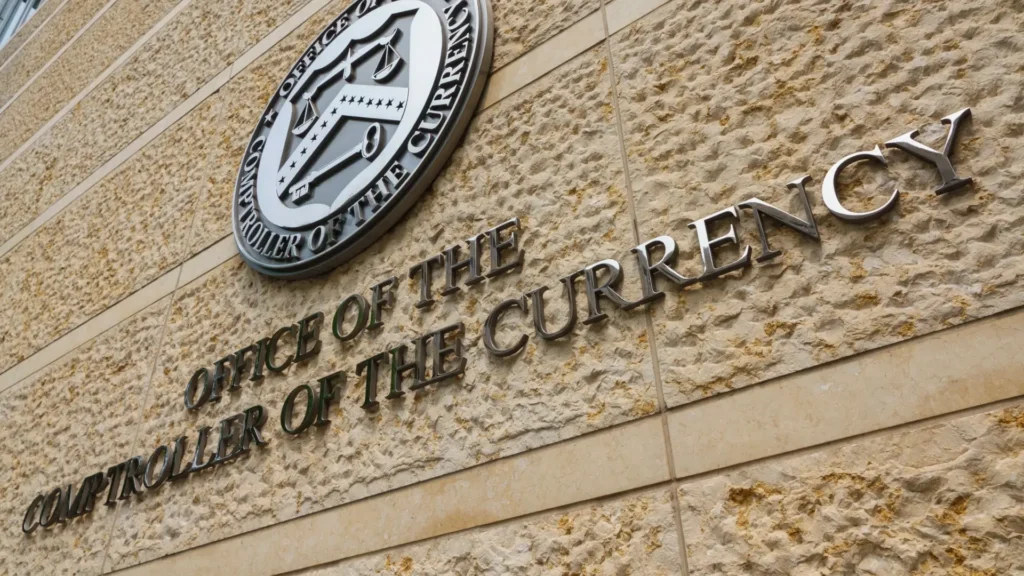
Recently, the Office of the Comptroller of the Currency (OCC) conditionally approved five crypto firms, including Ripple and Circle, to operate as national trust banks.
The decision marks one of the clearest signals yet that federal regulators are prepared to bring parts of the crypto sector inside the traditional financial framework.
Five Crypto Firms Win Trust Bank Approval
Under the OCC’s announcement, five companies received conditional approval to either establish or convert into national trust banks.
Once the regulator’s requirements are fully met, they will join roughly 60 other national trust banks already overseen by the OCC.
The approved firms are:
- Ripple National Trust Bank, a newly approved charter tied to Ripple.
- First National Digital Currency Bank, associated with Circle, the issuer of USDC.
- BitGo, Fidelity Digital Assets, and Paxos, which are converting existing state trust charters into national ones.
National trust banks differ from traditional retail banks.
While the decision doesn’t turn these crypto companies into full-service banks, it does grant them a regulated foothold inside the U.S. banking system.
They are not allowed to take deposits or issue loans, but they can custody assets, process payments, and provide fiduciary services under federal supervision.
All five firms must still satisfy capital, governance, compliance, and risk-management conditions before becoming fully operational.
The approval builds on a precedent set in 2021, when Anchorage Digital became the first crypto-focused firm to receive a national trust charter.
A Regulatory Win—And a Flashpoint
Crypto companies largely welcomed the OCC’s move as a long-awaited step toward regulatory clarity.
Ripple CEO Brad Garlinghouse celebrated the approval as a “massive step forward,” particularly for Ripple’s dollar-backed stablecoin, RLUSD, which now sits under both federal oversight from the OCC and state supervision from the New York Department of Financial Services.
Traditional banking groups were less enthusiastic.
In a statement released Friday, the Bank Policy Institute warned that the decision raised unresolved questions about regulatory consistency and oversight.
“Today’s decision by the OCC to grant conditionally five national trust charters leaves substantial unanswered questions,” the group wrote. “Chiefly, whether the requirements the OCC has outlined for the applicants are appropriately tailored to the activities and risks in which the trust will engage.”
The criticism reflects a broader concern among established banks that crypto firms could gain access to banking privileges without being subject to the same rules applied to traditional institutions.
Where XRP Fits Into the Picture
Despite Ripple’s prominence in the announcement, the approval does not directly authorize or regulate XRP itself.
The OCC’s decision applies to Ripple’s trust bank entity, which will focus on custody, payments infrastructure, and supporting stablecoin operations such as RLUSD.
XRP remains a separate asset, and its regulatory status is unchanged by the charter.
That said, the move could still have a lasting impact on XRP.
Ripple’s deeper integration into the federal banking system may encourage more financial institutions to use its payments infrastructure, where XRP can function as a bridge asset for cross-border transfers.
Any such shift would likely play out gradually, as part of broader institutional adoption rather than a short-term market catalyst.
That distinction was reflected in the market’s response.
XRP showed little immediate reaction to the news and was trading around $1.99, below the closely watched $2 level, amid a wider crypto market pullback in mid-December.
A Step Toward the Financial Mainstream
Taken together, the approvals underscore a broader shift in U.S. crypto policy—from enforcement-heavy oversight toward conditional inclusion.
By allowing firms like Ripple, Circle, Fidelity Digital Assets, BitGo, and Paxos to operate as national trust banks, the OCC is signaling that crypto companies can be part of the financial system, provided they meet the same supervisory standards as other federally regulated institutions.
For crypto advocates, it is a long-sought validation.
For critics, it is a test case that could redefine the boundaries of banking regulation.
Either way, the decision marks a meaningful turning point in how Washington approaches the future of digital finance.
Top Trending Crypto Articles

Prashant Jha is a seasoned crypto journalist based in Delhi, India, with a Bachelor’s Degree in Computer Science Engineering. Passionate about the evolving world of blockchain and cryptocurrencies, he has been a dedicated voice in the industry since 2018. Prashant’s expertise lies in regulatory reporting, where he unravels complex legal and financial developments with clarity and precision. Before joining CCN in 2024, he honed his craft at Cointelegraph, establishing himself as a trusted name in crypto journalism.
His coverage spans major industry events, including the high-profile collapses of FTX, Three Arrows Capital (3AC), and LUNA, offering readers insightful analyses of their regulatory and market implications. Prashant’s technical background enables him to bridge the gap between intricate blockchain technology and its real-world applications, making his work accessible to novices and experts.
Beyond his professional pursuits, Prashant is an avid music enthusiast, often exploring diverse genres to unwind. A sports lover, he has a particular passion for cricket and frequently engages in discussions about the game. His multifaceted interests and sharp journalistic instincts make him a valuable contributor to CCN, where he continues shaping the crypto landscape's narrative.