How Ripple’s $RLUSD Stablecoin Is Speeding Up Emergency Aid in Crisis Zones
Share
Key Takeaways
Multi-day cross-border banking delays no longer constrain aid delivery; stablecoins like RLUSD enable minute-level transfers.
Financial exclusion in crisis zones can be tackled by stablecoin wallets rather than traditional bank accounts.
Transparent on-chain flows offer new accountability metrics for donors, NGOs and governments.
Integrating digital-dollar stablecoins into aid strategy requires attention to regulation, infrastructure, local ecosystem readiness and end-user support.
In the wake of intensifying global crises, whether caused by climate disasters, conflict displacement, persistent poverty, or political instability, traditional aid systems often break down.
They struggle with slow banking rails, high transaction costs, a lack of transparency, and rigid infrastructure.
Ripple Labs is offering a different approach through its regulated U.S. dollar stablecoin, RLUSD, and its payments platform, Ripple Payments, to help humanitarian and development organizations deliver aid, expand financial inclusion, and support microfinance in crisis zones.
RLUSD operates on both the XRP Ledger (XRPL) and Ethereum, enabling it to connect Ripple’s enterprise payment network with the wider decentralized finance (DeFi) ecosystem.
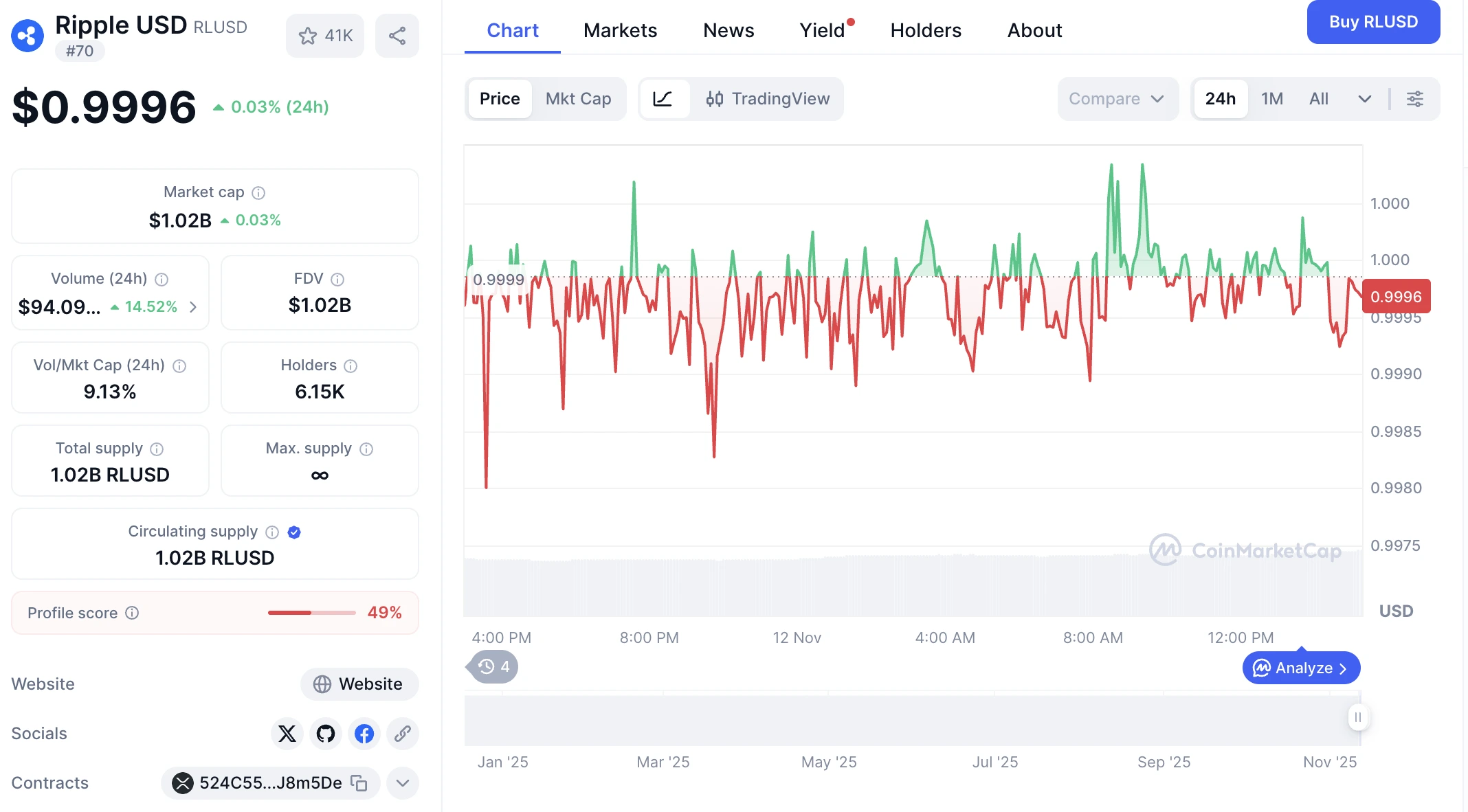
RLUSD financial data | Source: CoinMarketCap.
The article examines how RLUSD, launched in December 2024, quickly became a key tool for global humanitarian finance by late 2025.
It also explains why traditional cross-border aid payments fail, how RLUSD changes the process, real-world case studies, and what this means for the future of international humanitarian finance.
Why Traditional Cross-Border Aid Payments Fail
Aid that crosses borders passes through financial systems designed for an earlier era, when speed was less crucial and transparency and accessibility received less attention. This outdated design creates obstacles that weaken humanitarian responses.
Payment delays: Cross-border transfers typically take 3 to 7 business days, as they rely on correspondent banking networks, compliance checks, and multiple intermediaries. The delay reduces the impact of emergency assistance.
High costs: Each intermediary bank charges a fee or embeds a margin through foreign exchange spreads. In crisis regions, this can consume up to 10% of total aid before funds reach local organizations.
Financial exclusion: Many local NGOs, community groups, and individuals in affected areas lack access to banking. In fragile states, financial institutions withdraw, or infrastructure collapses after disasters, cutting off entire populations from relief payments.
These barriers slow the response, increase costs, reduce trust, and limit how quickly humanitarian aid can reach those in need. The global system prioritizes control and stability over inclusion and efficiency, rendering it ill-suited for rapid crisis relief.
RLUSD, a U.S. dollar-backed stablecoin from Ripple Labs, operates on both the XRP Ledger (XRPL) and Ethereum, offering dual-chain flexibility and other advantages.
$RLUSD for Humanitarian Aid: Bypassing Banks with Instant Stablecoin Transfers
According to Ripple, the token is fully backed by U.S. dollar deposits and short-term U.S. Treasuries under supervision by the New York Department of Financial Services (NYDFS).
Regulated stability: RLUSD is issued by Standard Custody & Trust Company, a subsidiary holding a New York trust charter. Its reserves are verified by independent auditors, helping build trust among institutions.
Dual-chain interoperability: Organizations can use XRPL or Ethereum depending on cost, speed, network access, or ecosystem support.
Traceability and trust: Every RLUSD transfer is recorded on a blockchain ledger, producing an immutable audit trail. This visibility aims to meet donor expectations for clarity and minimize the risks of fraud or misuse.
Eliminating correspondent banking: Through Ripple Payments, funds in RLUSD can go directly to local partners and wallets. This process aims to remove the chain of intermediaries that slows and fragments traditional cross-border aid systems.
RLUSD functions as a bridge between regulated fiat systems and blockchain networks. It enables fast, borderless, verifiable, and accessible digital dollar transfers, independent of traditional bank accounts. It is also part of a growing wave of crypto-based tools for humanitarian purposes.
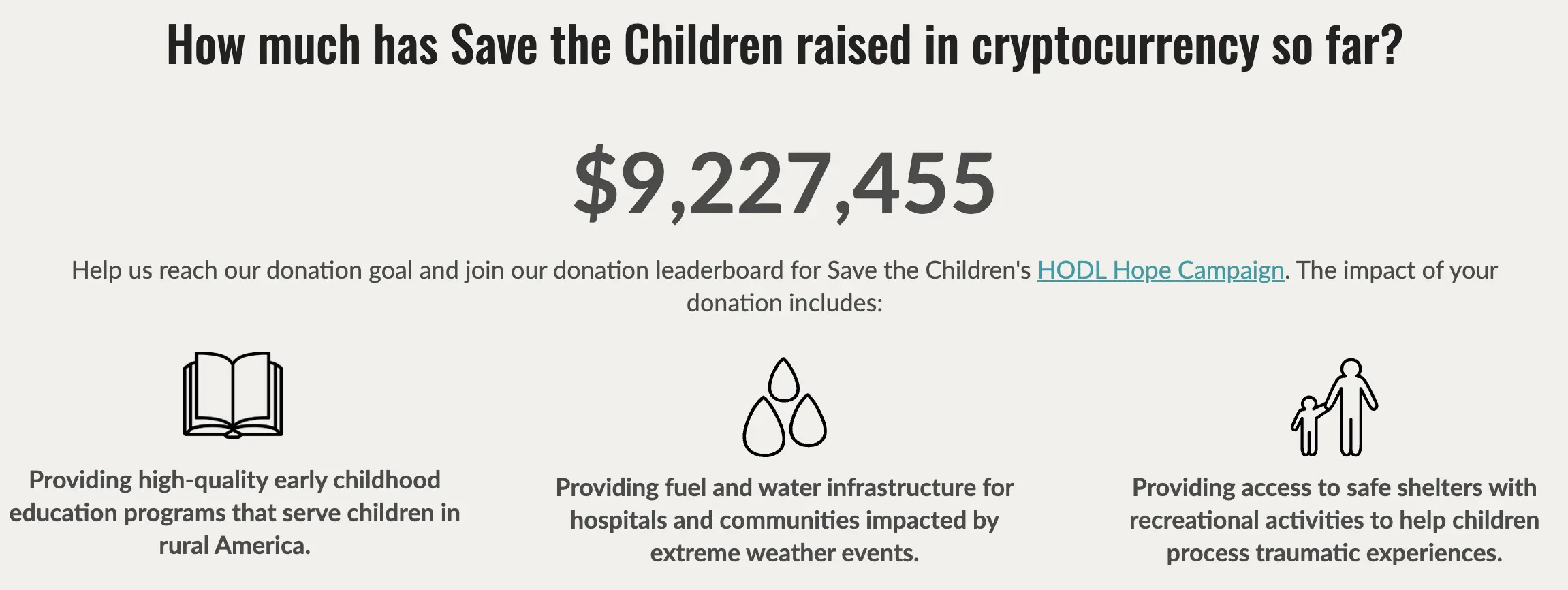
Financial aid to charities in crypto | Source: Save the Children.
For example, Save the Children has accepted crypto donations since 2020. UNHCR uses the Stellar network to deliver USDC aid to refugees in Ukraine. The Red Cross has tested blockchain cash vouchers in Kenya, and CARE has piloted crypto transfers for women entrepreneurs in Ecuador.
Case Study: World Central Kitchen (WCK) and $RLUSD in Disaster Response
Central Kitchen (WCK) provides meals to populations affected by disasters.
On October 30, 2025, WCK announced a partnership with Ripple to utilize RLUSD through Ripple Payments to support its local food partners in areas where banking infrastructure has been damaged or destroyed.
The scenario: a hurricane hits a coastal region, local banking branches close or collapse, and WCK’s goal is to quickly fund restaurants and food trucks so they can serve hot meals to displaced families and first responders.
Ripple and real-world utility |Source: X @PaulGoldEagle.
What Changes With RLUSD
Direct transfers: Instead of wires that take days and require bank accounts and intermediaries, WCK can issue RLUSD to local wallets or gateways.
Faster settlement: Funds arrive in minutes or hours instead of days, allowing food partners to start operations almost immediately.
Transparent tracking: WCK and donors can see when funds land, how they are spent, and when partners withdraw them.
Lower costs: Reduced fees mean a higher share of each dollar reaches relief workers and local communities.
As WCK states, RLUSD accelerates “the disbursement of funds to local restaurants and partners in regions without established banking infrastructure”.
This case illustrates the potential of stablecoin systems in situations where urgency is present and speed is crucial.
Beyond disaster relief, RLUSD is finding wider use across humanitarian and development finance.
Ripple has also partnered with organizations such as Water.org, which is expanding RLUSD-based microfinance programs in Brazil, Mexico, and Peru, with plans to reach Africa and Asia.
The stablecoin enables faster micro-loans, easier dollar on-ramps, and lower transaction costs for local institutions.
Mercy Corps Ventures is also piloting RLUSD for anticipatory aid in Kenya, where funds are automatically issued when drought conditions are triggered, helping families act before a crisis worsens.
Additionally, GiveDirectly is exploring pilots with parametric insurance and cash transfers in East Africa, Southeast Asia, and parts of Latin America, where traditional financial infrastructure remains limited.
Together, these initiatives demonstrate that Ripple’s stablecoin network is becoming a practical tool for prevention and inclusion, while also enhancing financial resilience and facilitating post-disaster recovery.
Microfinance, Anticipatory Aid, and $RLUSD: Beyond Immediate Relief
RLUSD is reshaping humanitarian finance by addressing long-standing weaknesses in cross-border aid systems.
Speed and immediacy: Transfers settle in minutes, not days, enabling faster delivery in emergencies.
Cost efficiency: Fewer intermediaries reduce expenses, allowing a higher share of funds to reach local partners.
Financial access and inclusion: Digital wallets replace traditional bank accounts, connecting underserved populations to aid flows.
Traceability and accountability:On-chain transactions create auditable trails that strengthen donor confidence and minimize misuse.
Together, these features highlight how regulated digital-dollar systems are becoming central to global relief operations.
Potential Challenges and Considerations
Despite its promise, RLUSD adoption requires awareness of key risks and implementation hurdles.
Regulatory shifts: Even under New York DFS oversight, stablecoin rules remain uncertain in many regions, which could impact issuance, redemption, or costs.
Operational barriers: Wallet access, internet connectivity, and partner readiness can still limit usability in damaged or remote areas.
Currency conversion: Local partners may face foreign-exchange exposure if they rely on U.S. dollar pegged assets.
Adoption and interoperability: Fragmentation may persist unless governments, NGOs, and fintech partners align systems.
User education: Beneficiaries must understand wallet security and redemption procedures to reduce misuse and build trust.
Addressing these points can help donors, practitioners, and educators design hybrid models that strike a balance between innovation and the realities of those who are disempowered.
Redefining Aid Delivery: Lessons from RLUSD for Humanitarian Finance and Education
RLUSD’s rise carries important lessons for humanitarian professionals and educators in the digital finance sector.
Curriculum integration: Programs on global development and humanitarian finance should include stablecoins, blockchain auditing, and digital-payment design as core content.
Partnership models: NGOs can establish alliances with fintech firms to enhance cross-border aid delivery.
Metrics and transparency: On-chain data introduces new indicators such as cost per dollar delivered and time to disbursement.
Financial inclusion strategy: RLUSD can connect unbanked populations to digital economies through accessible, traceable, and spendable digital dollars.
Systemic resilience: Digital rails reduce reliance on fragile correspondent banking networks, creating a stronger financial infrastructure for crises.
Educators and field practitioners now face a new chapter in aid delivery, in which crypto, in general, and stablecoins, such as RLUSD, could redefine how support moves across borders.
Can end-beneficiaries convert RLUSD into local currency?
It depends on local infrastructure and exchange partners. Aid organisations must plan redemption pathways into local fiat.
Does the use of RLUSD eliminate all banking risk?
No. While correspondent-bank risk falls, networks still require wallet access, internet, and local-partner integration.
Are there any restrictions on RLUSD usage in sanctioned or high-risk jurisdictions?
Yes. Because the issuer is regulated under NYDFS and other jurisdictions, compliance checks and sanctions screening still apply.
Is RLUSD the leading stablecoin for humanitarian aid support?
No, RLUSD is not yet the leading stablecoin for humanitarian aid, but it is rapidly gaining ground. The field is still dominated by USDC and USDT, which operate mainly on Ethereum, Polygon, and Stellar.
Disclaimer:
The information provided in this article is for informational purposes only. It is not intended to be, nor should it be construed as, financial advice. We do not make any warranties regarding the completeness, reliability, or accuracy of this information. All investments involve risk, and past performance does not guarantee future results. We recommend consulting a financial advisor before making any investment decisions.
Dr. Lorena Nessi is an award-winning journalist and media technology expert with 15 years of experience in digital culture and communication. Based in Oxfordshire, UK, she combines academic insight with hands-on media practice.
She holds a PhD in Communication, Sociology, and Digital Cultures, and an MA in Globalization, Identity, and Technology.
Lorena has taught at Fairleigh Dickinson University, Nottingham Trent University, and the University of Oxford. She is a former producer for the BBC in London, with additional experience creating television content in Mexico and Japan.
Her research focuses on digital cultures, social media, technology, capitalism, and the societal impact of blockchain innovation.
She has written extensively on digital media and emerging technologies, with her work featured in both academic and media platforms. Her Web3 expertise explores how blockchain technologies shape culture, economics, and decentralized systems.
Outside of work, Lorena enjoys reading science fiction, playing strategic board games, traveling, and chasing adventures that get her heart racing. A perfect day ends with a relaxing spa and a good family meal.


 Easy
Easy