Meta is developing Arena, a standalone prediction markets app that could compete with Polymarket and Kalshi in the event trading sector. | Credit: CCN.com
Share
Key Takeaways
Meta is reportedly developing a standalone prediction markets app called “Arena”.
Arena is expected to use a points-based system rather than real-money wagering at launch.
Analysts at Bernstein estimate prediction markets could reach $1 trillion in annual trading volume by 2030.
Meta is reportedly building a standalone prediction markets application called “Arena,” as CEO Mark Zuckerberg looks to capitalize on one of the fastest-growing sectors in online finance and social engagement.
According to a report by The New York Times, Zuckerberg recently assigned a small internal team to develop a smartphone app that would compete with leading prediction market platforms such as Polymarket and Kalshi.
Unlike those platforms, which allow users to wager money on future events, Arena is expected to initially rely on a points-based system similar to a video game. However, Meta has reportedly not ruled out introducing real-money betting functionality in the future.
The move signals Meta’s growing interest in alternative forms of online participation and comes as prediction markets continue to attract millions of users and billions of dollars in trading volume worldwide.
Try Our Recommended Crypto Exchanges
Sponsored
Disclosure
We sometimes use affiliate links in our content, when clicking on those we might receive a commission at no extra cost to you. By using this website you agree to our terms and conditions and privacy policy.
Arena would operate as a completely separate application from Meta’s existing social media ecosystem, which includes Facebook, Instagram, WhatsApp, and Messenger.
The strategy reflects Zuckerberg’s broader effort to identify emerging online behaviors and build products around them.
While Meta’s core platforms continue to attract massive audiences, reporting 3.56 billion daily active users across its family of apps in April, the company is increasingly exploring standalone products that could unlock new growth opportunities.
NEW: Meta is developing a standalone prediction-market style app, internally dubbed “Arena,” inspired by the rapid growth of Polymarket and Kalshi.
The app would initially use a points-based system rather than real-money wagering, though Meta has not ruled out betting features… pic.twitter.com/fpuHr4Czq4
According to the NYT, Meta plans to leverage its existing social media reach to drive adoption of Arena. The company could direct users from Facebook and Instagram toward the new app, potentially giving it a significant distribution advantage over smaller competitors.
Arena is reportedly one of several experimental projects under development. Another initiative, known internally as Meta Photos, focuses on creating new forms of AI-generated media through a dedicated standalone application.
Meta has not publicly commented on the reports, and Reuters said it was unable to independently verify the company’s plans.
Prediction Markets Become a Major Growth Industry
Meta’s interest arrives as prediction markets evolve from a niche internet activity into a rapidly expanding business category.
Platforms such as Polymarket and Kalshi allow users to speculate on the outcomes of political events, economic decisions, sports competitions, and cultural moments.
During the 2024 US presidential election cycle, prediction markets experienced explosive growth as traders increasingly turned to event contracts to gauge election outcomes and public sentiment.
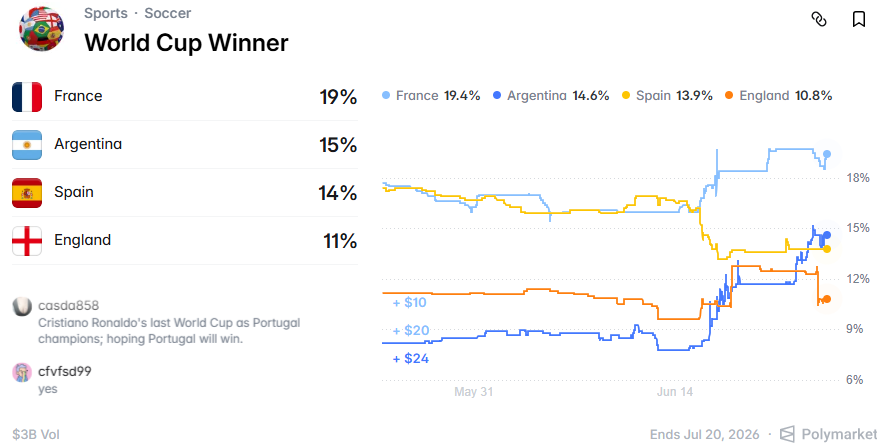
Prediction markets allow people to bet quite on everything. | Credit: Polymarket
The sector has continued expanding since then. Kalshi and Polymarket generated a combined $50 billion in trading volume during 2025. That figure has already surpassed $130 billion in 2026, highlighting the growing appetite for event-based trading.
Analysts at Bernstein have projected that prediction markets could reach as much as $1 trillion in annual trading volume by the end of the decade.
The growth has also attracted a wave of new competitors. Financial platforms including Robinhood and Interactive Brokers have introduced event contracts, while traditional sports betting operators such as FanDuel and DraftKings have explored similar offerings. Crypto companies, including Gemini, have also entered the market.
For Meta, Arena could provide a way to participate in this expanding sector without immediately entering the highly regulated world of real-money wagering.
Regulatory Scrutiny Continues to Shadow the Industry
Despite the sector’s growth, prediction markets face increasing regulatory and political scrutiny.
Because users can trade on the outcomes of real-world events, critics argue that these platforms create opportunities for insider trading and market manipulation. Several recent investigations have intensified those concerns.
In April, federal prosecutors charged a US Special Forces member with allegedly using confidential information to profit from bets tied to a secret operation involving Venezuelan President Nicolás Maduro. Prosecutors said the trader earned more than $400,000 from the wagers.
Polymarket is flagrantly violating federal law & past legal orders, pretending to operate outside the US while it pays for influencers promoting fake bets to Americans.
Any other Administration, the DOJ, CFTC & FTC would be shutting down gambling operations like this. https://t.co/99Ee9NtZp0
Lawmakers have also raised concerns about the broader social implications of prediction markets. Senator Richard Blumenthal criticized Meta’s reported plans, arguing that the company was moving deeper into products designed to drive engagement through speculative behavior.
The scrutiny comes as regulators face mounting pressure to oversee a rapidly growing market. The Commodity Futures Trading Commission (CFTC), which oversees many prediction market activities in the United States, has seen its responsibilities expand as the industry grows.
For now, Arena remains an experimental project that may never launch publicly. Yet Meta’s reported interest underscores how prediction markets have moved from the fringes of finance into the mainstream.
Giuseppe Ciccomascolo began his career as an investigative journalist in Italy, where he contributed to both local and national newspapers, focusing on various financial sectors.
Upon relocating to London, he worked as an analyst for Fitch's CapitalStructure and later as a Senior Reporter for Alliance News. In 2017, Giuseppe transitioned to covering cryptocurrency-related news, producing documentaries and articles on Bitcoin and other emerging digital currencies. He also played a pivotal role in establishing the academy for a cryptocurrency exchange website. Crypto remained his primary area of interest throughout his tenure as a writer for ThirdFloor.