Bloom Telegram Bot Hack: $953K Stolen From 48 Solana Wallets in 94 Seconds
Share
Key Takeaways
An investigation by Press Gazette found that four finance writers published across major financial outlets could not be conclusively verified.
It comes as a recent study found 56% of UK journalists use AI professionally at least once a week.
Newsrooms are embracing AI despite trust fears.
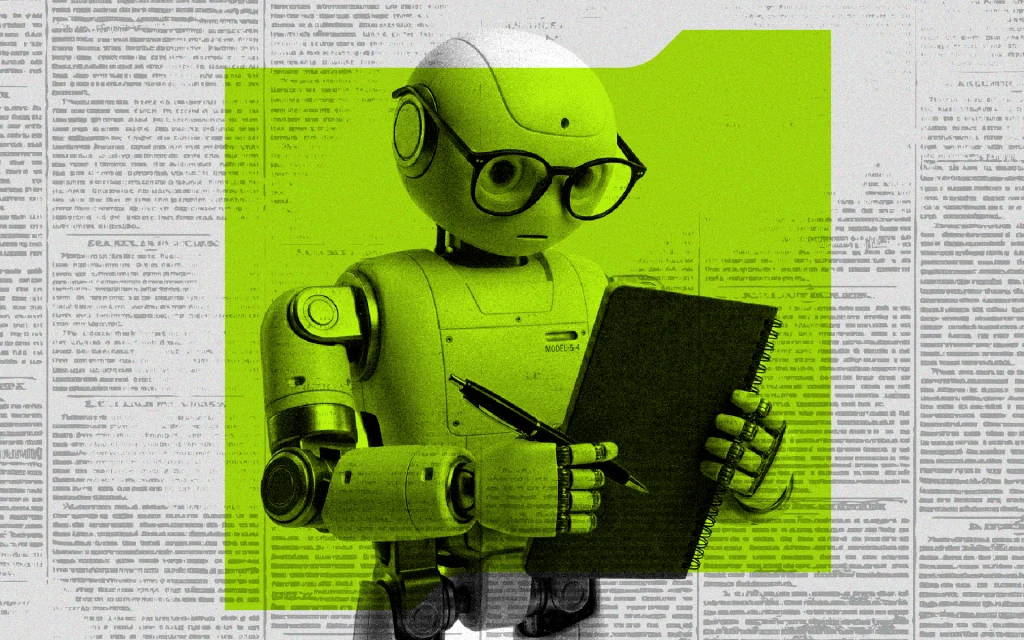
Artificial intelligence is rapidly becoming embedded in modern crypto journalism, from completely automated headline writing to less-invasive newsroom research tools.
But as publishers increasingly embrace the technology, a series of investigations has intensified concerns over the use of AI-generated personas.
A recent investigation by the Press Gazette found that four writers published across major financial outlets could not be conclusively verified as real journalists.
The findings come as a Reuters Institute study showed AI use among traditional and crypto journalism has become widespread, even while most reporters view the technology as a threat.
Try Our Recommended Crypto Exchanges
Sponsored
Disclosure
We sometimes use affiliate links in our content, when clicking on those we might receive a commission at no extra cost to you. By using this website you agree to our terms and conditions and privacy policy.
Press Gazette reported that the four named writers collectively authored more than 1,000 articles for over 30 outlets, including CoinTelegraph and Forbes.
The publication said repeated attempts to verify the writers’ identities were unsuccessful.
On top of that, several profile pictures linked to the bylines appeared to be AI-generated or repurposed images.
At the same time, the LinkedIn accounts were reported to have limited professional history.
Press Gazette reported that Nikolai’s profile picture is 100% AI-generated. | Source: LinkedIn
Press Gazette also reported links between the writers and the Israeli blockchain public relations firm Market Across, with numerous articles promoting cryptocurrency projects associated with the company.
The investigation said some publishers took action after being contacted, with Investopedia removing articles written by Joe Liebkind.
While suspecting AI, Press Gazette could not conclusively determine whether the writers were fabricated identities, pseudonymous contributors, or real individuals using altered profiles.
“Press Gazette will be happy to update this article and set the record straight if any of the four get in touch,” the publication wrote.
AI in Journalism Is Already Here
AI adoption has accelerated across traditional and crypto journalism in the last few years, and it isn’t showing signs of slowing down.
A November 2025 Reuters Institute report, based on a survey of 1,004 UK journalists, found that 56% used AI professionally at least once a week.
The study found journalists most commonly used AI for transcription, translation, and copy editing.
However, many were also using it for story research, brainstorming, headline generation, and drafting articles.
Despite that uptake, the report found deep unease about the technology’s impact on the profession.
According to the study, 62% of journalists viewed AI as a “large” or “very large” threat to journalism.
The report also found that 60% of journalists were “extremely concerned” about AI’s potential impact on public trust in journalism.
Warnings Over Public Trust
Award-winning journalist and author Margaret Simons warned in a Guardian opinion piece that AI risks fundamentally weakening the bond between journalists and audiences.
“The relationship between journalist and audience is key to trust, to robustness, to the ability to bring attention to uncomfortable issues and unwelcome news,” Simons wrote.
She said AI-generated search summaries were already reducing traffic to media organizations by providing readers with condensed information.
“That means that fewer people are clicking through to news media outlets in search of the news,” Simons wrote.
Simons also warned that AI systems prioritize individual prompts and behavioral data rather than editorial judgment or civic responsibility.
“An AI-dominated model … responds only to questions about specific topics,” she wrote. “It does not care about you as a fellow citizen.”
AI, Journalism, and Million Dollar Deals
A wave of multimillion-dollar partnerships between technology companies and news organizations has also rapidly spread AI’s reach into editorial.
In 2024, Microsoft announced it was partnering with Semafor and several journalism organizations to help reporters use generative AI tools.
As part of the deal, Semafor launched a global breaking news feed called Signals.
This uses Microsoft and OpenAI technology to help journalists produce “diverse, sophisticated perspectives and insights on the biggest stories in the world as they develop.”
Other outlets, such as News Corp, Vox, and The Atlantic, have also signed highly lucrative licensing contracts with OpenAI and Google.
Disclaimer:
The information provided in this article is for informational purposes only. It is not intended to be, nor should it be construed as, financial advice. We do not make any warranties regarding the completeness, reliability, or accuracy of this information. All investments involve risk, and past performance does not guarantee future results. We recommend consulting a financial advisor before making any investment decisions.
Kurt Robson is a London-based reporter at CCN, specialising in the fast-moving worlds of crypto and emerging technology. He began his career covering local news in Cornwall after graduating from Falmouth University with First Class Honours in Journalism. There, he cut his teeth on everything from council meetings to missing swans.
He quickly rose through the ranks to become a frontline journalist at several of the UK’s leading national newspapers. Over the years, he has interviewed musicians and celebrities, reported from courtrooms and crime scenes, and secured multiple front-page exclusives.
Following the upheaval of the COVID-19 pandemic, Kurt shifted his focus to technology journalism—just ahead of the AI boom. With a natural curiosity and a trained eye for emerging trends, he has found a new rhythm in reporting on innovation.
At CCN, Kurt's work focuses on the cutting edge of crypto, blockchain, AI, and the evolving digital world. Drawing on his background in people-first reporting and his deep interest in disruptive tech, Kurt delivers stories that are insightful, entertaining, and human-centric.














 Does Crypto Journalism Affect Price? 12 Years of Research Reveals Answer