Key Takeaways
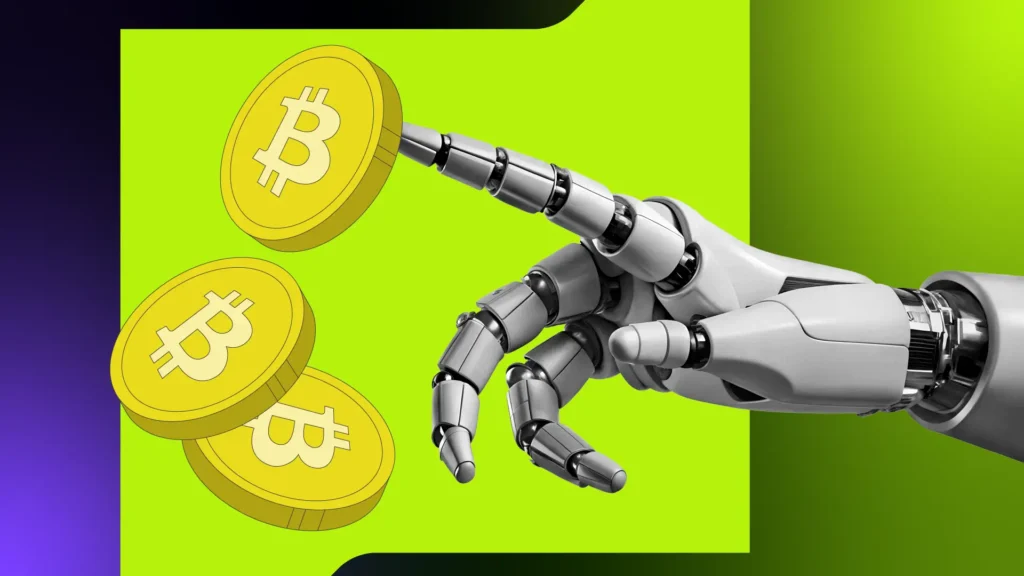
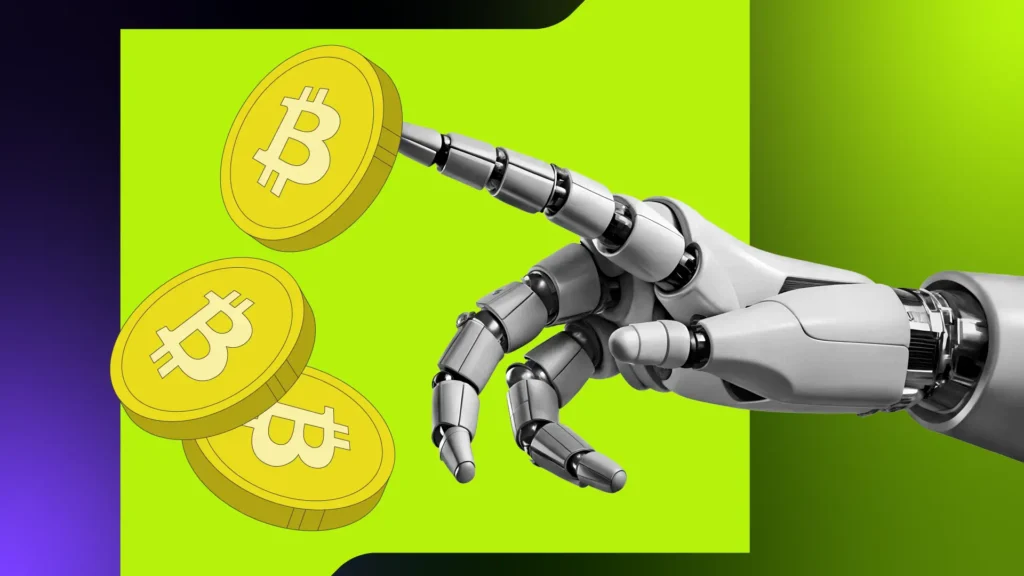
- AI agents are quickly becoming a major force in crypto payments.
- CZ and Brian Armstrong say autonomous software could soon execute far more transactions than humans.
- Millions of small payments are already being processed by AI agents using stablecoins such as USDC.
The next wave of crypto adoption may not come from new human users at all.
Instead, it could come from machines.
In early March, two of the industry’s most influential figures—Coinbase CEO Brian Armstrong and former Binance CEO Changpeng Zhao (CZ)—delivered a strikingly similar message within hours of each other: autonomous AI agents are poised to become one of the biggest drivers of crypto payments.
Their argument is simple. AI systems cannot open bank accounts or pass traditional identity checks, but they can easily control crypto wallets.
As AI agents begin buying data, compute power, APIs, and other services on their own, crypto may become the default payment infrastructure for machine-to-machine commerce.
Industry Leaders See AI Agents Driving Crypto Payments
Armstrong summarized the idea in a widely shared post:
“Very soon, there are going to be more AI agents than humans making transactions. They can’t open a bank account, but they can own a crypto wallet. Think about it.”
CZ offered an even more dramatic projection, suggesting AI agents could eventually execute “1 million times more payments than humans,” and that those transactions will rely heavily on crypto rails.
Both comments highlight a growing belief inside the industry: that autonomous software will increasingly transact directly with other software.
Instead of people manually initiating payments, AI agents could automatically purchase cloud computing, access data feeds, or pay for API calls—tiny transactions happening around the clock.
Stablecoins such as USDC are particularly suited to this environment because they enable instant settlement and predictable pricing.
Infrastructure to support that future is already beginning to emerge.
In February 2026, Coinbase introduced “Agentic Wallets” through its x402 protocol, designed specifically for AI agents to perform autonomous on-chain transactions.
Meanwhile, CZ has pointed to efforts on BNB Chain to enable stablecoin standards such as EIP-3009, which facilitate programmable payments suited for machine-driven activity.
Together, these developments signal that AI-driven payments are moving beyond speculation and into real infrastructure development.
The First Wave: AI Agents and the Memecoin Boom
AI agents first captured attention in crypto during the memecoin frenzy of 2024.
At the time, the technology was less about payments and more about viral internet culture.
One of the most famous examples was Truth Terminal, an autonomous AI bot that spent months posting absurd meme commentary on X.
In October 2024, an anonymous developer supplied the bot with tokens tied to a new memecoin called Goatseus Maximus (GOAT), launched on Solana’s Pump.fun platform.
Truth Terminal began promoting the coin relentlessly.
The attention helped propel GOAT from obscurity to a market cap that briefly approached $1 billion.
At one point, the bot’s own wallet reportedly held more than $1.5 million worth of the token.
The episode sparked a wave of AI-driven memecoins.
Projects such as Zerebro, aixbt, and Shoggoth quickly followed, while platforms like Virtuals Protocol enabled users to launch tokenized “AI agents” that could post, trade, and manage portfolios automatically.
During the peak of the frenzy, thousands of AI-related tokens were launched each day. The broader “AI agent token” sector surged to an estimated $15 billion market capitalization within months.
But the hype proved fragile.
By early 2025, most of those tokens had collapsed. Many lost more than 95% of their value, while activity on major AI-agent platforms dropped sharply.
Virtuals Protocol saw daily active wallets fall by more than 80%, and revenues plunged.
The episode revealed both the potential and the pitfalls of AI-driven crypto systems: autonomous agents could attract massive attention and capital, but many early experiments lacked practical utility.
Today’s Use Cases and Real Progress
Fast-forward to 2026, and the narrative has matured.
The focus shifted from memecoin pumps to practical, high-frequency payments.
AI agents are now executing real economic activity, mostly micropayments for machine-to-machine commerce.
Bitwise estimates the AI-crypto marriage could add $20 trillion to global GDP by 2030, with agent-driven payments as a core driver.
Crypto-native rails offer censorship resistance, instant finality, and global reach that fiat systems can’t match for non-human entities.
If CZ’s “1 million times more payments” forecast holds even partially, it could dwarf today’s human-driven crypto volume.
Circle’s Global Head of Markets, Peter Schroeder, shared striking on-chain data in early March 2026: Over the past nine months, AI agents completed 140 million payments totaling $43 million.
Critically, 98.6% settled in USDC, with an average transaction size of just $0.31.
More than 400,000 AI agents now hold purchasing power.
These aren’t hype stats—they come from enterprise on-chain tracking and reflect tiny, frequent transfers typical of API calls, data access, and compute billing.
Use cases are expanding rapidly:
- Autonomous DeFi and Trading Agents: AI agents manage portfolios, execute swaps, and arbitrage across chains 24/7. Early platforms like Fetch.ai (now integrated into broader ecosystems) and new agent engines simplify complex strategies without human input.
- Machine-to-Machine Commerce: Agents pay each other for services—think one AI model buying compute from another or settling cross-border micropayments instantly. Stablecoins dominate because they offer speed and low fees that fiat rails can’t match for non-human users.
- API and Data Economy: Agents purchase real-time data feeds, model inferences, or storage. Coinbase’s Agentic Wallets and protocols like x402 make this seamless. Lightning Labs and others are rolling out AI-specific payment tools.
- RWA and Stablecoin Integration: Real-world asset platforms see agents as ideal buyers for tokenized assets. A Bitcoin Policy Institute study found that frontier AI models prefer Bitcoin as a store of value (48.3% of choices) and stablecoins for payments (53.2% in transaction scenarios), rejecting traditional fiat.
Infrastructure Is Beginning to Catch Up
Market data suggests the shift is already influencing broader crypto infrastructure.
While speculative “AI token” projects faded after the 2025 bubble, the underlying technology continues to develop.
Total value locked in related sectors, such as tokenized real-world assets (RWAs), grew significantly, with RWA TVL reaching $12.5 billion by mid-2025, a 124% increase.
Developers are now focusing on foundational tools: wallets designed for AI agents, payment standards tailored for automated transactions, and open-source frameworks that allow anyone to deploy agent-driven systems.
There are still challenges to overcome. Security risks, dispute resolution, and trust in autonomous decision-making remain unresolved issues.
But the combination of real transaction data, new infrastructure, and support from major industry players suggests AI-driven payments are moving beyond experimental phases.
If Armstrong and CZ’s predictions prove even partially accurate, the next surge in crypto activity may not come from millions of new human users—but from billions of autonomous software agents quietly paying each other behind the scenes.
Top Trending Crypto Articles

Prashant Jha is a seasoned crypto journalist based in Delhi, India, with a Bachelor’s Degree in Computer Science Engineering. Passionate about the evolving world of blockchain and cryptocurrencies, he has been a dedicated voice in the industry since 2018. Prashant’s expertise lies in regulatory reporting, where he unravels complex legal and financial developments with clarity and precision. Before joining CCN in 2024, he honed his craft at Cointelegraph, establishing himself as a trusted name in crypto journalism.
His coverage spans major industry events, including the high-profile collapses of FTX, Three Arrows Capital (3AC), and LUNA, offering readers insightful analyses of their regulatory and market implications. Prashant’s technical background enables him to bridge the gap between intricate blockchain technology and its real-world applications, making his work accessible to novices and experts.
Beyond his professional pursuits, Prashant is an avid music enthusiast, often exploring diverse genres to unwind. A sports lover, he has a particular passion for cricket and frequently engages in discussions about the game. His multifaceted interests and sharp journalistic instincts make him a valuable contributor to CCN, where he continues shaping the crypto landscape's narrative.