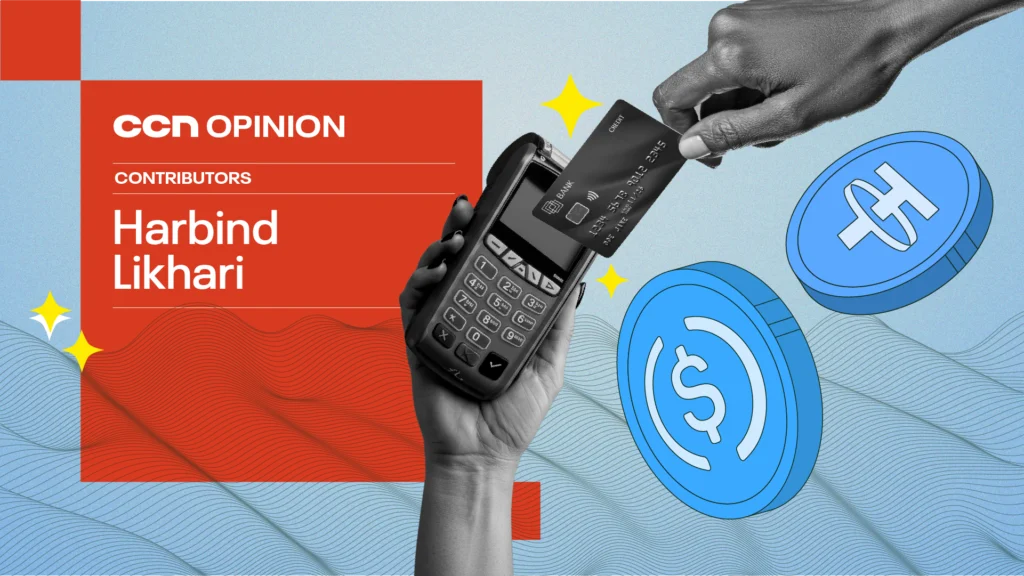
“A newsroom built on smart contracts has a chance of operating in a leaner, faster, and fairer fashion than the legacy institutions of today.”| Image credit: Hameem Sarwar
Share
Key Takeaways
Stablecoin micropayments could give journalism a flexible way to monetize individual articles without relying on subscriptions or advertising.
Micropayments may help publishers reach casual and global readers who avoid long-term commitments but still value quality reporting.
On-chain payment models could improve transparency and fairness for freelancers through faster, automated revenue distribution.
Wallet-based access systems could reduce friction, improve privacy, and lower cybersecurity risks tied to traditional news paywalls.
Journalism does not suffer from a lack of readers; it suffers from a lack of viable ways to pay for individual work. The last two decades have not been kind to journalism.
Once sustained by a steady flow of advertising dollars, media outlets have seen that revenue siphoned away by digital platforms like Google and Meta.
These tech giants have transformed attention into an algorithmic commodity. Publishers, who actually create the content that drives engagement, are scrambling to survive.
In response, many outlets have turned to paywalls and subscriptions. That strategy works up to a point. Big names like The New York Times, The Wall Street Journal, and The Economist have built stable, recurring revenue streams.
But smaller publications and local outlets struggle to convince readers to add yet another subscription to their already crowded list.
Now, a new technology might offer a fix. By enabling instant, low-cost micropayments, stablecoins could let media outlets move beyond rigid paywalls and find a sustainable way to monetize their content.
Bet on ESports with These Partners
Sponsored
Disclosure
We sometimes use affiliate links in our content, when clicking on those we might receive a commission at no extra cost to you. By using this website you agree to our terms and conditions and privacy policy.
Why Micropayments Failed Before and Why Stablecoins Change the Math
The idea of micropayments for journalism is not new. Tech thinkers have talked about it since the early days of the internet.
The problem lies in cost and friction. Credit card networks weren’t designed for $0.10 payments. Between transaction fees, failed payments, and geographic barriers, the math never worked out.
But by using stablecoins like USDC or USDT, a reader could pay a few cents to unlock a single article, with almost zero transaction cost.
A crypto wallet integrated into a browser could simply auto-deduct $0.10 worth of USDC to access a story. Readers need not worry about monthly subscriptions, credit card forms, or “try free for 30 days” pop-ups.
Turning Casual Readers Into Paying Readers
For the first time, publishers could have a path towards monetizing casual readers. People who, ordinarily, would never commit to a full subscription might happily pay a few cents to read a single piece.
In a global information market, this could become powerful. A student in Nairobi or a researcher in São Paulo could access journalism from Bloomberg or The Atlantic as easily as a reader in New York, without encountering any banking friction.
Even so, while stablecoins promise global access, media companies may inherit compliance obligations (KYC, AML, sanctions screening) that differ by jurisdiction. This could force publishers to reintroduce geo-blocking or compliance layers.
How Cross-Outlet Bundles Could Reshape Digital News Subscriptions
Stablecoins may also enable entirely new business models.
Instead of being locked into expensive one-size-fits-all subscriptions, readers could create their own media bundles based on their interests.
Let’s say someone wants to stay abreast of everything happening in the AI industry, and only that. In theory, they could just spin up a bundle made out of AI articles from The Financial Times, The Wall Street Journal and Bloomberg, without paying for any other content pieces from these outlets.
As things stand, only 17% of people pay for online news. Media bundles could potentially enlarge that pool. Publications covering similar beats would also be incentivized to create package deals, meaning subscription costs would likely be lower.
Even better, you could design smart contracts to distribute payment flow proportionally to outlets based on the articles that were actually read.
Harbind Likhari says that “in a time when trust in the media is at its lowest, technology could help make the news production process more collaborative.”| Image source: Harbind Likhari
Ideally, this could provide transparent accounting for both readers and publishers, and help give smaller publishers a seat at the table.
There would be a way for them to be discovered and compensated fairly, and they might suffer less when bigger outlets lift their scoops.
However, there is a risk that cross-outlet bundles could recreate the same power imbalance seen with Google News or social platforms, only this time on-chain.
Whoever controls the bundling interface could capture most of the value. The optimal solution would be for media publications to take the lead and create these bundled products themselves.
How Stablecoin Payments Could Fix Freelance Journalism Pay
Stablecoin-based payment rails may also end up fixing one of journalism’s oldest pain points: how freelancers and contributors get paid.
Today, freelance writers and photographers often wait weeks or months for payments. Revenue-sharing agreements are opaque. Contributors rarely have insight into how their work performs financially.
By moving revenue distribution on-chain, smart contracts can automatically split income among all contributors based on pre-agreed percentages. Payments could happen as soon as the piece is published. Nobody would have to chase invoices anymore.
For publishers, the technology could be equally transformative.
A newsroom built on smart contracts has a chance of operating in a leaner, faster, and fairer fashion than the legacy institutions of today.
Why News Paywalls May Move Beyond Accounts and Passwords
If you have ever tried to read an article and been greeted by a paywall, you know reading online comes with unique challenges.
You have to create an account, confirm your email, enter a card, agree to recurring billing, and pray the system does not charge you after you cancel. It is an experience that drives readers away.
We already have the technology to eliminate this friction.
There is a way for readers to simply connect a pre-existing crypto wallet that verifies ownership of funds, without exposing any of their personal data. Implement this on a news website, and premium content could be unlocked instantly.
In that case, the reader’s wallet would double as an authentication tool.
It is not just a convenience issue. A privacy-preserving model like this one eliminates many of the cybersecurity risks that plague digital publishing today. No passwords to steal, no databases to breach: just seamless, secure access to content.
I’m not going to subscribe to a paper in Phoenix or San Diego, but I might read an article from there for twelve or twenty cents. “Gift articles” are a step in the right general direction, but there is zero consistency and often the “gift” runs out with people wanting more.…
Can Blockchain Help Rebuild Trust Between Readers and Newsrooms?
Blockchain technology may even open the door to reader participation. Right now, the media business is one-sided: readers pay, publishers collect. But engagement and loyalty could be rewarded.
For example, publishers could issue small digital rewards for meaningful actions such as thoughtful commenting, fact-checking, sharing, or curating content. These rewards could grant access credits, unlock NFTs of exclusive reporting, or even confer governance rights in community-owned publications.
This would probably mean a change in the relationship between readers and publishers. On the one hand, audiences could become active participants who help shape the editorial ecosystem.
On the other hand, publications will need to ensure the new incentives align with their mission and avoid the engagement distortions we already see on social media platforms.
Nevertheless, in a time when trust in the media is at its lowest, technology could help make the news production process more collaborative.
Stablecoins will not magically solve all the challenges facing journalism.
The industry still needs trust, integrity, and great reporting. But they may provide crucial infrastructure in the form of a financial layer that aligns incentives between readers, reporters, and publishers.
Disclaimer:
The views, thoughts, and opinions expressed in the article belong solely to the author, and not necessarily to CCN, its management, employees, or affiliates. This content is for informational purposes only and should not be considered professional advice.
About the Author
Harbind Likhari
Harbind Likhari is Chief Product Officer of MNEE. With over two decades of experience in financial services and more than ten years in digital assets, he has played a key role in the development and adoption of MNEE's ERC-20 stablecoin and its integrated trading platforms.
Before joining MNEE, Harbind worked as VP of Trading Operations at Rockwallet and served as a hedge fund accounting manager at Citgo Group and Morgan Stanley. His background spans both traditional finance and the evolving Web3 sector.